Salicylic Acid Peel: Who It Is For and How It Differs From Glycolic
By Aida Khazieva·Chemical Peels·15 min read·Real Skin Beauty, Irvine CA·Updated October 13, 2026
A salicylic acid peel is a beta hydroxy acid (BHA) peel. It is oil-soluble, so it works inside the pore rather than only on the surface, which makes it the peel I reach for with blackheads, oily skin and acne-prone skin. Glycolic is an alpha hydroxy acid (AHA) that is water-soluble and works mainly on surface texture and tone. In short: salicylic for clogged pores and oil, glycolic for dullness and fine texture. Here is who each one suits, what a session at my Irvine studio is like and who should skip salicylic.
Quick answer
Salicylic (BHA): oil-soluble, clears pores, best for blackheads, oily and acne-prone skin.
Glycolic (AHA): water-soluble, smooths texture and brightens dull skin.
Typical plan: a series spaced every 3 to 4 weeks, often 4 to 6 peels, depending on the skin.
Studio prices: Acne Peel (salicylic) $100 and Glycolic Peel $100, both 45 minutes.
Skip or ask a doctor first: pregnancy, isotretinoin use, aspirin or salicylate allergy, open or very irritated skin.
What a Salicylic Acid Peel Actually Does
Salicylic acid is the one exfoliating acid that dissolves in oil. That detail explains almost everything about it. Your pores fill with a mix of sebum and dead skin cells. A water-soluble acid skims across the surface of that mix. Salicylic acid can move into the pore lining and loosen the plug from the inside.
In practice that gives you four effects, and I describe them the way clients feel them:
Clearer pores: blackheads and small bumps loosen over the first few peels.
Less oil shine: skin often feels less slick a few days after treatment as pores clear.
Calmer breakouts: salicylic acid has anti-inflammatory properties that help with red, active spots.
Smoother surface: dead cells shed faster, so skin looks fresher.
It is not a cure for acne, and it will not change what your hormones are doing. If breakouts cluster around your jawline and chin before your period, the cause is likely hormonal, and my article on hormonal acne explains why a peel alone is not the full plan. Peels work best as part of a routine and a series.
Home products with salicylic acid, such as cleansers and leave-on liquids, are much lower in strength. They are useful for maintenance between visits, but they do not do the same job as a professional peel, where the acid is applied evenly, timed and removed or neutralized under supervision. Using both without guidance is where people over-exfoliate, so tell me what is in your routine.
How Salicylic Acid Works Inside the Pore: A Closer Look
A clogged pore starts small. Skin cells that should shed normally stick together, and oil from the gland beneath them gets trapped in the opening. That plug is the beginning of a blackhead, a whitehead or an inflamed bump, and it can form well before you can see it.
Salicylic acid is a beta hydroxy acid. Two properties make it useful here:
It dissolves in oil. That lets it travel into the oily pore lining rather than staying on the skin surface, where water-soluble acids tend to act.
It loosens the bond between dead cells. Cells that were stuck together release, and the plug can clear.
Salicylic acid is also related to aspirin and has anti-inflammatory properties, which is why red, irritated spots often calm down after a peel. I describe these effects as tendencies, not guarantees. Skin is variable, and acne has several causes, including hormones, genetics, stress and products.
It helps to know what a peel does not do. It does not shrink pores permanently. Pore size is largely set by genetics, oil production and age, and a clean pore simply looks smaller than a filled one. My guide on enlarged pores: what works and what is marketing goes deeper into that question.
Salicylic vs Glycolic: The Real Differences
Clients often ask which acid is "stronger." That is the wrong question. They behave differently, and the right one depends on your skin. This table shows the practical differences.
Salicylic acid (BHA)
Glycolic acid (AHA)
Solubility
Oil-soluble, works inside pores
Water-soluble, works on the surface
Best for
Blackheads, oily and congested skin, acne
Dullness, rough texture, fine lines, uneven tone
Feels like
Warmth and tingling, often a drying finish
Stinging, a hot or prickly feeling for a few minutes
Dryness afterward
Often noticeable on dry skin
Tight skin, mild flaking in some cases
Skin types
Oily, combination, acne-prone
Normal to dry, mature, sun-affected
Sun sensitivity afterward
Yes, SPF daily
Yes, SPF daily
Studio price
$100 (Acne Peel), 45 min
$100 (Glycolic Peel), 45 min
You can also combine them in the same plan. For example, a client with oily skin and post-acne dark marks may alternate a salicylic peel for pores with a glycolic or lactic peel for tone. I decide that after looking at the skin. For the AHA side, my glycolic acid peel guide covers what to expect.
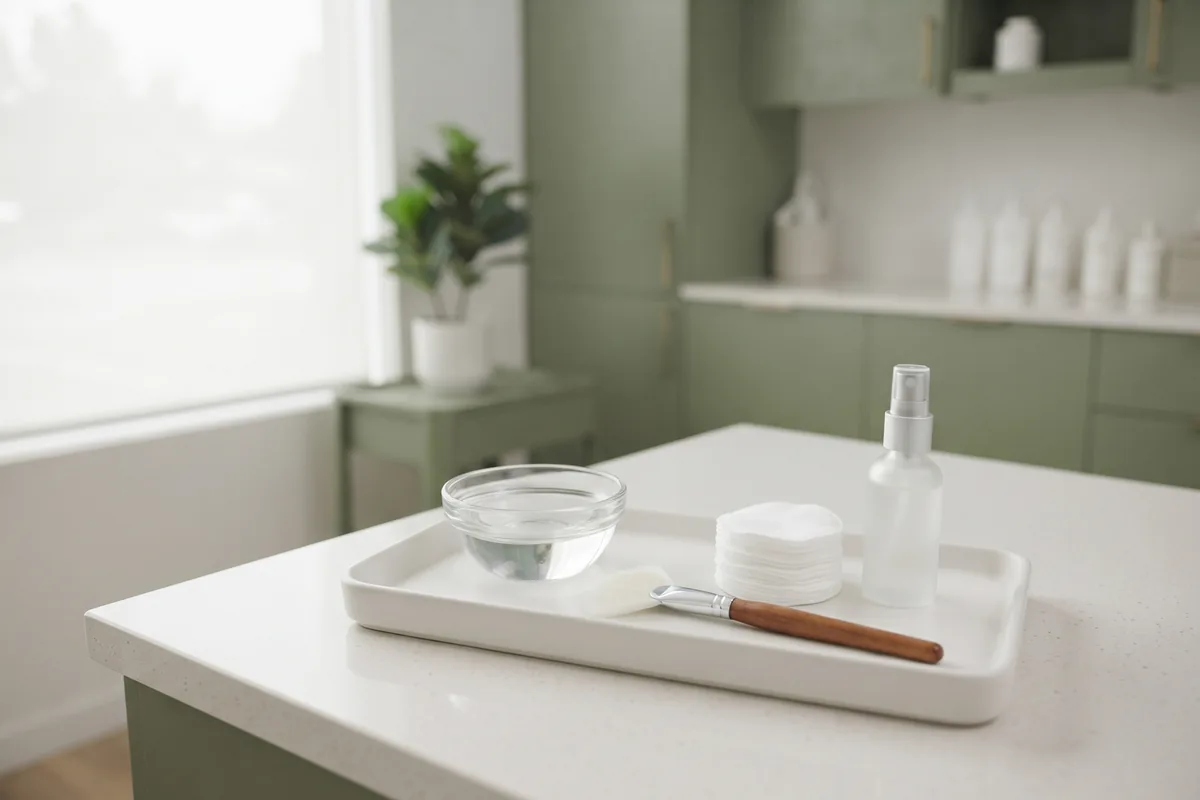
A salicylic peel is applied in a thin, even layer with a fan brush.
Salicylic Peel Compared With Other Acne and Pore Treatments
A peel is one tool among several. This table shows where it sits next to the other options clients ask about.
Option
What it does
Where it fits
Salicylic acid peel
Exfoliates inside the pore, loosens plugs, calms inflammation
Blackheads, oily and congested skin, mild to moderate breakouts
Deep cleansing or acne facial
Cleanses, softens and, when needed, performs gentle extractions
Visible congestion that needs manual clearing. See the acne facial
Glycolic peel
Surface exfoliation for texture and tone
Dullness, rough texture, fine lines. See the glycolic peel
Home retinoid
Speeds cell turnover and helps prevent new plugs
Daily maintenance, started slowly. See the retinol guide
Over-the-counter salicylic cleanser or toner
Low-strength daily exfoliation
Maintenance between professional visits
Prescription treatment from a physician
Medication matched to the cause
Severe, cystic, scarring or hormonal acne. See a dermatologist
Most clients do best with a combination: a peel series at the studio, a simple home routine and, if needed, medical care. For deep, painful or scarring acne, a peel is not the right first step. Acne that follows your cycle usually needs hormonal assessment too, which I describe in the article on hormonal acne.
Who Is a Good Candidate for a Salicylic Peel
The best candidates share a few traits. Your skin looks shiny by midday, your pores look enlarged or filled, and you get blackheads or small red breakouts more often than you would like. People in their teens through forties often fit this picture.
Salicylic peels are also commonly used for:
Blackheads and whiteheads on the nose, chin and forehead.
Oily or combination skin with visible congestion.
Post-acne dark marks that follow breakouts. Faster cell turnover helps them fade, and I pair the peel with sun protection so the marks do not darken.
Back and chest breakouts, where skin is thicker and clogged follicles are common.
If your skin is very dry, sensitive or reactive, salicylic may be too drying and I might choose a gentler option. Rosacea-prone skin usually needs a different approach, which I would discuss before any acid goes on. Acne scars need a more specific plan than a salicylic series, so ask at consultation.
Age matters less than people think. A teenager with mild breakouts and an adult with years of congestion can both benefit, but the teenager usually needs a lighter plan. I match the schedule to the skin in front of me, not to a standard package, and I will tell you when another treatment, such as an acne-focused facial, makes more sense.
Salicylic Peels on Different Skin Types and Tones
The acid is the same, but the plan changes with the skin. These are the adjustments I usually think about at the consultation.
Skin type
How I usually approach it
Oily and thick
The best match. Regular series is usually well tolerated.
Combination
Focus on the T-zone and watch drier cheeks closely for tightness.
Dry or dehydrated
Use caution. A gentler acid may suit better, or a shorter plan with extra hydration.
Sensitive or redness-prone
Often another approach first. Rosacea-prone skin needs its own plan and a physician if it is active.
Mature skin with congestion
Possible, with gentle timing, since mature skin is often drier and slower to recover.
Deeper skin tones
Often a lower-risk choice for acne-prone skin, but dark marks after irritation are the main concern. Start conservatively and protect from sun.
Back and chest
Skin is thicker and often tolerates a series well. See also back acne treatment.
This is why I look at your skin before choosing the acid. A skin that is oily in summer and tight in winter can need different handling across the year.
Who Should Skip It or Talk to a Doctor First
Salicylic acid is related to aspirin, and a few situations call for caution. This is general guidance, not a medical clearance, and a physician should make the call for your health.
Pregnancy or breastfeeding: many practitioners avoid salicylic acid peels during pregnancy. Ask your obstetrician before booking.
Isotretinoin (Accutane): skin on this medication is fragile. Peels are generally postponed until a physician says the skin has recovered, often for months after finishing.
Aspirin or salicylate allergy: do not use salicylic acid. Tell me at consultation.
Active cold sores, open wounds, sunburn or severe irritation: wait until the skin heals.
Recent waxing, laser or retinoid use on the face: the skin may be too sensitized. I usually ask clients to pause retinoids and other acids about 5 days before a peel.
History of keloids or unusual scarring: mention it so we can plan around it.
For darker skin tones, post-inflammatory dark marks are the main concern with any peel. Salicylic acid is often considered a lower-risk choice for acne-prone darker skin when it is applied at the right strength, but I still analyze the skin first and I may start conservatively. No peel is risk-free, and honest planning matters more than the acid.
Deciding Between Salicylic and Glycolic: The Questions I Ask
When a client asks which peel to book, I do not answer from the menu. I ask a short set of questions, and the answers usually point to one acid or to a mix of both.
Where do you break out? Nose, chin and forehead congestion leans salicylic. Overall dullness and rough texture lean glycolic.
How does your skin feel by midday? Shiny and slick points to salicylic. Dry or tight points to a gentler acid.
Do you see blackheads? If yes, the oil-soluble acid has a clear job.
What are the marks you want to fade? Flat dark marks after breakouts may call for both, spaced across the series.
What is your current routine? A retinoid or other acids at home change how strong a peel should be.
How much flaking can you accept? If you have an event, I plan around the date.
Are you pregnant, breastfeeding or on isotretinoin? This can change the plan entirely and may need your physician.
If your answers do not point clearly in one direction, we can start with the gentler option and adjust. It is easier to step up than to repair an overdone peel. My comparison of glycolic, lactic and mandelic peels shows the gentler options if salicylic turns out to be too drying for you.
What a Session Is Like at the Studio
A salicylic peel takes about 45 minutes at Real Skin Beauty. The typical flow is simple:
Consultation and skin analysis. We talk about your routine, medications and goals.
Cleansing. The skin is cleansed so the acid reaches the pores evenly.
Application. I brush a thin layer over the area. You usually feel warmth or light tingling.
Removal or neutralizing, then a soothing finish and sun protection.
Professional salicylic peels are commonly used at higher strengths than home products, which is why timing and application technique matter. You may see a white, powdery film on the skin during or after a salicylic peel. That is usually the acid crystallizing as it dries, not a sign of a problem, and I will explain what I see on your skin as it happens.
Afterward, the skin can feel tight and look slightly pink for a day, and mild flaking may follow over several days. Do not pick at flaking skin. The day-by-day pattern is in my chemical peel recovery timeline.
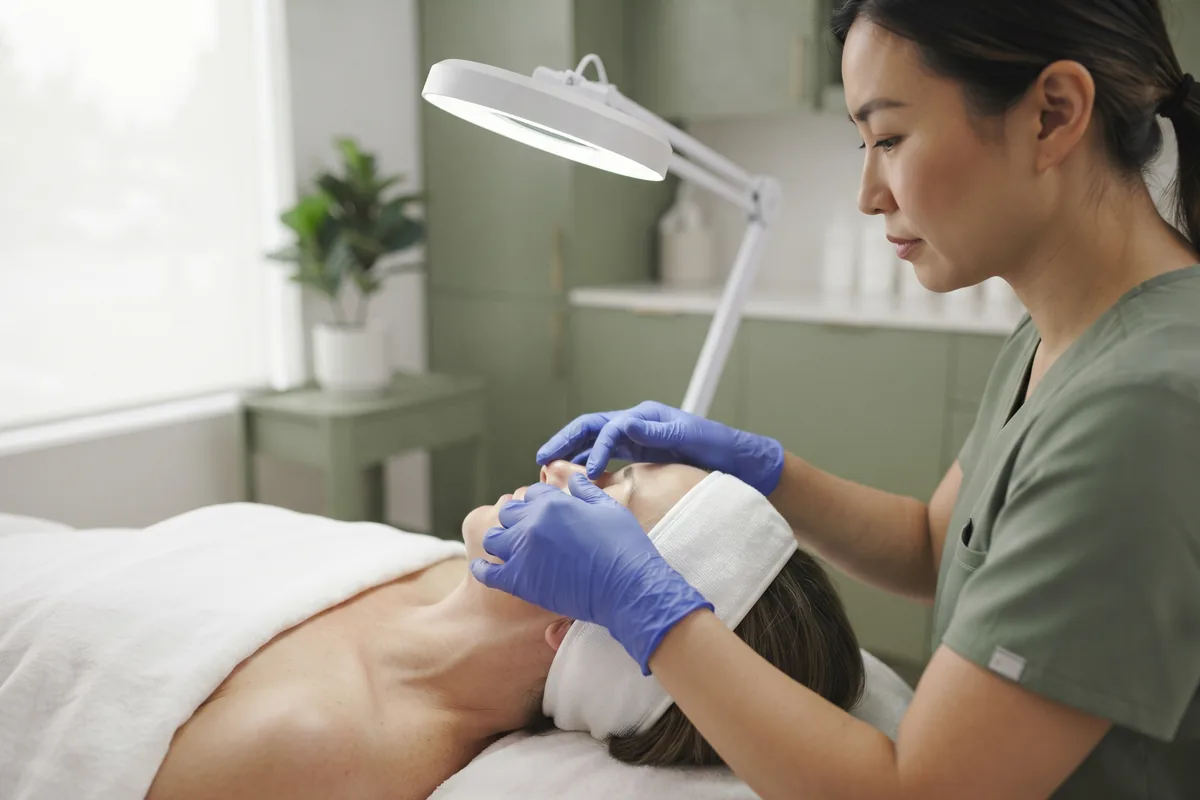
A skin analysis decides whether salicylic acid or another peel fits you.
Preparation and Aftercare Checklist
What you do before and after has a real effect on comfort and results. This is the routine I give clients:
When
Do
Avoid
5 days before
Keep a simple routine: gentle cleanser, moisturizer, SPF
Retinol, other acids, vitamin C, facial waxing and scrubs
Day of the peel
Arrive with clean, makeup-free skin if you can
Heavy sunscreen layering right before the appointment
First 48 hours
Gentle cleanser, bland moisturizer, SPF 30 or higher
Picking flakes, hot showers on the face, exercise that causes heavy sweating
Days 3 to 7
Keep moisturizing and use SPF daily
Retinol and exfoliating acids until the skin is calm
Between peels
Gentle routine and consistent sun protection
Sun exposure without SPF
Sun protection is not optional after any peel. Newly exfoliated skin burns and marks more easily. My retinol guide explains when to restart retinol after peels.
What to Expect Across a Series: From First Peel to Maintenance
People often ask when they will "see results." The honest answer is that it builds, and it depends on your skin. Here is how a typical series tends to feel, with the caveat that yours may differ.
Peel one. Skin often looks fresher after the flaking passes. Congestion has barely started to shift.
Peels two and three. Blackheads and small bumps usually begin to loosen. Some clients notice a temporary flare as clogged pores surface, which I would want to know about.
Peels four to six. Oil often feels better controlled and skin texture looks smoother. We reassess the plan together here.
Maintenance. Spacing out peels, keeping a gentle routine and using SPF every day helps hold progress.
If your skin is not responding, or it feels worse, the plan needs to change. That might mean a different acid, a longer gap between peels, or a referral to a physician. A series is not a contract.
Between visits, take photos in the same light so you can compare honestly. Memory is a poor judge of slow change. If you also have dark marks left by breakouts, my article on how to fade hyperpigmentation explains why sun protection and patience matter as much as the acid.
Myths About Salicylic Acid Peels
A few ideas repeat often enough that I answer them almost daily.
"Peeling means it is working." Flaking depends on the skin and the acid. Salicylic peels can work with little visible peeling.
"Stronger is better." Too much acid injures the skin barrier and can make breakouts and marks worse.
"Oily skin does not need moisturizer." Peeled skin needs a plain moisturizer so the barrier can recover.
"A peel cures acne." It supports treatment. It does not change hormones or genetics.
"I can skip sunscreen on cloudy days." UV reaches the skin through clouds, and freshly exfoliated skin marks more easily.
"Picking the flakes speeds it up." It raises the chance of marks and infection.
When in doubt, ask. A clear answer to a plain question is part of what you are paying for.
The simple aftercare trio: gentle cleanser, plain moisturizer and daily sunscreen.
Using Salicylic Acid at Home Between Peels
Over-the-counter acne cleansers, toners and leave-on products typically contain salicylic acid up to about 2 percent. That is far less intense than a professional peel, which is why they suit daily upkeep.
A sensible rhythm looks like this:
Use one salicylic product at a time, not a cleanser plus toner plus spot treatment together.
Start a few days a week and add more only if your skin stays comfortable.
Pause home acids and retinoids about 5 days before a peel, and restart only when the skin is calm.
Moisturize and use SPF 30 or higher every morning.
Stop and tell me if the skin burns, peels heavily or looks suddenly red.
If you already use a lot of actives, bring them to the consultation. Layering a peel over an over-exfoliated skin barrier is one of the most common causes of a bad reaction, and a few days of simplicity usually fixes it. Your regular facial is also a good place to check your routine. See facials for acne-prone skin for ideas on how a facial and a peel can work together.
How Many Peels, How Often and What It Costs in Irvine
One salicylic peel gives a visible freshening, but the pore and acne benefits build over a series. At the studio, I usually plan peels every 3 to 4 weeks, often 4 to 6 in a series, then space them out for maintenance. That number changes with how congested your skin is and how it reacts. I will not promise an outcome, and individual results vary.
The Acne Peel, which is the salicylic option on the menu, is $100 for 45 minutes. A Glycolic Peel is also $100, and the Lactic and Almond (Mandelic) peels are $95. You can see details on the acne peel page and the glycolic peel page.
The consultation is free. Come to 18021 Sky Park Circle, Suite N, in Irvine, and we will look at your skin and decide whether salicylic, glycolic or a combination fits. Clients come from across Orange County. Book a free consultation to get started.
Frequently Asked Questions
+ What is the difference between a salicylic acid peel and a glycolic peel?
Salicylic acid is a BHA that dissolves in oil and works inside pores, so it suits blackheads, oily skin and acne. Glycolic acid is an AHA that is water-soluble and works on the surface to smooth texture and brighten tone. Both require daily SPF afterward.
+ Is a salicylic acid peel good for acne?
It is a common choice for blackheads, congested pores and mild to moderate breakouts because it works inside the pore and has anti-inflammatory properties. It does not treat hormonal causes, so a physician should evaluate persistent or severe acne.
+ How often can I get a salicylic acid peel?
At the studio, peels are usually spaced every 3 to 4 weeks, and a series is often 4 to 6 peels. Your skin type, sensitivity and goals set the actual schedule.
+ Who should not get a salicylic acid peel?
People who are pregnant, are on or recently finished isotretinoin, have an aspirin or salicylate allergy, or have open, sunburned or very irritated skin should skip it or ask a physician first. Aida reviews your history at the consultation.
+ How much does a salicylic acid peel cost in Irvine?
At Real Skin Beauty, the Acne Peel, which uses salicylic acid, is $100 for a 45-minute session. The consultation is free, and Aida will recommend how many peels fit your skin.
+ Does a salicylic acid peel shrink pores?
It cannot permanently change pore size, which is mostly set by genetics, oil production and age. By clearing the plug inside a pore, it can make pores look smaller and cleaner. Results vary, and Aida explains what is realistic for your skin at the consultation.
+ Can I wear makeup after a salicylic acid peel?
It is best to leave skin bare for the first day if you can, since the skin is freshly exfoliated. After that, gentle products and mineral sunscreen are usually fine. Wash it off gently and avoid scrubbing. Follow the aftercare Aida gives you.
+ Is a salicylic acid peel painful?
Most people feel warmth or light tingling and sometimes a brief sting. The sensation usually fades within minutes after the acid is neutralized or removed. Tell the esthetician right away if it becomes uncomfortable, since it can be rinsed early.
Licensed electrologist and cosmetologist with 20+ years of experience. Aida sees clients at Real Skin Beauty, 18021 Sky Park Circle, Suite N, Irvine, CA 92614.
Book a free consultation with Aida Khazieva at Real Skin Beauty in Irvine, CA. She will analyze your skin, tell you honestly whether a salicylic peel fits and plan the series with you.
This article is for informational purposes and reflects Aida Khazieva's professional experience. It does not replace a personalized medical consultation. Individual results vary.
Questions? Aida Answers Them All.
Visit our FAQ or book a free consultation to discuss your specific skin and hair concerns.