How to Get Rid of Blackheads on the Nose Without Damaging Your Skin
By Aida Khazieva·Facials and Skin Care·14 min read·Real Skin Beauty, Irvine CA·Updated October 17, 2026
To get rid of blackheads on the nose, use a gentle cleanser, add salicylic acid two or three nights a week, add a retinoid later, protect with sunscreen and have extractions done by a trained professional. Skip scrubs, strips and nail squeezing. Blackheads are oxidized plugs of oil and dead cells, not dirt, so force does not help. Below is the routine, a six-week timeline and when a deep cleansing facial in Irvine is worth booking.
Quick answer
Blackheads are oxidized plugs of oil and dead cells, not dirt. Scrubbing does not clear them.
Salicylic acid 2 to 3 nights a week is the best place to start. Add a retinoid after a few weeks if needed.
Pore strips, nail squeezing and home extractor tools cause more harm than good.
A deep cleansing facial ($105, 1 hr) or acne facial ($115, 1 hr) removes existing plugs safely.
What Blackheads Actually Are
A blackhead is an open comedone: a pore that has filled with a plug of oil (sebum), dead skin cells and keratin, and stays open at the surface. The dark color does not mean dirt. The plug darkens when it is exposed to air and oxidizes, much like a cut apple turns brown. That is why scrubbing harder never works. You are not removing dirt, you are irritating the skin around a plug that sits inside the pore.
The nose collects them because it has some of the largest and most active oil glands on the face. Chin, forehead and the creases beside the nose follow. Blackheads can show up at any age. They are common in teenagers, and many adults have them well into their 40s and beyond, especially with oily or combination skin, hormonal swings, humidity or heavy occlusive products.
This guide explains how to tell blackheads from the harmless dots people confuse them with, what really clears them (and what only looks like it does), a routine that you can follow at home in Irvine or anywhere else, and when a professional extraction at a studio is worth booking. I am a licensed cosmetologist and electrologist, not a dermatologist. If your skin is inflamed, scarring or not responding, see a dermatologist.
Blackheads, Sebaceous Filaments or Clogged Pores?
Many people try to treat the wrong thing. The nose is full of tiny dots, and not all of them are blackheads.
Feature
Blackhead (open comedone)
Sebaceous filament
Whitehead (closed comedone)
Color
Dark gray or black, raised slightly
Pale gray, beige or yellowish, flat
Skin colored or white bump
Surface
Plug sits at the opening and is visible
Looks like a tiny dot at the pore center
Skin closed over the plug
What it is
Hardened, oxidized plug of oil and cells
Normal lining that carries oil to the surface
Plug trapped under skin
Comes back?
Yes, if the pore keeps clogging
Within days or weeks, always
Yes, if the cause continues
Goal
Clear and prevent
Manage, do not try to remove
Clear and prevent
Sebaceous filaments are a normal part of skin. They are the channel oil travels through, and they refill in days. If you squeeze them, you get a thin string of material, and they come back, so the effort buys you enlarged pores and irritation. Reducing how visible they are is the realistic goal. I covered pore size in Enlarged Pores: What Actually Works and What Is Marketing, and the same logic applies here.
If you have mostly small flesh-colored bumps on the forehead instead of dark dots, you are probably looking at closed comedones. I wrote a separate article for that, Tiny Bumps on the Forehead.
Why Blackheads Form and Why They Return
Blackheads form when three things line up: a pore that produces oil, dead cells that do not shed cleanly, and conditions that keep the plug in place. Several factors push that balance.
Oil production. Androgens drive oil glands. Puberty, the days before a period, stress and some conditions raise oil output.
Slow cell turnover. When dead cells cling to the surface instead of shedding, they mix with sebum and pack into the pore.
Heavy or occlusive products. Thick creams, some sunscreens and makeup can contribute in people who clog easily. The word "non-comedogenic" on a label is a hint, not a guarantee.
Skipping cleansing. Makeup, sunscreen and oil left overnight add to the plug.
Over-cleansing and harsh scrubbing. Stripped, irritated skin often responds with more oil and thicker cell buildup.
Friction. Masks, helmets, hands resting on the chin or nose, and picking.
Genetics. Pore size and oiliness run in families.
That last point matters for expectations. If your skin makes plenty of oil and your pores are large by inheritance, you can reduce blackheads a great deal, and they will still tend to come back without maintenance. A good routine is something you keep, not a one-time cure.
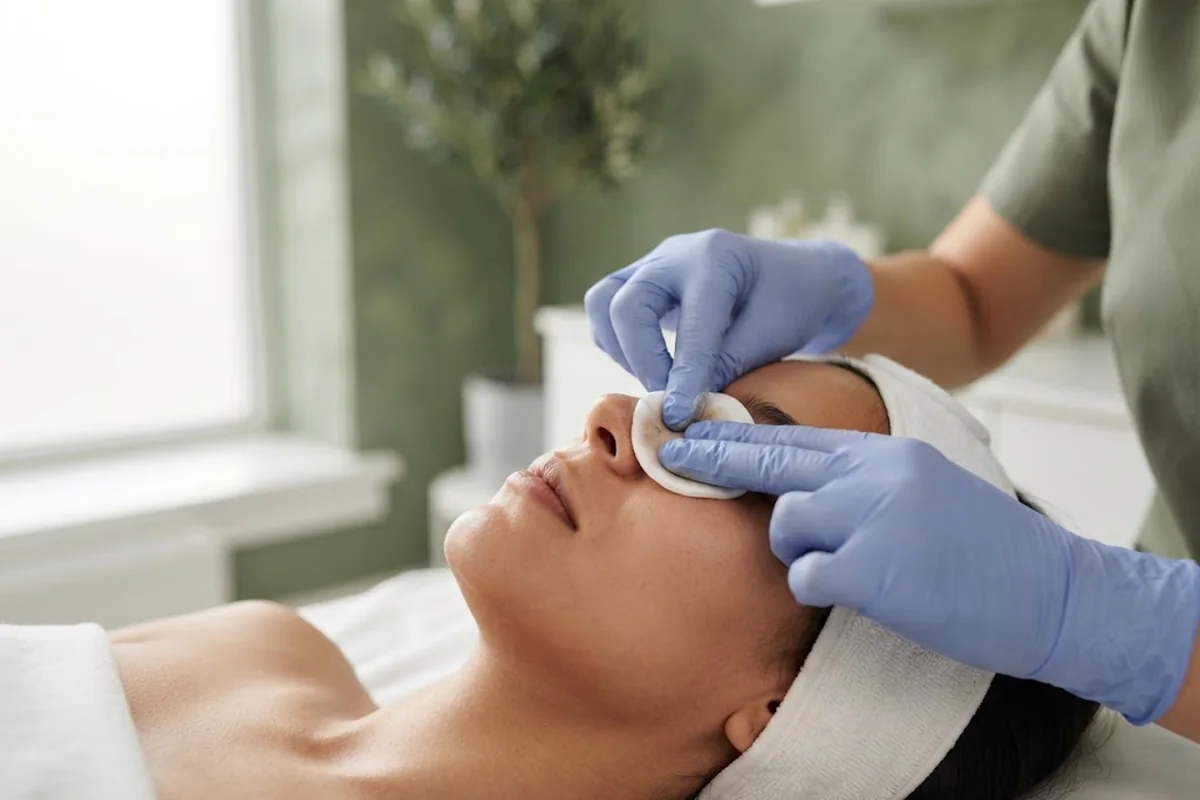
Extraction starts with softening and cleansing the skin, not with pressure.
What Actually Clears Blackheads at Home
Three types of ingredients do most of the real work. Because skin differs, introduce one new active at a time.
Ingredient
How it helps
How to start
Watch for
Salicylic acid (BHA)
Oil-soluble, so it works inside the pore and loosens the plug
2 to 3 evenings per week in a cleanser, toner or leave-on, then increase if skin tolerates
Dryness, peeling, stinging
Retinoids (adapalene is available over the counter; stronger forms are prescribed)
Speed up cell turnover so plugs do not pack in
A pea-sized amount for the whole face, two nights a week, building slowly
Irritation, flaking, sun sensitivity, avoid in pregnancy without medical advice
Azelaic acid
Helps with clogged pores and uneven tone, gentle for many skin types
Once daily after cleansing
Mild tingle at first
Glycolic or lactic acid (AHA)
Sloughs surface cells and brightens
Once or twice a week at low strength
Sensitivity, sun burn risk
Clay or charcoal masks
Absorb surface oil for a short time
Once a week at most
Dryness, a temporary effect only
I would start with salicylic acid, then add a retinoid after several weeks if blackheads persist. My guides to salicylic acid peels and retinol for beginners explain strengths, schedules and the first month of adjustment. If you use isotretinoin, are pregnant or are nursing, check every active with your prescriber or doctor first.
Be patient. Blackheads that took months to build do not dissolve in a week. Most people who stay consistent see improvement over several weeks, and the skin keeps improving with continued use. Expect some dryness in the beginning, and treat it with a plain moisturizer rather than stopping.
A Simple Routine for Blackhead-Prone Skin
This is the routine I suggest to clients who are starting from nothing. It uses few products on purpose.
Step
Morning
Evening
1. Cleanse
Gentle gel or foaming cleanser, lukewarm water
Same cleanser; if you wore sunscreen or makeup, cleanse twice (a first pass to melt it, a second to cleanse)
2. Treat
Optional: azelaic acid or a light niacinamide-type product if you use one
Salicylic acid 2 to 3 nights per week, retinoid on other nights, never both on the same night at the start
3. Moisturize
Light, oil-free lotion or gel-cream
Same, a little more if skin feels tight
4. Protect
Broad-spectrum sunscreen SPF 30 or higher, every day
Not needed
Washing more than twice a day does not help and often backfires. Cleanse after sweating if needed, but rinse with water rather than scrubbing again. Do not skip moisturizer. Dehydrated skin can look oilier and clog more, and retinoids and acids need a comfortable barrier to work well.
Sunscreen matters here for a second reason. Acids and retinoids make skin more vulnerable to sun, and irritation plus sun can leave dark marks. For beginners who need a base routine, my skin care routine for beginners lays out the order of products.
Makeup, Sunscreen and the Double Cleanse
Many adult blackheads are linked to what stays on the skin overnight. Water-resistant sunscreen, long-wear foundation and primer are designed not to rinse away, and a single pass with a foaming cleanser often leaves a film behind. That film mixes with oil and dead cells and settles into pores, especially along the nose and chin.
A double cleanse solves most of it. The first step melts the product: a cleansing balm, oil cleanser or micellar water on dry skin, massaged for about a minute, then rinsed or wiped off. The second step is your regular gentle cleanser on damp skin. Oil cleansers can sound wrong for oily skin, but oil dissolves oil, and the second wash removes what remains. If your skin reacts to oils, micellar water followed by a gel cleanser works too.
Choose sunscreen you will wear every day. Lightweight lotions, gels and fluids tend to suit blackhead-prone skin, and if one formula seems to clog you, switch rather than skipping sun protection. Sun damage thickens the surface of the skin over time, which does not help clogged pores. For makeup, look for labels such as "non-comedogenic" or "oil-free", keep in mind that they are not guarantees, and remove everything before bed. Wash makeup brushes and sponges weekly, because they carry oil and bacteria back to the skin.
Why Pore Strips, Scrubs and Squeezing Fall Short
Every blackhead plan collides with the same temptations. Here is what I tell clients about each.
Pore strips. They pull the top of a plug and the fine hairs and cells around it. The result looks dramatic on the strip, and the pore refills within days. Repeated use can irritate skin. If you use them, keep it occasional and never on inflamed skin.
Physical scrubs. Rough particles scratch the surface and do not reach the plug. Many irritate the skin and increase redness.
Fingernail squeezing. Pressing with nails bruises the pore wall and can push material deeper. It leaves red marks, and on some skin tones, dark marks that last for months.
Metal extractor tools at home. Used without training, they tear skin. Professionals use them only after softening the skin and with technique.
Toothpaste, baking soda, lemon juice. These disrupt the skin's protective layer and can cause burns or dermatitis. Avoid them.
Pore-minimizing promises. No product shrinks the pore opening permanently. Reducing oil and keeping the pore clear makes it look smaller.
If you cannot leave a blackhead alone, do the safer version: cleanse, apply a warm damp cloth for a minute to soften the skin, then use a gentle cleanser with a BHA. Do not press. If it does not release without force, it is not ready.
A magnifying lamp shows which pores are blackheads, which are filaments and which need to be left alone.
Blackheads by Skin Type and Life Stage
The same routine does not suit everyone, so adjust the plan to your situation.
Oily skin. Gel cleansers, salicylic acid and a light moisturizer usually work well. Do not skip moisturizer.
Dry or dehydrated skin with blackheads. It happens. Use a milder cleanser, a lower strength of acid, and a richer moisturizer. Introduce actives once a week first. See my article on facials for dry skin for gentle options.
Sensitive skin. Azelaic acid and a low-percentage BHA are usually easier than strong retinoids. Test on a small area first, and read facials for sensitive skin before booking exfoliating services.
Teens. Keep it simple: gentle cleanser, one active, sunscreen. Persistent or painful acne should be seen by a pediatrician or dermatologist.
Adults with hormonal swings. Blackheads may spike before periods or during perimenopause. A steady routine helps, and deeper breakouts along the jaw are worth a doctor conversation.
Darker skin tones. Irritation can leave long-lasting dark marks, so go slowly with acids and retinoids, protect with sunscreen, and never squeeze.
Skin type is a starting guess, not a verdict. Your skin in July can differ from your skin in January, and what suited you at twenty may not suit you at forty. Check in with your skin every few months and adjust.
Professional Extraction: What It Is and When It Helps
A professional extraction is not squeezing. A trained esthetician prepares the skin first, often with a warm cleansing step, gentle exfoliation or steam, so that the pore opens and the plug softens. Extraction is then done with clean, gloved hands or sterile tools, using even pressure and stopping if the plug does not release easily. After that, the skin is calmed and protected.
At my Irvine studio, extractions are part of a facial and not a stand-alone service. These are the treatments clients most often combine with them:
Vacuum-assisted cleansing, exfoliation and hydration
$165, 1 hr 15 min
The question I hear most is how often to do it. For most people, a deep cleansing facial every four to six weeks matches the natural cycle of skin renewal and keeps blackheads from stacking up. My guide on how often to get a facial covers the reasoning. If your skin is very reactive or you use a strong retinoid, tell me, because I may skip steps such as exfoliation and extractions on that day.
A free skin consultation in the studio is the place to ask what fits your skin. It is also the chance to bring up everything you use at home, because the right professional treatment depends on it. Clients from Irvine, Tustin, Newport Beach and the rest of Orange County come in for this kind of reset several times a year.
What to Expect After an Extraction Facial
Right after the treatment skin can look pink for a few hours, and spots where I worked may be slightly red or tender. Some clients notice small pinpoint marks along the nose for a day. These calm quickly when you leave them alone. The common-sense aftercare:
Do not touch, pick or press the treated pores.
Skip makeup for the first few hours if you can. If you wear it, use clean brushes and sponges.
Use gentle cleanser, simple moisturizer and sunscreen for the next day or two.
Pause retinoids, acids and scrubs for at least a couple of days, or as advised.
Avoid saunas, hot yoga and heavy sweating for the first 24 hours.
Do not book another extraction the following week to "finish the job." Skin needs time.
A single facial rarely resolves blackheads that are rooted in oil and slow cell turnover. What it does is clear the existing plugs and give your home routine a clean start. After that, the maintenance routine does the main work. If you are unsure how the two fit together, ask at your appointment and write down the steps.
A Six-Week Timeline
This is a realistic outline for someone who starts a salicylic acid and retinoid routine and adds a professional facial. It is a general pattern and not a promise, since skin differs.
Week
What you do
What you may notice
1
Switch to gentle cleanser, moisturizer and daily sunscreen. Add salicylic acid twice a week.
Some dryness. Blackheads look the same.
2
Hold at the same schedule. Do not add anything new.
Skin adjusts. Occasional flaking.
3
Book a deep cleansing facial for extractions.
Clearer pores after the visit. Redness fades within a day.
4
Add a retinoid two nights a week, on nights without salicylic acid.
Mild irritation is possible. Cut back if skin burns.
5
Increase frequency slowly if skin is comfortable.
Texture starts to smooth. New blackheads form more slowly.
6
Keep going. Reassess with a photo in the same light.
Fewer visible blackheads for most people who stayed consistent.
If your skin is still congested after eight to twelve weeks of steady use, or if it becomes red, swollen or painful, see a dermatologist. Prescription options exist, and a doctor can check for other causes. For breakouts with deeper bumps, my articles on facials for acne-prone skin and hormonal acne may help you tell what you are dealing with.
Three or four products used consistently beat a crowded shelf of actives.
Common Mistakes That Keep Blackheads Coming Back
Most of the stubborn cases I see come from habits, not from bad luck.
Using too many actives at once. Salicylic acid, retinoid, glycolic acid and a scrub in the same week leaves skin raw and more clogged than before.
Stopping when it works. Blackheads return within weeks once the maintenance routine stops.
Skipping moisturizer. Irritated, dry skin makes more oil and holds onto plugs.
Not removing sunscreen and makeup properly. A rinse is not enough for water-resistant formulas.
Picking after a long mirror session. Magnifying mirrors encourage squeezing that does more harm than good.
Changing products every two weeks. Skin needs a month or more to show a response.
Ignoring what touches the face. Pillowcases, phone screens, hair products and hands all matter.
If you recognize yourself in this list, you are in the majority. Simplify, give each change time, and keep records. A photo every two weeks in the same light tells you far more than your memory does.
When to Skip DIY and See a Professional
Book a visit with a dermatologist or a licensed skin care professional if:
Blackheads come with painful, deep, inflamed bumps or cysts.
You have scarring or dark marks from earlier picking.
You are pregnant, nursing or taking isotretinoin and want to know which actives are appropriate. Ask your doctor first.
Your skin reacts to nearly everything.
You have tried a steady routine for several weeks and see no change.
A free skin analysis consultation at the studio is a good first step if you live in Orange County. I look at your skin, ask what you use and tell you which service, if any, fits. Sometimes the right answer is to simplify your routine, and I say so. When you are ready, you can book a free consultation, learn about the Deep Cleansing Facial, or read about the Acne Facial.
Frequently Asked Questions
+ What is the fastest way to get rid of blackheads on the nose?
There is no instant fix. A gentle cleanser, salicylic acid a few nights a week and a professional extraction in a deep cleansing facial give the quickest safe improvement. Squeezing at home risks marks and scarring.
+ Are blackheads dirt?
No. The dark color comes from oxidation of the oil and dead cells plugging the pore. Scrubbing harder does not remove them and often irritates skin and increases oil production.
+ Do pore strips work for blackheads?
They lift the top of the plug and the pore refills within days. Occasional use on healthy skin is fine, but repeated use can irritate. They do not fix the cause.
+ Can salicylic acid remove blackheads?
It is oil-soluble, so it works inside the pore and loosens the plug. Many people see improvement over several weeks with steady use. Start 2 to 3 nights a week and watch for dryness.
+ Is it bad to squeeze blackheads?
Pressing with nails or fingers can bruise the pore wall, leave red or dark marks and push material deeper. If you extract at home, soften the skin first and stop if the plug does not release easily.
+ How often should I get a facial for blackheads?
Many people do well with a deep cleansing facial every four to six weeks. Your skin type, medications and routine change that, so ask at your consultation.
+ Why do blackheads come back after a facial?
Extraction removes existing plugs, but oil production and cell turnover continue. A consistent routine with an exfoliating active such as salicylic acid or a retinoid slows the return.
+ What are the little dots on my nose that look like blackheads?
They are often sebaceous filaments, a normal channel for oil. They look pale or gray and refill within days. Regular BHA use can make them less visible, but they cannot be removed for good.
Licensed electrologist and cosmetologist with 20+ years of experience. Aida sees clients at Real Skin Beauty, 18021 Sky Park Circle, Suite N, Irvine, CA 92614.
Book a free skin consultation with Aida Khazieva at Real Skin Beauty in Irvine, CA. She will look at your skin, review your routine and recommend a deep cleansing facial only if it fits.
This article is for informational purposes and reflects Aida Khazieva's practitioner experience. It does not replace a personalized medical consultation. Individual results vary.
Questions? Aida Answers Them All.
Visit our FAQ or book a free consultation to discuss your specific skin and hair concerns.