How Often Should You Get a Facial? The Complete Frequency Guide
By Aida Khazieva·Facials·11 min read·Real Skin Beauty, Irvine CA·Updated July 27, 2026
Every month. That is the answer most people have heard, and it is not wrong exactly, but it is incomplete in ways that lead clients to either overtreating their skin or coming in far less often than their skin type actually benefits from. In over 20 years of professional skin care, I have noticed that the clients who get the best long-term results are the ones who understand why the frequency recommendation exists rather than just following it as a rule. This guide covers the real reasoning behind facial frequency by skin type, age, and goal, so you can make a decision that actually fits your skin.
Quick answer: Every 4 weeks is the standard guideline, matching the roughly 28-day skin cell turnover cycle, but it is a starting point. Oily or congested skin may benefit from more frequent care, while reactive or rosacea-prone skin often does better every 6 to 8 weeks. Over-treating can cause redness, sensitivity and breakouts.
Why One Frequency Does Not Fit All Skin Types
The 4-week recommendation for professional facials comes from a real biological rationale: the average skin cell turnover cycle takes approximately 28 days. Getting a professional facial aligned with that cycle means each treatment is working on a fresh layer of skin that has just completed its own natural renewal. That logic is sound for certain skin types and certain treatment goals. For others, it either overshoots what the skin can tolerate or undershoots what the skin actually needs to see meaningful improvement.
Skin type determines a great deal about optimal treatment frequency. Oily, congested, acne-prone skin accumulates dead cells and sebum faster than average and benefits from more frequent professional clearing and exfoliation. Sensitive, reactive, or rosacea-prone skin has a compromised barrier that needs more time between stimulating treatments to recover and stabilize. Dry, lipid-deficient skin needs intensive hydration sessions more than exfoliation, and the frequency of those sessions is determined by how quickly the barrier depletes rather than by the 28-day turnover cycle.
Treatment goals matter equally. A client whose goal is maintenance and prevention needs a different schedule than a client who is actively treating hyperpigmentation from sun damage accumulated over years of Orange County outdoor living, or a client working through an acne scar series. The maintenance client might do well on one facial every 6 to 8 weeks. The client working through a brightening protocol should be in every 4 weeks to maintain the momentum of the series. These are different answers to the same question, and both are correct for their specific situation.
Age changes the equation as well. Skin cell turnover slows with age: the 28-day cycle of a 25-year-old becomes closer to 40 to 45 days by age 50. This means professional support for cell renewal becomes more valuable with age, not less. Clients in their fifties who think they need facials less often than they did in their thirties typically have the opposite situation. Their skin needs more support, not less, because its ability to renew itself without assistance has decreased.
In my practice at Real Skin Beauty in Irvine, I assess each client's skin type, concerns, and goals before recommending a frequency, and I revisit that recommendation as their skin changes seasonally, through life stages, or in response to treatment. The guidance below covers the most common presentations I work with.
Every 4 Weeks: The Standard Recommendation Explained
The 4-week interval is the appropriate baseline for clients with normal to combination skin, no active inflammatory conditions, and a general goal of skin maintenance and early prevention. It is not an arbitrary number; it is calibrated to the biology of skin renewal. Here is why it works for this skin type.
Normal and combination skin completes its cell turnover cycle in approximately 28 days. By day 28, the outermost layer of the epidermis is populated largely by dead cells awaiting shedding. A professional facial at this interval provides deep cleansing and extraction of the debris that has accumulated over the cycle, exfoliation to clear the dead cell layer and reveal the fresh cells beneath, and application of active ingredients to the newly cleared surface where absorption is maximized. The skin is then left to complete its next cycle on its own before the next professional treatment.
For clients focused on general maintenance, this schedule produces consistent skin health: pores remain relatively clear, surface texture stays smooth, and any early pigmentation from casual sun exposure does not accumulate into established spots before it is addressed. These clients often remark that their skin looks noticeably different in the weeks they have an upcoming appointment compared to periods when they have let their schedule slip, which is a reliable indicator that the 4-week cadence is doing its job.
What the 4-week standard does not account for is what type of facial is being received. Monthly facials that are identical in protocol regardless of how the skin has changed over the previous month are less effective than monthly facials that are adjusted based on current skin state. In my practice, I assess skin at the start of every session before deciding which extractions are needed, which treatment focus is appropriate, and whether the previous protocol should be maintained or modified. The monthly interval works because of what happens during each visit, not despite it being routine.
When Skipping Sessions Becomes Costly
Clients who maintain regular monthly facials and then go 3 or 4 months without treatment often come in to find that their skin has regressed noticeably: pores are more congested, surface texture has roughened, and any pigmentation that was being managed has deepened. The cumulative maintenance benefit does not hold indefinitely without reinforcement. Monthly investment produces monthly dividends; stopping the investment stops the returns.
How often you need a professional facial depends on your skin type, goals and the treatment itself.
Oily and Acne-Prone Skin: Why More Frequent Is Better
Oily and acne-prone skin is the one skin type category where I recommend professional treatment more often than every 4 weeks, particularly during periods of active breakouts or significant congestion. The biology of sebaceous glands in this skin type drives that recommendation: sebum production in oily skin exceeds what the normal cell turnover cycle can clear efficiently, leading to accelerated buildup in pore openings and higher bacterial activity at the follicular level. Professional clearing every 2 to 3 weeks during active phases provides meaningful support that the skin cannot replicate on its own.
The most effective treatment frequency for oily, acne-prone skin in active phases is every 2 to 3 weeks. At this interval, each session removes the sebum and dead cell accumulation from the previous 2 to 3 weeks before it has had time to fully oxidize and consolidate into established comedones and inflammatory lesions. The result over a series of biweekly or triweekly sessions is a measurable reduction in overall congestion and breakout frequency that does not happen at monthly intervals for truly oily skin types.
The treatments appropriate for this frequency are not the same as standard monthly facials. Biweekly sessions for oily or acne-prone skin should be:
Focused on thorough cleansing and extraction rather than extended mask and massage time
Using salicylic acid or enzyme-based exfoliation rather than aggressive AHAs on inflamed skin
Including LED blue light therapy for its documented P. acnes antibacterial action
Short on steaming or high-heat components that can worsen inflammation in active acne
Followed by non-comedogenic barrier support rather than heavy moisturizing masks
Once active acne is brought under control, typically over 6 to 10 sessions of intensive clearing, I generally reduce frequency to monthly for maintenance. The intensive phase gets the skin to a manageable baseline; the monthly maintenance phase keeps it there without overtreating skin that is now more stable than it was at the start.
My Irvine clients with acne-prone skin often push back on the biweekly recommendation initially, concerned about cost and time commitment. I address this directly: 10 sessions at $105 to $165 each over 5 months is a meaningful investment, but it is typically less than the cumulative cost of prescription topicals, dermatology visits, and the expensive skincare products clients buy trying to solve the problem at home. The cost comparison matters for commitment, so I make it explicit rather than asking for commitment without acknowledging what it requires.
Dry and Dehydrated Skin: Quality Over Frequency
Dry and dehydrated skin needs a different approach to facial frequency than oily or combination skin, and getting this wrong in either direction produces problems. Undertreating dry skin leads to dead cell accumulation that blocks absorption of moisturizing products and leaves the skin looking dull and rough despite using good products. Overtreating it with frequent extractive or acid-heavy facials strips the limited lipids the skin produces, worsens barrier function, and creates a cycle of increasingly sensitized, reactive skin.
For true dry skin (a skin type characterized by insufficient sebum production), I recommend professional facials every 4 to 6 weeks. The slightly extended interval compared to normal skin allows more time for the barrier to fully recover and rebuild between sessions. The treatments themselves should be hydration-focused with minimal mechanical extraction and no high-concentration chemical exfoliation. The goal of each session for dry skin is to replenish what is depleted, not to aggressively clear what is not there to begin with.
For dehydrated skin (a temporary condition of water deficit that can affect any skin type, including oily skin), the optimal facial frequency depends on the severity and cause of the dehydration. Acute dehydration from environmental factors like the dry Santa Ana wind conditions that affect Orange County in fall months, forced-air heating in winter, or air travel may call for an extra hydrating session outside the normal schedule. Chronic dehydration from inadequate home-care routine calls for a conversation about daily habits alongside the professional treatment schedule.
The key signals I look for to determine whether dry skin is being treated at the right frequency:
Skin feels comfortable and supple for the majority of the interval between sessions. If it feels tight and dry again within 7 to 10 days of a treatment, the interval may be too long or the treatment protocol too stripping.
Products absorb without balling up or sitting on the surface. Heavy dead cell buildup on dry skin blocks absorption. If this is happening despite regular facials, the exfoliation component of each session needs adjustment.
No new sensitivity or reactive episodes between sessions. Dry skin that is becoming more sensitive over time with regular professional treatments is being overtreated, and frequency or protocol needs to change.
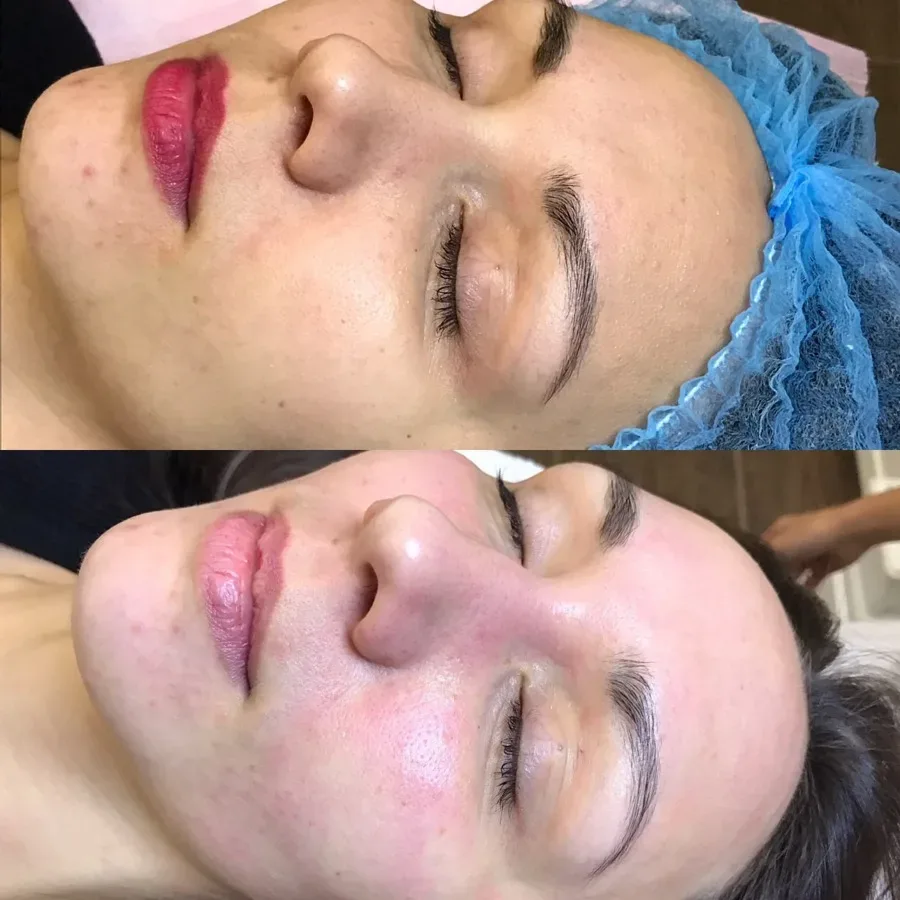
Before and after a deep cleansing facial at Real Skin Beauty in Irvine, CA.
Sensitive and Rosacea-Prone Skin: Less Is Often More
Sensitive and rosacea-prone skin is the category where I most consistently find clients who have been overtreated, either through too-frequent sessions, the wrong treatment protocols, or both. Sensitive skin has a compromised or easily-overwhelmed barrier that requires more time between professional stimulation events to fully recover. Rosacea-prone skin adds the complication of a chronic inflammatory condition that can be worsened by exactly the treatments that benefit other skin types: steam, extractions, high-heat, and acid exfoliation.
For sensitive skin without a diagnosed inflammatory condition, I recommend professional facials every 6 to 8 weeks. This longer interval allows the barrier adequate recovery time between sessions and reduces the cumulative inflammatory load on skin that is already managing more baseline reactivity than average. The sessions themselves should use calming protocols: no steam, gentle enzyme or extremely low-concentration acid exfoliation, no extractions on inflamed areas, calming masks with centella asiatica, aloe, or oat extract, and LED red light therapy to support healing and reduce inflammation.
For rosacea-prone skin specifically, I typically recommend 6 to 8 week intervals as a starting point and adjust based on how the skin responds. The treatment protocol for rosacea is fundamentally different from standard facials:
No steam at any temperature, as heat directly triggers rosacea vasodilation and flushing
No extractions in areas of active redness or visible vessels
No glycolic acid or other high-penetration AHAs during active flare periods
LED red light therapy as a primary treatment component rather than an add-on
Emphasis on barrier strengthening with ceramides and niacinamide rather than exfoliation
Cool rather than warm application temperatures throughout the session
The goal for rosacea clients is not the same as for clients without the condition. It is not about aggressive improvement or rapid transformation. It is about consistent, gentle support that keeps the skin stable, reduces the frequency and intensity of flares, and prevents the long-term structural changes (persistent redness, telangiectasias, and rhinophyma in severe cases) that rosacea can produce when it is undertreated or treated incorrectly for years.
Why Reactive Skin Gets Worse With Too-Frequent Facials
I see this regularly: a client with reactive skin starts getting monthly facials because they read that monthly is standard, and their skin becomes increasingly sensitized over 3 to 4 months rather than improving. Each session triggers an inflammatory response that has not fully resolved before the next session begins. The cumulative effect is progressive barrier compromise. Extending the interval to 6 to 8 weeks and switching to calming protocols typically reverses this pattern within 2 to 3 sessions.
Mature Skin Over 40: Consistency Beats Intensity
Skin over 40 faces a specific set of challenges that professional facials address particularly well: declining cell turnover rate (from 28 days at 20 to 45 or more days by 50), decreased collagen and elastin production, reduced natural hydration from declining ceramide levels, and accumulated sun damage from decades of UV exposure. For Orange County residents who have enjoyed the outdoor lifestyle the region offers, this accumulated photoaging is often significant by the late thirties and early forties.
The cell turnover slowdown is particularly relevant for frequency decisions. As the natural renewal rate slows, dead cells accumulate on the surface for longer periods, contributing to dullness, rough texture, and reduced efficacy of home-care products. Professional exfoliation becomes more important, not less, as this slowdown progresses, because the skin's own housekeeping mechanisms are no longer keeping pace with what the environment is doing to it.
For most clients over 40 without inflammatory conditions, I recommend returning to the 4-week interval even if they have been comfortable with 6-week intervals in their thirties. The difference in skin behavior justifies the more frequent support. At 4-week intervals, each session addresses the accumulated dead cells from the previous cycle, delivers active ingredients at maximum absorption, and provides the collagen-stimulating modalities (microcurrent, LED red light, low-concentration peels) that professional facials offer and home care cannot replicate.
The specific treatments I emphasize for mature skin facials include:
Microcurrent therapy to support facial muscle tone and improve lymphatic drainage, both of which contribute to the overall lift and definition that fades with age
LED red light therapy for its well-documented collagen stimulation and anti-inflammatory effects at the cellular level
Hyaluronic acid infusion to compensate for the declining water-retention capacity of aging skin
Gentle glycolic or lactic enzyme peels to manage the dead cell accumulation that the slowing turnover rate leaves behind
Peptide and growth factor serums applied post-exfoliation when absorption is maximized
Consistency matters more than intensity for mature skin. A client who receives moderate, well-chosen treatments every 4 weeks consistently for 12 months will typically outperform a client who receives one or two aggressive treatments per year in terms of overall skin quality maintained over time. This is not the skin care industry's preference for selling more sessions. It is the biology of how collagen maintenance and barrier health actually work: they require consistent stimulus, not occasional dramatic intervention.
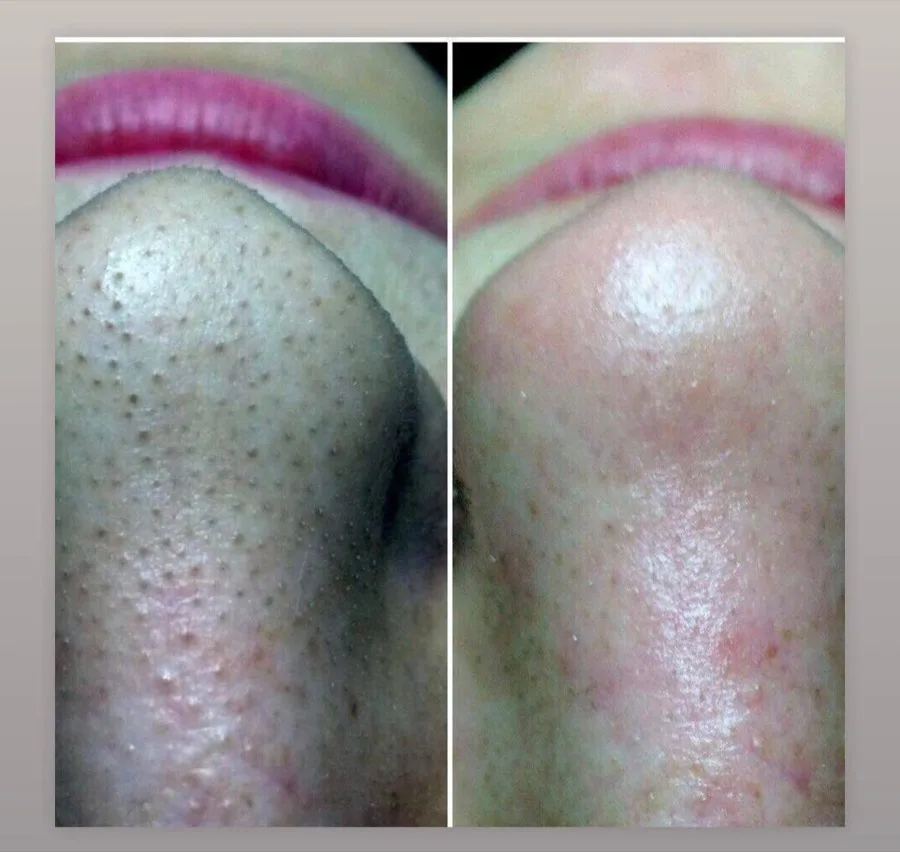
Congested pores on the nose before and after professional cleansing.
Anti-Aging Goals: How Treatment Sequencing Works
Clients with specific anti-aging goals, meaning active concerns about visible lines, laxity, uneven tone from photoaging, and overall skin quality decline, benefit from a treatment sequence approach rather than treating every session as an independent event. This is where the difference between a client who receives sporadic single facials and a client who works with me on a planned protocol becomes most visible in results.
A treatment sequence for anti-aging goals over 6 months might look like this, with sessions at 4-week intervals:
Sessions 1 and 2: Assessment, barrier strengthening, and light exfoliation to establish baseline health and prepare the skin for more active interventions. Microcurrent included in both sessions to begin ATP production stimulation at the cellular level.
Sessions 3 and 4: Glycolic acid peel at 30 to 40 percent combined with LED red light therapy and hyaluronic acid infusion. This phase introduces meaningful exfoliation and collagen stimulus while maintaining hydration.
Sessions 5 and 6: Increased glycolic concentration to 50 percent, continued LED, and addition of peptide serums applied post-exfoliation. Assessment of results against baseline photographs.
After the initial sequence, I typically move clients to a maintenance protocol of monthly sessions that rotate between a treatment focus session (microcurrent plus active exfoliation) and a recovery and replenishment session (deep hydration plus LED plus barrier mask). This alternating approach ensures the skin is consistently stimulated without being consistently pushed, which reduces adaptation and keeps the treatment producing results rather than becoming routine maintenance without ongoing benefit.
The professional treatments at Real Skin Beauty in Irvine that I use most frequently for anti-aging protocols are on our facials page. If you are not sure where to start or which combination of treatments addresses your specific concerns, a consultation is the right first step. You can book a free consultation through our booking page. Our FAQ also covers common questions about anti-aging treatment options and what to expect from a series.
Building a Sustainable Facial Schedule Within Your Budget
Ideal frequency and budget-constrained frequency are often different, and I prefer to acknowledge that reality directly rather than recommending a protocol that a client cannot realistically maintain. The most important principle for getting value from professional skin care on any budget is consistency within whatever interval you can sustain, rather than sporadic intensive treatment when you can afford it.
If budget limits allow only one professional facial every 6 to 8 weeks rather than every 4 weeks, here is how to maximize the value of each session and what to prioritize at home between appointments:
Invest in professional-grade home exfoliation between sessions. A quality AHA toner at 5 to 8 percent used 2 to 3 times per week bridges some of the exfoliation gap between professional sessions.
Prioritize daily SPF 50 without exception. Sun damage is the largest driver of accelerated skin aging and the most expensive to treat. Consistent SPF prevents the accumulation that makes professional treatment more intensive and costly.
Use at least one active ingredient consistently: either vitamin C in the morning for antioxidant protection and melanin management, or retinol at night for cell turnover acceleration. These are the two home-care actives with the strongest evidence base and the most meaningful contribution to outcomes between professional sessions.
When you can afford only one professional treatment per quarter, choose the treatment that your skin cannot replicate at home: professional extraction, a professional-grade chemical peel, or microcurrent. These are the modalities where the gap between professional and home capability is widest.
I have many clients in Irvine and across Orange County who have maintained excellent skin health on a budget-constrained schedule through a combination of consistent home care and strategic professional sessions. The home care does not replace the professional treatment, but it genuinely extends the benefit of each session and makes less-frequent professional visits produce results closer to what monthly sessions would achieve. The key word is consistent. Sporadic home-care efforts between infrequent professional sessions produce the worst outcome of any combination.
For clients ready to start, our facials page lists all current services and starting prices. Our electrolysis page covers another popular service if hair removal is part of your goals. When you are ready to discuss your specific skin goals and build a plan that fits your schedule and budget, book a free consultation at our Irvine studio.
Frequently Asked Questions
What is the standard recommendation for facial frequency? +
Every 4 weeks is the most common professional guideline, aligned with the skin cell turnover cycle of approximately 28 days. This is a solid starting point for normal to combination skin with general maintenance goals. Your specific skin type, current concerns, and treatment goals all modify this baseline, and the appropriate answer for your skin may be different from the standard recommendation.
Is monthly too often for sensitive skin? +
For highly reactive, rosacea-prone, or compromised barrier skin, monthly professional facials can be too stimulating. Each session triggers a mild inflammatory response, and when that response has not fully resolved before the next treatment, skin becomes progressively more sensitized rather than improved. Every 6 to 8 weeks with calming, barrier-focused protocols and no strong acids is often more appropriate and produces noticeably better results.
Can you get too many facials? +
Yes. Over-treating the skin disrupts the natural barrier and moisture cycle. Signs that you may be getting facials too frequently include persistent redness between sessions, increased overall sensitivity compared to before you started regular treatment, breakouts triggered by sessions that did not occur before, and a tight or stripped feeling between appointments that never fully resolves.
Do I need professional facials if I have a good at-home routine? +
Yes, and for specific reasons. Professional facials access levels of deep cleansing, extraction, and active ingredient delivery that at-home products cannot replicate regardless of quality or price. Professional extraction properly clears pores without damage. Professional-grade peels and infusions deliver actives at concentrations not available in retail products. And a professional assessment at each visit catches changes in your skin that require protocol adjustments before they become problems.
Should I get facials more often in winter? +
Many clients benefit from adding an extra hydrating session during winter months. Lower outdoor humidity and forced-air heating indoors both strip skin moisture significantly, often causing skin that behaved normally through spring and summer to become tight, flaky, and reactive by January. Adding one barrier-repair or deep hydration facial between your normal December and February appointments is a practical and effective strategy for maintaining skin comfort through the drier season.
Licensed electrologist and cosmetologist with 20+ years of experience. Aida sees clients at Real Skin Beauty, 18021 Sky Park Circle, Suite N, Irvine, CA 92614.
Book a free consultation with Aida Khazieva at Real Skin Beauty in Irvine, CA. We will assess your skin type and design a realistic facial schedule that matches your goals and your life.
This article is for informational purposes and reflects Aida Khazieva's clinical experience. It does not replace a personalized medical consultation. Individual results vary.