Dermaplaning vs Shaving Your Face: What Is the Difference?
By Aida Khazieva·Facials and Skin Care·14 min read·Real Skin Beauty, Irvine CA·Updated October 18, 2026
Dermaplaning is a professional exfoliation using a sterile single-use surgical blade on clean, dry skin. Shaving your face is a quick hair-removal step done with a razor, usually at home. Both remove peach fuzz, and neither makes hair grow back thicker. Dermaplaning also lifts dead surface cells evenly and costs $90 at my Irvine studio. Below are the differences in tools, technique and risk, plus safer shaving steps.
Quick answer
Both remove peach fuzz with a blade, and neither makes hair grow back thicker.
Dermaplaning is a sterile, professional exfoliation. Shaving is hair removal with incidental, uneven exfoliation.
Dermaplaning is $90 for 45 minutes and is commonly repeated every 3 to 4 weeks.
Avoid blades on active acne, active rosacea, sunburn and peeling skin, and ask first if you use a retinoid.
The Short Answer
Dermaplaning and shaving your face both remove fine vellus hair with a blade, and that is where the similarity ends. Dermaplaning is a professional exfoliation: a trained practitioner draws a sterile surgical blade across clean, dry skin at a controlled angle to lift dead surface cells along with the peach fuzz. Shaving, even with a small facial razor, is designed to cut hair, and any exfoliation is a side effect.
In practice that means three differences. Dermaplaning is done by a licensed professional with a single-use blade and attention to every area of the face. Shaving is usually done at home with a razor you reuse and with foam, gel or water to protect skin. And dermaplaning aims for smoother, brighter skin and better product absorption, where shaving aims only for hair removal.
The result is also not identical. Many people find a facial shave leaves a soft finish and a mild glow, and a professional dermaplane leaves skin noticeably smoother. This article compares them side by side, covers the mistakes that make home shaving irritating, and explains when each one makes sense. For the full background on the treatment itself, my complete guide to dermaplaning goes deeper. Here I stay on the comparison.
Dermaplaning vs Shaving Your Face: Side by Side
This table shows how the two approaches differ across the points clients ask about most.
Point
Professional dermaplaning
Shaving your face at home
Who does it
Trained, licensed practitioner
You
Tool
Sterile, single-use surgical blade on a handle
Razor or small facial razor, often reused
Skin prep
Cleansed and completely dry, with no product under the blade
Often wet, with foam, gel or water
Technique
Short feathering strokes at about 45 degrees, skin held taut, whole face covered systematically
Whatever you do in the mirror, usually in a hurry
Main goal
Remove dead surface cells and vellus hair
Remove visible hair
Exfoliation
Yes, deliberate
Incidental and uneven
Typical rhythm
About every 3 to 4 weeks
Every few days to a week
Hygiene
New blade every client, surfaces disinfected
Depends on razor care
Cost
$90 for a 45-minute session at my studio
Cost of razors and time
Risk of nicks and irritation
Low in trained hands, but possible
Higher with dull blades, rushed technique or dry skin
Suits
Skin without active acne, rosacea or retinoid sensitivity, as assessed at consultation
Anyone who wants occasional, quick tidy-up and has no skin condition that blades irritate
Neither one is right for everyone. Dermaplaning costs more and takes an appointment, and it suits skin that is not in an active flare. Shaving is cheap and fast and gives the least expensive way to remove fuzz, but it is easy to do badly. I explain how to do it better further down.
Does Either One Make Hair Grow Back Thicker?
No. This is the question I hear first. Vellus hair is fine, short and soft because of the follicle that produces it. Cutting the hair at the surface, with a razor or a dermaplaning blade, does not change the follicle, so it does not change thickness, color or growth rate. Hair that has been cut has a blunt tip instead of the natural tapered tip, and that blunt tip can feel stiffer for a few days. As the tip wears down, it softens again.
The same holds for dermaplaning. After a treatment the hair regrows over a few weeks, and the first days can feel slightly stubbly. That is a short-lived feeling, not a change in the hair. If the hair on your face really is getting darker or thicker over months, the cause is more likely hormonal, and I would send you to a physician. Why Am I Growing Facial Hair? explains the common causes.
One distinction matters for people with coarse chin or upper-lip hair. Terminal hair is thicker than peach fuzz, and neither shaving nor dermaplaning will remove it permanently. Those hairs return quickly because the follicle is unchanged. Electrolysis is the FDA-recognized method of permanent hair removal for such hairs. For lip hair options, see my article on upper lip hair removal.
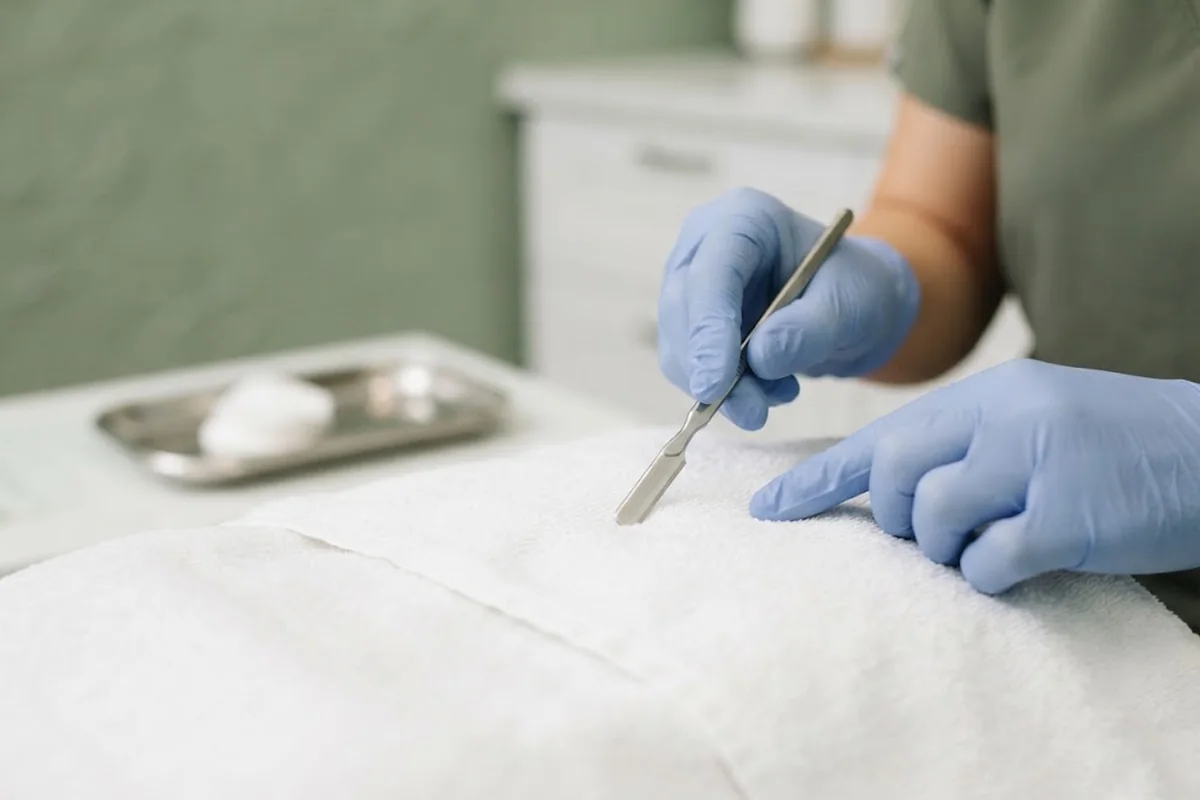
A professional uses a sterile, single-use blade held at a consistent angle, not a reused razor.
What Each Method Does to the Skin Surface
Skin renews itself by shedding dead cells from the top layer. When shedding is slow, a film of dead cells builds up. The skin can look dull, makeup can sit unevenly, and serums absorb less well. Exfoliation speeds that shedding up.
Dermaplaning removes that top film in a controlled way. Because the blade moves across clean, dry skin and covers the entire face, the exfoliation is even. Clients often describe the result as the face looking brighter and feeling smoother, and makeup lays flatter afterward. Immediately after, the skin may be slightly pink for a short time.
Shaving with foam or gel also takes off some surface cells, but not evenly. Areas where you press harder lose more and areas you skip lose none. A dull razor drags and can scrape, which is how people end up with razor burn on the cheeks. That unevenness is the main reason a shave never gives the same finish as a professional treatment.
It is worth saying what neither one does. Neither reaches below the surface. They do not treat acne scars, deep wrinkles, melasma or active breakouts. For those concerns, other treatments are better: chemical peels, microneedling-type options or targeted facials. I explain how to choose among them in Chemical Peel vs Microdermabrasion.
How to Shave Your Face More Safely at Home
Plenty of people shave their face and have no trouble. If you do, these habits protect skin.
Start with a clean face. Remove makeup, sunscreen and oil so the blade does not drag.
Soften first. Warm water or a damp cloth for a minute softens hair and surface cells.
Use a lubricant. A thin layer of shaving gel, or a plain unscented cream, helps the blade glide.
Use a sharp, clean blade. A dull blade tugs and scrapes. Replace it often, and do not share it.
Hold the skin taut and go with the hair. Short, light strokes in the direction of growth. Do not press.
Skip active acne and irritated areas. A blade across inflamed pimples spreads bacteria and opens lesions.
Rinse and soothe. Splash with cool water, pat dry, apply plain moisturizer.
Wear sunscreen the next day. Freshly exfoliated skin is more sun-sensitive.
Avoid shaving the face on the same day as retinoids, acid peels or waxing, since the combined effect irritates skin. A good gap is a couple of days after a peel and at least several days after waxing. If you take isotretinoin, ask your prescriber before using any blade or exfoliating treatment on the face.
Why DIY "Dermaplaning" Tools Are Not the Same
Small folding razors sold as dermaplaning tools are everywhere. They look similar to the professional device, and the videos make it look simple. In practice, the tool is a short, sharp blade on a handle, and the skill is in controlling it.
The professional version differs in several ways. The blade is sterile and single-use. The practitioner holds it at a consistent angle, uses short strokes and holds the skin taut, and knows when to stop. At home, people tend to change the angle, press too hard near the jaw and upper lip, reuse the blade for weeks and skip the cleansing step. The result can be nicks, irritation, ingrown hairs and, if the blade is dirty, infection.
If you decide to use a tool at home, treat it as a razor. Follow the shaving steps above, use a new blade each time, and do not use it on active acne, over sunburn or on skin that is peeling. If you have rosacea, a history of keloids, or you are on a retinoid, ask a professional before starting. I also recommend a professional session at least once, so you can see the technique and ask questions. The first one gives you a benchmark to compare with your own results.
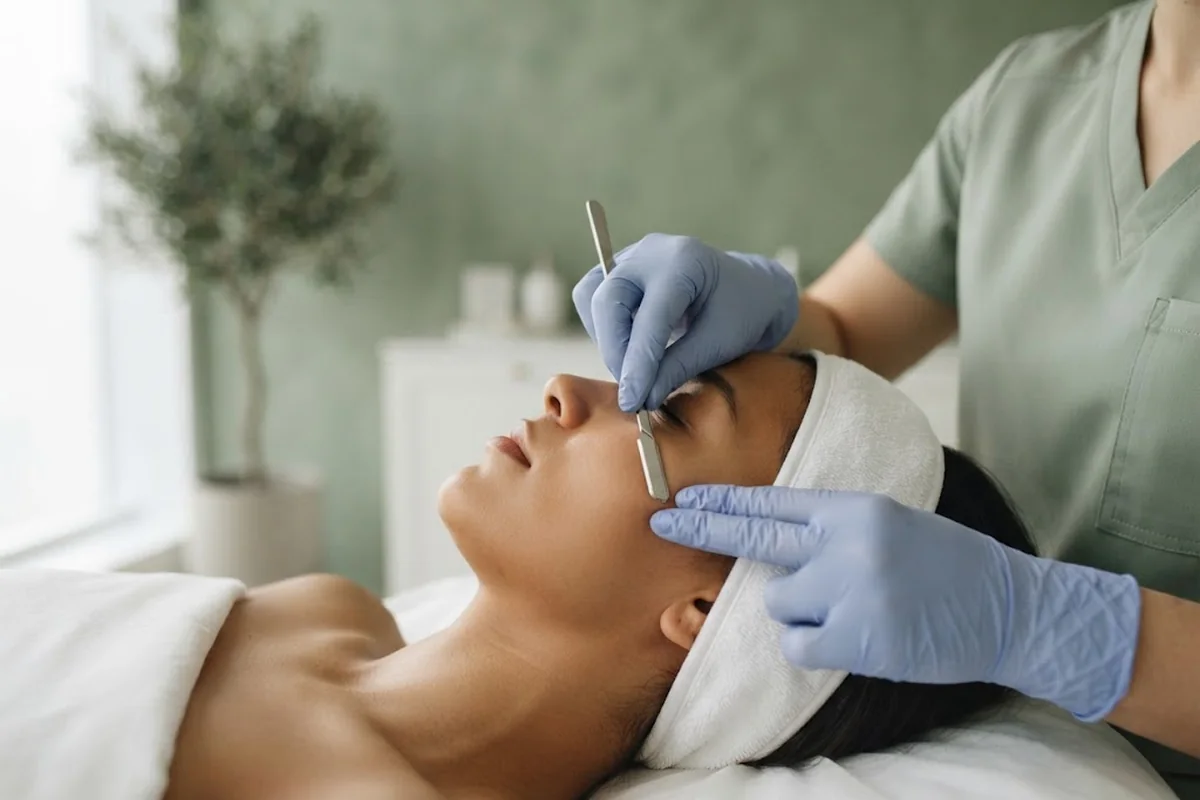
Short feathering strokes across clean, dry, taut skin lift dead cells and peach fuzz evenly.
Who Should Choose Dermaplaning, and Who Should Shave or Skip
The right choice depends on your skin and your goal. Use this table as a starting point and then confirm at a consultation.
Your situation
Better choice
Why
Dull skin, makeup looks patchy, no active acne
Dermaplaning
Even exfoliation plus fuzz removal in one visit
Quick tidy-up before an event, no skin condition
Careful shave at home
Fast and inexpensive
Active acne with open lesions
Neither on the affected area
Blades can spread bacteria and irritate. Choose acne-friendly facials instead
Rosacea or very reactive skin
Neither, unless a practitioner clears you
Mechanical stimulation can trigger flushing
Using a retinoid or recently on isotretinoin
Ask your prescriber first
Skin is thinner and more sensitive
Sunburned or peeling skin
Neither
Wait until skin has healed
Dark, coarse chin or lip hairs
Electrolysis for permanence
Blades only cut hair at the surface
Pregnant or nursing
Ask your doctor, then decide
Skin is often more reactive and hormones change hair growth
If you are unsure, a free skin consultation in the studio answers it. I look at your skin, check for conditions that rule out a blade, and tell you which route suits you. If dermaplaning fits, you can read about the dermaplaning service. If it does not, I will say so and suggest an alternative.
What a Professional Session Adds
The treatment at my Irvine studio takes 45 minutes and costs $90. That time includes more than the blade. I begin with a skin assessment and ask about your products and medications. I cleanse thoroughly, dry the skin completely, and then dermaplane the whole face with a sterile blade. After that I apply products that benefit from freshly exfoliated skin, finish with a calming step and give clear aftercare.
Step
What happens
Why it matters
Assessment
Check for active acne, rosacea, sunburn, medications
Decides whether a blade is safe that day
Cleanse and dry
Skin free of makeup, sunscreen and oil
The blade glides evenly on clean, dry skin
Dermaplaning
Short strokes across forehead, temples, cheeks, upper lip, chin
Systematic coverage, no missed areas
Treatment step
Serum, mask or LED if suitable
Freshly exfoliated skin absorbs more
Sun protection and aftercare
Sunscreen and a short list of dos and don'ts
Fresh skin is more sensitive to sun
Many clients combine dermaplaning with another treatment, such as an LED session or a hydrating facial, because product absorption is better afterward. My complete guide covers which combinations are sensible and which to avoid. Not every pairing works on the same day, and chemical peels in particular are better separated by a couple of weeks. Clients from across Orange County, including Tustin, Newport Beach and Costa Mesa, book dermaplaning before events, and plan it a few days ahead so any pinkness is gone.
What the Skin Looks and Feels Like Over the Following Weeks
Knowing the pattern helps you judge the result and decide how often you need it.
Time
After dermaplaning
After a home shave
Same day
Smooth, bright, sometimes slightly pink for 30 to 60 minutes. Makeup applies evenly.
Smooth to the touch. Pinkness depends on technique and blade sharpness.
Days 2 to 5
Skin still feels soft. Products absorb well. Sunscreen is essential.
Soft at first, then a blunt stubble feeling can start in 2 to 3 days.
Week 2
Fine hair begins to show again and may feel slightly stubbly.
Regrown fuzz is visible. Many people shave again.
Weeks 3 to 4
Hair is back to its natural look. Surface cells have renewed. Time for the next session if you want to keep the pattern.
Several shaves have happened. Any ingrown hairs or bumps would show up here.
Hair on the face grows in cycles, so not every hair reappears on the same day. That is why the stubbly feeling arrives in waves. It is a short phase and not a sign that the treatment failed.
If you are planning an event, book dermaplaning three to five days ahead rather than the morning of. That gives pinkness time to fade and lets you check how the skin takes makeup before the day itself. If you have a wedding or a photo shoot coming up, my bridal skin care timeline shows where a dermaplaning session fits in a three-month plan.
What It Costs Over a Year, Honestly
Shaving looks cheaper, and per week it is. The honest comparison depends on how often you want the result and what else you would buy.
Rhythm
Visits per year
Cost at $90 per session
Before special events only, about 4 times a year
4
$360
Every 8 weeks
About 6 to 7
About $540 to $630
Every 4 weeks
About 13
About $1,170
Every 3 weeks
About 17
About $1,530
Most clients do not dermaplane every three weeks. They choose a rhythm that matches their budget and their skin, and many alternate dermaplaning with other facials. Frequency also depends on how your skin looks: if it is clear and smooth, there is no reason to rush. For a comparison with other facial treatments and how often they make sense, see how often to get a facial.
Home shaving costs very little in money, but it uses time and carries its own risk: irritation, ingrown hairs and the temptation to use a dull blade for too long. If you shave every few days, the costs add up as razors, gel and soothing products, and the skin is the one that pays when you cut corners. My advice is practical: if you like the result of professional dermaplaning and it fits your budget, use it for the times you want the best finish. If you enjoy the quick home routine, keep it simple and keep the blade fresh.
Questions to Ask Before You Pick
Answer these honestly, and the choice often makes itself.
Do I have active acne, rosacea or a sunburn right now? If yes, skip blades for now.
Do I use a retinoid or isotretinoin? If yes, ask the prescriber first.
Do I mainly want smoother skin and better makeup, or just fewer visible hairs?
Is my hair fine and light (peach fuzz), or coarse and dark (terminal)? Coarse hairs call for electrolysis if you want permanence.
How often do I want to maintain it, and what budget fits?
Am I comfortable using a blade on my own face every few days?
Do I have an event coming up and want a polished finish?
If your answers point toward a professional session, a free consultation at the studio confirms it. If they point toward shaving, there is no shame in that. Many of my clients shave their face at home and book dermaplaning twice a year.
If you shave your face at home, a clean sharp blade, a lubricant and a damp cloth make the biggest difference.
Aftercare for Both Methods
Whether you shave or are dermaplaned, the skin is freshly exfoliated for the next day or two. These rules apply to both.
Use a gentle cleanser, a plain moisturizer and sunscreen every morning.
Skip retinoids, strong acids, scrubs and exfoliating brushes for at least 24 to 48 hours, or as your practitioner advises.
Avoid saunas, hot yoga, swimming pools and tanning for the first day.
Do not pick at any small nicks or dry areas. Keep them clean.
Wait to wax or thread the face for at least a few days after a blade.
If redness, burning or small bumps last longer than a couple of days, contact your practitioner or a doctor.
Makeup is usually fine soon after dermaplaning, but use clean brushes and sponges. Dirty tools are one of the more common reasons for small post-treatment bumps.
Pay attention to your skin over the next few days. Mild tightness is normal, especially if you are using a cleanser with surfactants that strip oil. Switch to a creamy or gel cleanser for a couple of days and keep your moisturizer plain. If you wear sunscreen daily, choose a formula you already know your skin tolerates, because a new product on freshly exfoliated skin is a recipe for confusion about what caused any reaction. Keep a note of what you used and when, so that you can tell your practitioner exactly what happened if something looks off.
Myths That Confuse the Comparison
Four statements come up in nearly every conversation about facial shaving.
"Shaving your face is only for men." Not true. Many women remove peach fuzz for a smoother finish. It is a personal choice.
"It will leave stubble." Peach fuzz regrows with a tapered tip, and the short-lived stubbly feel passes. It does not turn into a beard.
"Dermaplaning is just shaving with a fancy name." The technique, hygiene, preparation and aim differ, and so do the results.
"If I dermaplane, I will not need sunscreen." The opposite is true. Fresh skin needs more protection.
If you want to compare treatments before spending money, a free consultation is the least expensive way to decide. Book a free consultation and bring the questions you have. You can also read how often to get a facial and whether dermaplaning belongs in your rhythm.
Frequently Asked Questions
+ Is dermaplaning the same as shaving your face?
No. Both use a blade, but dermaplaning is done by a trained professional with a sterile single-use blade on clean, dry skin to exfoliate and remove peach fuzz. Shaving is meant to cut hair and exfoliates unevenly.
+ Does shaving your face make hair grow back thicker?
No. Cutting hair at the surface does not change the follicle, so thickness, color and growth rate stay the same. The blunt tip can feel stubbly for a few days.
+ How often should I dermaplane compared with shaving?
Dermaplaning is commonly repeated every 3 to 4 weeks, in line with the skin renewal cycle. Facial shaving is usually done more often, anywhere from every few days to weekly.
+ How much does dermaplaning cost at Real Skin Beauty?
Dermaplaning is $90 for a 45-minute session at the Irvine studio. Consultations in the studio are free.
+ Can I use a dermaplaning razor at home?
You can, but treat it as a razor. Use a new blade, clean dry or properly lubricated skin, light strokes and avoid active acne, sunburn and peeling skin. Ask a professional if you have rosacea or use a retinoid.
+ Who should not get dermaplaning or shave their face?
People with active acne lesions, active rosacea, sunburn, peeling skin, or those using a retinoid or isotretinoin should check with a professional first.
+ Will dermaplaning or shaving remove chin hairs permanently?
No. Both only cut hair at the surface. Coarse chin and lip hairs return, and electrolysis is the FDA-recognized method for permanent hair removal.
+ Can I wear makeup after dermaplaning or shaving?
Usually yes, with clean brushes and sponges. Skip heavy or irritating products for the first day, and use sunscreen every morning because fresh skin is more sun-sensitive.
Licensed electrologist and cosmetologist with 20+ years of experience. Aida sees clients at Real Skin Beauty, 18021 Sky Park Circle, Suite N, Irvine, CA 92614.
Book a free consultation with Aida Khazieva at Real Skin Beauty in Irvine, CA. She will check your skin, tell you honestly whether a blade is right for you and explain what dermaplaning would involve.
This article is for informational purposes and reflects Aida Khazieva's practitioner experience. It does not replace a personalized medical consultation. Individual results vary.
Questions? Aida Answers Them All.
Visit our FAQ or book a free consultation to discuss your specific skin and hair concerns.