Chemical Peel vs Microdermabrasion: Which One Should You Book?
By Aida Khazieva·Chemical Peels·15 min read·Real Skin Beauty, Irvine CA·Updated October 14, 2026
A chemical peel and microdermabrasion both exfoliate, but they work differently and solve different problems. A peel uses acid to dissolve the bonds between dead skin cells, so it can also shift dark spots and clear breakouts. Microdermabrasion uses a handpiece with fine crystals or a diamond tip plus suction to sand off the top layer, with no real downtime. For dullness and rough texture, start with microdermabrasion. For dark spots or acne, a peel is usually the better first booking.
Quick Answer
Pick microdermabrasion for dull, rough or congested skin when you want zero downtime. Pick a chemical peel for dark spots, uneven tone or active breakouts, and expect a few days of dryness or light flaking. Skip both if you are on isotretinoin, have an active cold sore, sunburn or open skin, and ask your doctor first if you are pregnant.
Which One Matches Your Skin Goal
Most people ask me this because both treatments are described as "exfoliation" and both appear on menus around Orange County for roughly the same price range. They are not interchangeable. The better question is what you want your skin to do differently in a month.
Your main concern
Usually the better first choice
Why
Dull, tired-looking skin
Microdermabrasion
Removes the surface layer of dead cells right away and lets products absorb better
Rough texture, small bumps
Microdermabrasion
Physical polishing smooths the surface without chemistry
Dark spots, uneven tone
Chemical peel
Acids work on the layer where uneven pigment accumulates, over a series
Breakouts, clogged pores
Chemical peel (acne or mandelic type)
Acids can loosen oil and dead cells inside the pore, not only on top
Fine lines on a budget of time
Either, then reassess
Both help surface texture. Neither replaces sun protection and a good home routine
Very sensitive or reactive skin
Neither at first
A calming facial is the safer starting point. See the rosacea guide on this blog
Notice that "either" shows up in only one row. If your goal is clear, one treatment will almost always fit it better, and a consultation is mostly about confirming that with your skin in front of me.
Five Questions to Ask Yourself Before You Book
Before I recommend anything, I ask five questions. You can answer them at home and arrive at the studio with half the decision made.
Is the problem on the surface or underneath? Dullness, flakes and rough patches sit on top. Dark spots and breakouts have roots deeper down.
Can I live with a few days of dryness or flaking? If you cannot, microdermabrasion is the easier fit.
Is my skin calm right now? Red, stinging or freshly irritated skin should rest before any exfoliation.
What am I already using at home? Retinoids, acids and scrubs all count as exfoliation, and they change what I can do in the studio.
Is there an event in the next two weeks? A first peel needs a buffer. A first microdermabrasion needs a lot less.
How a Chemical Peel Works
A chemical peel applies an acid to the skin for a measured amount of time. The acid loosens the bonds that hold dead cells together and, depending on the acid and strength, speeds up how quickly the upper layers shed. Newer skin is revealed underneath. In the studio I use superficial peels only: glycolic, lactic, mandelic (almond), plus acne, pigmentation, anti-aging and retinol formulas. Each one has a different personality.
Glycolic acid has a very small molecule, so it works efficiently on texture and dullness. It can sting more on sensitive skin. See the glycolic peel guide for the full picture.
Lactic acid is gentler and more hydrating, a common starting point for first-time peel clients.
Mandelic (almond) acid has a larger molecule that penetrates more slowly, which is why it is often chosen for sensitive skin or for clients who are prone to pigmentation.
The process in my room is simple. I cleanse and degrease the skin, apply the peel with a brush in a set pattern, watch your skin closely, then neutralize or remove it at the right moment. A superficial peel takes about 45 minutes in total. You feel warmth, tingling or a light sting, which usually settles within a couple of minutes. I decide the timing by what I see on your skin, not by a stopwatch alone.
Where the peel really earns its place is on problems that sit below the very surface. Uneven pigment and breakouts both involve more than just a layer of dead cells on top, and a chemical exfoliant can reach further into that picture than a polishing tool. If you want to see how I think about each acid, the chemical peels overview lists all the options and the glycolic peel page has current pricing and details.
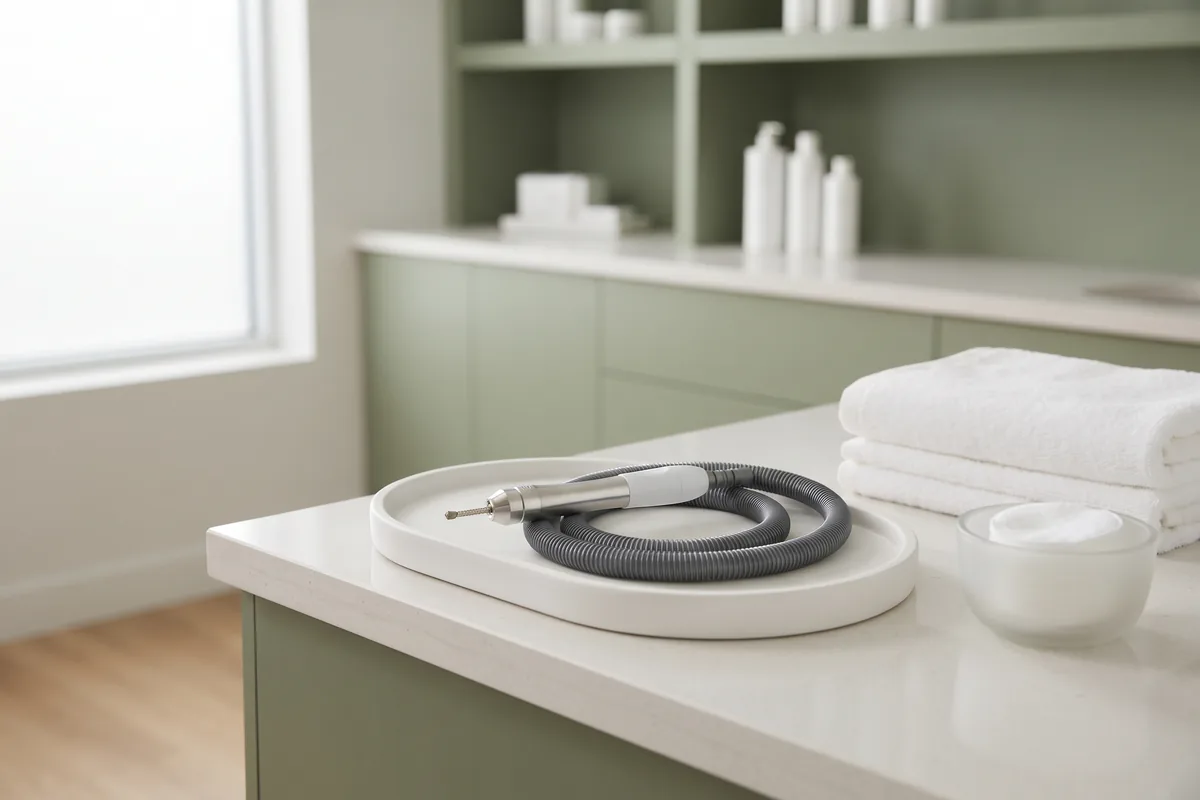
A diamond-tip microdermabrasion handpiece ready for a facial treatment room setup.
How Microdermabrasion Works
Microdermabrasion is mechanical. A handpiece with a diamond-embedded tip, or a stream of fine crystals, lightly abrades the outermost layer of the skin, the stratum corneum. A vacuum in the same handpiece pulls away the loosened debris and gives a mild suction massage. There is no acid involved.
The sensation is often compared to a cat's tongue or fine sandpaper being drawn across the skin, with a gentle pull from the suction. It is not painful for most people. I vary the pressure and the number of passes by area: lighter over the cheekbones and around the eyes, more even coverage on the forehead and chin. The treatment takes about 45 minutes with cleansing and a calming finish, and the microdermabrasion page has the current price.
Because it removes only the top layer, microdermabrasion works best for what lives on the surface: dullness, rough patches, flaky skin that makes makeup sit badly, and blackheads that sit close to the opening of the pore. It also prepares the skin for serums, since there is less barrier of dead cells to get through. What it cannot do is chemically change pigment or treat deep inflammation, so I never promise it for stubborn dark spots or cystic acne.
Side-by-Side Comparison
Chemical peel
Microdermabrasion
Method
Acid solution applied with a brush
Diamond tip or crystals with suction
Depth
Superficial (in our studio)
Outermost layer only
Best for
Pigment, acne, tone, texture
Dullness, roughness, surface congestion
During treatment
Warmth, tingling or light sting
Scratchy feeling and suction
Visible downtime
Often 2 to 5 days of dryness or light flaking, varies by peel
Usually pinkness for an hour or two
Sun sensitivity afterward
Higher, daily SPF is essential
Moderate, daily SPF still needed
Typical spacing
Every few weeks, set per peel type
About every 3 to 4 weeks
Our price
From $95 (glycolic $100, lactic $95, almond $95)
$110
Series needed?
Usually yes for pigment or acne
Usually yes for lasting texture change
Spacing and the number of sessions depend on your skin and which peel I choose, so treat the table as a general guide. Prices are listed on each service page and in our booking system.
Myths About Peels and Microdermabrasion
Both treatments carry stories that make people either too nervous or too casual. These are the ones I correct most often.
Myth: a peel burns off a layer of skin. A superficial peel loosens the bonds between dead cells so they shed faster. It is a controlled exfoliation, not a burn, and I stop it based on how your skin responds.
Myth: peeling means the peel worked. Visible flaking only shows that skin is shedding. A peel can do its job with very little flaking, and heavy flaking is not a prize.
Myth: microdermabrasion thins the skin. It removes the outermost layer of dead cells, which the skin replaces on its own. Problems come from doing it too often or pressing too hard, which is why spacing and a light hand matter.
Myth: stronger is better. The best peel is the mildest one that gets the job done. Irritation can leave skin darker, redder and slower to heal.
Myth: microdermabrasion shrinks pores. It clears debris, so pores look cleaner for a while. It does not change their size. The enlarged pores guide explains what does help.
Downtime and What Your Skin Looks Like Afterward
Downtime is where people feel the difference most. After microdermabrasion your skin is usually a little pink and feels tight or sensitive for an hour or two. Most clients return to work or an evening out the same day. I finish with a soothing mask and sunscreen, and you can wear makeup later that day if you wish, though I would give the skin a few hours.
After a chemical peel, the experience depends on the acid and strength. A light lactic or mandelic peel may leave only mild tightness and some fine flaking on day two or three. A stronger glycolic or pigmentation peel can bring more visible dryness and peeling over several days. For a day-by-day account, the chemical peel recovery timeline walks through what to expect. The one rule I repeat to every peel client: do not pick or pull flaking skin. Let it shed on its own, or you risk marks and pigment changes that take much longer to fade than the flaking itself.
With both treatments, your skin is more exposed to sun for a while after. Broad-spectrum SPF every morning is not optional, and Orange County sunshine does not take a winter break. Skip retinoids, exfoliating acids and scrubs at home for the number of days I give you, usually a few. If you have an event, book at least a week ahead, longer if it is your first peel.
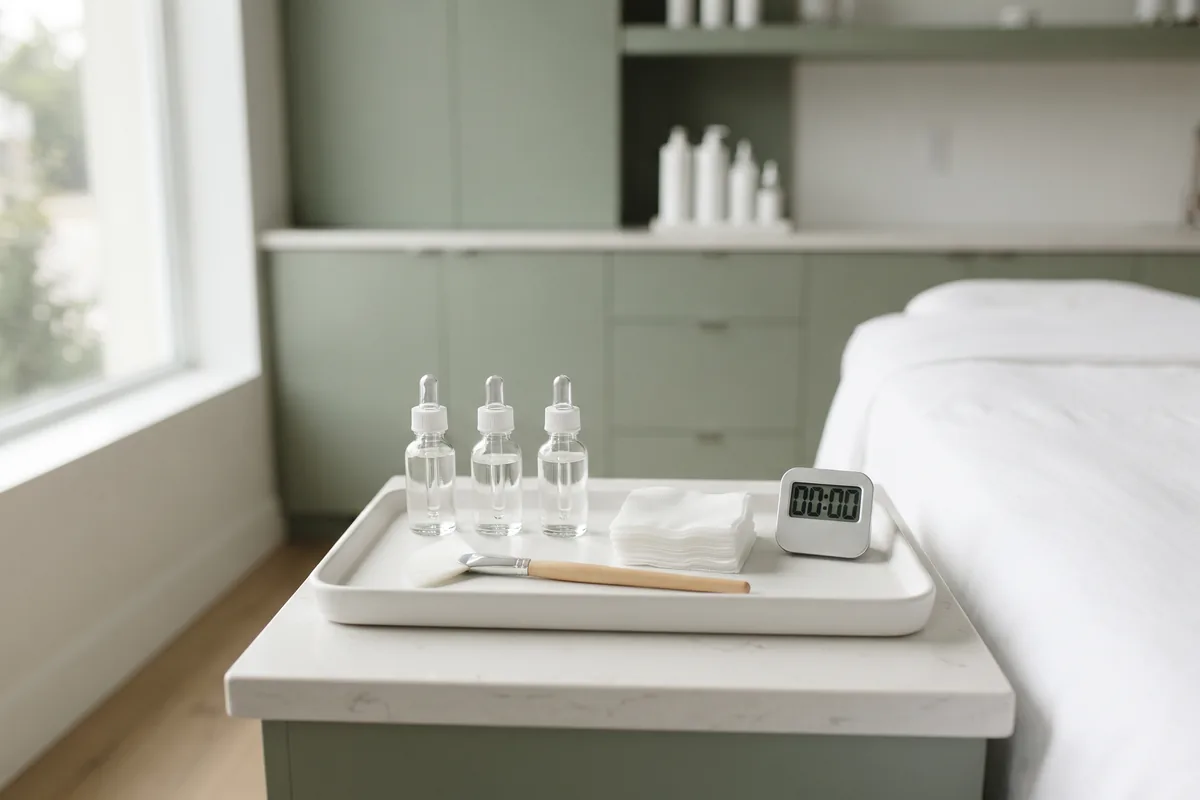
A peel setup: acid solution, fan brush, gauze and neutralizing supplies prepared before the client arrives.
Who Should Skip One or the Other
Neither treatment is right for everyone. Here is the screening I run through before I start, and I ask about all of it again at every visit, because your medications and skin condition change.
Isotretinoin (Accutane) or other strong oral retinoids: current or recent use is a reason to wait for both treatments. Ask your prescriber how long, since the usual waiting periods are set by the doctor.
Active cold sore, open sores, infection, sunburn or fresh cuts: postpone until fully healed.
Rosacea, very reactive skin or visible broken capillaries: suction and friction from microdermabrasion can aggravate this skin, and many peels are too stimulating. I would start with a calm facial instead.
Pregnancy or breastfeeding: talk with your doctor. Some peel acids are treated differently than others, and I would rather you check first.
Darker skin tones or a history of dark marks after irritation: peels are still possible, but the acid, strength and prep matter a lot. Microdermabrasion needs a lighter touch too. Say this at consultation.
Recent waxing, dermaplaning or laser on the same area: the skin needs time to recover before more exfoliation.
If any of this is unclear for you, a physician is the right person to clear a treatment, not me and not a website.
How Skin Type and Skin Tone Change the Choice
The same treatment behaves differently on different skin, so I adjust the plan instead of following a template.
Oily and breakout-prone skin
Peels usually lead here, because acids can reach oil inside the pore. Microdermabrasion can still help with surface congestion between peels, as long as the skin is not actively inflamed.
Dry or flaky skin
Dry skin often looks dull because dead cells pile up. Gentle microdermabrasion or a lactic peel can lift that layer, followed by moisture. Over-exfoliating dry skin makes it tighter and more fragile, so I keep spacing generous.
Mature skin
Skin renews more slowly with age, so it often looks better after regular, mild exfoliation. Both treatments can help with texture. Neither replaces sunscreen, and neither is a face lift.
Darker skin tones and skin prone to marks
Skin that darkens after irritation needs more caution. I choose milder acids, shorter timing and careful prep for peels, and I use lighter pressure for microdermabrasion. Tell me about any history of dark marks after pimples, waxing or shaving. It changes my plan.
Can You Combine Them, and How Often
I do not stack a peel and microdermabrasion on the same day. Both exfoliate, and doing them together strips more than the skin needs. What works well is alternating them in a planned series. For example, a client with both rough texture and early dark spots might begin with a gentle lactic peel to prepare the skin, then use microdermabrasion a few weeks later to refine the surface, with a break in between so the skin never feels raw.
If you are already getting facials, how often to get a facial explains how treatments like these fit into a regular schedule. Another option for smooth skin without acids or crystals is dermaplaning, which removes fine facial hair along with surface cells.
The mistake I see most is too much of a good thing: weekly scrubs at home, plus a peel, plus an active serum. Irritated skin looks dull and blotchy, and then people book another exfoliating treatment to fix it. If your barrier is already unhappy, the answer is usually less, not more.
What a Series Looks Like, Week by Week
One session rarely changes a problem. Here is how a series might look for two common goals. It is an example, not a prescription, since I set the spacing after seeing your skin.
Timing
Dark spots and uneven tone (peel-led)
Rough, dull texture (microdermabrasion-led)
Week 0
Free consultation, skin check, simple home routine with sunscreen
Free consultation, skin check, simple home routine with sunscreen
Weeks 1 to 2
First gentle peel, such as lactic or almond. A few days of dryness
First microdermabrasion. Pinkness for an hour or two
Weeks 3 to 4
Skin settles. No new actives unless I approve them
Second microdermabrasion around the three to four week mark
Weeks 5 to 6
Second peel, adjusted to how the first one went
Rest week or a calming facial if skin feels tight
Weeks 8 to 12
Review dark spots with you and decide whether to continue, space out or change acids
Review texture with you and decide whether to continue or switch to a peel
The review step matters. If dark spots have not moved after a few visits, more of the same is not the answer. Sometimes the cause is sun exposure at home, a hormonal trigger or a product you are using, and I would rather find that than keep booking you. For pigment that looks like patches rather than spots, read the melasma guide before starting any exfoliation.
Caring for Your Skin Between Visits
What you do in the days after matters about as much as the treatment itself. These are the habits I give every client.
Sunscreen every morning, SPF 30 or higher. Freshly exfoliated skin is more exposed. Reapply if you are outdoors for long stretches.
Moisturize more than usual. A plain, fragrance-free moisturizer supports the barrier while new cells come up.
Pause actives for the days I name. Retinoids, exfoliating acids, scrubs and vitamin C serums wait until your skin feels normal again.
Skip heat for a day or so. Hot yoga, saunas and very hot showers can irritate freshly treated skin.
Do not pick or peel flakes. Let them go on their own, or use a soft damp cloth if I say it is fine.
Wait on other hair removal and treatments. Waxing, dermaplaning or shaving over the area right after a peel invites irritation.
Sunscreen and a plain moisturizer are the two products that matter most after either treatment.
What Happens at a Consultation in Irvine
Consultations at the studio are free. I look at your skin under good light, ask about your routine, products, medications and past reactions, and then recommend one treatment, not a menu. If your skin needs a few weeks of calming before any exfoliation, I will say so. If a peel and microdermabrasion could both work, I explain the tradeoff in time and downtime and let you choose. You can also start with a free skin consultation, or book your appointment when you are ready. Clients come from across Irvine, Tustin, Newport Beach and the rest of Orange County, and I plan the series around your calendar, not a package.
Questions to Ask Before You Book Either Treatment
A good provider welcomes questions. These are the ones I would ask if I were the client, anywhere in Orange County.
Which exact acid or device settings will you use on my skin, and why?
How many sessions do you expect, and when will we review progress?
What should I stop using at home, and for how long?
What could go wrong, and what do I do if my skin reacts?
Is there something gentler to try first?
When do you decide a treatment is not working and change course?
If answers are vague or the plan is the same for every client, keep looking. A plan should have your skin in it.
Frequently Asked Questions
+ Is microdermabrasion or a chemical peel better for acne scars?
It depends on the type of scar. Surface roughness and shallow marks may improve with a series of either treatment. Deep pitted scars usually need procedures beyond what a superficial peel or microdermabrasion can do, and I will tell you that honestly at consultation rather than promise results.
+ Which has more downtime, a peel or microdermabrasion?
A chemical peel usually has more. Expect dryness or light flaking for a few days after a peel, depending on the type. Microdermabrasion typically leaves pinkness for an hour or two. Both require daily sunscreen afterward.
+ Can I get a chemical peel and microdermabrasion on the same day?
I do not recommend it. Both exfoliate, and combining them can over-strip the skin. A better approach is to alternate them with a few weeks between treatments, planned around your skin and your calendar.
+ How much do these treatments cost at Real Skin Beauty?
Microdermabrasion is $110 for a 45-minute session. Peels start at $95 (lactic and almond) and glycolic is $100. Other peel types are listed on the service pages. Consultations in the studio are free.
+ Who should not get microdermabrasion or a chemical peel?
People currently taking isotretinoin, anyone with an active cold sore, infection, sunburn or open skin, and often those with rosacea or very reactive skin. If you are pregnant or on prescription skin medications, check with your physician first.
+ Can I wear makeup after a peel or microdermabrasion?
After microdermabrasion, most people can wear makeup later the same day, though I suggest waiting a few hours. After a peel, I usually ask you to skip makeup until the skin feels comfortable, often a day, and longer if you are flaking. Use clean brushes either way.
+ Does microdermabrasion hurt?
Most people describe it as a scratchy feeling with gentle suction, not pain. I adjust pressure by area, lighter near the eyes and cheekbones. Tell me right away if anything feels sharp.
+ How many sessions until I see a difference?
Many people notice smoother, brighter skin after the first microdermabrasion. Lasting changes in texture, dark spots or breakouts usually take a series of sessions, and the number depends on your skin. I review progress with you rather than promise a count.
Licensed electrologist and cosmetologist with 20+ years of experience. Aida sees clients at Real Skin Beauty, 18021 Sky Park Circle, Suite N, Irvine, CA 92614.
Not sure which one your skin needs? Book a free consultation with Aida Khazieva at Real Skin Beauty in Irvine, CA. She will look at your skin in person and tell you honestly whether a peel, microdermabrasion or something gentler makes sense first.
This article is for informational purposes and reflects Aida Khazieva's professional experience. It does not replace a personalized medical consultation. Individual results vary.
Questions? Aida Answers Them All.
Visit our FAQ or book a free consultation to discuss your specific skin and hair concerns.