Enlarged Pores: What Actually Works and What Is Marketing
By Aida Khazieva·Facials and Skin Care·15 min read·Real Skin Beauty, Irvine CA·Updated October 15, 2026
You cannot shrink a pore, because pores do not open and close. What you can change is how visible they look. Clearing buildup, controlling oil, protecting collagen with daily sunscreen and, for some people, using retinoids and a series of peels or cleansing facials all make pores look smaller. Toners, ice cubes, pore strips and harsh scrubs do not. Here is how I sort what works from what is marketing.
Quick Answer
No product physically shrinks a pore. The treatments that make pores look smaller are salicylic acid, retinoids, daily sunscreen, a series of peels and professional cleansing facials. Pore strips, ice, toners and scrubs only give a short cosmetic effect or irritate the skin.
What Makes Pores Look Enlarged
Pores are the openings of hair follicles and the oil glands attached to them. Every person has them, and you cannot remove them. What changes is how visible they look, and that comes down to a handful of causes.
Oil production. Skin that makes more sebum tends to have wider-looking openings, especially across the nose, forehead and chin. Hormonal shifts and genetics both play a role here.
Heredity. If your mother and grandmother have visible pores, you likely will too. This part is not something a product can rewrite.
Sun damage and age. Years of UV exposure break down collagen and elastin around the pore. With less support, the edge of the opening sags and looks wider and more oval.
Buildup. A pore stuffed with oil and dead cells stretches and darkens at the surface. This is why blackheads make pores look so much bigger than they are.
Notice what is on that list and what is not. Poor cleansing habits rarely cause large pores by themselves. Washing your face harder does not shrink anything, and I see plenty of irritated, shiny skin from people who scrub twice a day.
Pores do not open and close
Pores have no muscle that opens or shuts them. Steam does not "open" them and cold water does not "close" them. Warmth softens oil in the pore so it comes out more easily, and cold makes skin feel tighter for a few minutes. Neither changes the size. This single myth feeds half the products in the drugstore pore aisle.
How to Tell Which Kind of Large Pores You Have
Before you buy anything, look at your skin in daylight for a minute. The pattern tells you more than any label.
Dark dots, mostly on the nose and chin. This is usually buildup. Oil and dead cells sit in the opening and darken at the surface.
Wide openings across a shiny forehead, nose and cheeks. This points to high oil production, which often runs in families.
Teardrop or stretched shapes on the cheeks. This is more often a firmness issue linked to sun exposure and age, and it tends to look smoother when you gently pull the skin taut.
Pores that look worse after new products. Irritation swells the skin around the opening and makes everything look rougher.
Most people have a mix. A skin analysis under magnification separates them, and the plan changes depending on which one leads.
Marketing Claims vs What Works
Here is how I sort the common claims. The table separates what changes the look of pores for real from what only feels like it did something.
Claim or method
What it actually does
My verdict
"Pore-shrinking" toner or primer
Mattifies and fills the opening for a few hours. Some contain alcohol that dries and irritates.
Cosmetic effect only. Read the ingredient list before buying.
Pore strips
Pull oil and debris from the very surface of the pore. Pores refill within days.
Temporary. Can irritate sensitive skin if used often.
Ice cubes or cold water
Skin feels firmer for a few minutes.
No change in pore size. Skip the ice on rosacea-prone skin.
Harsh scrubs and brushes
Scratch the surface and strip the barrier.
Often makes skin oilier and redder. I advise against them.
Clay masks
Absorb surface oil and leave skin matte for a day or so.
Fine as a weekly extra, not a treatment.
Salicylic acid (BHA)
Oil-soluble, so it works inside the pore lining to loosen buildup.
Well supported for oily, congested skin. Start slowly.
Retinoids
Speed cell turnover and, over months, support firmer skin around the pore.
Slow but effective. Ask your doctor about prescription strengths.
Niacinamide
Helps regulate the look of oil and supports the barrier.
Low-risk, modest effect, usually used for months.
Daily sunscreen
Prevents the collagen loss that makes pores sag with age.
The least exciting and one of the most useful items on the list.
I will say it plainly: no topical product physically shrinks a pore. What you can do is keep pores clear, keep the skin around them firm and keep oil from collecting at the surface. All three make pores look smaller.
A Home Routine That Helps
The routine below is intentionally boring. It works because you can keep doing it for six months, and pores respond to consistency rather than intensity.
Morning: a gentle cleanser, a lightweight moisturizer and broad-spectrum sunscreen. Sunscreen is the step that protects the collagen holding pores in shape.
Evening cleanse: remove sunscreen and makeup thoroughly. A second gentle wash only if you wear heavy product.
A salicylic acid product 2 to 3 nights a week if your skin is oily or congested. Add frequency only if there is no stinging or peeling.
Retinol or a prescription retinoid a few nights a week once your skin tolerates the salicylic acid. Do not start both on the same night. My retinol beginner's guide covers how to build up.
Niacinamide in a serum or moisturizer, if you like it. Many people do.
If you are brand new to actives, begin with the basic skincare routine first and add one product at a time, two to three weeks apart. When something stings, stop. Pores that look worse after a week of new products are usually reacting to irritation, not to the product being "too effective".
Check with a doctor first
If you are pregnant, breastfeeding or taking isotretinoin, ask your physician before using salicylic acid, retinoids or any exfoliating product, and do not book exfoliating treatments until you have the go-ahead.
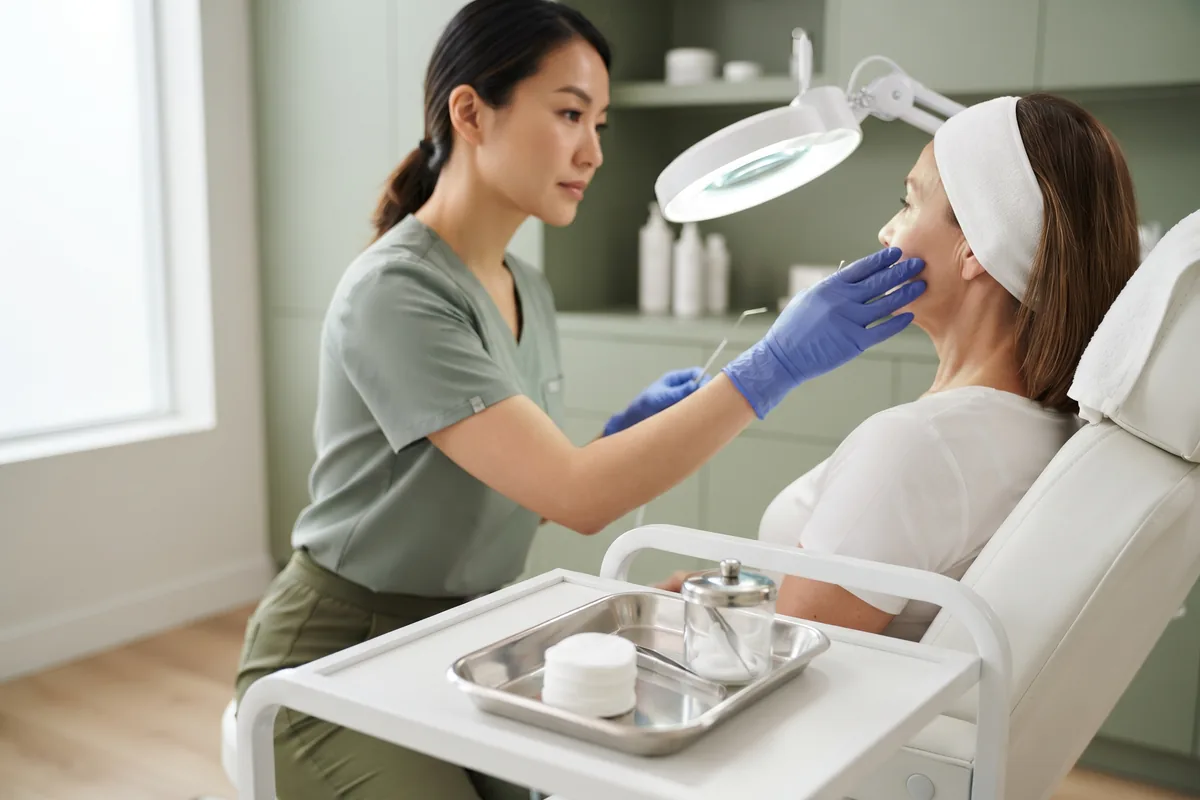
A skin analysis under magnification shows whether pores are clogged, oily or simply lax.
How to Add Actives Without Irritating Your Skin
Most skin that "gets worse" on a pore routine is skin that was rushed. This pace works for most people, and I adjust it for sensitive skin.
Weeks
What you add
What to watch for
1 to 2
Gentle cleanser, moisturizer, daily sunscreen only
Skin settles. This is your baseline
3 to 4
Salicylic acid 2 nights a week
Mild tingle is common. Stinging, flaking or redness means pull back
5 to 6
Salicylic acid up to 3 nights if comfortable
Skin should feel normal the next morning
7 to 8
A retinoid 1 night a week, on a different night than the acid
Dryness and peeling can start here. Add moisturizer, not more actives
9 to 12
Retinoid up to 2 or 3 nights if tolerated
Review with me. Pores usually look clearer before they look finer
Two habits make this easier. First, test each new product on the jawline for a few nights before using it on your whole face. Second, if skin starts to sting, take a full week off all actives and use only cleanser, moisturizer and sunscreen. Most irritated skin recovers within days when you stop piling on products. Prescription retinoids are a conversation for your doctor, especially if you may become pregnant.
Professional Treatments That Make a Difference
Treatments in the studio cannot change your genetics, but they do three useful things: clear what is stuck inside the pore, smooth the surface so light reflects more evenly, and stimulate the skin over a series of visits. Here is what I use and what each can realistically do.
Chemical peels for oily and congested skin
Peels loosen buildup and speed up cell turnover. For oily, clogged pores I usually think about the acne and clarifying peel ($100) or the almond (mandelic) peel ($95), which is gentler and suits skin that reacts easily. A series of peels often makes pores look cleaner and the texture smoother. It does not make them smaller. I ask clients to commit to a series rather than a single visit, because one peel gives a brief glow and nothing more.
Microdermabrasion
The microdermabrasion treatment ($110) polishes the top layer and clears surface debris with suction. Skin looks smoother right away, and pores appear less obvious for a while. It suits dull, rough or mildly congested skin. It is not the right choice for active inflamed breakouts or rosacea. The peel vs microdermabrasion comparison shows how to choose between the two.
Cleansing facials with extractions
When pores are filled with blackheads, a professional deep cleansing facial ($105) is often the first step. Softening the skin, then extracting carefully, clears what a home routine cannot reach. Please do not squeeze at home. Pressing hard around a pore can bruise the tissue and stretch the opening, which is the opposite of what you wanted.
HydraFacial and other cleansing facials
The HydraFacial ($165) cleans, exfoliates and vacuums the pores in one visit, then infuses serums. Many people like how fresh skin looks for several days. As with any cleansing treatment, the effect on pore appearance fades as oil returns, so regular visits plus a good home routine matter more than one big session. The HydraFacial benefits guide goes deeper on what it does.
What I do not offer
Some pore claims come from procedures such as needling or energy-based devices at medical practices. Those are decisions to make with a physician or dermatologist, and I will tell you if I think your concern is better handled there.
Which Option Fits Which Pore Problem
Not all large pores are the same problem. This table matches the likely cause to the most useful starting point.
What you see
Likely cause
Good starting point
Visible dark dots on the nose and chin
Oil and dead cells oxidizing at the surface
Salicylic acid at home plus a deep cleansing facial
Shiny T-zone, pores look wide all day
High oil production, genetics
Salicylic acid, niacinamide, an acne or mandelic peel series
Pores look stretched or teardrop-shaped on cheeks
Lost collagen from sun and age
Daily sunscreen, retinoid, a peel series
Rough, bumpy texture with small pores clogged under the surface
Surface buildup and dryness
Gentle exfoliation, microdermabrasion, hydrating care
Redness, stinging, flaking from products
Over-exfoliated barrier
Stop actives for two weeks, rebuild with moisturizer and SPF
The last row matters more than people expect. If your skin is irritated, pores look larger because the skin is swollen and shiny from inflammation. I often send clients home with fewer products, not more, and ask them to come back in two weeks.
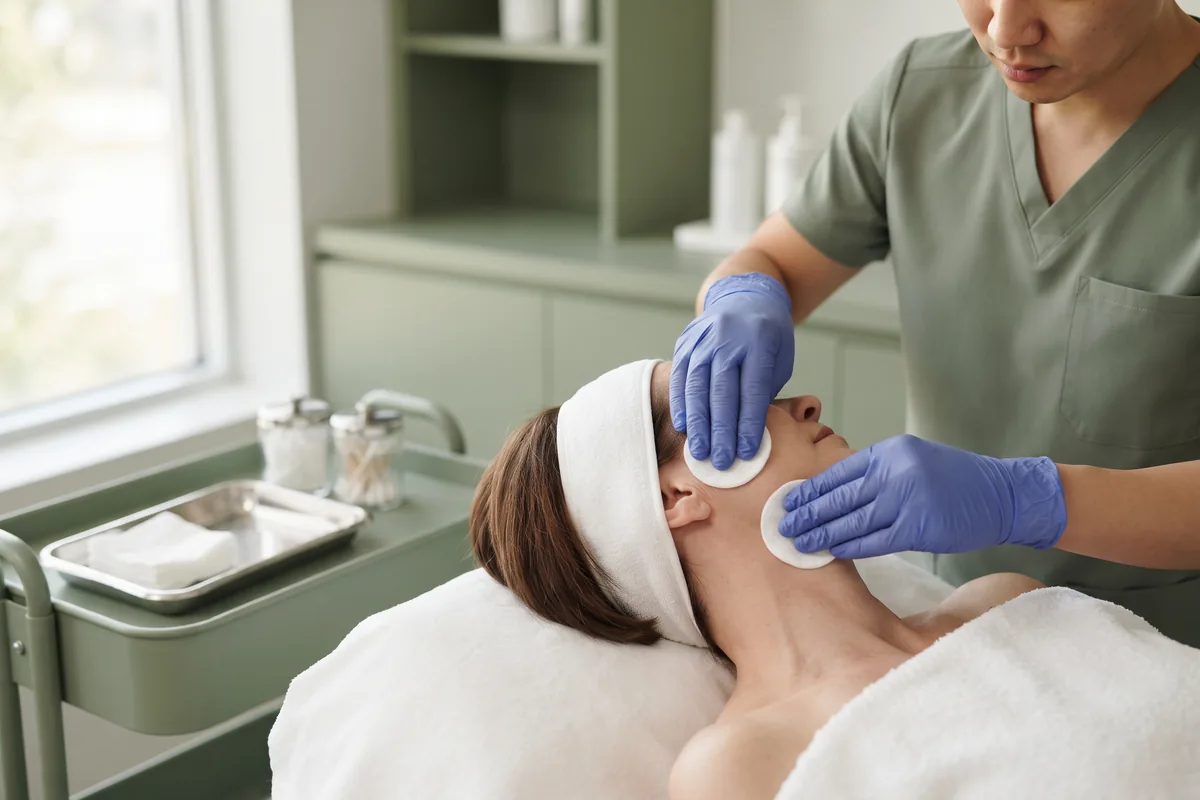
A cleansing facial softens and clears pores before any exfoliation or extraction.
Extractions: What Is Safe and What Is Not
Everyone has squeezed a pore at some point. I understand the urge, and I also know what it costs.
Pressing hard around a pore bruises the surrounding tissue and can push oil deeper instead of out. Fingernails break the skin and leave marks that last longer than the blackhead did. Repeated squeezing in the same spot can leave the opening looking wider and the area red for days.
In the studio, extraction comes after the skin is cleansed and softened, and only for pores that are ready to release. If a pore does not come out with light, even pressure, I leave it alone and use a peel or enzyme step to loosen it for the next visit. You will also hear about sebaceous filaments, the pale or grayish threads that sit in pores on the nose. They are a normal part of how oil travels to the surface, and they refill within weeks after being removed. I do not try to clear them every visit, because chasing them just irritates the skin.
Pore strips and vacuum gadgets can remove surface debris, but pulling on skin repeatedly is hard on the barrier. If you use a strip, keep it occasional and never on red or inflamed skin.
Oily Skin, Dry Skin and Large Pores
Large pores are not only an oily-skin issue. Dry and mature skin can have visible pores too, and the advice is different.
On oily skin, I focus on clearing and controlling shine, with salicylic acid and a peel series as the main tools. On dry or dehydrated skin, over-cleansing and strong drying products make pores look rougher, since the skin around them flakes and loses its smooth surface. Hydration and a gentle exfoliant do more than a clay mask. On mature skin, the main issue is lost support around the pore, so sunscreen, a retinoid under a doctor's guidance and gentle exfoliation matter most. Combination skin often needs two approaches at once, a clearing routine on the nose and chin and a kinder one on the cheeks.
A Four-Month Plan for Visible Pores
Here is a realistic timeline for someone with oily, congested skin who wants a calmer, smoother look. Adjust it for your own skin.
Month 1: base and analysis. Free skin consultation, simple routine, daily sunscreen. One deep cleansing facial ($105) to clear what is stuck.
Month 2: clear and build. Salicylic acid at home. An acne peel ($100) or almond peel ($95), depending on how your skin handles the first visit.
Month 3: refine. Second peel in the series, or microdermabrasion ($110) if the surface is rough. Add a retinoid if your doctor agrees.
Month 4: review and maintain. Compare photos taken in the same light. Move to a lighter schedule, such as a cleansing facial every month or two.
This is an example, not a package. Some skin needs fewer visits and some needs more, and I tell you at each step whether another treatment is worth your money.
How Long Before You See a Difference
Salicylic acid and a good cleanse can make skin look clearer within a couple of weeks. Retinoid and sunscreen effects on the structure around the pore build over months, not days. A peel series usually runs over several weeks, with visits spaced apart according to the peel and your skin's tolerance, and I plan that spacing in person.
What I will not promise is a number or a guarantee. Pore appearance depends on your age, oil production, sun history and how consistently you follow the routine. What I can promise is an honest read on what is realistic for your skin. Some people reach a point where pores look smooth in daily light and in photos. Others see good improvement but still have visible pores on the nose, which is normal.
Orange County adds one more factor: strong sun year round. Clients who treat pores in Irvine, Tustin or Newport Beach and skip daily SPF often lose the progress within a season. Sunscreen is part of the treatment plan, not an optional extra.
A short home routine of cleanser, treatment and sunscreen does more for pores than a shelf of products.
Mistakes That Make Pores Look Worse
Scrubbing harder. Friction inflames the skin and often increases oil.
Skipping moisturizer on oily skin. Dehydrated skin can produce more oil to compensate, and flaky surface skin makes pores look rougher.
Starting three actives in one week. You cannot tell what helps and what irritates.
Skipping sunscreen. UV breaks down the collagen that supports the pore wall. It is the main reason pores seem to stretch with age.
Heavy makeup and not removing it. Product left in pores adds to buildup. Wash it off every night.
Expecting one treatment to fix it. Clear pores need maintenance, like clean teeth.
When to Book a Consultation
If you have tried a few products and nothing is shifting, or if your skin gets worse every time you add something new, a skin analysis saves time and money. A free skin consultation at my Irvine studio covers your routine, your oil level, your medications and what is realistic for your pore concerns. I will tell you if a treatment is not worth booking yet.
For deeper problems such as inflamed acne, scarring or signs of a skin condition, I may suggest seeing a dermatologist first. That is part of doing this job honestly. When you are ready, you can book your visit, and I will build a plan with realistic spacing between treatments.
Questions to Ask at a Skin Analysis
If you are choosing where to go, ask what you will see and hear during the visit. A good analysis covers these points.
What type of large pores do I have, and what is the likely cause?
Which home products should I keep, stop or add?
How many professional visits do you expect, and when will we review?
Is there anything about my skin that should be seen by a doctor first?
Frequently Asked Questions
+ Can you permanently shrink pores?
No. Pore size is largely set by genetics, oil production and the collagen around the opening. You can make pores look smaller by keeping them clear, controlling oil and protecting skin from the sun, but nothing makes them permanently smaller on its own.
+ Do pores open with steam and close with cold water?
No. Pores have no muscle, so they cannot open or close. Warm water softens oil so it comes out easily, and cold water makes skin feel tighter for a few minutes. Neither changes pore size.
+ Which treatment is best for large pores on the nose?
Nose pores are usually filled with oil and dead cells. Salicylic acid at home plus a professional deep cleansing facial or a mandelic or acne peel series is a common plan. A skin analysis shows which fits your skin.
+ Does microdermabrasion make pores smaller?
It smooths the surface and clears debris, so pores look less obvious for a while. It does not change the actual size. It is not suitable for inflamed breakouts or rosacea.
+ How much do pore-focused treatments cost at Real Skin Beauty?
A deep cleansing facial is $105, microdermabrasion $110, an acne peel $100, an almond peel $95 and a HydraFacial $165. Skin consultations in the studio are free.
+ Why do my pores look bigger as I get older?
Skin loses collagen and elastin with age and sun exposure, so the walls around each pore support less and the opening looks wider or more oval. Daily sunscreen and, for some people, a retinoid recommended by a doctor help protect what you have.
+ Is it safe to squeeze blackheads at home?
I advise against it. Hard pressure can bruise skin, push oil deeper, leave marks and make the opening look larger. A professional extraction after cleansing and softening is gentler, and some pores are better loosened with a peel and left alone for now.
+ Can makeup make pores worse?
Heavy makeup does not enlarge pores by itself, but leaving it on overnight adds to buildup that makes them look darker and wider. Remove makeup every evening, choose non-comedogenic formulas if you break out, and keep brushes clean.
Licensed electrologist and cosmetologist with 20+ years of experience. Aida sees clients at Real Skin Beauty, 18021 Sky Park Circle, Suite N, Irvine, CA 92614.
Not sure why your pores look the way they do? Book a free consultation with Aida Khazieva at Real Skin Beauty in Irvine, CA. She will analyze your skin in person and recommend a realistic plan, including what to leave out.
This article is for informational purposes and reflects Aida Khazieva's professional experience. It does not replace a personalized medical consultation. Individual results vary.
Questions? Aida Answers Them All.
Visit our FAQ or book a free consultation to discuss your specific skin and hair concerns.