Facials for Acne-Prone Skin: The Complete Treatment Guide
By Aida Khazieva·Acne & Breakouts·13 min read·Real Skin Beauty, Irvine CA·Updated July 27, 2026
The most counterproductive thing I hear from acne clients is that they stopped getting facials because their last one made them break out. The instinct is understandable: if a facial caused more breakouts, why would you go back? But a facial that worsens acne is almost always a technique or product mismatch, not evidence that facials cannot help acne-prone skin. Done correctly, a professional acne facial is one of the most effective tools for managing congestion, reducing bacteria and producing visible improvement in breakout frequency and severity. This guide explains what the right acne facial looks like, what goes wrong when it is done incorrectly, and how to build a protocol that actually keeps skin clearer over time.
Quick answer: The best facial for acne-prone skin is a clinical acne facial: deep cleansing, careful sterile extraction, salicylic acid, blue LED light and a light non-comedogenic finish. Avoid oil-based massage and heavy masks. Facials manage and improve acne but do not cure its hormonal or genetic causes, so a home routine matters too.
Why Standard Facials Often Make Acne Worse
The standard facial protocol, the one designed for normal or dry skin seeking relaxation and glow, is a poor fit for acne-prone skin. Several elements of that traditional protocol can actively aggravate acne when applied to skin that is already prone to breakouts. Understanding these mechanisms is useful both for clients evaluating where to go for treatment and for understanding why the right acne facial looks so different from the generic spa facial.
Oil-based massage products. Traditional facial massage uses emollient oils and creams to provide slip. Many of these products are comedogenic, meaning they contain ingredients that block pores in acne-prone skin. Mineral oil, coconut oil, lanolin and cocoa butter are among the commonly used massage ingredients that clog pores in susceptible skin. When these are massaged into acne-prone skin during a standard facial, new comedones form and existing congestion is worsened. For acne-prone skin, massage either uses non-comedogenic water-based products or is omitted entirely from the treatment.
Inadequate extraction technique. Extractions performed with insufficient sterile technique spread P. acnes bacteria from one follicle to adjacent follicles. Bacteria transferred during poorly performed extractions can cause new breakouts in areas that were clear before the treatment. This is one of the most common causes of the "my facial made me break out" experience. The solution is sterile gloves, proper wound-field preparation, correctly applied pressure and never forcing an extraction that is not ready to come out cleanly.
Over-stimulating steam. Steam loosens sebum plugs and softens the skin, which is useful preparation for extractions. But prolonged steam application on already-reactive acne-prone skin can over-stimulate sebaceous glands and increase oil production in the hours following a treatment. Acne-appropriate steam is brief, controlled and followed immediately by treatment rather than being used as a relaxation element in its own right.
Heavy, occlusive finishing masks and moisturizers. Cream masks and rich finishing moisturizers designed to leave non-acne skin feeling nourished and hydrated can seal congestion into pores and create exactly the warm, occluded environment that P. acnes bacteria thrive in. Acne-appropriate finishing products are lightweight, non-comedogenic and often have active ingredients like niacinamide or zinc that support acne management rather than simply sealing the surface.
Purging versus new breakouts. One genuine complexity in this picture is the distinction between purging and new breakouts. Purging occurs when a deep-cleansing treatment accelerates the surfacing of congestion that was already forming below the skin. The breakouts appear in the same areas where congestion is usual for that client and resolve faster than typical breakouts. True new breakouts from a reaction to the treatment appear in new areas and behave like typical breakouts in terms of duration. Purging is expected and often desirable. New breakouts from incorrect technique or products are a problem to fix.
Types of Acne and Why Treatment Differs
Acne is not a single condition. The same word covers several distinct presentations that require meaningfully different treatment approaches. Using the wrong approach for the wrong type of acne is one of the reasons facials fail to improve acne in some clients.
Comedonal acne
Comedonal acne consists of blackheads (open comedones) and whiteheads (closed comedones) without significant inflammation. This is the type that responds best to professional extraction combined with salicylic acid treatment. The sebum plugs that form blackheads and whiteheads are accessible through the follicle opening with correct extraction technique and dissolve effectively with oil-soluble BHA treatment. A series of deep-cleansing facials with consistent salicylic acid application and careful extractions significantly clears this type of congestion over 4 to 6 sessions.
Inflammatory acne
Inflammatory acne includes papules (red, raised bumps) and pustules (papules with visible pus). These are active bacterial infections within the follicle. Extraction on papules is more complex because the follicle wall may not yet be intact enough for clean, contained extraction. Forced extraction on not-ready papules ruptures the follicle wall below the skin and spreads infection into the dermis, causing deeper, more painful lesions and increased scarring risk. The appropriate approach for inflamed papules is blue LED to kill the bacteria, high-frequency treatment to desiccate the pustule surface and reduce inflammation, and salicylic acid to prevent further congestion. Manual extraction is reserved for pustules that are fully surfaced and ready.
Cystic and nodular acne
Cystic and nodular acne involves large, deep, painful lesions that form entirely within the dermis without a follicular opening at the surface. These lesions cannot be extracted through the skin surface without causing significant trauma and scarring. Professional esthetic treatment for cystic acne focuses on reducing inflammation through non-invasive means: blue LED, high-frequency, anti-inflammatory masks. For persistent cystic acne, a referral to a dermatologist for medical management (spironolactone, isotretinoin, cortisone injection) is the appropriate recommendation. Esthetic treatment manages the surface environment but cannot adequately address the dermal-level infection of true cystic acne on its own.
The Extraction Rule I Never Break
A lesion that does not come out cleanly with gentle pressure stays in. Forced extraction, the kind that requires significant pressure and causes visible trauma to the surrounding skin, does more damage than leaving the lesion in place. A comedone that is not ready for extraction will be ready in another week. A follicle wall ruptured by forced extraction leaves a potential scar that was preventable. When I teach clients about this at my Irvine studio, the concept that is most useful: "ready" extractions feel like very light pressure with immediate clean release. Anything requiring significant force is not yet ready.
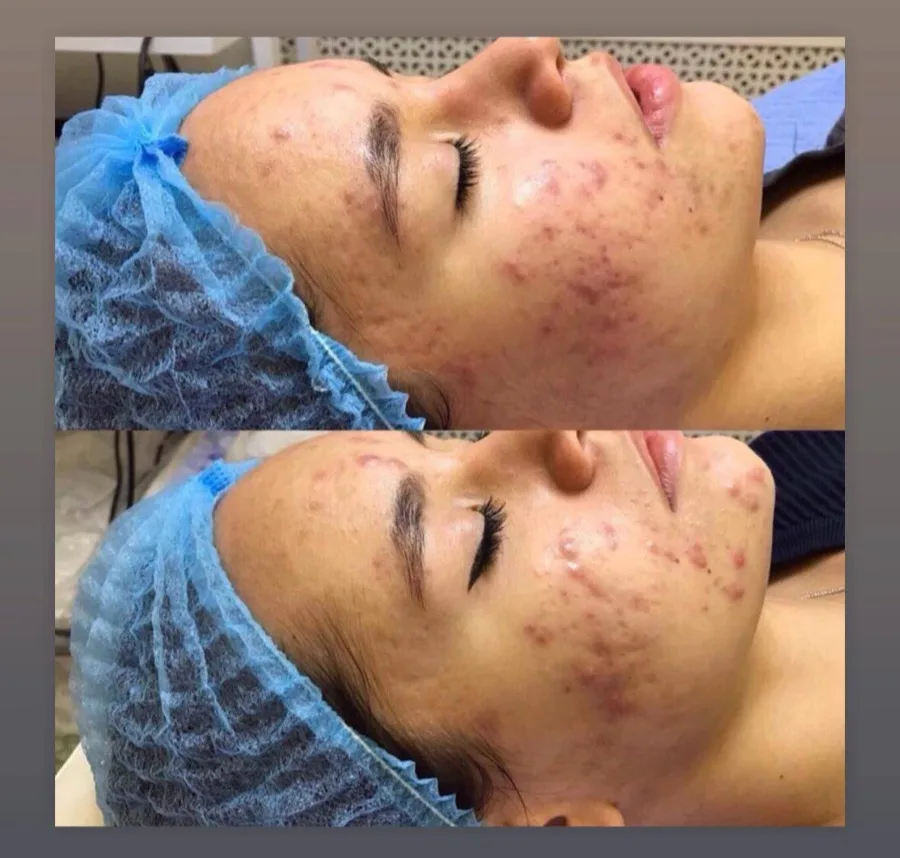
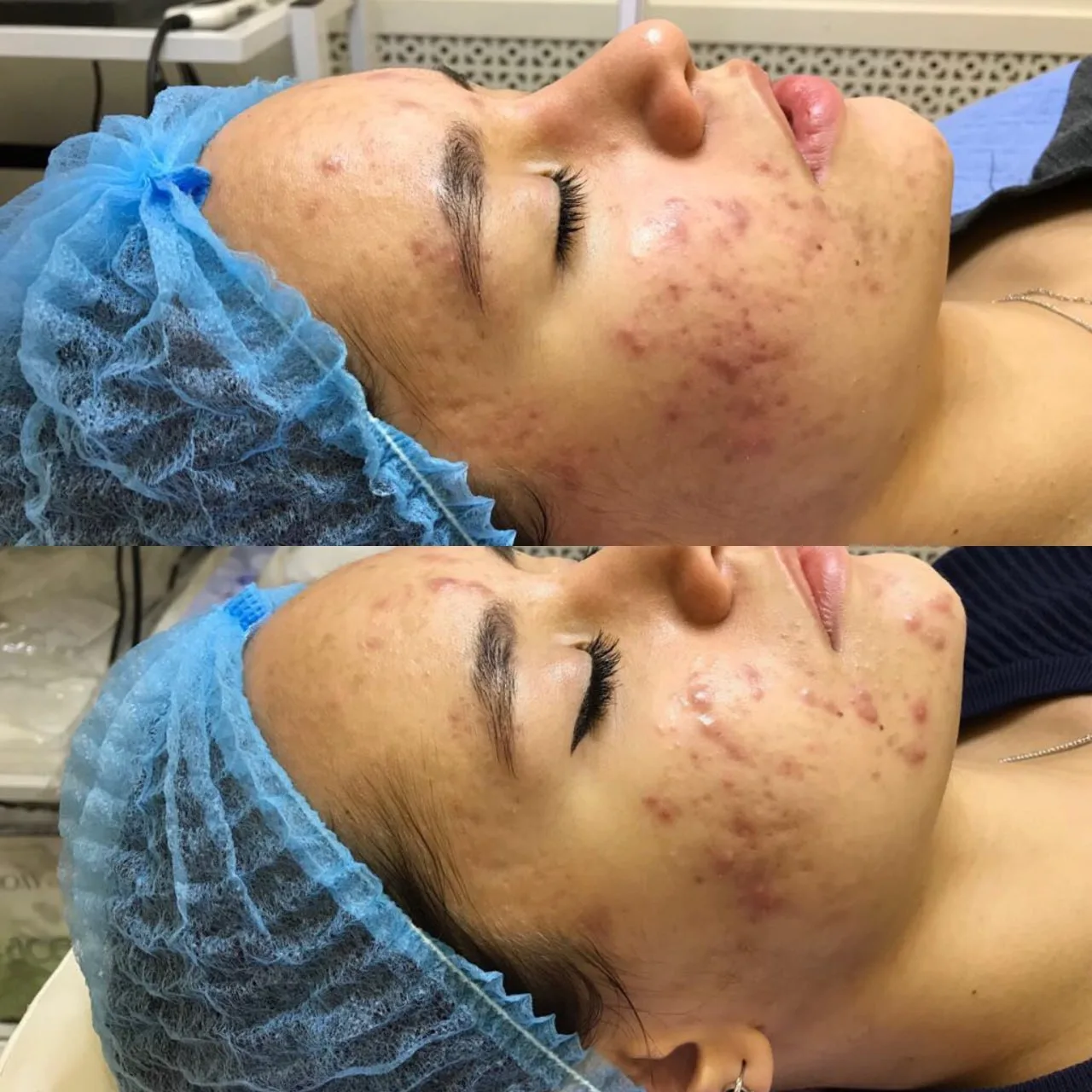
Acne-prone skin before and after a professional cleansing facial at Real Skin Beauty.
Salicylic Acid Treatments for Active Breakouts
Salicylic acid (beta-hydroxy acid, BHA) is the most clinically appropriate chemical exfoliant for acne-prone skin and a cornerstone of professional acne treatment. Its chemistry makes it uniquely well-suited to follicular acne: unlike alpha-hydroxy acids, salicylic acid is oil-soluble. It dissolves in sebum and penetrates inside the follicle rather than working only at the surface. Once inside the follicle, it dissolves the sebum-cell plug that forms comedones, loosens and clears existing congestion, and has direct anti-inflammatory properties that reduce the redness and swelling associated with inflammatory acne lesions.
The concentrations used in professional acne facials range from 10 to 30 percent, significantly higher than the 0.5 to 2 percent found in over-the-counter acne products. A professional salicylic acid peel applied by a trained esthetician produces follicular clearing that at-home products cannot match because the concentration and contact time can be precisely controlled and because the pre-treatment preparation and extraction sequence that precede the peel optimize the result.
The protocol for salicylic acid application in an acne facial at my Irvine studio:
Deep cleanse to remove surface sebum and product residue
Brief controlled steam or warm towel to soften sebum plugs
Manual extractions of comedones and ready pustules under sterile technique
Salicylic acid application at the appropriate concentration, left for the appropriate contact time based on skin sensitivity assessment
Neutralization and thorough removal
Blue LED application
Non-comedogenic calming serum (niacinamide, centella asiatica) and lightweight SPF
Most clients with comedonal and mild to moderate inflammatory acne see visible improvement within 48 to 72 hours of this treatment sequence. Pores look tighter, existing congestion is reduced and inflammation is visibly calmer. A series of 4 to 6 monthly treatments produces cumulative improvement that is significantly greater than a single session, because each treatment addresses the current congestion while creating conditions that make the next cycle of congestion milder.
The chemical peels page at Real Skin Beauty describes the specific acne-focused peel options I offer, including how salicylic peels are incorporated into a broader acne management protocol.
LED Blue Light: The Anti-Bacterial Professional Treatment
Blue LED light at 405 to 420 nanometer wavelength is one of the most effective and safest professional acne treatments available. Its mechanism is specific and well-documented: light at this wavelength is absorbed by porphyrins, molecules naturally produced by P. acnes bacteria as metabolic byproducts. When porphyrins absorb blue light photons, they generate reactive oxygen species that destroy the bacterial cell membrane from within. This photodynamic antibacterial process kills P. acnes bacteria in the follicle without heat, without chemical activity, without pain and without any effect on surrounding healthy skin cells.
The specificity of this mechanism is what makes blue LED particularly valuable for acne treatment. The porphyrins in P. acnes are the photosensitive target. Human skin cells do not contain these porphyrins in significant quantities, so the antibacterial light does not damage healthy skin. This allows blue LED to be applied over active acne lesions, including inflamed papules and pustules, without risk of causing the additional irritation that other active treatments would produce on compromised skin.
Clinical outcomes from blue LED for acne are well-documented. Multiple randomized controlled trials have shown statistically significant reductions in inflammatory acne lesion counts following a series of blue LED treatments. A 2003 study in the British Journal of Dermatology showed 76 percent mean improvement in inflammatory lesion count after 12 weeks of twice-weekly blue LED treatment. A 2012 review in the Journal of Clinical and Aesthetic Dermatology confirmed consistent evidence for blue LED efficacy in reducing inflammatory acne lesion counts across multiple trials.
In my practice, I apply blue LED following extraction and salicylic acid treatment in every acne facial session. The sequence makes clinical sense: remove the physical obstruction in the follicle through extraction and chemical dissolution, then kill the residual bacteria with blue light. I also offer blue LED as a standalone treatment between full facial appointments for clients who are experiencing an active inflammatory flare and want to reduce bacteria load without the full protocol.
Blue LED can also be combined with red LED in the same session. The red wavelength reduces inflammation and stimulates repair while the blue wavelength addresses bacteria simultaneously. This combination is particularly useful for clients with active inflammatory acne alongside the post-inflammatory hyperpigmentation that previous breakouts have left behind.
High-Frequency Therapy for Acne Control
High-frequency therapy uses an alternating electrical current at a high frequency, typically 100,000 to 250,000 Hz, delivered through a glass electrode filled with argon or neon gas. When the current passes through the gas, it generates ozone at the skin surface. The ozone has direct antibacterial properties that reduce the P. acnes bacterial count on the skin surface and within accessible follicles.
High-frequency therapy for acne works through three distinct mechanisms:
Ozone generation: The UV-ozone produced at the electrode contact point kills surface bacteria and has mild disinfecting activity within superficial follicles.
Thermal effect: The mild warming of the tissue from the current stimulates local circulation, bringing immune cells and oxygen to the treatment area. This supports the skin's own acne-fighting immune response.
Desiccation of pustules: When applied directly to a pustule using the "direct method," high-frequency desiccates the surface of the lesion, reducing its size and promoting faster resolution without requiring extraction of a lesion that may not yet be ready.
High-frequency is particularly useful for clients with active inflamed acne that is not yet ready for extraction. The combination of bacterial kill, circulation stimulation and direct lesion desiccation helps inflamed lesions resolve faster than they would without treatment. It is also useful as a final antibacterial step after extractions, applied over the just-extracted zones to reduce the risk of post-extraction inflammation spreading.
The sensation during high-frequency treatment is a mild, buzzing tingle. Some clients describe it as feeling like static electricity. It is not painful and produces no recovery period. The skin may appear slightly flushed immediately after, which resolves within 30 to 60 minutes.
What a Proper Deep Cleansing Acne Facial Looks Like
An acne facial performed correctly is a clinical treatment, not a relaxation experience. The goal is measurably clearer skin, reduced bacterial load and an improved follicular environment. Here is a detailed description of what a proper acne facial involves at my Irvine studio, step by step.
Step 1: Double cleanse. The first cleanse removes surface product, makeup and environmental debris. The second cleanse is the treatment cleanse: I use a low-concentration salicylic acid cleanser and work it into the skin for 60 to 90 seconds to begin loosening sebum plugs before any other treatment step.
Step 2: Skin analysis. Under magnification and bright light, I map the face: where are comedones, where are active inflammatory lesions, where is congestion building, what is the overall barrier condition. This map guides every subsequent decision in the treatment.
Step 3: Controlled steam. For acne-prone skin, steam is brief (5 to 8 minutes maximum) and kept at a moderate temperature. The goal is softening sebum plugs to make extractions cleaner. Steam is not used as a relaxation element and is shortened or eliminated entirely for clients with sebaceous hyperactivity where extended steam triggers increased oil production.
Step 4: Extractions. This is the most technically demanding part of the acne facial. I extract only lesions that are ready: comedones that release cleanly with appropriate gentle pressure, pustules that have fully surfaced. I use sterile gloves and work systematically across the face. No forced extractions. Every extracted site is immediately treated with a high-frequency pass to reduce post-extraction bacteria spread.
Step 5: Salicylic acid application. After extractions, salicylic acid at the appropriate concentration is applied to the full face. The freshly extracted follicles are particularly receptive to the BHA's deep-penetrating activity at this moment. Contact time is timed precisely.
Step 6: Blue LED, 15 to 20 minutes. Following salicylic acid removal, blue LED is applied for a full session. This is not a quick light pass. The full therapeutic dose requires adequate exposure time.
Step 7: Calming mask or treatment ampoule. A non-comedogenic calming mask with centella asiatica, niacinamide or green tea extract is applied to reduce residual redness and support barrier repair. Heavy cream masks are not used.
Step 8: Finish. Lightweight non-comedogenic serum and SPF. No heavy moisturizer. No facial oil.
The full treatment takes 75 to 90 minutes. A compressed version done in 45 minutes cuts steps that matter: inadequate salicylic contact time, shortened LED exposure, rushed extractions. When I see clients who report poor results from acne facials elsewhere, the history almost always reveals a compressed protocol.
After Your Acne Facial: The 48-Hour Rules
Do not apply heavy moisturizers, facial oils or makeup with talc or comedogenic pigments for 48 hours after an acne facial. Do not touch your face unnecessarily. Do not work out within 24 hours (sweat on freshly treated skin can introduce bacteria into the extraction sites). Do wash your pillowcase before the night of your appointment. These habits protect the work the facial just did and prevent the new congestion cycle from starting immediately.
Inflammation calms gradually over a series of treatments combined with a consistent home routine. Individual results vary.
What to Tell Your Esthetician Before an Acne Facial
The intake conversation before an acne facial is not a formality. The information you share directly determines whether the treatment is safe and whether the product choices are appropriate. Here is what I need to know from every new acne client, and why each piece of information matters.
Current and recent medications
Isotretinoin (Accutane): Current use is an absolute contraindication for extractions, peels and any treatment that challenges the skin barrier. I ask about Accutane history specifically because the skin thinning effects persist for at least 6 months after completing a course. Clients who do not disclose Accutane history and receive standard acne treatment risk significant adverse reactions.
Topical prescriptions: Tretinoin, adapalene, clindamycin, benzoyl peroxide, dapsone. I need to know what you are applying and when you last applied it. Some topical prescriptions sensitize the skin to salicylic acid in ways that require concentration adjustment.
Oral medications: Antibiotics can change the skin's microbiome in ways that affect treatment response. Certain medications cause photosensitivity that affects LED treatment parameters. Hormonal contraceptives affect acne pattern in ways that inform treatment planning.
Current skincare products
Knowing what products clients are using at home tells me a significant amount about their skin's current state and possible sensitivities. A client using a strong at-home BHA daily may have different acid tolerance than one with no current exfoliation in their routine. A client using a vitamin C serum with L-ascorbic acid needs different post-peel care than one using no vitamin C.
Dietary supplements
Biotin supplements at high doses have documented connections to acne for some individuals. High-dose vitamin B12 supplements can also contribute to acne in some people through mechanisms that alter skin bacterial ecology. Fish oil, zinc and vitamin D, in contrast, have evidence for supporting acne improvement. Knowing what supplements a client takes helps identify potential contributors to their breakout pattern.
Breakout history and pattern
Where on the face do breakouts consistently appear? Are they cyclical with the menstrual cycle? What makes them worse? What has helped in the past? This history points to comedonal versus inflammatory versus hormonal patterns and helps me select the most appropriate treatment approach. A client whose breakouts are primarily on the lower face and jaw with a cyclical pattern needs a different protocol than one whose congestion is primarily through the T-zone without cyclical variation.
You can book a free initial consultation at Real Skin Beauty before committing to a treatment if you want to discuss your specific history and what the right approach would be. The FAQ page also covers common questions about acne treatment preparation and what to expect.
Maintaining Clear Skin Between Professional Sessions
Professional acne facials produce the best results when the at-home routine between sessions actively supports the work done in the treatment. A good acne facial that is followed by a home routine using comedogenic products and no active acne management loses ground faster than one followed by a consistent, appropriate home routine. Here is the at-home framework I recommend to acne clients in my Orange County practice.
Cleansing
Twice daily with a non-foaming or gentle foaming cleanser that contains 0.5 to 2 percent salicylic acid. The salicylic acid in a cleanser does not have long enough contact time to act as a peel, but it does maintain a daily dose of follicular clearing activity that prevents the rapid re-accumulation of comedonal congestion between professional sessions. Avoid sulfate-heavy foaming cleansers that strip the barrier, as barrier disruption increases skin reactivity and can actually worsen inflammatory acne.
Actives for acne management
Niacinamide (4 to 10 percent): Reduces sebum production, decreases pore appearance, anti-inflammatory, reduces post-inflammatory hyperpigmentation from previous breakouts. One of the most versatile and well-tolerated active ingredients for acne-prone skin.
Benzoyl peroxide (2.5 to 5 percent): Kills P. acnes bacteria and helps prevent antibiotic resistance. Use as a spot treatment or an all-over very thin layer. Start at 2.5 percent before increasing to 5 percent to minimize initial dryness and irritation.
Azelaic acid (10 to 20 percent): Anti-bacterial, anti-inflammatory, reduces post-inflammatory hyperpigmentation. Particularly useful for clients with acne and concurrent pigmentation concerns. Well-tolerated by most skin types including sensitive skin.
Non-comedogenic moisturizer
Acne-prone skin still needs hydration. Dehydrated skin produces more oil to compensate for water loss, which creates a worse environment for acne. A lightweight, non-comedogenic moisturizer with glycerin, hyaluronic acid or ceramides provides hydration without clogging pores. Look specifically for the label "non-comedogenic" and check the ingredient list for known comedogenic ingredients including coconut oil, cocoa butter and isopropyl myristate.
SPF every morning
Acne lesions and the post-inflammatory hyperpigmentation they leave are made significantly darker by UV exposure. SPF every morning is not optional for acne-prone clients. Choose a formula labeled specifically as non-comedogenic and tested on acne-prone skin. Mineral sunscreens with zinc oxide are generally better tolerated than chemical sunscreens for acne-prone and sensitive skin types.
For clients who want to understand how to combine professional treatment with the right home routine for their specific skin, the full range of skin services at Real Skin Beauty provides context for how different treatments fit together. The about page describes the approach I take to building individualized protocols rather than applying generic templates to every client.
Frequently Asked Questions
Why did I break out after getting a facial?
Several mechanisms can cause post-facial breakouts. Comedogenic massage oils seal bacteria into pores. Poor extraction technique spreads P. acnes bacteria to adjacent follicles. Over-stimulating steam increases oil production. Heavy finishing products clog freshly extracted pores. True new breakouts after a facial indicate a technique or product mismatch, not evidence that facials cannot help your skin. Purging, where deep cleansing accelerates surfacing of congestion already forming, is different and can look like a breakout but resolves faster in areas where you normally break out.
What type of facial is best for active acne?
A clinical acne facial with careful, brief steam, sterile-technique extractions of ready lesions, salicylic acid application at an appropriate professional concentration, blue LED light therapy for antibacterial effect and a lightweight non-comedogenic finish. No oil-based massage, no heavy occlusive masks, no finishing products that would clog freshly cleared pores. The protocol is calibrated to the specific type and severity of acne, not applied identically to every client.
Can facials permanently clear acne?
No. Facials manage and improve acne but do not cure its underlying drivers, which are typically hormonal, dietary or genetic. Consistent professional treatment alongside an appropriate at-home routine produces the best long-term management. Clients who treat professional facials as part of an ongoing skin health practice rather than expecting a one-time permanent fix consistently achieve better results than those looking for a single-session solution.
Is a facial safe if I am on Accutane (isotretinoin)?
No. Isotretinoin thins the skin and severely compromises the barrier's ability to tolerate any active treatment. Facials, chemical peels, extractions and waxing are all contraindicated during Accutane treatment and for a minimum of 6 months after completing the medication. I ask about Accutane history at every new client intake and will postpone any active acne treatment if Accutane is current or recent. Gentle, barrier-supportive skincare is appropriate during this period. Active treatments wait until the skin has fully recovered.
How soon after a facial will I see my acne improve?
With appropriate treatment, many clients see reduced inflammation and visibly clearer pores within 48 to 72 hours. The immediate improvement from a good acne facial is from extraction clearing existing congestion, salicylic acid dissolving follicular buildup and blue LED reducing the bacterial population. Cumulative improvement in breakout frequency and severity develops across a series of 4 to 6 monthly acne facials as the ongoing treatment progressively changes the follicular environment.
Licensed electrologist and cosmetologist with 20+ years of experience. Aida sees clients at Real Skin Beauty, 18021 Sky Park Circle, Suite N, Irvine, CA 92614.
Book a free consultation at Real Skin Beauty in Irvine, CA. I will assess your specific acne type, review your current products and medications, and explain exactly what treatment approach is right for your skin.
This article is for informational purposes and reflects Aida Khazieva's clinical experience. It does not replace a personalized medical consultation. Individual results vary.