Skin Purging vs Breakout: How to Tell the Difference
By Aida Khazieva·Facials and Skin Care·14 min read·Real Skin Beauty, Irvine CA·Updated October 18, 2026
Skin purging is a temporary flare of small pimples in your usual breakout zones after starting a retinol, acid or peel. A breakout from a bad product shows up in new places, may itch or burn, and keeps getting worse. Most purges settle within four to eight weeks; if skin is worse after eight to twelve, it is probably not a purge. Below are seven checks, a timeline and when to stop, from my Irvine studio.
Quick answer
Purging appears in your usual breakout zones, with small spots that clear faster than usual, after starting a retinoid, acid or peel.
A reaction appears in new areas, itches, burns or swells, and does not improve.
New moisturizers, makeup and sunscreens do not cause purging, so breakouts from them are reactions.
Reduce frequency, keep skin calm, and see a doctor if skin burns, swells or is worse after 8 to 12 weeks.
Purging or Breakout: The Short Version
A purge is a temporary flare of small pimples and comedones that can appear after you start a product that speeds up skin cell turnover, such as a retinoid, an exfoliating acid or a professional peel. A breakout is a reaction to something that does not suit your skin, or a flare with another cause such as hormones, stress or friction. Both look like pimples. The difference lies in where they appear, how they behave and how long they last.
As a rule, purging shows up in the places where you already break out, involves small bumps that clear faster than your usual pimples, and begins within the first couple of weeks of starting an active. A breakout from a bad product tends to appear in new places, may itch, burn or look like uniform red bumps, and keeps going or gets worse the longer you use the product.
Dermatologists do not always agree on the word purging, and some prefer to call it an expected adjustment period. I use it because clients ask about it all the time at my Irvine studio. I am a licensed cosmetologist, not a physician, so I describe patterns and common practice, and I send people to a doctor when something does not fit.
What Happens Inside the Skin During a Purge
Pimples and comedones begin deep in the pore, weeks before they are visible. A plug of oil and dead cells forms, bacteria feed on the oil, and the surrounding skin can become inflamed. At any time there are several of these microcomedones under the surface that you cannot see yet.
Ingredients that speed up cell turnover push those hidden plugs toward the surface faster than they would have come up on their own. Skin that normally takes about a month to renew itself, a pace that slows with age, starts shedding cells more quickly. The result is a short period when you see more spots than usual, in the same regions where spots tend to form. If the active is doing its job, the plugs clear out and the number of new ones drops.
That is the theory behind purging, and it explains the pattern: same location, small spots, resolve more quickly, and an expected window after you start. It does not mean every breakout after a new product is a purge. Plenty are simply irritation or clogging, and calling those a purge delays the moment you stop using a product that does not suit you.
A useful way to think about it: a purge is a side effect of the treatment working as intended, and a breakout is a sign that the treatment or product is not right for you. The two can overlap. You may purge and also irritate your skin by using too much, which is why reducing frequency is the first move in nearly every case. Skin that feels comfortable is skin that can keep using the active, and that matters more than speed.
It also helps to know what a purge is not. It is not detoxing. Skin does not store toxins that spots release, and the idea sells products more than it explains skin. What actually happens is mechanical: pores that were already blocked get cleared sooner than they would have been. That is a modest, understandable process, and it should look like a mild, short flare, not a crisis.
Which Products and Treatments Can Cause a Purge
Purging is linked to ingredients and procedures that change how quickly the skin renews. These are the usual ones.
Often noticed in the first several weeks; a retinoid guide is in my retinol article
Salicylic acid and other BHAs
Clears the pore lining and releases trapped material
Usually shorter than a retinoid purge
Glycolic, lactic and mandelic acids (AHAs)
Surface exfoliation increases turnover
Can show up within a week or two
Chemical peels
Controlled exfoliation, sometimes followed by a flare
Days to a couple of weeks after the peel
Microdermabrasion and similar exfoliation
Removes the top layer and loosens plugs
Often within a week
Benzoyl peroxide
Mainly kills bacteria; some people notice dryness and flaking first
Variable
Other products behave differently. A new moisturizer, foundation, sunscreen, hair product or cleanser does not speed up cell turnover. If you break out after starting one of them, you are probably dealing with clogging or irritation, not a purge. Treat that as a reaction until proven otherwise.
Weekly photos in the same light show whether spots are fading or multiplying.
How to Tell the Difference: Seven Checks
No single sign settles it, but together these checks give a clear picture.
Check
Points to a purge
Points to a breakout or reaction
Location
Your usual breakout zones (for example chin, jaw or forehead)
New areas, such as cheeks that never broke out before
Spot type
Small comedones and small pimples
Large, painful, cystic or uniform itchy bumps
Timing
Begins within 1 to 3 weeks of starting a turnover-boosting active
Begins within days of any new product, or after weeks of use
Healing speed
Spots come up and resolve faster than your usual ones
Spots linger or are replaced by new ones
Skin feel
Dry or mildly flaky, no burning
Burning, stinging, swelling, hives or rash
Trend
Improves after several weeks
Does not improve or worsens
Product type
An active that changes cell turnover
A new moisturizer, makeup, sunscreen or cleanser
If you tick mostly the left column, a purge is likely. If you tick mostly the right column, stop the product. When in doubt, treat the situation as a reaction and see a professional before continuing.
A photo diary helps. Take a picture in the same light every week. It shows whether the number of spots is dropping, which your memory will not tell you after a stressful month.
How Long a Purge Lasts
There is no exact number, and published guidance varies. Many dermatology and skin care sources describe the adjustment period as lasting several weeks, commonly in the range of four to six weeks for a retinoid, with some people taking longer. Skin has a renewal cycle of roughly a month in younger adults, and it slows with age, so older skin may take longer to show the pattern.
As a practical rule, I use this timeline with clients.
Time since starting
What is normal
What to do
Week 1 to 2
Mild dryness. A few new spots may appear in usual zones.
Stay the course. Keep moisturizing and use sunscreen.
Week 3 to 4
Flare may peak. Spots are small and come and go quickly.
Reduce frequency of the active if skin is raw. Do not add new products.
Week 5 to 6
Fewer new spots. Texture starts to smooth.
Continue at the same level.
Week 8 to 12
Clear improvement for many people.
Reassess. If skin is worse than at the start, see a professional.
If skin is still flaring after about eight to twelve weeks of steady use, treat it as a poor fit rather than a purge. That decision is yours and your dermatologist's. Waiting forever for a purge to end is a common trap.
What a Reaction Looks Like
Reactions come in a few types, and they call for different responses.
Irritant reaction. Redness, stinging, tightness and flaking, usually from using too much of an active or combining several at once. It improves when you reduce the amount.
Allergic contact reaction. Itching, swelling, small blisters or a rash where the product touched the skin. It can appear a day or two after use. Stop the product and see a doctor if swelling is significant, if it affects the eyes or lips, or if you have trouble breathing, in which case seek emergency care.
Clogging. Many small flesh-colored bumps or whiteheads, especially in areas where you apply a rich cream or sunscreen. It tends to follow a new heavy product.
Fungal-type folliculitis. Uniform, itchy small bumps, sometimes on the forehead or chest. Standard acne products do not always help, and a dermatologist can diagnose it.
Hormonal or stress flare. Deeper, tender bumps along the jaw and chin around the same point in your cycle. See hormonal acne treatment.
Friction. Masks, helmets, hands and hair rubbing the same area.
Because the list is long, one of the most useful questions is what changed. List everything you started or stopped in the past month, including shampoo, laundry soap, makeup, supplements and medication. Very often the answer is on that list.
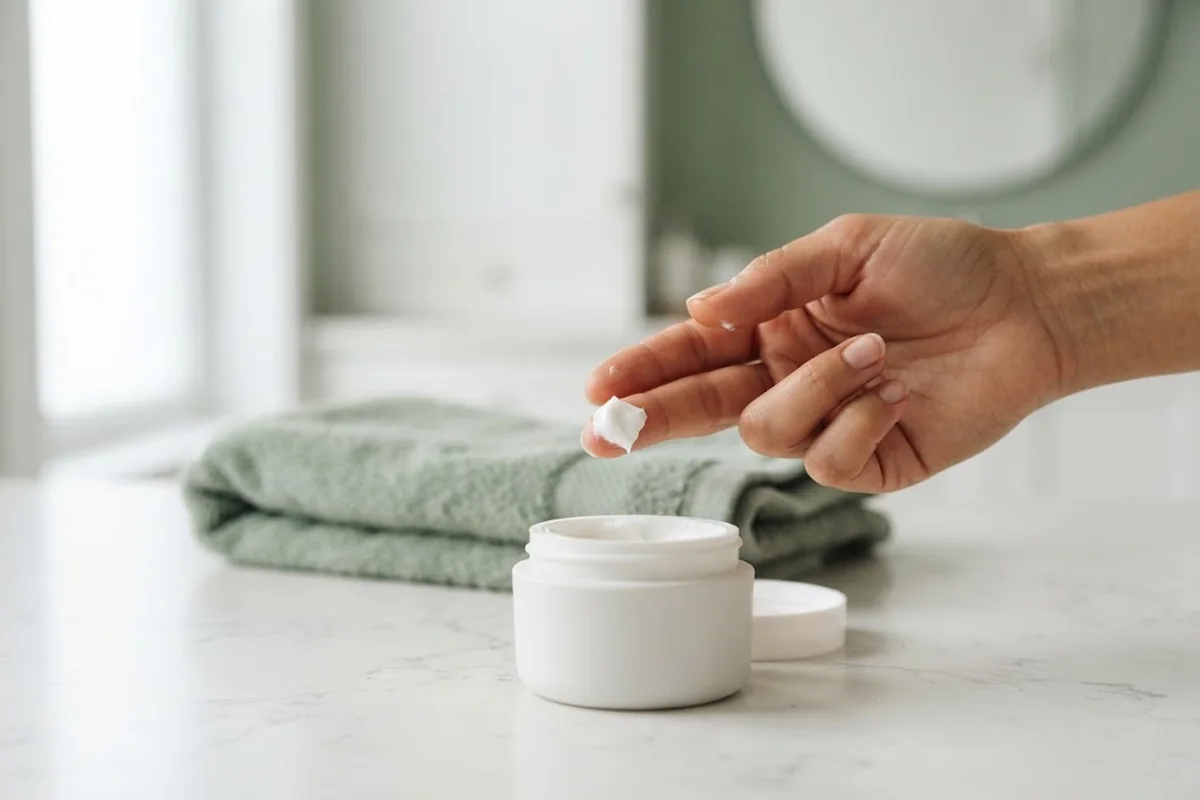
A pea-sized amount, two or three evenings a week, is a gentle way to start any active.
What to Do During a Purge
If your pattern fits a purge, the plan is to be calm and steady. These steps keep skin comfortable while it adjusts.
Do not stop abruptly in week one or two unless you have signs of a reaction. Stopping resets the clock.
Reduce the frequency. Go from every night to two or three nights a week, or alternate nights. That is often enough to slow the flare.
Do not add more actives. Pause scrubs, extra acids and other strong products.
Keep the barrier comfortable. Plain cleanser, plain moisturizer, sunscreen every morning.
Do not pick. Picking turns a small, fast-clearing spot into a mark that stays for months.
Use gentle spot care only if needed. A small dab of a pimple patch can protect a spot from picking, and it adds no extra active.
Document with photos to see the trend.
Ask a professional if your skin is painful, burning or not improving.
If your skin tolerates it, the "sandwich" method helps beginners: apply moisturizer, then the active, then moisturizer again. It softens the effect without removing the benefit. For a full routine, see the skin care routine for beginners.
Age, Skin Tone and Hormones Change the Timeline
The same product can behave very differently on two people, and these factors are the usual reasons.
Age. Cell turnover slows over time, so skin in the 40s or 50s may take longer to show a purge, and often shows a smaller one. Dryness and sensitivity are more common than spots.
Skin tone. Inflamed spots on deeper skin tones can leave dark marks that outlast the spot itself. Go slower, protect with sunscreen and never squeeze.
Hormones. Spots that follow your cycle can easily be mistaken for a purge. Track the dates for two or three months to see whether the pattern matches your period.
Dry or sensitive skin. Flaking and tightness can show up before any spots. Reduce frequency and moisturize.
Oily, congested skin. Usually has more hidden plugs, so a visible flare is more likely, and the improvement afterward is also noticeable.
Pregnancy and nursing deserve a separate line. Some actives that are common in skin care are not recommended in pregnancy, and it is a conversation for your doctor, not for a blog or a salesperson. If you might be pregnant, tell your practitioner before any peel or exfoliating treatment.
How to Start a New Active So the Flare Stays Small
The best purge is the one you barely notice. Most intense flares come from starting too much too fast. This schedule works for most beginners with healthy skin. It is a general outline, not medical advice.
Week
Retinoid or acid schedule
Notes
1
One evening, pea-sized amount for the whole face
Moisturize after. Sunscreen every morning.
2
Two evenings, with a rest night between
Skip if skin feels tight or stings
3 to 4
Two or three evenings per week
Stay here for a full month before increasing
5 to 8
Every other evening if skin is comfortable
Never use two exfoliating actives on the same night at the start
After 8
Adjust to what your skin tolerates
Many people stay at three to four nights a week
Start with one active, not three. If you add a retinoid, an acid and vitamin C in the same week and the skin erupts, you cannot tell which one did it. Wait at least two weeks between additions. Apply to dry skin, because damp skin absorbs more and stings more. Keep products away from the corners of the nose, the corners of the mouth and the eyelids.
Choose strength carefully. A low percentage or a gentler form will cause a smaller flare, and the benefit comes from consistent use, not from the maximum strength. If your skin is sensitive or you have rosacea, read my rosacea skin care guide before adding actives.
Purging After a Facial or Peel
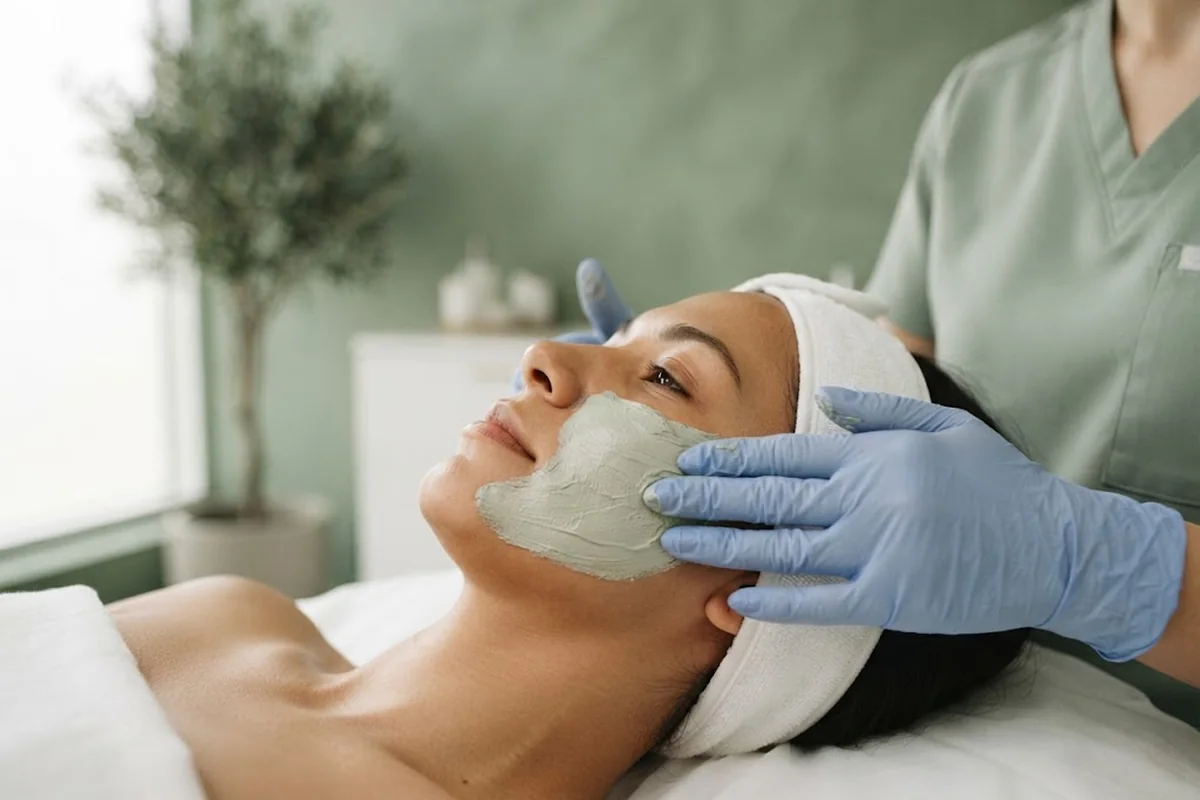
Clients often ask whether a few spots after a facial are a purge. The honest answer is that it depends. After a treatment with exfoliation or extractions, skin can be sensitive for a few days, and small spots can appear along the treated area as it recovers. Some people see them. Others do not. They usually clear within several days to a couple of weeks.
There are a few things I do to reduce the chances. I examine the skin first and adjust the strength or skip exfoliation if the skin is reactive. I ask what you use at home, because retinoids and acids stack on top of the treatment. I calm and protect the skin at the end. I give clear aftercare. You can follow these steps:
Avoid picking, scrubbing and hot exercise for the first 24 hours.
Pause retinoids and acids for a couple of days, or as advised.
Use gentle cleanser, simple moisturizer and sunscreen.
Do not book another strong exfoliating treatment right away.
Send me a photo if a flare lasts longer than a week, or if the skin burns, swells or oozes.
Peels have their own timelines. My guide to chemical peel recovery shows what to expect day by day, and the glycolic acid peel guide covers a common acne-prone option. If breakouts follow every peel you try, we should talk about whether a gentler option such as an almond (mandelic) peel suits your skin better.
Mistakes That Make a Purge Worse
Most flares that I see in the studio last longer than they need to because of avoidable habits.
Calling every breakout a purge. It delays stopping a product that is clogging or irritating you.
Layering extra products to treat the flare. More actives on irritated skin create a second problem.
Over-cleansing. Washing three or four times a day strips the barrier and adds dryness and redness.
Skipping sunscreen. Retinoids and acids make skin more sun-sensitive, and sun on inflamed spots can leave dark marks.
Switching products too often. Skin needs weeks to show a trend.
Squeezing. It turns a spot that would clear in days into a mark that lasts weeks or months.
Comparing yourself with someone else. A friend's timeline says little about yours. Age, hormones and skin barrier all change it.
If you recognize some of these, you are not alone. Tidy up your routine, return to the basics and give it a few weeks. Skin is forgiving when you stop provoking it.
A calming step at the end of a facial helps skin settle, especially when it is adjusting to new actives.
When to Stop and When to See a Doctor
Stop the product and see a dermatologist or your doctor if you have any of these.
Burning, swelling, hives, blistering or a spreading rash.
Swelling of the lips, eyelids or face, or difficulty breathing (seek emergency care).
Deep, painful or cystic spots that leave scars.
Skin that is worse than at the start after eight to twelve weeks.
A flare that comes with other symptoms such as irregular periods, rapid hair growth or fatigue.
Pregnancy or nursing while using retinoids or other prescription products. Ask your doctor, and do not rely on general advice.
Isotretinoin use. Many professional treatments are not recommended during and for some time after isotretinoin, so ask your prescriber.
For acne that is persistent, the options are broader than cosmetic care. Prescription topicals, oral medications and procedures exist, and a dermatologist chooses among them based on your history. Studio care works best as a complement: gentle cleansing, careful exfoliation, extraction and a routine you can keep.
How I Help Clients Through the Adjustment
Clients who come to my studio in Irvine usually arrive at one of two moments. Some have started a new active and panic when the skin flares. Others have been fighting a flare for months and want to know whether to keep going. In both cases, the first step is a free skin consultation. I look at the skin under magnification, ask for the list of what you use and what changed, and tell you what I see.
Situation
What I may suggest
Early in a retinoid or acid, skin dry but pattern fits a purge
Reduce frequency, keep the barrier calm, wait and re-check in two weeks
Spots in new areas, burning or itching
Stop the suspect product, simplify the routine, consider a medical visit
Congested skin that needs help to start
Deep cleansing facial or acne facial, then a gentle home plan
Reactive skin, wants to try peels
Start with a gentle peel on a small area or choose a facial without peel
Persistent deeper acne
See a dermatologist, and use studio care as support
A temporary flare of small pimples and comedones after starting an ingredient or treatment that speeds up cell turnover, such as a retinoid, an acid or a peel. It appears in your usual breakout areas and usually settles within weeks.
+ How long does skin purging last?
Many sources describe about four to six weeks for a retinoid, sometimes longer. If you are worse after eight to twelve weeks of steady use, treat it as a poor fit and ask a professional.
+ Can a moisturizer or foundation cause purging?
No. Purging is tied to ingredients that speed up cell turnover. Breakouts after a new moisturizer, foundation or sunscreen usually mean clogging or irritation, so stop that product.
+ Where do purge pimples appear?
In the areas where you already tend to break out. Spots in new areas, or itchy uniform bumps, point more to a reaction or another condition.
+ Should I stop my retinol if I am purging?
Not necessarily. Reduce frequency to two or three nights a week, keep moisturizing and use sunscreen. Stop and see a doctor if you have burning, swelling, hives or a spreading rash.
+ Can a facial or chemical peel cause a purge?
Skin can flare for a few days to a couple of weeks after exfoliating treatments. Tell your practitioner what you use at home, and contact the studio if a flare lasts over a week or the skin burns.
+ Is purging real or a myth?
Dermatologists differ on the term. A temporary flare after starting turnover-boosting actives is widely described, but not every breakout is a purge. When unsure, treat it as a reaction.
+ Is it safe to keep using a product if I am purging while pregnant?
Do not rely on general advice. Many retinoids are not recommended in pregnancy, so ask your doctor before using or continuing any active.
Licensed electrologist and cosmetologist with 20+ years of experience. Aida sees clients at Real Skin Beauty, 18021 Sky Park Circle, Suite N, Irvine, CA 92614.
Book a free skin consultation with Aida Khazieva at Real Skin Beauty in Irvine, CA. Bring a list of what you use and photos, and she will help you decide whether to keep going, adjust or stop.
This article is for informational purposes and reflects Aida Khazieva's practitioner experience. It does not replace a personalized medical consultation. Individual results vary.
Questions? Aida Answers Them All.
Visit our FAQ or book a free consultation to discuss your specific skin and hair concerns.