Hormonal Acne: Causes, Patterns and What Actually Clears It
By Aida Khazieva·Acne & Breakouts·14 min read·Real Skin Beauty, Irvine CA·Updated July 27, 2026
Hormonal acne is consistently the most frustrating form of acne for adults to manage because it resists the approaches that work for other acne types. You wash your face twice a day. You watch what you eat. You avoid touching your skin. And still, every few weeks before your period, or seemingly at random during perimenopause, deep painful cysts appear along your jawline and chin. The problem is not your hygiene routine. The problem is that you are treating a hormonal condition with surface-level solutions. Understanding what is actually driving your breakouts, which starts with androgen activity deep in the sebaceous gland, is the prerequisite for treating them effectively. This guide covers the full picture, from the biochemistry to the clinical treatment options available in Irvine and throughout Orange County.
Quick answer: Hormonal acne is driven by androgens that increase oil and disrupt shedding inside the pore. It usually appears on the chin, jaw and neck, flares before menstruation and forms deep cysts. Salicylic acid facials, blue LED and chemical peels help manage it, alongside medical care. Washing more does not fix it.
What Makes Acne Hormonal: The Biochemistry
The word "hormonal" in the context of acne specifically refers to androgen hormones: testosterone, dehydroepiandrosterone (DHEA) and dihydrotestosterone (DHT). These are the hormones that regulate sebaceous gland activity. When androgen levels rise, or when sebaceous gland androgen receptors are unusually sensitive to normal androgen levels, the glands respond by producing more sebum. More sebum, combined with abnormal skin cell shedding inside the follicle, creates the conditions where acne forms.
The follicular environment in hormonally driven acne has two distinct problems. First, the increased sebum volume fills the follicle faster than normal. Second, the same androgens that increase sebum production also cause follicular hyperkeratinization: the cells lining the inside of the follicle shed abnormally, clumping together rather than shedding individually. These clumped cells mix with the excess sebum and form plugs that trap the follicle contents and create the anaerobic (oxygen-free) environment where P. acnes bacteria multiply rapidly.
This combination of excess sebum and follicular hyperkeratinization is the biochemical signature of hormonal acne, and it is why treating it with products that address only the bacteria on the skin surface (like surface-applied benzoyl peroxide) or only the dead skin cells on the surface (like mechanical exfoliation) produces limited results. The problem is inside the follicle, driven by hormonal signaling that surface-level treatments do not reach.
An important nuance: "hormonal acne" does not mean your hormone levels are abnormal when measured on a blood panel. Sebaceous glands have androgen receptors. If those receptors are unusually sensitive, they respond to completely normal androgen levels with the same increased sebum production that would normally only occur with elevated androgen levels. This explains why many women with clear hormonal acne patterns on bloodwork show normal testosterone and DHEA levels. The sensitivity of the receptor matters as much as the level of the hormone.
Androgens are present in everyone, including people who do not menstruate. Men experience hormonal acne through different androgen fluctuation patterns than women. The jawline and chin distribution that characterizes hormonal acne in women reflects the specific androgen receptor density distribution in facial sebaceous glands, which is highest in the lower face area.
The Androgen-Sebum Connection Explained
Sebaceous glands are located adjacent to hair follicles throughout most of the skin. Their primary function is to produce sebum, a waxy substance composed of triglycerides, wax esters, squalene and fatty acids. Sebum lubricates the skin and hair, supports the skin's acid mantle, and provides some antimicrobial protection through its fatty acid content. In appropriate quantities, sebum is essential to healthy skin function.
The androgen receptor activation pathway in sebocytes, the cells that produce sebum, works as follows: DHT (dihydrotestosterone), the most potent androgenic stimulant of sebaceous activity, binds to androgen receptors in the sebocyte nucleus. This receptor activation upregulates the expression of genes involved in lipid synthesis, causing the sebocyte to produce more sebum. When this happens in individual follicles consistently, those follicles are chronically overfilled with sebum and more prone to the plugging and bacterial overgrowth that produces acne.
The enzyme 5-alpha-reductase, present in sebaceous glands, converts testosterone to DHT locally within the gland. This means the sebaceous gland is not simply responding to circulating DHT in the bloodstream. It is actively producing its own DHT from available testosterone. This local DHT production is one reason why reducing circulating testosterone levels through hormonal contraceptives only partially addresses the sebaceous activity in hormonal acne. Spironolactone, which blocks androgen receptors directly rather than reducing hormone levels, is often more effective because it blocks the receptor that both circulating and locally-produced DHT would activate.
The sebum composition in androgen-stimulated glands also differs from normal sebum. Elevated squalene content and altered fatty acid ratios in androgen-stimulated sebum are more comedogenic, meaning the sebum itself is more likely to form plugs within the follicle. This is not just about volume. The chemistry of the sebum changes under androgen stimulation in ways that increase acne risk beyond what the quantity alone would predict.
Understanding this pathway is clinically useful because it explains the treatment logic. Reduce androgen receptor activation (spironolactone), reduce overall androgen production (oral contraceptives), target follicular hyperkeratinization (retinoids, salicylic acid), and manage the bacterial consequences of the follicular environment (blue LED, topical antibiotics). Each intervention targets a specific point in the pathway rather than applying generic acne treatment to a condition with a specific hormonal driver.
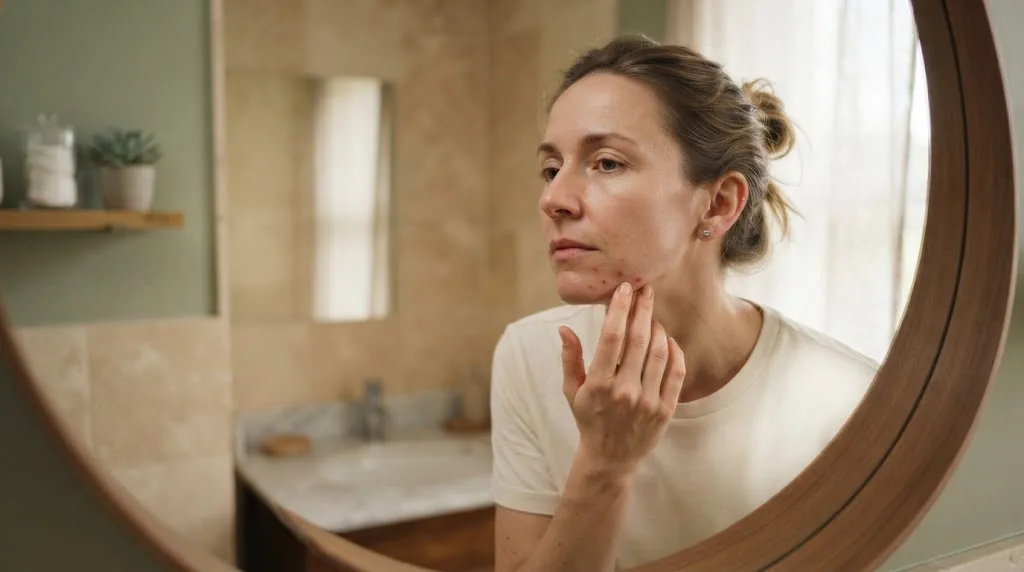
Breakouts that return along the jawline and chin are the typical pattern of hormonal acne.
Pattern Recognition: Where Hormonal Acne Appears on the Face
Pattern is the most reliable diagnostic tool for identifying hormonal acne, and it is something I assess in every new acne client at my Irvine studio before recommending a treatment protocol. Hormonal acne has a characteristic distribution that differs from other acne types in predictable ways.
The lower face distribution
Hormonal acne concentrates on the lower third of the face: the chin, the jawline, the area below the corners of the mouth and the neck just below the jaw. This specific distribution reflects the androgen receptor density map of facial sebaceous glands. The lower face has a significantly higher concentration of androgen-responsive sebaceous follicles than the T-zone or the cheeks. When androgen activity increases, it is these lower-face follicles that respond most dramatically.
The chin is typically the most affected zone. Breakouts that consistently appear on the chin, particularly deep, painful, slow-healing cysts rather than quick-appearing surface pustules, are among the strongest clinical indicators of hormonal acne. The jawline is the second most characteristic zone. Breakouts that track along the jaw from the ear toward the chin, appearing as a line of cysts or deep papules, are highly characteristic of androgenic drive.
What hormonal acne feels like
Hormonal acne lesions differ in texture and depth from comedonal or surface acne. The characteristic lesion is:
Deep, dome-shaped and painful to the touch, often noticeable before it is visible at the surface
Cystic or nodular in structure, meaning it exists primarily within the dermis rather than at the follicular surface
Slow to resolve, often persisting for 2 to 4 weeks compared to 3 to 7 days for surface inflammatory acne
More likely to leave post-inflammatory hyperpigmentation or shallow scarring after resolution
Resistant to standard topical treatments like benzoyl peroxide and salicylic acid that work for surface acne
Distinguishing hormonal from other acne types
T-zone acne (forehead, nose, central chin) without lower face involvement is less likely to be primarily hormonal. Generalized acne affecting the full face, neck and chest simultaneously without a lower-face concentration suggests other drivers (dietary, medication-related, mechanical). Acne that is primarily comedonal, meaning blackheads and whiteheads without significant deep cysts, is less characteristic of hormonal acne even when it appears in the lower face zone.
The Lower Face Pattern Is the Key Diagnostic Clue
If your breakouts consistently appear on your chin and along your jawline, appear as deep painful cysts rather than surface blackheads, and worsen in a predictable cyclical pattern, the probability that androgens are the primary driver is high. This pattern matters because it determines the treatment approach. Treating hormonal lower-face acne with general acne cleansers and benzoyl peroxide alone is addressing the wrong point in the causal chain.
How Hormonal Acne Differs From Teenage Breakouts
Teenage acne and adult hormonal acne share the same biochemical roots: androgen-driven sebum overproduction and follicular hyperkeratinization. The differences between them are significant enough that they typically require different treatment approaches.
Teenage acne involves a generalized surge in androgens that affects the entire face relatively uniformly. During puberty, androgen levels rise dramatically and all androgen-responsive sebaceous follicles respond. This is why teenage acne tends to appear across the full face, often with significant T-zone involvement, and frequently includes both comedonal (blackheads, whiteheads) and inflammatory (papules, pustules) components simultaneously. The severity of teenage acne tends to correlate with the degree of androgenic surge during puberty.
Adult hormonal acne in women typically follows a different pattern driven by the cyclical androgen fluctuations of the menstrual cycle rather than a sustained androgenic surge. The breakouts are concentrated in the lower face where androgen receptor density is highest, tend to be more cystic and less comedonal than teenage acne, and follow a cyclical timing pattern that correlates with specific phases of the menstrual cycle. Adult hormonal acne can occur in women who had completely clear skin as teenagers.
The treatment implications of these differences:
Teenage acne: responds well to topical retinoids, benzoyl peroxide and salicylic acid targeting the full face
Adult hormonal acne: requires follicular hyperkeratinization management (retinoids, salicylic) plus hormonal management (oral contraceptives, spironolactone) for adequate control
Teenage acne: often improves naturally as the androgenic surge of puberty normalizes, typically by the early to mid-20s
Adult hormonal acne: does not self-resolve without addressing the hormonal driver; it can persist or worsen through perimenopause if untreated
A 35-year-old woman who had clear skin throughout her teens and twenties and is now experiencing cystic jaw breakouts almost certainly has adult-onset hormonal acne rather than a continuation of teenage acne, and the treatment approach should reflect that.
The Menstrual Cycle and Predictable Breakout Timing
For women with regular menstrual cycles, hormonal acne often follows a predictable monthly pattern that, once understood, can guide both treatment timing and expectations. The cycle creates a predictable hormonal environment with phases that have very different implications for acne-prone skin.
The follicular phase (Days 1 to 14, counting from the first day of menstruation)
During the follicular phase, estrogen rises progressively until the pre-ovulatory peak. Estrogen has skin-protective effects: it stimulates collagen production, suppresses androgen activity and generally supports skin barrier function. Many women with hormonal acne experience their clearest skin in the late follicular phase, the week before ovulation, when estrogen peaks and relative androgen activity is lowest.
Ovulation (approximately Day 14)
The mid-cycle testosterone surge that occurs around ovulation can trigger initial lower-face breakouts in androgen-sensitive skin. Some women with particularly androgen-reactive sebaceous glands notice a brief mid-cycle flare at this point.
The luteal phase (Days 14 to 28)
This is the critical phase for hormonal acne. After ovulation, progesterone rises significantly. Progesterone stimulates sebum production and increases follicular hyperkeratinization. The week before menstruation (Days 21 to 28 in a 28-day cycle) is when progesterone is highest and sebum production peaks. This is when the majority of hormonal cysts that clients experience become painful and visible, arriving reliably a few days before menstruation begins each cycle.
Estrogen drops in the late luteal phase, removing the anti-androgenic protection it provides during the follicular phase. The combination of progesterone-driven sebum increase and loss of estrogen-mediated protection creates the worst possible follicular environment for androgen-sensitive skin, which is why the pre-menstrual week consistently generates the most acne activity for this type.
Using cycle timing for professional treatment scheduling
Knowing this pattern allows for strategic professional treatment scheduling. I recommend that clients with cycle-correlated hormonal acne schedule their professional acne facial appointments during the follicular phase (approximately Days 5 to 12 of their cycle), when skin is at its least reactive and most able to tolerate active treatments. Scheduling treatments during the luteal phase, when skin is most actively producing excess sebum and inflammation is highest, can lead to more challenging recovery and less comfortable treatment sessions.
Medical Options: Birth Control, Spironolactone and Beyond
Professional esthetic treatment manages the skin environment and significantly improves hormonal acne, but it operates downstream of the hormonal driver. For clients with moderate to severe hormonal acne, addressing the hormonal root cause through medical treatment produces the most complete control. I am an esthetician, not a physician, and I am always clear about which decisions belong to the medical team versus what I can address professionally. Here is a factual overview of the primary medical options.
Combined oral contraceptives
Estrogen-containing oral contraceptives reduce androgen activity through two mechanisms: the synthetic estrogen increases sex hormone binding globulin (SHBG) production in the liver, which binds free testosterone in the bloodstream and reduces its availability to androgen receptors; and the progestin in some formulations has anti-androgenic properties of its own. The FDA has approved three combined oral contraceptives specifically for acne treatment: Ortho Tri-Cyclen, Estrostep and Beyaz. Results typically take 3 to 6 months to be fully visible. Not all women are appropriate candidates, and the decision involves a full medical review of cardiovascular risk factors, smoking history and migraine status.
Spironolactone
Spironolactone is an aldosterone antagonist that, in lower doses (25 to 200 mg/day), functions as an androgen receptor blocker. It competitively occupies androgen receptors in the sebaceous gland, preventing DHT from binding and stimulating sebum production. It does not reduce androgen levels in the bloodstream. It prevents the signal from reaching the target. Many dermatologists consider spironolactone the most effective medical option for adult female hormonal acne, particularly lower-face cystic acne, because it directly targets the receptor that drives sebum overproduction. It requires prescription from a physician and regular monitoring during use.
Isotretinoin
For severe, scarring hormonal acne that has not responded adequately to other treatments, oral isotretinoin (Accutane) produces the most significant long-term sebum reduction of any available therapy. It directly suppresses sebaceous gland size and activity. Approximately 85 percent of patients experience long-term remission after one course. The side effects profile, particularly the teratogenicity risk requiring pregnancy prevention, limits its use to cases where other options have been insufficient.
When to seek a dermatologist referral
I recommend that clients see a dermatologist when: hormonal acne is cystic and leaving scars, when 3 to 4 months of consistent esthetic treatment has not produced adequate improvement, when PCOS or another hormonal disorder is suspected as the underlying driver, or when the client is using or considering isotretinoin. Professional esthetic treatment and medical treatment work best as complements, not alternatives. I continue working with clients who are in medical treatment for hormonal acne, adjusting the protocol to fit their current medications.
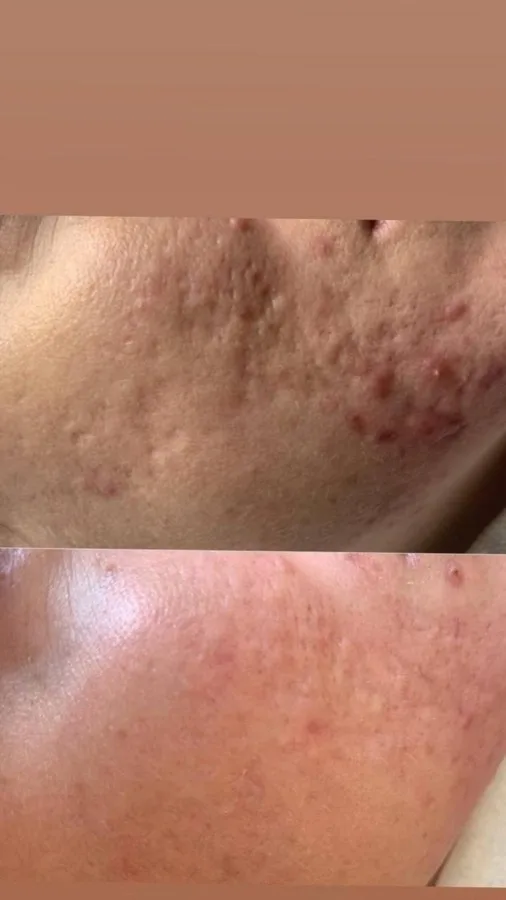
Cheek area before and after an acne treatment series at Real Skin Beauty. Individual results vary.
Professional Treatments That Target Hormonal Acne Specifically
Professional esthetic treatment for hormonal acne works at the level of the follicular environment: managing the excess sebum, preventing the follicular plugging through hyperkeratinization management, killing the P. acnes bacteria that thrive in the hormonally-driven follicular conditions, and reducing the inflammation of existing lesions. The treatment cannot alter the hormonal driver, but it can significantly reduce the severity of the skin consequences of that driver when applied consistently.
Salicylic acid facials on a regular schedule
The oil-solubility of salicylic acid that makes it effective for acne in general makes it specifically important for hormonal acne, where follicles are chronically overfilled with sebum. Regular professional salicylic acid treatments maintain an ongoing follicular clearing effect that prevents the severe accumulation of the plugging material that produces cysts. I find that clients with hormonal acne who maintain monthly professional salicylic treatments show significantly fewer and less severe cysts than those who come in only reactively when cysts have already formed.
Blue LED on a consistent schedule
The antibacterial effect of blue LED at 405 to 420 nanometers directly reduces the P. acnes bacterial population that causes inflammatory lesions within hormonally-primed follicles. For hormonal acne, I use blue LED in every session and often recommend standalone blue LED appointments in the week before the expected luteal-phase breakout window as a preventive antibacterial measure. Reducing bacterial load before the high-sebum phase of the cycle reduces the inflammatory severity of the breakouts that do form.
Salicylic acid peels timed strategically with the cycle
A professional salicylic acid peel scheduled during the mid-follicular phase, when skin is clearest and most receptive, addresses follicular hyperkeratinization by providing a deeper exfoliation than a cleansing facial alone. The BHA penetrates the follicle and helps normalize the abnormal shedding pattern that contributes to comedone formation. A series of 4 to 6 peels over 4 to 6 months, timed consistently in the follicular phase, produces cumulative improvement in the follicular environment that reduces the severity of subsequent hormonal flares.
Niacinamide-focused treatment protocols
Niacinamide at 4 to 10 percent concentration has documented effects relevant to hormonal acne. It reduces sebum production by approximately 20 percent in clinical studies when applied consistently. It reduces inflammatory mediators in the skin. It inhibits melanosome transfer, which helps prevent the post-inflammatory hyperpigmentation that hormonal cysts frequently leave behind. I incorporate niacinamide-concentrated products both in professional treatments and in the home routine I recommend to every hormonal acne client in my Orange County practice.
You can book a free consultation at Real Skin Beauty to discuss your specific hormonal acne pattern, history and what a professional treatment protocol would look like for you. The facials page describes the acne-focused treatment options in more detail.
Timing Matters for Hormonal Acne Treatment
Schedule professional acne facials during Days 5 to 12 of your menstrual cycle, when estrogen is rising and skin is least reactive. Blue LED standalone sessions can be scheduled proactively during Days 18 to 22, before the peak sebum production of the late luteal phase. This cycle-aware scheduling reduces treatment discomfort and improves outcomes compared to scheduling treatments reactively during active flares.
The At-Home Routine for Hormonally Reactive Skin
The at-home routine for hormonal acne must do three things simultaneously: manage the excess sebum in follicles through appropriate exfoliation, reduce bacterial load between professional sessions, and protect the skin barrier from over-stripping that worsens inflammatory response. The mistake I see most often in clients with hormonal acne is an over-aggressive routine that strips the skin in the name of controlling oil, which paradoxically triggers rebound sebum production and barrier disruption that increases inflammatory severity.
Morning routine
Gentle cleanser: Non-foaming or very low-sulfate formula. Morning cleansing for most skin types can be as gentle as rinsing with water if the evening cleanser was thorough, because nothing has accumulated on the skin overnight that requires aggressive removal.
Niacinamide serum (4 to 10 percent): Applied immediately after cleansing. Reduces sebum, manages inflammation, protects barrier function and begins addressing any post-inflammatory hyperpigmentation from previous breakouts.
Lightweight non-comedogenic moisturizer: Gel-based or water-based. Oil-free does not mean moisturizer-free. Dehydrated skin with a compromised barrier reacts more severely to the same degree of hormonal androgen activity.
Mineral SPF 50: Non-negotiable every morning. UV exposure darkens the post-inflammatory hyperpigmentation from existing and healing cysts. Zinc oxide-based formulas are generally better tolerated by hormonally reactive skin than chemical sunscreen formulas.
Evening routine
Double cleanse: First cleanse with a gentle balm or oil to remove SPF and any makeup (despite the name, oil cleansers do not cause acne when rinsed thoroughly from the skin). Second cleanse with a salicylic acid cleanser at 0.5 to 2 percent to maintain daily follicular clearing.
Azelaic acid (10 to 15 percent) 3 to 4 nights per week: Addresses both the acne itself (antibacterial, anti-inflammatory) and the post-inflammatory hyperpigmentation simultaneously. Well-tolerated by most skin types, including sensitive skin that cannot tolerate retinol or stronger actives.
Retinol 0.025 to 0.05 percent, 2 to 3 nights per week: Addresses follicular hyperkeratinization, one of the two primary mechanisms of hormonal acne formation. Builds tolerance gradually. Not used on the same nights as azelaic acid in concentrations above 15 percent to avoid over-stimulation.
Ceramide moisturizer: Every night. Barrier support is not optional. A strong barrier reduces inflammatory severity and supports faster healing of existing lesions.
Dietary considerations
Dietary factors influence hormonal acne for some individuals significantly and others minimally. The response is individual and requires self-experimentation with a food diary over 6 to 8 weeks to assess personal impact.
Dairy: Milk contains IGF-1 and bovine androgens that can stimulate sebaceous activity. Observational studies show higher acne prevalence in high-dairy consumers. Eliminating dairy for 8 weeks and tracking outcomes is a reasonable trial for clients with treatment-resistant hormonal acne.
High-glycemic foods: Rapid blood sugar spikes trigger insulin release. Insulin activates IGF-1, which increases androgen production. A low-glycemic diet reduces this androgen stimulus for some people significantly.
Whey protein: Whey raises IGF-1 levels and has documented connections to acne exacerbation in some individuals. Clients who supplement heavily with whey protein and have treatment-resistant acne should consider a trial period without it.
Zinc supplementation: Zinc at 30 to 45 mg/day has clinical evidence for reducing acne severity through anti-inflammatory and androgen-modulating mechanisms. It is among the most evidence-supported dietary supplements for acne management.
For questions about which combination of professional and at-home treatment is most appropriate for your specific acne pattern, the FAQ page covers common questions about treatment scheduling and what to expect. The about page outlines my clinical background and approach to building individualized protocols for different acne presentations.
Frequently Asked Questions
How do I know if my acne is hormonal?
Key diagnostic signs: breakouts concentrated on the lower face, specifically chin, jaw and neck; a cyclical pattern that predictably worsens in the week before menstruation; deep, painful cystic nodules rather than surface blackheads and whiteheads; adult-onset acne that appeared or worsened after previously clear skin years; and resistance to standard topical acne treatments including benzoyl peroxide and salicylic acid applied consistently for 8 or more weeks. If most of these apply to you, androgen-driven acne is the likely primary driver.
Is hormonal acne caused by dirty skin or poor hygiene?
No. Hormonal acne is driven by androgen activity that increases sebum production and alters the way skin cells shed inside the follicle. These are internal hormonal processes that washing cannot change. Washing your face more frequently or with stronger, more stripping cleansers does not reduce the hormonal driver and can actually damage the barrier, which increases inflammatory severity. Appropriate, gentle cleansing twice daily is correct. Over-washing is counterproductive.
What professional treatments work best for hormonal acne?
A combination approach produces the best results: regular monthly salicylic acid facials to manage congestion and follicular hyperkeratinization buildup, blue LED light therapy to reduce P. acnes bacterial load at each session, salicylic acid peels 3 to 4 times per year for deeper follicular clearing, and niacinamide-focused protocols to reduce sebum and manage post-inflammatory hyperpigmentation. When hormonal acne is moderate to severe, professional esthetic treatment works best in coordination with medical management (spironolactone, combined oral contraceptives) prescribed by a dermatologist or gynecologist.
Does cutting dairy or sugar help hormonal acne?
For some clients it makes a significant difference. Dairy contains IGF-1 and bovine androgens that stimulate sebum production. High-glycemic foods spike insulin, which increases androgen activity through IGF-1. For other clients, dietary changes produce minimal visible improvement. Individual metabolic and receptor sensitivity varies considerably. The practical approach is to track diet and skin systematically for 8 weeks while eliminating one variable at a time. This gives you actual data about your own response rather than general statistics.
What is the fastest way to reduce a hormonal cyst?
Apply ice wrapped in a cloth to the cyst for 10 minutes at a time to reduce inflammation and pain. Avoid touching, squeezing or picking under any circumstances as this causes permanent scarring. Spot-apply benzoyl peroxide 2.5 to 5 percent or tea tree oil 5 percent. A cortisone injection from a dermatologist can visibly shrink an inflamed hormonal cyst within 24 to 48 hours, which is the fastest option available for a single severe lesion. Do not attempt to extract deep cysts yourself. They have no follicular opening at the surface and cannot be extracted without causing trauma to the dermis and risk of permanent scarring.
Licensed electrologist and cosmetologist with 20+ years of experience. Aida sees clients at Real Skin Beauty, 18021 Sky Park Circle, Suite N, Irvine, CA 92614.
Book a free consultation at Real Skin Beauty in Irvine, CA. I will assess your acne pattern, discuss your history and build a treatment protocol specifically calibrated to hormonally-driven acne.
This article is for informational purposes and reflects Aida Khazieva's clinical experience. It does not replace a personalized medical consultation. Individual results vary.