How to Fade Hyperpigmentation: The Clinical Approach That Works
By Aida Khazieva·Pigmentation·13 min read·Real Skin Beauty, Irvine CA·Updated July 27, 2026
Hyperpigmentation is one of the top concerns I hear from clients at my Irvine CA studio, and the frustration is consistent: they have tried brightening products for months and seen little change. The reason almost always comes down to the same two factors. They are not protecting skin from UV every single day, and they are relying on over-the-counter concentrations that are simply not strong enough to move the needle on established pigmentation.
Quick answer: The fastest approach combines daily SPF 50, a vitamin C serum in the morning, retinol or a retinoid at night, and a monthly series of professional chemical peels. Post-inflammatory marks and most sun spots can fade to near-invisible with consistency, while melasma usually needs ongoing management. Pigment fades slowly, so patience matters.
What Hyperpigmentation Actually Is and Why It Forms
Hyperpigmentation is the result of excess melanin being deposited in localized areas of the skin. Melanin is the pigment produced by specialized cells called melanocytes, which live in the basal layer of the epidermis. Under normal conditions, melanocytes produce melanin at a regulated rate and transfer it to surrounding keratinocytes, where it provides natural UV protection. When melanocytes are triggered by an outside stressor, they overproduce melanin, and that excess pigment becomes visible as dark spots, patches, or uneven tone.
Three main triggers activate this overproduction. UV radiation is the most universal. When UV light hits the skin, melanocytes interpret it as a threat signal and ramp up melanin production as a protective response. This is what causes tanning, but repeated UV exposure without protection creates cumulative spots rather than an even response. Inflammation is the second trigger: any wound, acne lesion, rash, or skin disruption can cause the surrounding melanocytes to become hyperactive, producing the dark marks that remain long after the initial problem has healed. Hormonal signals are the third driver, relevant primarily with melasma, where estrogen and progesterone appear to sensitize melanocytes to UV stimulation in ways that are not yet fully understood.
The depth at which pigmentation is deposited matters enormously for treatment. Epidermal pigmentation, sitting in the upper skin layers, typically appears more brown and responds well to topical brightening agents and superficial peels. Dermal pigmentation, which has migrated deeper into the skin, appears more gray or blue-brown and is substantially harder to treat with topicals alone. Mixed pigmentation, with both epidermal and dermal components, requires a more complex approach. In my practice in Irvine, assessing this distinction is one of the first things I do before recommending any treatment protocol.
Understanding the mechanism also explains why so many popular brightening products fail. Products that only address the symptom, meaning they try to bleach existing pigment, miss the fact that the melanocytes are still active and producing more. A complete approach has to interrupt melanin synthesis at the enzyme level, accelerate the shedding of already-pigmented skin cells, and remove the trigger so no new pigment forms. Without all three elements working together, results are slow and rarely sustained.
Clinical Note
The most common mistake I see is treating existing dark spots while continuing to receive daily UV exposure without adequate SPF. Those two things directly cancel each other out. The new melanin produced during a single unprotected afternoon in the Orange County sun can offset weeks of brightening treatment progress.
Types of Hyperpigmentation: Why Treatment Differs by Type
Correctly identifying which type of hyperpigmentation you have is the first step toward choosing the right treatment. I see three distinct types regularly in my Irvine studio, and the protocols are genuinely different for each.
Post-Inflammatory Hyperpigmentation
Post-inflammatory hyperpigmentation, abbreviated PIH, develops after any form of skin injury or inflammation. Acne is the most common cause, but PIH can also follow eczema, psoriasis, rashes, scratches, burns, or aggressive cosmetic procedures that compromise the skin barrier. It appears as flat, discolored marks that are perfectly even in texture, because they are not scars. The texture underneath is unchanged. The only change is in pigmentation.
PIH color varies significantly by skin tone. In Fitzpatrick skin types I through III, it tends to appear pink to light brown and fades relatively quickly, often within 3 to 6 months of consistent treatment. In skin types IV through VI, PIH appears dark brown to almost black and can persist for 12 to 24 months or longer without active treatment. This is because baseline melanin production is higher in darker skin tones, so the inflammatory response triggers a more pronounced melanin output.
The key with PIH is addressing the original source of inflammation while simultaneously treating the pigmentation. Continuing to break out in acne while treating existing PIH is an uphill battle. I always address the active acne or inflammatory skin condition first before focusing treatment exclusively on the residual marks.
Melasma
Melasma is a specific pattern of hyperpigmentation driven by the combination of hormonal exposure and UV radiation. It appears in a characteristically symmetrical pattern across the cheeks, upper lip, nose bridge, and forehead. It is most common in women, particularly during pregnancy, while using hormonal contraceptives, or during hormonal shifts around perimenopause. Because the hormonal trigger keeps melanocytes sensitized to UV, melasma is uniquely difficult to treat and uniquely likely to return after successful fading. I cover this in dedicated detail in the melasma treatment guide.
Solar Lentigines
Solar lentigines, also called sun spots or age spots, are the accumulated result of years of UV exposure. Unlike melasma, they have no hormonal component, and unlike PIH, they have no inflammatory origin. They are simply the long-term consequence of unprotected sun exposure, most visible on the face, hands, chest, and shoulders. They tend to have clearly defined edges and a relatively uniform color, and they respond well to treatment once UV exposure is properly controlled. In Orange County, where sun exposure is year-round and intense, I see significant solar lentigines even in clients in their 30s who grew up without daily SPF habits.
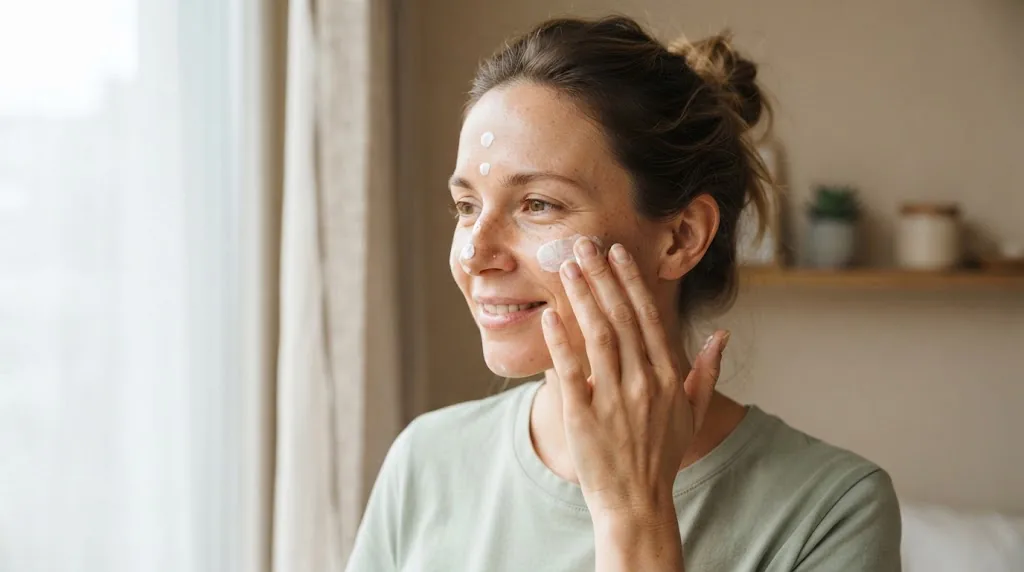
Daily sunscreen is the single most important step: without it, dark spots come back whatever the treatment.
The Sun Protection Non-Negotiable That Changes Everything
I want to be direct about this because I see it derail treatment plans repeatedly: no brightening protocol works sustainably without strict daily sun protection. This is not a secondary recommendation. It is the primary intervention. Everything else, every serum, every peel, every professional treatment, functions as a supporting layer on top of this foundation. Remove the foundation and the entire structure collapses.
Here is the physiology behind that statement. UV radiation directly stimulates melanocytes. When melanocytes receive a UV signal, they produce melanin within hours. A 20-minute unprotected walk during lunch in Irvine California, where UV index regularly reaches 8 to 10 from March through October, can trigger enough melanin production to partially offset two weeks of brightening treatment. This is not hypothetical. It is what the data on melanocyte response time shows, and it is exactly what I see clinically when clients who are diligent with their products but inconsistent with SPF see frustratingly slow results.
Choosing the Right SPF
For active hyperpigmentation treatment, the minimum is SPF 50 with broad-spectrum UVA and UVB coverage. SPF 30 is adequate for general prevention but insufficient when you are trying to actively fade existing pigmentation. The difference in UV filtration between SPF 30 and SPF 50 is meaningful at this level of sensitivity. SPF 30 blocks approximately 97 percent of UVB rays, while SPF 50 blocks approximately 98 percent. That extra margin matters when melanocytes are already primed to overreact.
Application amount is as important as SPF number. Most people apply 20 to 50 percent of the recommended amount, which dramatically reduces effective protection. For the face, a quarter teaspoon of sunscreen is the minimum adequate amount. Apply it as the last step of your morning routine, after moisturizer, and reapply every two hours during sun exposure.
Physical (mineral) sunscreens containing zinc oxide or titanium dioxide are preferable for hyperpigmentation clients, particularly those with melasma or sensitive skin. Physical blockers reflect UV rather than absorbing and converting it chemically, which means they are less likely to cause the kind of heat or oxidative stress that can further stimulate melanocytes. Many of my clients in Irvine prefer tinted mineral SPF formulas because the iron oxide pigments in the tint provide additional protection against visible light, which has also been shown to trigger melasma in susceptible skin.
Daily Habit That Matters Most
Apply SPF 50 every morning, even on cloudy days, even when you plan to be indoors. UVA rays penetrate cloud cover and glass. If you sit near a window, you are receiving UVA exposure. This single habit change produces more visible improvement in hyperpigmentation over 3 months than almost any other intervention.
Professional Treatments That Effectively Fade Dark Spots
Over-the-counter brightening products can contribute to a pigmentation protocol, but they operate at concentrations that are too low to produce dramatic fading of established spots. Professional treatments deliver active ingredients at higher concentrations with precisely controlled contact times, which is why results at the clinical level consistently outpace what home care alone achieves.
Professional-Strength Chemical Peels
Chemical peels are the workhouse treatment for hyperpigmentation in my practice. They work through two mechanisms simultaneously: they accelerate cell turnover so that pigmented skin cells are shed faster, and they deliver active acids that directly inhibit melanin production in the skin layers. A series of professional peels, typically 4 to 6 treatments spaced 3 to 4 weeks apart, produces compounding improvement that builds session over session. See the detailed section on chemical peels for full treatment information.
Enzyme Treatments
Enzyme treatments using papain from papaya or bromelain from pineapple provide a gentler form of exfoliation that is particularly useful for clients with sensitive or reactive skin who cannot tolerate acid peels. Enzymes dissolve the bonds holding dead skin cells together without changing the skin's pH, making them less likely to cause irritation. They are not as dramatically effective as acid peels for established hyperpigmentation, but they are a valuable option for maintaining results between peel sessions or for those in the early stages of a brightening protocol.
Professional Vitamin C Infusions
Professional vitamin C treatments use L-ascorbic acid at concentrations of 20 to 30 percent with a very low pH, penetrating far deeper into the skin than home-care products. These treatments are typically performed in combination with ultrasound or iontophoresis technology to drive the vitamin C deeper into the dermal layer, where melanocytes are most active. Results are visible in the days following treatment as skin appears brighter and more even.
LED Light Therapy
Red and near-infrared LED light therapy is an adjunct treatment that I use in combination with topicals and peels rather than as a standalone approach for pigmentation. Red light at 630 to 700 nanometers stimulates fibroblast activity and reduces inflammation, which decreases the PIH trigger cycle in acne-prone clients. It does not directly fade pigmentation but creates a better skin environment for other treatments to work in. Learn more about what to expect from professional facial treatments that incorporate LED.
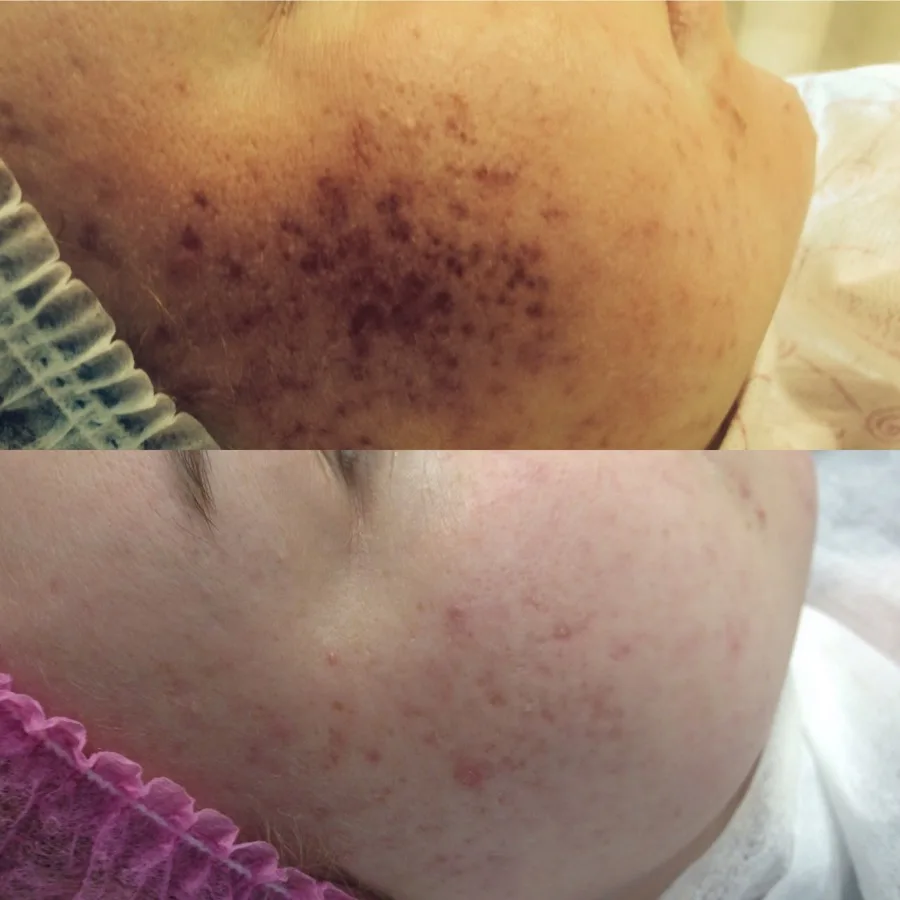
A dark patch on the body before and after treatment at Real Skin Beauty. Individual results vary.
The Role of Vitamin C in a Brightening Protocol
Vitamin C is the ingredient with the strongest body of clinical evidence for hyperpigmentation treatment, and it belongs in every serious brightening protocol. The reason comes down to how it interacts with melanin synthesis at the enzymatic level.
Melanin is produced through a multi-step enzymatic pathway. The rate-limiting step in that pathway is the conversion of tyrosine to DOPA, catalyzed by the enzyme tyrosinase. Vitamin C, specifically in its L-ascorbic acid form, inhibits tyrosinase activity. When tyrosinase is inhibited, melanin production slows at the source rather than just at the symptom level. This is a fundamentally different mechanism from exfoliants that simply shed existing pigmented cells. Vitamin C reduces new melanin formation while other ingredients help clear what is already there.
The second mechanism is antioxidant activity. UV radiation damages skin cells partly through the production of reactive oxygen species, or free radicals. These free radicals trigger inflammatory cascades that signal melanocytes to produce more melanin. Vitamin C neutralizes free radicals before they can initiate that cascade. Applied in the morning before UV exposure, it intercepts the very first step in the pigmentation formation chain.
Concentration Requirements
The clinical evidence for vitamin C is specifically built around L-ascorbic acid at 15 to 20 percent concentration. Studies using lower concentrations show minimal efficacy. Studies using L-ascorbic acid at 15 to 20 percent show consistent inhibition of melanin synthesis and measurable brightening over 8 to 12 weeks. Products marketed as vitamin C that use alternative stable derivatives such as ascorbyl glucoside or magnesium ascorbyl phosphate may be more stable on the shelf but deliver a fraction of the tyrosinase-inhibiting activity of L-ascorbic acid at equivalent or even higher concentrations.
This is why I consistently recommend that clients invest in a professionally formulated L-ascorbic acid serum rather than a cheaper stable-derivative alternative. The stability issue with L-ascorbic acid is real but manageable: store it in a dark, opaque bottle away from light and heat, and replace it within 3 months of opening. A yellow-orange serum is oxidized and no longer effective.
Pairing Vitamin C for Maximum Effect
L-ascorbic acid's effectiveness is significantly boosted by vitamin E (tocopherol) and ferulic acid. This triple combination, widely studied in the literature, produces a synergistic antioxidant effect that is four times greater than vitamin C alone. Ferulic acid also improves the photostability of vitamin C, meaning the combination retains its potency longer after application. When I recommend vitamin C products to clients from my Irvine practice, I specifically look for formulas that include all three of these ingredients.
Application Tip
Apply vitamin C serum to clean, dry skin in the morning before moisturizer and SPF. Wait 60 to 90 seconds after application before applying the next product. This contact time allows the L-ascorbic acid to absorb and adjust to skin pH before being diluted by the next layer.
Chemical Peels as Part of the Pigmentation Plan
When clients ask me what single professional treatment has the most consistent impact on hyperpigmentation in my practice, the answer is a well-chosen chemical peel series. Peels work through controlled exfoliation that removes the pigment-containing surface cells, but the better ones also carry active acids that directly interrupt melanin production in the living skin layers below.
Glycolic Acid Peels
Glycolic acid, derived from sugar cane, has the smallest molecular size of the alpha-hydroxy acids. That small molecular size allows it to penetrate relatively deeply into the epidermis compared to other AHAs. For hyperpigmentation, glycolic acid works by breaking down the bonds between surface skin cells, dramatically accelerating cell turnover and shedding pigmented cells faster than they would shed naturally. At professional concentrations of 30 to 70 percent with appropriate contact times, glycolic acid peels produce visible brightening and improved skin texture after a series of 4 to 6 treatments. I use glycolic peels for sun spots, mild PIH, and overall uneven tone in clients with Fitzpatrick skin types I through III.
Lactic Acid Peels
Lactic acid, derived from milk, is a gentler AHA with a larger molecular size than glycolic acid. It exfoliates more slowly and less deeply, which makes it the preferred option for clients with sensitive skin, rosacea, or darker skin tones where aggressive exfoliation can paradoxically trigger PIH rather than treat it. Lactic acid has an added benefit for hyperpigmentation clients: it is a skin-identical humectant, meaning it helps attract moisture into the skin while it exfoliates. This hydration effect is particularly valuable because hydrated skin shows pigmentation more clearly, which can be discouraging mid-treatment.
Mandelic Acid Peels
Mandelic acid, derived from bitter almonds, has the largest molecular size among common alpha-hydroxy acids. It penetrates very slowly and evenly, making it exceptionally well-suited for darker skin tones and for clients prone to PIH. I use mandelic acid peels frequently for clients with Fitzpatrick skin types IV through VI who need brightening without the risk that more aggressive peels carry for their skin tone. Mandelic acid also has antibacterial properties, making it doubly useful for clients whose hyperpigmentation is PIH-driven by active acne.
A professional peel series for hyperpigmentation typically involves 4 to 6 treatments spaced 3 to 4 weeks apart. That spacing allows each treatment's exfoliation cycle to complete before the next is applied. Attempting peels more frequently does not accelerate results and risks compromising the skin barrier. Visit our chemical peels page for a full breakdown of what each peel type addresses and what the treatment process involves.
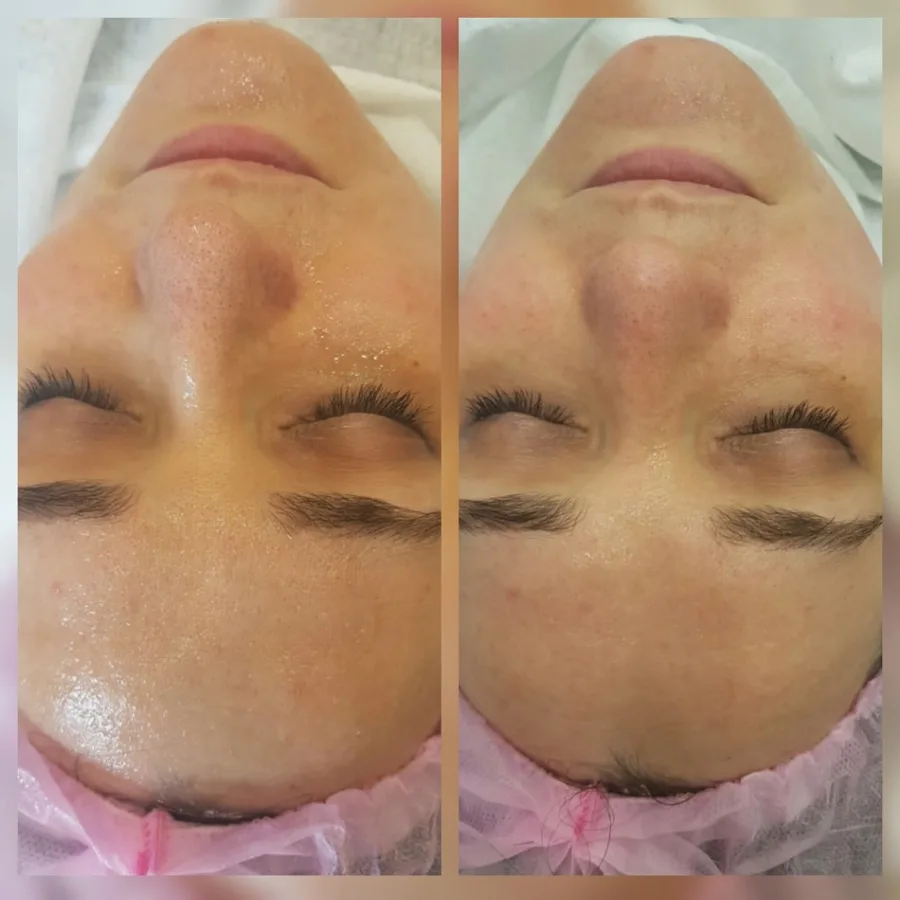
Facial pigmentation before and after a treatment series.
Combining Treatments for Maximum Brightening Effect
The clients in my Irvine practice who see the fastest and most durable improvements in hyperpigmentation are the ones running a coordinated protocol, not a single product or treatment in isolation. Every element of an effective brightening protocol targets a different step in the melanin production and elimination process, and they work better together than individually.
The Complete Morning Protocol
A morning protocol for active hyperpigmentation treatment should include, in this order:
Gentle cleanser: Remove overnight products without disrupting the skin barrier. Avoid cleansers with scrubbing beads or surfactants harsh enough to cause visible dryness or tightness after rinsing.
Vitamin C serum at 15 to 20 percent: Applied to clean, slightly damp skin. This is the most important active step in the morning routine. Let it absorb for 60 to 90 seconds.
Lightweight hydrating moisturizer: Seal in the vitamin C and provide a base for SPF application. Look for ceramides, hyaluronic acid, or niacinamide. Niacinamide at 4 to 5 percent has its own mild brightening properties and pairs well with vitamin C.
SPF 50 broad-spectrum: The final step, every single morning, every single day of the year. Reapply every two hours during outdoor activity.
The Evening Protocol
The evening routine focuses on accelerating cell turnover and allowing concentrated actives to work overnight without UV interference:
Oil-based cleanser or micellar water: Remove SPF, makeup and environmental debris accumulated during the day.
Water-based cleanser: Second cleanse to clear any residue. This double-cleanse approach is more relevant for those wearing full makeup or heavy SPF.
Exfoliating toner or serum: A leave-on AHA at 5 to 10 percent, used 3 to 4 nights per week between retinol nights. Glycolic or lactic acid at these concentrations accelerates cell turnover on the nights you are not using retinol.
Retinol or retinoid: Used 2 to 3 nights per week on alternating nights with AHA. Retinol accelerates cell turnover, stimulates collagen, and has direct brightening effects. Start at the lowest available concentration and build slowly.
Rich moisturizer or barrier-repairing cream: Applied over all actives to seal in treatment and prevent transepidermal water loss overnight.
Professional Treatments Within the Protocol
Monthly professional peels sit on top of this daily home-care routine. On the week of a peel, pause exfoliating actives (AHAs and retinol) for 2 days before treatment and 5 to 7 days after to allow the post-peel exfoliation cycle to complete without interference. Continue vitamin C and SPF through the entire process, including after peels. Check the FAQ for specifics on how to prepare for a professional peel appointment and what to expect during recovery.
Realistic Timeline: How Long Until You See Results
Setting realistic expectations is one of the most important conversations I have with new pigmentation clients. Hyperpigmentation takes months to develop and months to fade. Anyone promising dramatic clearing in 2 weeks is oversimplifying the biology significantly.
What to Expect Week by Week
Weeks 1 to 4: Skin adjusts to the new protocol. You may notice mild purging if retinol or acids are new to your routine. Brightening results are not yet visible. This phase is about building the foundation, not seeing results.
Weeks 4 to 8: Overall skin texture and radiance begin to improve as cell turnover accelerates. Fresh, unblemished cells are reaching the surface faster. Individual dark spots may not yet be visibly lighter, but skin tone appears more even overall.
Weeks 8 to 12: Visible lightening of individual spots begins. The most superficial, recent PIH typically shows the most change first. Sun spots that are primarily epidermal also respond in this timeframe with consistent treatment.
Months 3 to 6: Continued and compounding improvement. Well-established sun spots and older PIH continue fading. With a monthly professional peel series running alongside daily home care, this phase shows the most dramatic visual change.
Month 6 and beyond: Maintenance phase. Most clients reach a point of significant improvement by 6 months. Ongoing monthly peels and daily home care maintain results and prevent new pigmentation from establishing.
Melasma operates on a longer timeline than other hyperpigmentation types and requires ongoing management rather than a defined treatment course. Sun spots in lighter skin tones tend to respond fastest. Deep dermal pigmentation takes longest and may require professional assessment to determine whether topical treatment is sufficient or whether additional interventions are warranted.
I tell every new hyperpigmentation client at my Irvine studio: if you do this properly, consistently, and without cutting corners on SPF, you will see meaningful change. The skin absolutely can fade pigmentation with the right support. What it cannot do is fade it while you keep triggering new formation. Those two things are not compatible.
If you want a professional assessment of your specific pigmentation type and a protocol built for your skin, book a free consultation at Real Skin Beauty. I will assess the type, depth, and severity of your hyperpigmentation in person and give you an honest protocol and timeline.
Frequently Asked Questions
What is the fastest way to fade hyperpigmentation? +
A combination approach works fastest: strict daily SPF 50, vitamin C serum in the morning, retinol or retinoid at night, and a monthly series of professional chemical peels at the appropriate concentration. Combined and consistent, these can show visible fading in 8 to 12 weeks with continued improvement over 6 months.
Can hyperpigmentation be completely removed? +
Post-inflammatory hyperpigmentation and most sun spots can be faded to near-invisible with consistent treatment. Melasma is more stubborn and may require ongoing management rather than a single course of treatment. Patience is essential because pigmentation takes months to fully fade.
What ingredient is most effective for hyperpigmentation? +
Vitamin C at 15 to 20 percent L-ascorbic acid concentration has the strongest clinical evidence for brightening. It inhibits tyrosinase, the enzyme that produces melanin, and neutralizes the UV damage that triggers pigmentation formation. Applied daily in the morning under SPF, it is the cornerstone brightening ingredient.
Why does hyperpigmentation come back after treatment? +
The most common reason is insufficient sun protection. Treating existing pigmentation while exposing skin to UV creates new melanin production faster than treatment removes existing spots. SPF 50 every single day without exception is mandatory for results to hold.
Is hyperpigmentation the same as melasma? +
No. Melasma is a specific subtype of hyperpigmentation triggered by the combination of hormones such as pregnancy or birth control and UV exposure. It has a characteristic symmetrical pattern on the face. Standard hyperpigmentation is triggered by inflammation or UV damage without the hormonal driver.
Licensed electrologist and cosmetologist with 20+ years of experience. Aida sees clients at Real Skin Beauty, 18021 Sky Park Circle, Suite N, Irvine, CA 92614.
Book a free consultation with Aida Khazieva at Real Skin Beauty in Irvine, CA. Get a clinical assessment of your hyperpigmentation type and a protocol built specifically for your skin.
This article is for informational purposes and reflects Aida Khazieva's clinical experience. It does not replace a personalized medical consultation. Individual results vary.