Chemical Peels for Dark Spots: The Complete Clinical Guide
By Aida Khazieva·Chemical Peels·13 min read·Real Skin Beauty, Irvine CA·Updated July 27, 2026
Dark spots are the concern I hear most from clients who walk into my Irvine studio. They have tried brightening serums, vitamin C products, maybe some drugstore exfoliating pads, and the spots are still there. Sometimes lighter, sometimes unchanged, occasionally darker from using the wrong product on the wrong skin type. In this guide I cover every acid I use professionally for hyperpigmentation, why each one works the way it does, and how I design protocols that produce lasting results rather than temporary surface improvement.
Quick answer: The right acid depends on the cause of the dark spots and your skin tone. Light glycolic or lactic peels usually need 4 to 6 sessions for clear fading, while medium-depth TCA can show results in 1 to 2 sessions with more downtime. For darker skin I use lactic, mandelic and carefully dosed TCA to limit new marks.
What Causes Dark Spots and Uneven Skin Tone
Dark spots form when melanocytes, the pigment-producing cells in the epidermis, become overactive and deposit excess melanin in localized areas rather than distributing it evenly. The trigger varies depending on which type of hyperpigmentation you are dealing with, and identifying the trigger correctly is the first step toward choosing the right treatment acid.
Solar lentigines, commonly called age spots or sun spots, develop after cumulative UV exposure over years and decades. Ultraviolet radiation damages melanocytes and forces them to produce melanin as a protective response. Over time that response becomes dysregulated in specific zones, most often the cheeks, temples, nose bridge, and upper lip. Living in Southern California, as most of my clients do, means year-round UV exposure at intensities higher than most of the country. Many Orange County residents underestimate how much UV accumulates from daily life: driving to work, walking across a parking lot, sitting near a window. These low-level exposures compound significantly over months and years, and I see the result in clients who genuinely believe they have been careful about sun protection but still develop clusters of solar spots by their mid-thirties.
Post-inflammatory hyperpigmentation, or PIH, works through a different mechanism entirely. It forms as a healing response to skin trauma. Acne lesions, eczema flares, cuts, burns, and even aggressive cosmetic treatments all trigger an inflammatory cascade that signals melanocytes in the affected area to increase melanin production. Once inflammation resolves, a flat brown or gray-brown mark remains, sometimes for months, sometimes for years. PIH affects every skin tone but tends to be more pronounced, longer-lasting, and more resistant to treatment in deeper skin tones because melanocytes in Fitzpatrick types IV through VI are more reactive to inflammatory signals. A mild blemish that would leave no trace on a lighter complexion can produce a dark mark lasting 12 months or longer on a deeper one.
Melasma is its own category. It presents as larger, symmetrical patches of brown or grayish pigmentation on the forehead, cheeks, upper lip, and chin. Hormones drive melasma directly. Estrogen and progesterone stimulate melanocyte activity, which is why melasma appears during pregnancy, with hormonal contraceptive use, and during perimenopause. UV exposure worsens it significantly. Melasma has both a dermal and an epidermal component, meaning it sits at multiple skin depths simultaneously. This dual depth is what makes melasma the most treatment-resistant form of hyperpigmentation and the one that frustrates clients who have tried surface-only approaches for years before coming to see me.
The depth of melanin deposition also matters enormously when selecting a peel. Epidermal pigmentation, sitting closer to the surface, appears light to medium brown and responds readily to surface-level acids. Dermal pigmentation appears blue-gray under daylight and requires deeper intervention to reach. Many stubborn dark spots have both components, which is why layered multi-acid protocols often outperform single-acid approaches for pigmentation that has not cleared with earlier treatments.
Before I recommend any acid, I examine spot location, pattern, color tone, and a client's full skin and medication history. Getting this assessment right at the start saves months of ineffective treatment and the genuine frustration that comes with it. The correct protocol depends entirely on correctly categorizing the problem first.
How Chemical Peels Actually Fade Hyperpigmentation
Chemical peels reduce hyperpigmentation through several mechanisms working simultaneously. Understanding these mechanisms clarifies why different acids produce different results on different types of spots, and why professional treatment outperforms home care options regardless of product quality.
The first mechanism is accelerated cell turnover. Every chemical peel, regardless of the specific acid, increases the rate at which the skin sheds its outermost layers. Melanin that has accumulated in the epidermis gets carried away as these pigmented dead cells are removed faster than they would be through normal skin cycling. With repeated treatments, the skin consistently clears surface-level pigmentation faster than new accumulation can build, progressively revealing more even tone beneath.
The second mechanism is disruption of melanin transfer. Melanocytes produce melanin and transfer it to surrounding keratinocytes via structures called melanosomes. Alpha-hydroxy acids including glycolic and lactic appear to interfere with this transfer process. When the transfer is disrupted, less pigment reaches the visible surface layer of skin even if melanocytes themselves remain active. This accounts for brightening that goes beyond what simple exfoliation alone would explain.
The third mechanism is melanogenesis inhibition. Certain acids, most notably mandelic acid, partially inhibit tyrosinase, the enzyme that catalyzes the rate-limiting step in melanin synthesis. Working at the production level before pigment is even deposited means these acids address hyperpigmentation from an earlier point in the cycle. This is why mandelic acid can outperform acids with faster penetration on certain presentations despite its gentler profile.
The fourth mechanism is barrier disruption enabling post-peel active delivery. When a peel removes the dead cell layer, serums and active ingredients applied in the days following treatment penetrate significantly deeper than they would on intact skin. This is why I always pair every chemical peel series with a targeted post-peel home protocol using vitamin C, kojic acid, and niacinamide. The peel opens the delivery pathway; the serums extend and consolidate the brightening between sessions.
Pre-Peel Preparation
Stop retinol and all other exfoliating acids 5 to 7 days before your peel appointment. Retinol thins the skin barrier. Applying a chemical peel to a barrier already compromised by retinol use raises irritation risk unpredictably, reduces my ability to gauge the correct contact time for your skin on that day, and increases the chance of uneven results. This preparation step is not optional.
Depth of peel determines where these mechanisms operate in the skin. Superficial peels affect the stratum corneum and uppermost epidermis. Medium-depth peels reach the basal layer of the epidermis and the papillary dermis. Deep peels reach the reticular dermis. For most hyperpigmentation concerns, superficial and medium-depth peels are the appropriate intervention. Very deep peels carry significant healing demands and are rarely necessary for pigmentation correction alone.
One clinical point I address with every new brightening client: peels fade existing hyperpigmentation but cannot prevent future hyperpigmentation if the underlying trigger remains active. A client who completes a successful brightening series but continues sun exposure without protection will see spots return, often within a single season in Southern California. The peel does its job. Sun protection determines whether results last. I explain this clearly before any series begins so clients know what their participation in the process looks like outside the treatment room.
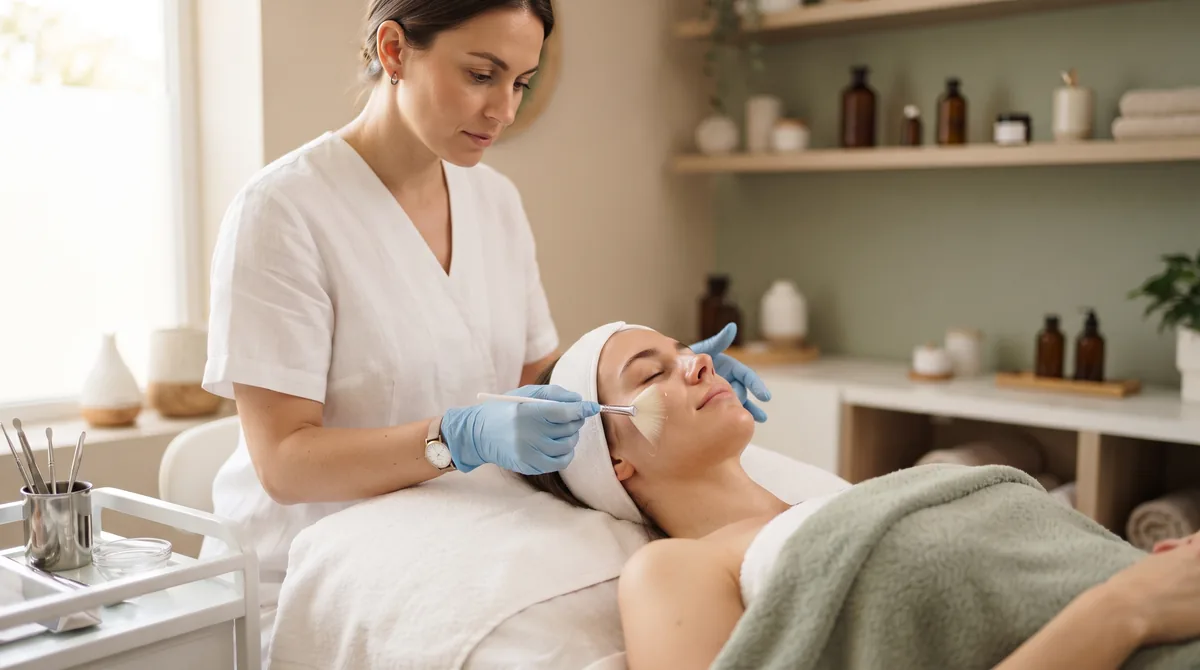
A peel is applied in a thin, even layer and timed carefully. Strength is chosen for the skin, not the other way around.
Glycolic Acid: The Gold Standard for Surface Pigmentation
Glycolic acid is an alpha-hydroxy acid derived from sugar cane. It is the most extensively researched and widely used acid in professional skin care, and it holds that position with good reason. Its molecular weight is the smallest of all the AHAs, which allows it to penetrate the epidermis faster and more completely than any other acid in its class.
For surface-level hyperpigmentation, glycolic acid's penetration depth and cell turnover acceleration make it genuinely effective where over-the-counter products consistently fall short. It dissolves the intercellular bonds holding dead skin cells together, dramatically accelerating their removal from the surface. As those pigmented cells shed, newer and less pigmented cells replace them. The cumulative effect across a series of treatments is a measurable reduction in the concentration of melanin visible at the skin surface, producing visible lightening of solar lentigines and mild PIH.
Glycolic acid also triggers fibroblast activity in the dermis, stimulating collagen synthesis even at superficial concentration levels. For clients treating dark spots alongside early texture changes and fine lines, which describes a large portion of my clients over 35, this is a meaningful clinical benefit. One treatment protocol addresses multiple concerns simultaneously without adding procedures or cost.
In my practice I use glycolic acid peels from 20 percent to 70 percent concentration, selected based on each client's skin history, previous acid exposure, Fitzpatrick skin type, and the depth of their pigmentation. First-time peel clients almost always begin at 20 to 30 percent. This lower range provides genuine exfoliation and early brightening with minimal downtime: mild redness for 24 hours and subtle flaking over 3 to 5 days. Starting lower is not a compromise; building tolerance progressively produces better long-term results than jumping to high concentration immediately.
At 50 to 70 percent, glycolic peels produce more significant results in fewer sessions. These higher concentrations require careful client selection. Thinner skin, previous sensitivity reactions, active rosacea, or a compromised skin barrier all indicate staying at lower concentrations and building up over several sessions. Jumping to high concentrations without preparation does not accelerate results. It produces irritation, potential peel-induced hyperpigmentation, and a disrupted barrier that requires recovery time before the next treatment can proceed.
For solar lentigines specifically, I typically design a series of 4 to 6 glycolic peels spaced 3 to 4 weeks apart, aligned with the natural skin cell turnover cycle. By sessions three and four, clients consistently report visible improvement. Photographic comparison against session one shows 40 to 60 percent reduction in spot intensity in most cases. Sessions five and six address remaining stubborn areas and consolidate the overall result.
Glycolic acid is not the right choice for every client with dark spots. Darker skin tones in Fitzpatrick types IV through VI, active rosacea, and skin with significant barrier compromise are situations where I choose a different acid or modify my approach significantly. For lighter to medium skin tones with solar damage and surface pigmentation, glycolic acid remains the most reliable, most documented option in my brightening toolkit.
Lactic Acid: The Gentler Brightening Option
Lactic acid is an alpha-hydroxy acid derived from fermented milk. Its molecular weight is larger than glycolic acid, which slows its penetration through the epidermis. This slower penetration translates directly to a lower irritation risk, and that is the central clinical reason I reach for lactic acid with specific client presentations where glycolic would be too aggressive or carry too much risk.
For sensitive skin types, first-time peel clients, and individuals with mild rosacea who still want brightening benefits, lactic acid delivers meaningful results while remaining well within a tolerable range. The trade-off is that more sessions are needed to match glycolic acid results at equivalent concentrations. For most clients in this category, that trade is entirely acceptable because the alternative, pushing glycolic on sensitive or reactive skin, tends to produce setbacks that cost more time overall than the gentler approach would have.
What makes lactic acid clinically distinct from glycolic is its dual action on hyperpigmentation. Beyond accelerating cell turnover, lactic acid has demonstrated in research an independent inhibitory effect on melanin synthesis through tyrosinase activity modulation. This means it addresses pigmentation through two pathways simultaneously: removing existing surface pigmentation through exfoliation and slowing the production of new pigment at the synthesis level. For clients dealing with PIH from acne where both existing marks and ongoing melanocyte stimulation are concerns, this dual action matters.
Lactic acid also contains a natural humectant component that other AHAs lack. It attracts and retains water in the epidermis, so skin typically feels hydrated and comfortable after a lactic peel rather than tight or stripped. This makes it particularly suitable for clients who have dry skin alongside hyperpigmentation, a combination I see frequently and that requires choosing exfoliants that will not further compromise an already-strained moisture barrier.
Client presentations where I reach for lactic acid include:
Fitzpatrick III to V skin tones that need brightening with a lower-risk acid profile
Clients who reacted poorly to glycolic acid in previous treatments at our studio or elsewhere
Skin that is simultaneously dry and hyperpigmented, where barrier support during exfoliation is a priority
First-time peel clients who want to assess their skin's response before moving to stronger acids
Perimenopausal clients with concurrent dryness, sensitivity, and hormonally driven pigmentation changes
At concentrations between 30 and 50 percent, lactic peels produce meaningful brightening without significant downtime. Redness typically resolves within 12 to 24 hours. Subtle flaking occurs over 3 to 5 days, often so minimal that clients barely notice it. Most people can return to normal activity and apply mineral SPF the same day.
For moderate hyperpigmentation in clients with sensitive or combination skin, I often alternate lactic and glycolic peels within the same series. Starting with lactic to assess tolerance and begin brightening, then introducing glycolic sessions as barrier health improves, produces more consistent results with fewer adverse reactions than using glycolic alone throughout. This type of sequencing is exactly what distinguishes a professional protocol from whatever combination of products a client might try at home on their own.
When Both Dry Skin and Dark Spots Are the Problem
If your skin feels tight after cleansing and you also have dark spots, standard glycolic peels can worsen both conditions simultaneously. Lactic acid is typically the correct starting point: it exfoliates and brightens while its humectant properties maintain the moisture your barrier needs to stay healthy. I address this specific combination regularly with clients throughout Orange County, and lactic consistently performs better than glycolic for this presentation.
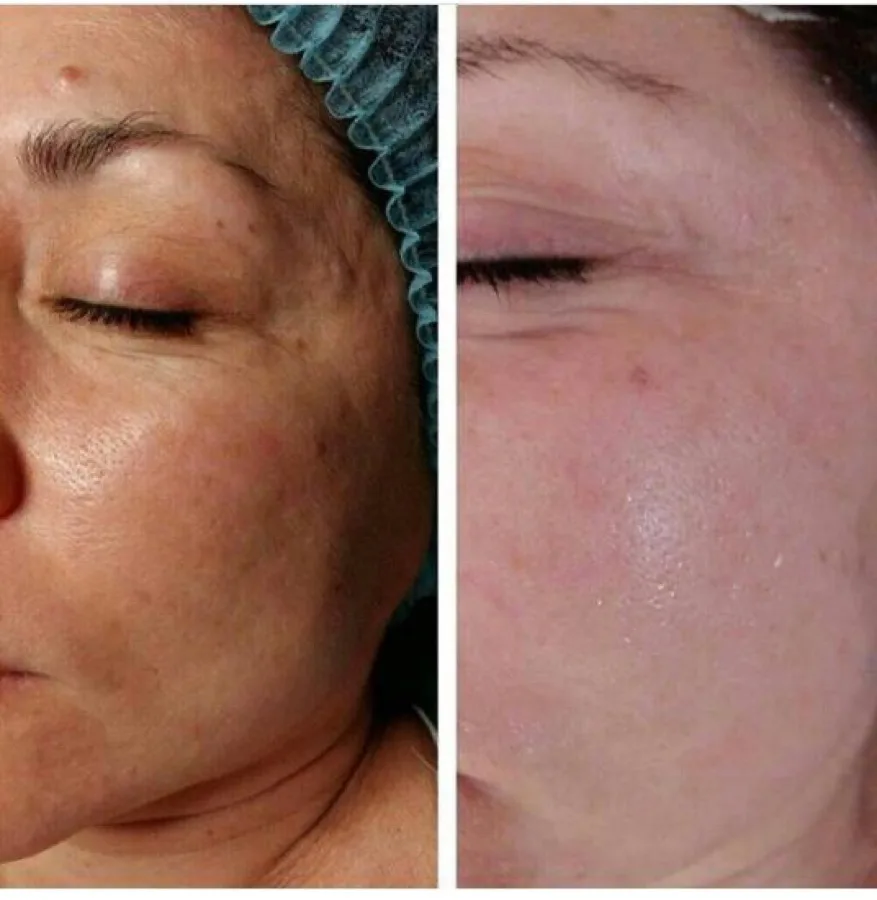
Facial pigmentation before and after a treatment series at Real Skin Beauty. Individual results vary.
Salicylic Acid: Best for Post-Acne Dark Marks
Salicylic acid is a beta-hydroxy acid, placing it in a different chemical class than the alpha-hydroxy acids discussed above. This chemical distinction has a practical clinical consequence that makes salicylic uniquely effective for one specific type of hyperpigmentation: the dark marks left behind after acne breakouts resolve.
The defining property of salicylic acid is that it is oil-soluble rather than water-soluble. AHAs are water-soluble and work on the skin surface and between dead cells. Salicylic acid, being fat-soluble, can penetrate the sebum inside pores. This allows it to exfoliate from inside the follicular opening outward, reaching exactly where post-acne hyperpigmentation forms: at and immediately adjacent to the follicular openings where the original inflammatory event was concentrated.
Post-inflammatory hyperpigmentation from acne forms because the inflammatory cascade of the breakout itself signals melanocytes in surrounding tissue to increase melanin production. When the breakout resolves, that melanin remains as a flat brown mark. Salicylic acid interrupts this process at two points simultaneously: it clears follicular buildup that contributes to future breakouts, reducing how often new PIH-forming inflammatory events occur, and its well-documented anti-inflammatory properties reduce the strength of the melanocyte-stimulating signal even while current inflammation is still active. This dual interrupt is what makes salicylic acid my first-line recommendation when a client presents with concurrent active acne and post-acne marks.
In professional settings, salicylic peels run from 10 to 30 percent concentration. These levels provide thorough follicular cleansing, meaningful reduction in P. acnes bacterial activity, anti-inflammatory action at treated sites, and accelerated shedding of PIH-bearing surface cells. For clients dealing with both active acne and dark marks at the same time, the sequence I use most often is:
Sessions 1 and 2: Salicylic at 20 percent to clear active congestion, reduce bacterial activity, and begin addressing early PIH without pushing deeper acids onto already-inflamed skin
Sessions 3 and 4: Alternating salicylic with 30 percent glycolic to continue follicular management while introducing surface brightening for established PIH marks
Sessions 5 and 6: Glycolic or lactic focus once active acne is controlled, targeting remaining hyperpigmentation with acids that can operate more efficiently on non-inflamed tissue
One important point about salicylic acid and skin tone diversity: unlike glycolic acid, salicylic peels are generally well-tolerated across Fitzpatrick types III through VI at appropriate concentrations. Salicylic's anti-inflammatory mechanism actually reduces one of the primary risk factors for treatment-induced PIH in darker skin tones, which is the inflammatory response to the peel itself. I stay at 20 percent or below for new clients with deeper skin tones until I have assessed individual tolerance across at least one full session.
For clients interested in exploring professional acne and PIH treatment, our chemical peels page covers the full scope of treatment options we offer at Real Skin Beauty in Irvine. Our facials page also covers complementary treatment options for acne-prone skin that work well alongside a peel series.
TCA Peels for Deeper Pigmentation Problems
Trichloroacetic acid, universally known as TCA, operates at a fundamentally different depth than the AHAs and salicylic acid discussed above. While those acids work primarily within the epidermis, TCA at concentrations of 15 to 35 percent penetrates into the papillary dermis. This deeper action makes TCA the most powerful option in professional practice for pigmentation that has migrated below the epidermal surface, or that has not responded to consistent superficial acid treatment.
TCA creates a controlled protein coagulation in skin tissue. When applied, it causes proteins in skin cells to precipitate, triggering a significant healing and regeneration response. New skin forms from below, carrying improved collagen architecture and dramatically reduced pigmentation. The frosting reaction, the white appearance that occurs at the skin surface during treatment, is the primary visual indicator of penetration depth. A light, uneven frost indicates superficial contact. A firm, opaque, sustained frost indicates the peel has reached the upper dermis. Reading the frost correctly and stopping at the appropriate depth is one of the most technically demanding skills in professional peel administration and is not achievable outside a trained clinical setting.
For deep epidermal melasma and for PIH that has not responded to 4 to 6 sessions of superficial acid treatment, TCA peels can produce results that surface-level acids simply cannot. The remodeling process stimulates new collagen synthesis, improves overall texture and firmness, and significantly reduces persistent pigmentation in 1 to 3 sessions rather than the 4 to 8 sessions typically needed with AHAs. For clients who have tried multiple approaches without adequate results, this compressed timeline is often the difference between continuing with treatment and giving up entirely.
The trade-off is recovery. After a medium-depth TCA peel at 20 to 30 percent, clients should plan for:
Redness and mild swelling during the first 24 to 48 hours post-treatment
Skin noticeably darkening and tightening by day 2 to 3
Active peeling beginning around day 3 to 5 and continuing through day 7 to 10
Strict avoidance of manually peeling or picking skin throughout recovery, the most important rule for preventing scarring and uneven results
Final skin clarity visible by day 14 to 21, with continued improvement over the following 4 to 6 weeks
I always discuss TCA recovery in complete detail during consultation because a client who is not prepared for the process will not manage it correctly. Incorrect aftercare during TCA recovery, particularly premature removal of peeling skin or failure to use broad-spectrum SPF, significantly raises the risk of complications and can compromise the entire result.
TCA is not appropriate for all clients. I exercise particular caution with Fitzpatrick type IV and above, where the risk of post-inflammatory hyperpigmentation from the peel itself is meaningfully higher than in lighter skin tones. For clients in this range who require medium-depth intervention, I use TCA at lower concentrations of 10 to 15 percent applied conservatively, or use the CROSS technique (Chemical Reconstruction of Skin Scars), which delivers TCA only to isolated focal spots rather than across the full face. This targeted approach reduces systemic inflammation risk while still providing medium-depth action exactly where it is needed.
Southern California Sun and TCA Recovery
TCA recovery requires strict sun avoidance during healing. In Orange County, where UV levels remain high year-round and outdoor activity is part of daily life, I ask TCA clients to schedule their peel when they can realistically avoid direct midday sun for at least 14 days post-treatment. Broad-spectrum SPF 50 every morning throughout recovery is mandatory. New hyperpigmentation triggered by UV on freshly treated skin is one of the more disheartening complications I see, and it is entirely preventable.
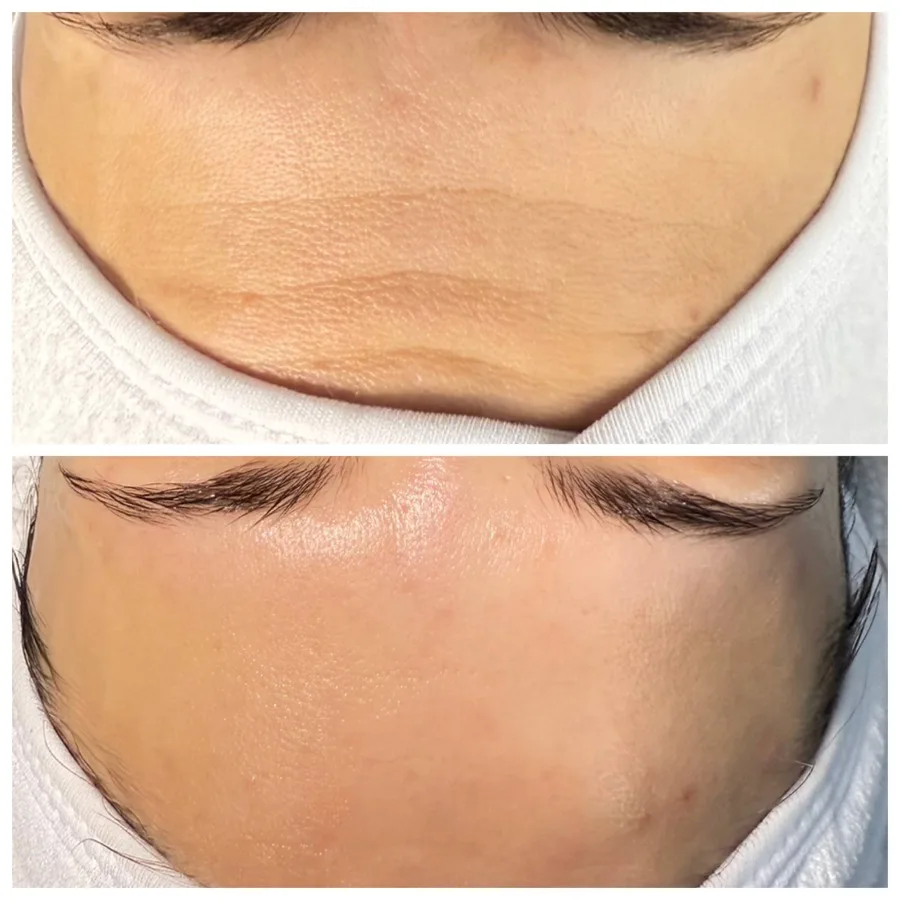
Forehead pigmentation before and after treatment. Daily sun protection is what keeps the result.
Mandelic Acid for Sensitive and Darker Skin Tones
Mandelic acid is the acid I reach for most often when working with clients who have sensitive or reactive skin, or with clients in deeper Fitzpatrick categories where the risk of treatment-induced hyperpigmentation is a serious clinical concern. It is an alpha-hydroxy acid derived from bitter almonds, and its molecular structure is the largest in the AHA family. This larger molecular size produces the most gradual and controlled penetration rate of any AHA, with clinical consequences that make it genuinely different in behavior from its smaller-molecule relatives.
What makes mandelic acid particularly useful for hyperpigmentation is its multi-mechanism action. It exfoliates the stratum corneum and accelerates cell turnover like all AHAs. It also inhibits tyrosinase, the rate-limiting enzyme in melanin synthesis, working at the production stage before pigment is deposited in skin tissue. It carries documented antibacterial properties against a range of bacteria including P. acnes, which makes it useful for clients with acne-related PIH alongside their sensitivity concerns. Three mechanisms from one acid with a gentle penetration profile is a meaningful clinical advantage, particularly when the alternative acids carry elevated risk for the client in front of you.
The tyrosinase inhibition is the most clinically significant property for dark spot treatment in deeper skin tones. By partially suppressing melanin production at the synthesis stage, mandelic acid prevents new pigmentation from forming while exfoliation simultaneously removes existing surface pigmentation. This dual-directional action is why I frequently see mandelic outperforming glycolic for clients with Fitzpatrick IV through VI skin, despite mandelic's gentler penetration rate. The comparison is not about harshness; it is about which mechanisms are most beneficial for that specific skin type and pigmentation type.
For clients with South Asian, Middle Eastern, East African, or East Asian skin tones who have experienced adverse reactions to stronger peels elsewhere, or who have been told they cannot safely undergo brightening treatments due to their skin tone, mandelic acid is almost always where I start. The risk of treatment-induced PIH is significantly lower with mandelic due to its gentler penetration rate and its anti-inflammatory properties that reduce the inflammatory response to the peel itself.
A mandelic peel session at Real Skin Beauty typically looks like this:
Thorough double cleanse to remove all oil, product residue, and sunscreen from the skin surface before acid application
Application of mandelic acid at 25 to 40 percent concentration with careful monitoring of skin response throughout the contact time
Neutralization followed immediately by a calming serum containing centella asiatica, allantoin, or beta-glucan to reduce any residual inflammatory response
Red LED light therapy for 10 minutes post-peel to further reduce inflammation and support healing
Mineral SPF 50 applied before the client leaves the treatment room
Recovery from a mandelic peel is typically mild. Redness resolves within a few hours. Subtle flaking occurs over 3 to 5 days. Most clients with sensitive skin report less immediate discomfort during mandelic treatment than with any other professional peel they have previously tried. For clients in Irvine or across Orange County who want brightening results without the downtime or elevated risk associated with stronger acids, mandelic acid is often the optimal first step and, in many cases, provides sufficient results on its own without needing to escalate to more aggressive protocols.
For questions about which acid suits your specific skin type, our FAQ page covers the most common peel-related questions. To get a direct assessment of your pigmentation and a personalized protocol recommendation, book a consultation at our Irvine studio.
Building a Multi-Peel Brightening Protocol
A single well-chosen acid produces real results. A strategic sequence of acids, calibrated to where the skin is in its recovery and response cycle at each session, produces better results more consistently and with fewer adverse events. The critical distinction is that a genuine protocol has a specific rationale behind every acid choice at every session. Randomly alternating between acids is not a protocol; it is guesswork with professional-grade products.
The protocol I use most commonly for clients presenting with mixed hyperpigmentation, meaning concurrent solar damage, post-inflammatory marks, and possibly early melasma, over a 12-week series looks like this:
Sessions 1 and 2 (Weeks 1 and 4): Lactic acid 30 to 40 percent. Starting with lactic allows me to assess skin tolerance against a known safe baseline, begin cellular turnover and initial brightening from the first session, and prepare barrier integrity for the stronger interventions that follow. Lactic's humectant properties improve overall barrier health, which matters for everything that comes after.
Sessions 3 and 4 (Weeks 7 and 10): Glycolic acid 40 to 50 percent. With barrier health established and skin response assessed, glycolic at moderate concentration provides significantly accelerated cell turnover. Clients typically begin seeing clearly visible improvement in their solar spot areas by session three or four. The skin is now prepared to handle this concentration without the irritation risk present at the start of the series.
Session 5 (Week 13): TCA 15 to 20 percent or glycolic 50 to 70 percent, depending on skin response. For clients with stubborn or deeper pigmentation who have responded well to sessions one through four, I move to medium-depth intervention. For clients with mild-to-moderate pigmentation that has already responded significantly, I maintain glycolic at higher concentration instead, consolidating results without introducing the deeper recovery demands of TCA unnecessarily.
Session 6 (Week 16): Maintenance assessment and protocol adjustment. I reassess the full result against baseline photographs and determine whether ongoing monthly maintenance sessions are needed or whether the client transitions to home-care maintenance only with a quarterly professional peel.
Between every session, I send clients home with a targeted daily protocol:
Vitamin C serum at 15 percent L-ascorbic acid every morning for antioxidant protection and additional melanin regulation support
Niacinamide 10 percent to reduce inflammation and support the melanin transfer disruption initiated by the peels
Broad-spectrum SPF 50 applied every morning and reapplied every 2 hours during outdoor exposure in Southern California's year-round UV environment
A gentle, non-stripping cleanser twice daily to support barrier integrity without removing the active benefits of the protocol
A fragrance-free moisturizer at night to support barrier repair between sessions
The home care component is not supplementary to the treatment. It is half the treatment. A client who faithfully attends every session but skips daily SPF is counteracting the brightening work being done in the treatment room. UV restimulates the exact melanocytes we are working to calm. I make this point directly with every client, not as a disclaimer but as a clinical fact that determines whether the investment they are making actually delivers the results they came for.
I also review and adjust the protocol after each session based on how the skin actually responded. A plan that made sense at session one may need modification by session three if response is faster than expected, if barrier signals suggest stepping back, or if new pigmentation has appeared in a previously untreated area. This real-time clinical assessment and adjustment is the component of professional skin care that cannot be replicated at home regardless of product quality. It requires someone who has examined thousands of skin responses and knows the difference between normal treatment variation and an early warning sign worth addressing.
For anyone in Irvine or the wider Orange County area who wants a professional assessment of their specific hyperpigmentation and an honest recommendation about what will work for their skin, I offer consultations at Real Skin Beauty. The peels page and facials page cover the full range of treatments we offer. When you are ready to start, the booking page has current availability for new client consultations.
Frequently Asked Questions
How many chemical peels do I need to fade dark spots? +
Light superficial peels such as glycolic or lactic typically require 4 to 6 sessions to see significant fading. Medium-depth TCA peels can produce visible results in 1 to 2 sessions but require considerably more recovery time. Maintenance sessions are generally needed afterward, particularly for skin that receives ongoing sun exposure in Southern California's year-round UV environment.
Will a chemical peel make my dark skin tone worse? +
This is a valid concern I take seriously with every client. Deeper peels carry higher risk of post-inflammatory hyperpigmentation in darker skin tones because melanocytes in Fitzpatrick types IV through VI are more reactive to inflammation. I use lactic acid, mandelic acid, and carefully dosed low-concentration TCA for darker skin types specifically to minimize this risk. The right acid at the right concentration for your skin type produces brightening without causing new spots.
How soon after a peel can I see results? +
Superficial peels show improvement after the peeling phase completes, typically 5 to 7 days post-treatment. Medium-depth peels produce more dramatic results but require 10 to 14 days of healing before you see the final outcome. I always ask clients to evaluate results after healing is fully complete rather than during the peeling phase itself, when skin can temporarily look more uneven than before treatment began.
Can I get a chemical peel while using retinol? +
Stop retinol 5 to 7 days before a peel and avoid restarting it during the active peeling phase. Retinol accelerates cell turnover and thins the skin barrier. Applying a chemical peel to skin that is already barrier-compromised from retinol use raises sensitivity, increases irritation risk unpredictably, and makes it difficult for me to gauge the correct contact time for your specific skin condition on that day.
Is sun exposure a risk after a chemical peel for dark spots? +
UV exposure immediately after a peel can trigger new hyperpigmentation in freshly treated skin, directly undoing the brightening work the peel accomplished. Strict broad-spectrum SPF 50 every morning throughout the recovery period and for 2 to 4 weeks post-peel is non-negotiable. Avoiding direct midday sun and reapplying SPF every 2 hours during outdoor time are the practical habits that determine whether peel results last.
Licensed electrologist and cosmetologist with 20+ years of experience. Aida sees clients at Real Skin Beauty, 18021 Sky Park Circle, Suite N, Irvine, CA 92614.
Book a free consultation with Aida Khazieva at Real Skin Beauty in Irvine, CA. We will assess your specific hyperpigmentation and design a protocol that fits your skin type, schedule, and goals.
This article is for informational purposes and reflects Aida Khazieva's clinical experience. It does not replace a personalized medical consultation. Individual results vary.