Tiny Bumps on the Forehead: Closed Comedones and How to Clear Them
By Aida Khazieva·Facials and Skin Care·14 min read·Real Skin Beauty, Irvine CA·Updated October 17, 2026
Tiny skin-colored bumps across the forehead are usually closed comedones, pores plugged with oil and dead skin cells under a thin layer of skin. Fix the triggers first: hair products, bangs, headwear and leftover sunscreen. Then add salicylic acid or a retinoid slowly, and consider a deep cleansing facial or acne peel. Do not squeeze them. Below is how to tell them from milia and fungal-type bumps, and a realistic timeline from my Irvine studio.
Quick answer
Closed comedones are plugged pores under a thin layer of skin, common on the forehead and hairline.
Hair products, bangs, hats, heavy skin care and leftover sunscreen are frequent triggers.
Salicylic acid, a retinoid or azelaic acid, used slowly and with sunscreen, helps most people over weeks.
Itchy, uniform bumps may be fungal folliculitis, so see a dermatologist before escalating acne products.
What Those Tiny Forehead Bumps Are
Small, flesh-colored bumps across the forehead that feel rough but do not hurt are usually closed comedones. A closed comedone is a pore plugged with oil (sebum) and dead skin cells, with a thin layer of skin still covering it, so the plug cannot oxidize and turn dark the way a blackhead does. Dermatologists often group them with whiteheads. They tend to cluster on the forehead, along the hairline, on the temples and on the chin.
They are common and they are not infectious. They also rarely clear up from washing harder. The plug lives inside the pore, so the goal is to loosen it, speed up the way skin sheds, and remove whatever keeps feeding the problem. That last part is often overlooked, and it is where forehead bumps differ from the ones on the nose or cheeks. The forehead meets hair products, bangs, headbands, hats and sweat more than any other part of the face.
In this guide I explain how to tell closed comedones from similar-looking bumps, what usually causes them, which ingredients and professional treatments help, and a realistic timeline. I am a licensed cosmetologist, not a physician. If the bumps itch, burn, spread quickly or turn into painful red pimples, see a dermatologist.
Closed Comedones, Milia, Fungal Acne or Something Else?
Several different conditions look alike on the forehead, and treating the wrong one wastes months. This table gives a general guide. It cannot replace an in-person look.
Feature
Closed comedones
Milia
Fungal-type folliculitis
Heat or sweat rash
Look
Skin-colored or whitish bumps of varied size
Tiny, hard, pearly white or yellow domes
Small, uniform red or flesh-colored bumps in a similar size
Tiny red or clear dots
Feel
Slightly rough, not painful
Smooth, firm, like a grain
Often itchy
Itchy or prickly
Cause
Plugged pore with oil and dead cells
Trapped keratin under the skin
Overgrowth of yeast around follicles, per dermatology sources
Blocked sweat ducts in hot weather or after exercise
Squeezable?
Sometimes, but should be done by a professional
No opening, needs a sterile tool
No, and squeezing spreads irritation
Not applicable
Usually helped by
BHA, retinoid, azelaic acid, professional extraction
Gentle exfoliation, professional removal
Medical advice, since standard acne products can make it worse
Cooling, loose headwear, time
If the bumps are all the same size, itch, and have not responded to normal acne products, ask a dermatologist about fungal folliculitis. It is sometimes called fungal acne, though it is not true acne. I cannot diagnose it, and I tell clients that straight away. For skin that is clogged but not inflamed, the rest of this article applies. For acne with inflamed pimples, my guide to facials for acne-prone skin is a better start.
What Causes Closed Comedones on the Forehead
Several triggers stack up. You may have one or all of them.
Hair products. Oils, waxes, pomades, silicones and styling sprays drift or rub onto the forehead and hairline. Dermatology sources describe this as pomade acne. If the bumps follow your hairline, suspect this first.
Hats, headbands and helmets. Friction, heat and trapped sweat favor plugging.
Bangs. Hair resting on the forehead carries oil and product to the skin all day.
Heavy skin care and makeup. Thick creams, balms, primers and long-wear foundations can contribute for people who clog easily.
Sunscreen not fully removed. Water-resistant formulas need a proper cleanse at night.
Hormones. Cycle changes, stress and conditions that raise androgens increase oil production. See hormonal acne treatment if you also have deeper breakouts around the jaw.
Slow cell turnover. Dry flakes mix with oil and pack into the pore.
Over-exfoliation. A damaged barrier thickens the skin surface and traps more oil than before.
A short audit often solves a lot. Try to remember when the bumps started. A new shampoo, conditioner, hair oil, sunscreen or haircut can be the answer.
Hairline, Temples and Forehead Center: Different Spots, Different Causes
Where the bumps sit tells you something about why they formed.
Along the hairline. Usually hair products, shampoo residue, sweat from hats or headbands. Change what touches the area before you add actives.
Under the bangs. Oil from the hair, and in some cases dry shampoo and styling spray. Clip bangs back at home and at night.
Center of the forehead. More often oil production and cell turnover. This is the zone where BHA and retinoids work best.
Temples. Pillow friction, glasses frames and hair accessories. Wash glasses frames and pillowcases.
Whole forehead plus chin. Often hormonal or related to heavy products. Consider a conversation with your doctor if there are other symptoms.
This also explains why a routine that fixes your cheeks does not always fix your forehead. The forehead has its own oil activity and its own contact points. A habit change in the right place can do more than a new serum.
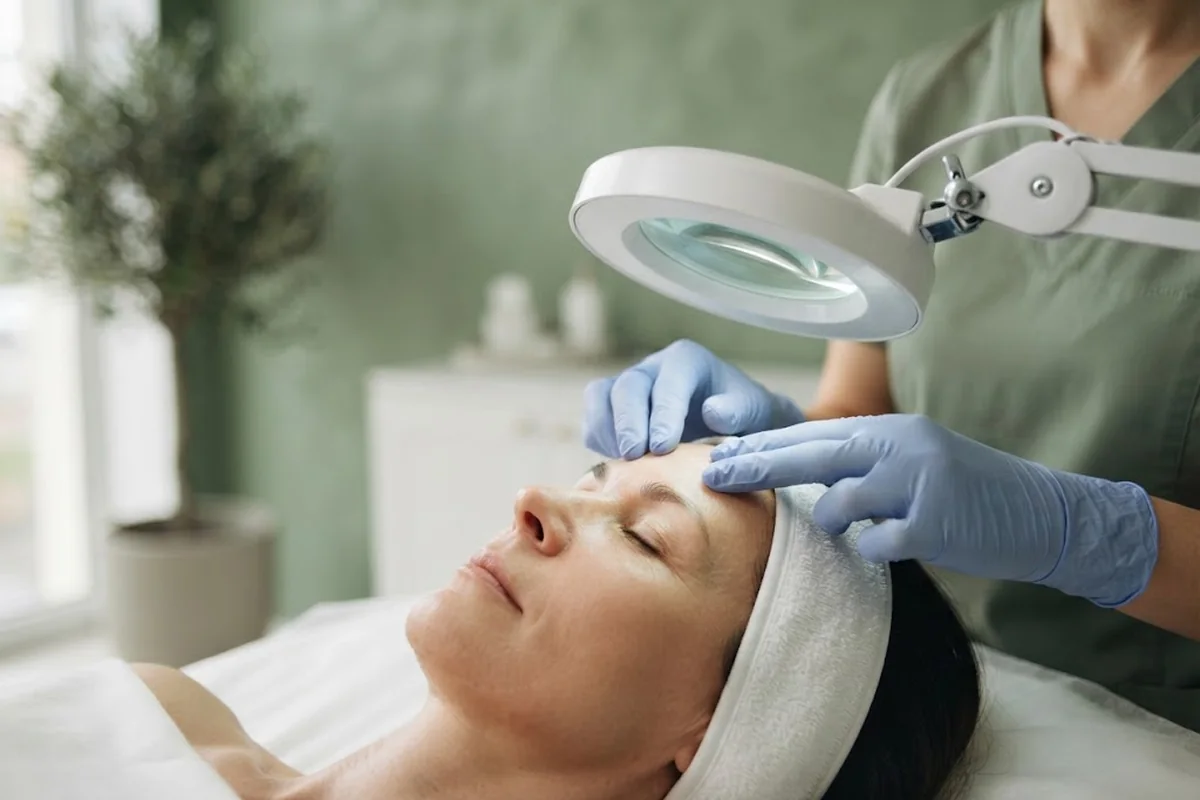
A close look under magnification shows whether the bumps are comedones, milia or something else.
Start With Habits Before Products
Active ingredients work better when the cause is removed. These changes cost nothing.
Keep hair products off the forehead. Apply styling products and leave-in conditioners away from the hairline, and wash hands before touching your face.
Wash hair regularly if it touches your forehead. Rinse the shampoo and conditioner away from the face. Tie hair back when sleeping.
Wash headbands, hats and pillowcases weekly. They collect oil and product.
Switch sweaty headwear. Rinse the forehead after exercise rather than waiting.
Double cleanse at night. Remove makeup and sunscreen with a balm or micellar water first, then a gentle cleanser.
Stop touching. Resting your forehead on your hand while you work adds oil and pressure.
After two to four weeks of these changes, many people see fewer new bumps. The existing ones usually need more help, which is the job of active ingredients and, if needed, a professional treatment.
Ingredients That Help Clear Closed Comedones
Because closed comedones sit under the surface, ingredients that exfoliate inside the pore or speed up cell turnover work best. Add one at a time and wait at least two weeks between additions.
Ingredient
Why it helps
How to start
Cautions
Salicylic acid (BHA)
Oil-soluble, so it can get inside the pore and loosen the plug
2 to 3 evenings per week, then increase if skin is comfortable
Dryness, peeling
Adapalene or another retinoid
Normalizes how cells shed, which prevents new plugs and helps clear existing ones
Two evenings a week at first, pea-sized for the whole face
Irritation and flaking in the first weeks; avoid in pregnancy without medical advice
Azelaic acid
Helps with clogged pores and calms redness
Once daily
Mild tingling
Glycolic or lactic acid (AHA)
Loosens surface buildup and smooths texture
Once a week at low strength
Sun sensitivity, over-exfoliation if overused
Benzoyl peroxide
Mainly for inflamed pimples, less for pure comedones
Short contact or low strength
Bleaches fabric, dries skin
My guides to salicylic acid, glycolic acid and retinol give strengths and schedules in detail. If you are taking isotretinoin, are pregnant or are nursing, check every active with your doctor before you start.
Use a plain, lightweight moisturizer and sunscreen every morning. Retinoids and acids make skin more sensitive to sun, and irritation plus sun can leave marks. If you are a beginner, my skin care routine for beginners shows how to layer them.
An Eight-Week Plan You Can Follow
Here is the sequence I give clients who want a clear, low-risk path. It assumes no pregnancy, no isotretinoin and no skin condition that needs medical care. If any of those apply, talk to your doctor first.
Weeks
Home routine
Professional step
1 to 2
Fix triggers: move hair products off the hairline, wash pillowcases, double cleanse at night, sunscreen every morning. No new actives.
Optional free skin consultation to check what you use
3 to 4
Add salicylic acid two evenings a week.
Book a deep cleansing facial if bumps are numerous
5 to 6
Keep the BHA. If skin is comfortable, add a retinoid on two other evenings.
Acne peel or mandelic peel if the skin tolerates exfoliation
7 to 8
Hold the schedule. Increase frequency only if there is no burning or peeling.
Reassess with a photo in the same light as week one
Take a photo every two weeks, always in the same spot and with the same daylight. Closed comedones change slowly, and a photo is the only way to tell that the number of bumps is going down. Under bathroom lighting every pore looks like a crater, so do not judge by the mirror alone.
Keep the routine boring on purpose. People who change products every ten days never learn which one helped, and they give irritation no time to settle. Choose a plan, follow it for the full eight weeks, and judge it by the photos. If you also visit the studio, tell me everything on your shelf, including hair products, so we do not duplicate exfoliating ingredients in one week. Some foaming cleansers and toners already contain salicylic or glycolic acid, and adding a leave-on active on top is a common cause of raw, peeling foreheads.
If at week four the forehead looks worse, check whether you added more than one thing at once. Strip back to cleanser, moisturizer and sunscreen for a week, then reintroduce one active at a time. If it still looks inflamed, see a dermatologist.
Why the Forehead Can Get Worse Before It Gets Better
Many people stop a new treatment after the first two or three weeks because the forehead looks worse. This is a common pattern with retinoids and exfoliating acids. They speed up cell turnover, and plugs that were forming under the surface come up faster. The result looks like a flare in the same places where you usually break out.
That response is often called purging, and it is different from a real reaction to a product. A purge typically appears in your usual breakout zones, involves small comedones or pimples that resolve faster than normal, and settles within several weeks. A bad reaction shows up in new places, burns or itches, and does not improve. I explain the difference in detail in Skin Purging vs Breakout.
If you are not sure which one you are seeing, stop adding new products, return to a gentle cleanser and moisturizer, and see a professional if redness or burning continues.
Styling products, bangs and headbands that touch the hairline are a common hidden trigger.
What Not to Do to Forehead Bumps
The bumps are hard to ignore, and the usual reaction creates new problems.
Do not squeeze them. Closed comedones have no opening. Squeezing bruises the pore and can leave marks, which are slower to fade than the bump itself.
Do not scrub. Physical scrubs scratch the surface and do not reach the plug.
Do not stack actives. A BHA, retinoid, AHA and scrub in the same week leaves skin raw.
Do not apply heavy oils or thick balms across the forehead to "feed" dry patches. Use a light moisturizer.
Do not use pore strips. They are made for open pores and do nothing for closed ones.
Do not use a dermaroller or microneedling device at home on active bumps. It can spread bacteria and cause scarring.
A realistic expectation helps. Closed comedones respond slowly, and most people need weeks to see a clear difference. If you see some change in two to four weeks, you are on the right track.
Professional Treatments That Help
When habits and home actives do not clear the forehead, in-studio treatments can speed things up. They loosen plugs, remove them gently and give the skin a clean start. These are the ones clients in Irvine and the rest of Orange County most often book for forehead congestion:
Gentle current used to calm skin as part of a facial
$70, 30 min
I choose among them after a skin analysis, not before. A peel suits some foreheads, and a facial with extraction suits others. For a reactive forehead I may begin with a gentle peel or no exfoliation at all. To compare peels, see which chemical peel fits your skin, and if you are considering physical exfoliation, chemical peel vs microdermabrasion explains the difference.
A common plan is a deep cleansing facial or acne facial every four to six weeks, with a steady home routine in between. A series of light peels can follow if the skin tolerates it. Your skin tells us how fast to go.
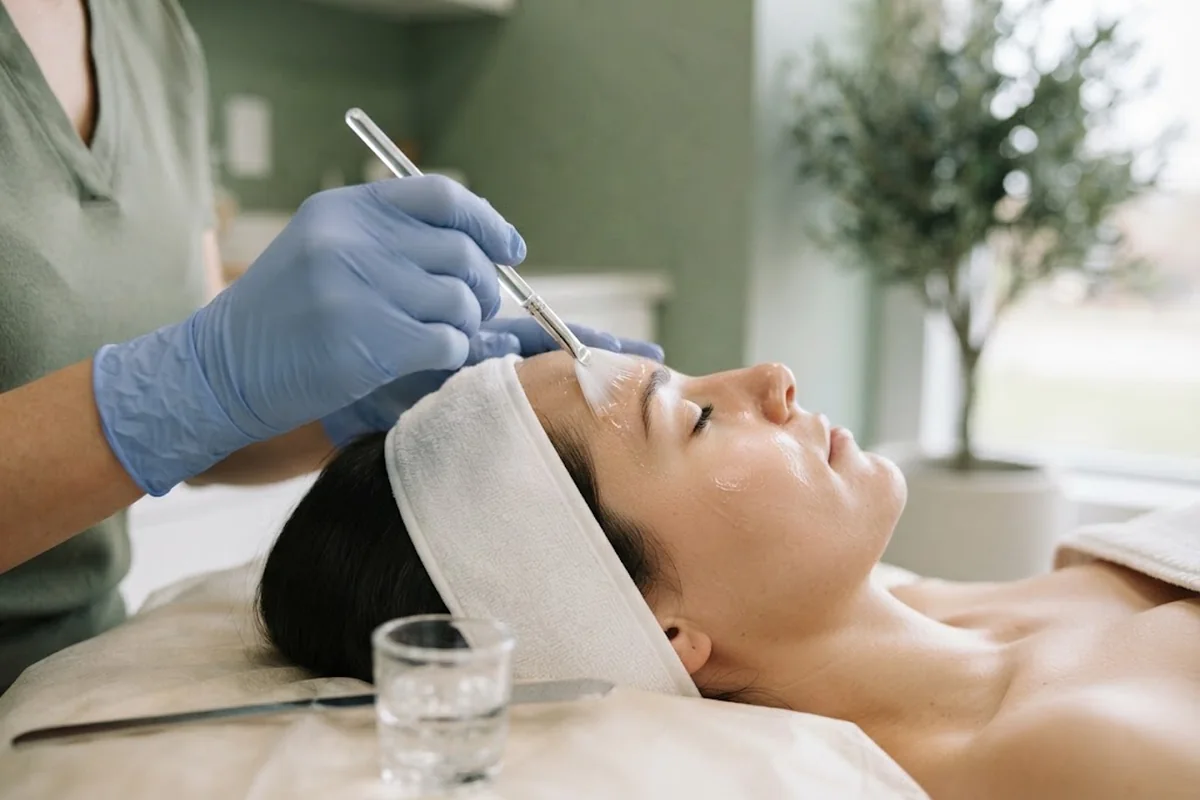
What happens in the room is straightforward. I cleanse and examine the forehead under magnification, then soften the skin with a gentle exfoliating step or a warm, moist cloth. Plugs that release easily are extracted with gloved hands or sterile tools. Plugs that do not release are left alone, because forcing them creates marks without clearing the pore. I finish with a calming mask or serum and sunscreen. Most clients feel light pressure and a little pinching, not sharp pain.
Darker skin tones and very sensitive skin need extra care. These skin types can develop long-lasting dark marks after irritation, so I avoid aggressive exfoliation and often choose a mandelic peel or a facial without a peel. Tell me about previous dark marks or scars at the consultation. If you take blood thinners, use prescription retinoids or have had a recent peel elsewhere, say so as well, because it changes what is safe on the day.
Myths About Forehead Bumps
A few ideas keep returning in consultations.
"I must be dirty." Closed comedones are not a hygiene problem. Over-washing makes them worse.
"Drinking more water will clear them." Staying hydrated is healthy, but it will not unplug pores.
"Diet is the whole answer." Research on diet and acne is mixed and varies by person. If you notice a pattern, discuss it with a doctor or dietitian instead of cutting out food groups on your own.
"Strong acids will fix it quickly." Strong acids on a damaged barrier create irritation and sometimes dark marks. Gradual works better.
"Pore vacuums remove them." Suction on closed pores bruises skin and rarely moves the plug.
"It will go away by itself." Sometimes it does, especially when the trigger was a temporary hair product. When it does not, steady care helps.
If you want a second opinion on what you are dealing with, bring photos of your products and a list of what you apply to hair and face. It makes the consultation faster and more accurate.
A light peel can loosen the plugs inside forehead pores when the skin tolerates it.
Aftercare and Maintenance
After a professional treatment the forehead can look pink for a few hours, and mild tightness is normal. Sunscreen, a plain moisturizer and no picking are the basics. Pause retinoids and acids at home for a couple of days, or as your practitioner advises.
Maintenance is where results are kept. Once the forehead is clearer, many people keep a BHA or retinoid two or three nights a week, keep hair products away from the hairline, wash pillowcases weekly and continue to double cleanse. The bumps may return if you stop all of this, and that is normal. It means the cause is still present.
Habit
How often
Wash pillowcases, hats and headbands
Weekly
Double cleanse at night when you wear sunscreen or makeup
Every night
BHA or retinoid
2 to 3 nights per week
Sunscreen
Every morning
Professional facial or peel
Every 4 to 6 weeks, or as your skin allows
Review the products touching your hairline
Every few months
When to See a Dermatologist
See a dermatologist if:
The bumps itch, burn or look uniform and have not responded to normal acne care.
You develop painful, deep or scarring pimples.
You are pregnant or nursing and need a safe routine.
You are on isotretinoin or other medication and want to know which actives are appropriate.
The forehead has changed suddenly together with other signs such as irregular periods or hair growth.
Your skin does not improve after eight to twelve weeks of steady care.
A free skin consultation at my Irvine studio helps you work out whether the cause is clogged pores or something else. I look at your skin under magnification, ask what you use on your hair and face, and tell you honestly which service, if any, fits. Book through the booking page, or read more about the Deep Cleansing Facial and the free skin consultation.
Frequently Asked Questions
+ What causes tiny bumps all over the forehead?
Most are closed comedones: pores plugged with oil and dead cells under a thin layer of skin. Hair products, bangs, hats, heavy products and hormones are common triggers. Uniform itchy bumps may be something else.
+ Are closed comedones the same as whiteheads?
Closed comedones are generally grouped with whiteheads because the pore stays covered. The terms are often used interchangeably, and both are non-inflamed clogged pores.
+ How do I tell closed comedones from milia?
Milia are tiny, hard, pearly domes of trapped keratin and do not respond to acne products. Closed comedones are softer, vary in size and sit in oily areas. A professional can tell them apart.
+ Can hair products cause forehead bumps?
Yes. Oils, waxes, pomades and styling sprays that rub onto the hairline and forehead can clog pores. Bumps that follow the hairline are a clue. Keep products off the forehead and wash pillowcases weekly.
+ What ingredient is best for closed comedones?
Salicylic acid and a retinoid such as adapalene are the usual starting points. Azelaic acid is gentler. Introduce one at a time and use sunscreen daily.
+ Can I pop closed comedones?
Not safely. They have no opening, so squeezing bruises the pore, leaves marks and can scar. A trained professional can remove softened plugs gently during a facial.
+ How long does it take to clear forehead bumps?
Many people see a change in two to four weeks and a clear difference in eight to twelve weeks with steady care. Results vary. Skin may look worse for a few weeks when starting a retinoid or acid.
+ Are forehead bumps a sign of a health problem?
Usually not. They are common and related to oil, products and skin turnover. See a physician if the bumps appear suddenly with other symptoms, or a dermatologist if they itch, burn or spread.
Licensed electrologist and cosmetologist with 20+ years of experience. Aida sees clients at Real Skin Beauty, 18021 Sky Park Circle, Suite N, Irvine, CA 92614.
Book a free skin consultation with Aida Khazieva at Real Skin Beauty in Irvine, CA. She will examine the bumps under magnification, ask what touches your forehead and suggest only what your skin needs.
This article is for informational purposes and reflects Aida Khazieva's practitioner experience. It does not replace a personalized medical consultation. Individual results vary.
Questions? Aida Answers Them All.
Visit our FAQ or book a free consultation to discuss your specific skin and hair concerns.