Niacinamide for Skin: Benefits, How to Use It and What Not to Mix
By Aida Khazieva·Facials and Skin Care·15 min read·Real Skin Beauty, Irvine CA·Updated October 19, 2026
Niacinamide is a form of vitamin B3 that helps oily, congested, uneven and sensitized skin when you use it daily. Most people do well with a serum or moisturizer containing about 2 to 5 percent, applied once or twice a day after cleansing. It does not conflict with retinol, vitamin C or acids in the way the internet claims. Here is what it does, what to expect and how I layer it with clients in my Irvine studio.
Quick answer
What it does: supports the skin barrier, calms redness, helps regulate oil and can soften the look of pores and dark marks over weeks.
Start with 2 to 5 percent, once a day. Higher strengths are not automatically better and can cause flushing or stinging.
It layers well with retinol, vitamin C, hyaluronic acid and sunscreen. Introduce one new active at a time.
Give it 8 to 12 weeks before judging. Stop and see a professional if you get persistent burning, hives or swelling.
What Niacinamide Is and What It Does in the Skin
Niacinamide is the amide form of vitamin B3, also called nicotinamide. Your skin cells already use it as a building block for NAD, a molecule involved in energy and repair. When you put it on the skin, it behaves less like a dramatic exfoliant and more like a quiet supporting actor. It does several small things at once, and that is why it appears in products for acne, redness, aging and dullness.
The effects that have reasonable research behind them, in plain terms:
Barrier support. Niacinamide helps the skin make more of the fats (ceramides and fatty acids) that hold the outer layer together. A stronger barrier loses less water and reacts less to everyday irritants.
Oil balance. Many people notice that skin looks less shiny by afternoon after a few weeks. It does not dry the skin out. It appears to influence how much sebum the oil glands produce, and the effect is modest.
Calming redness. It has a mild anti-inflammatory action, which is why it is often tolerated in routines for blotchy or reactive skin.
Uneven tone. It can reduce the transfer of pigment within the skin, so brown marks and general sallowness may fade slowly. It works best alongside daily sunscreen.
Pore appearance. By keeping pores clearer and the skin around them firmer and better hydrated, they can look smaller. The actual pore size is genetic.
None of this is instant. The effects are cumulative and gentle, which is exactly why niacinamide is a good first active for people who burned out on stronger ingredients. If you are brand new to actives, my beginner skin care routine shows where a niacinamide serum sits among cleanser, moisturizer and sunscreen.
One more point from the treatment room. I do not see niacinamide as a fix for a single problem. I see it as maintenance. Clients who use it consistently tend to arrive at facials with calmer, less oily skin, which means I can spend the appointment on the concern they actually came for instead of on irritation.
Benefits by Skin Concern: What to Realistically Expect
Different skin types use niacinamide for different reasons. Here is how I explain it, with honest limits.
Concern
What niacinamide may do
What it will not do
Typical wait
Oily, shiny skin
Helps moderate sebum and shine through the day
Cannot stop oil production or replace a cleanser
4 to 8 weeks
Enlarged pores
May make pores look tighter and clearer
Cannot shrink pores permanently
8 to 12 weeks
Acne-prone skin
Calms inflammation and supports a barrier stressed by acne treatments
Is not a standalone acne treatment for moderate to severe acne
8 to 12 weeks
Redness and sensitivity
Reinforces the barrier, so skin reacts less
Does not treat rosacea or eczema on its own
4 to 8 weeks
Dark marks and uneven tone
Can help marks fade and tone look more even
Will not erase deep melasma or work without sunscreen
12 weeks or more
Fine lines and dullness
Improves smoothness and radiance through better hydration
Is not a substitute for retinoids or professional collagen treatments
12 weeks or more
Notice the pattern in the right-hand columns. Niacinamide supports and refines. It does not replace medical care or stronger treatments. If you have stubborn acne, see my guide to facials for acne-prone skin. If you have deep or hormonal pigmentation, read about melasma before assuming a serum will handle it.
Niacinamide and oily skin
This is where it earns its reputation. Oily skin often goes through a cycle: harsh cleansing strips the surface, the skin overproduces oil to compensate, and shine returns within hours. Niacinamide helps break that loop by supporting the barrier while you use a gentler cleanser. Clients who add it and swap a foaming scrub for a mild wash often tell me their skin feels less tight and less greasy at the same time.
Niacinamide and dry or mature skin
Dry skin can use it too. Because niacinamide helps the skin hold water, it pairs well with a plain moisturizer. On mature skin it is a gentle way to improve tone and texture without the dryness that retinol can bring in the first month.
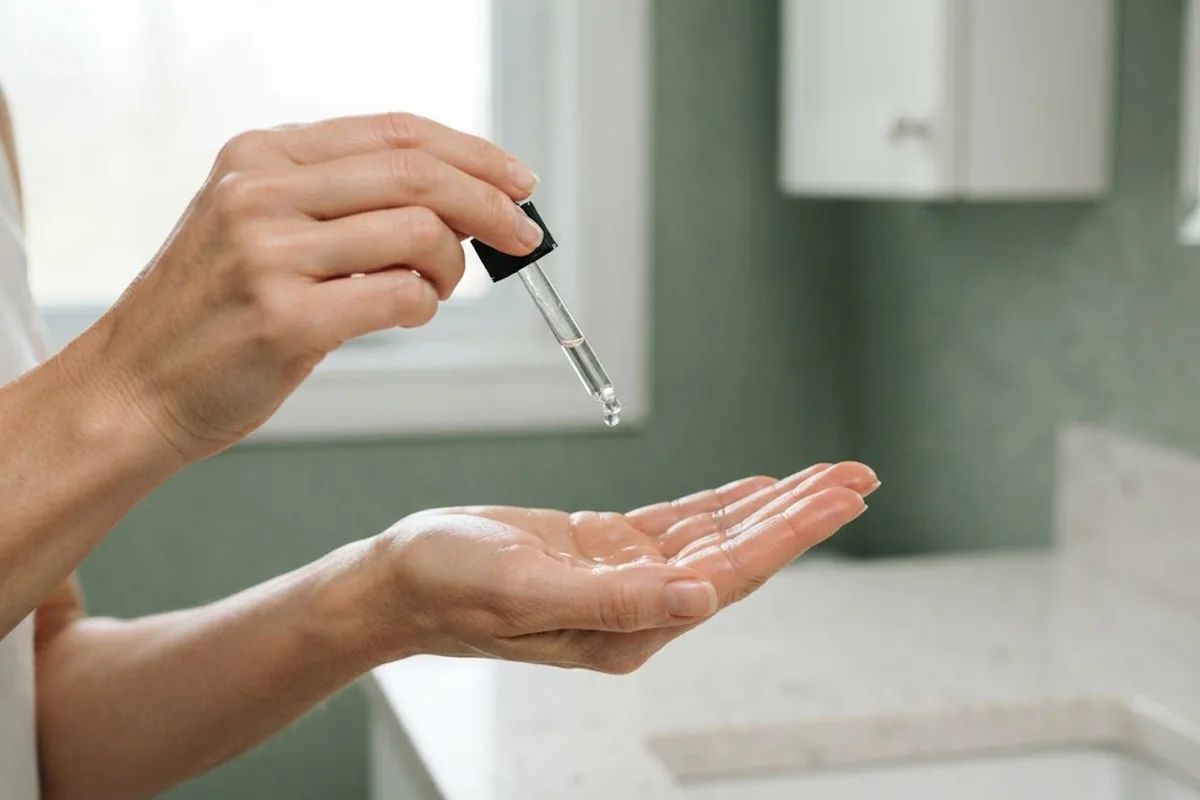
A few drops are enough for the whole face. More product does not mean more benefit.
How to Choose a Strength and Product Format
Concentration is the most misunderstood part. Studies that show benefits mostly use about 2 to 5 percent. Products at 10 percent and above are everywhere, and many people believe that more is better. In practice, higher concentrations are more likely to cause flushing, tingling or small bumps, especially on dry, sensitive or compromised skin. Some people tolerate 10 percent comfortably, and that is fine, but you do not need it to see a result.
Your skin
Suggested starting point
How often
Sensitive, reactive or recently peeled
2 to 4 percent in a simple moisturizer or light serum
Once a day, evening, after the skin has calmed
Normal or combination
4 to 5 percent serum
Once a day, then twice a day after two weeks if comfortable
Oily and congested
5 percent serum, or up to 10 percent if you have used it before
Morning and evening
Dry and mature
2 to 5 percent in a cream
Once or twice a day
These are starting points for adult skin, not prescriptions. Check the ingredient list for the actual percentage when the label shows it, and patch test any new product behind the ear or along the jaw for two or three days.
Serum, moisturizer or toner?
Serum: the most flexible. It is light enough for oily skin and sits easily under moisturizer and sunscreen.
Moisturizer with niacinamide: the simplest way to start. One product does two jobs, and the concentration is usually lower, which suits beginners.
Toner or essence: fine if you like the feel, but the contact time is short, so the benefit may be smaller. Make sure the formula is alcohol-free.
Rinse-off cleansers: contact time is a few seconds. They are pleasant but do little for niacinamide delivery.
Look at the rest of the formula too. Fragrance, essential oils and lots of botanical extracts can irritate sensitive skin regardless of how gentle the active is. I do not recommend products by brand, so I will leave the shopping to you. Read the label, keep it simple, and ask me at a visit if you want a second opinion on an ingredient list.
How to Use Niacinamide Step by Step
Here is the order I teach, whether you are using it in the morning, the evening or both.
Cleanse with a gentle, non-stripping cleanser and pat the skin almost dry. Slightly damp skin helps some formulas spread, but it should not be dripping.
Apply the niacinamide serum. Three to five drops cover the face and neck. Press it in with your palms instead of rubbing.
Wait a minute or two if you are layering other serums, so each product settles.
Moisturize. A plain cream seals in hydration and keeps the barrier working.
Finish with sunscreen in the morning. This step matters most if you are using niacinamide for tone and dark marks.
For most people, once a day is a sensible beginning. Add the second application after two weeks if the skin feels comfortable. If you notice warmth, tingling or a flushed look that does not settle in a few minutes, go back to once a day or drop to every other day. Flushing is not a sign that the product is working harder. It means your skin is telling you the dose or the formula is too much.
Morning or night?
Either works. Niacinamide is stable and is not made unsafe by sunlight, so there is no rule that it must go on at night. In the morning it fits nicely under sunscreen. In the evening it can sit alongside retinol and take the edge off dryness. If you pick one time, choose the one you will remember. Consistency beats timing.
What Not to Mix With Niacinamide: Myths and Facts
An old rumor says niacinamide and vitamin C cancel each other out or form a harmful compound. That claim traces back to old laboratory observations with very high heat, very low pH and mixing in a beaker. Modern formulations are stable, and many products combine them on purpose. Still, there are real situations where combining actives gives you trouble. The table separates myth from practical reality.
Combination
Does it conflict?
What I tell clients
Niacinamide + vitamin C
Not in a meaningful way for most modern products
Use together or in separate routines. If you sting, use vitamin C in the morning and niacinamide at night. See the vitamin C guide.
Niacinamide + retinol
No conflict. Often a helpful pair
Niacinamide can cushion dryness. Start retinol slowly, as in the retinol guide.
Niacinamide + AHA or BHA exfoliants
No chemical conflict. The risk is too much exfoliation overall
Use acids two or three nights a week and niacinamide on the others, or the same night if skin is calm.
Niacinamide + hyaluronic acid
No conflict
A good pairing. Apply hyaluronic acid first on damp skin, then niacinamide, then cream.
Niacinamide + sunscreen
No conflict
Niacinamide first, sunscreen last in the morning.
Niacinamide + benzoyl peroxide
No chemical conflict, but both can sting
Introduce one at a time and watch for dryness.
Niacinamide + prescription acne medicine
Depends on the medicine
Ask the prescriber. This includes isotretinoin and topical retinoids.
What actually causes trouble is the total load, not a magic forbidden pair. Skin cannot tell whether your irritation came from niacinamide or the glycolic toner you added the same week. The cleanest way to introduce any active is to add one product, use it for two weeks, and only then add the next. When something goes wrong, you know the cause.
Niacinamide with prescriptions and treatments
If you take isotretinoin, use prescription topical retinoids or are being treated for a skin condition, check with your dermatologist before changing your routine. Niacinamide is gentle, but your skin on those medications is thinner and more reactive than usual. Likewise, tell me about it before a peel or facial. I usually ask clients to pause new actives for a short period before and after treatments. The reasoning is covered in the peel recovery timeline.
Common Mistakes With Niacinamide
Starting at 10 percent on irritated skin. If your skin is already red, peeling or stinging, wait until it calms, then start low.
Using it on top of five other new products. If you react, you will not know why.
Expecting pore size to change overnight. Pores can look smaller by week eight to twelve. They do not vanish.
Skipping sunscreen. Without daily sun protection, dark marks keep getting reinforced and niacinamide cannot catch up.
Using too much. A thick layer pills under moisturizer and makeup and wastes product.
Quitting at week three. The early weeks are mostly barrier repair. Visible tone and pore changes take longer.
Treating it as an acne cure. It supports acne routines. Persistent or painful acne needs professional care.
Another misunderstanding is the idea of a niacinamide purge. Niacinamide is not an exfoliant, so it should not cause the cycle of deep breakouts that some strong acids or retinoids do. If you break out in whiteheads or small bumps within days of starting, the cause is more likely the other ingredients in the formula, such as heavy oils or silicones, than a purge. A true purge comes from exfoliating actives speeding up cell turnover. Reactions from heavy ingredients show up fast, in the same spots you applied the product, and do not follow the pattern of your usual breakouts.
Pores are a feature of normal skin. Niacinamide can make them look less prominent but cannot close them.
Who Should Be Careful or Skip It
Niacinamide has a good safety profile and few documented problems when used topically. Even so, some people should go carefully.
People with a known allergy to vitamin B3 or to anything in the formula. Real allergy to niacinamide is uncommon, but reactions to preservatives and fragrance in the same bottle are not.
Very sensitive or compromised skin. Wait until a burn, peel or rash has healed. Start with a low strength.
People who flush easily. Some people feel warmth or redness even at modest strengths. Try a lower percentage or a moisturizer format.
Pregnant or breastfeeding clients. Niacinamide is widely used and considered low-risk in topical skin care, but ask your physician about your full routine rather than relying on a blog article.
Anyone on prescription skin medicine. Check with your prescriber first.
A patch test is cheap insurance. Put a small amount behind the ear or on the inner forearm once a day for three days. If there is no redness, itching or swelling, go ahead. If you do get a reaction, stop, rinse with cool water and see a physician if it spreads, swells or blisters.
If your skin has been unpredictable for a while, a professional look can save months of guessing. At the studio in Irvine, I check the skin under magnification before suggesting anything, because the same redness can come from dehydration, over-exfoliation or true sensitivity, and each needs a different answer. The sensitive skin facial is built for this situation, and the free consultation is a good first step if you would rather talk than experiment.
How Niacinamide Fits Around Professional Treatments
Clients often ask whether they should keep using niacinamide before and after a facial or peel. In most cases, yes, with some timing rules.
Treatment
Before
After
Hydrating or deep cleansing facial
Normal use is usually fine. Mention it at check-in
Skip the evening of the facial if the skin feels warm, then resume
Chemical peel
Pause strong actives as advised, often several days before. Niacinamide is usually allowed
Resume when peeling has stopped and the skin is comfortable
Microdermabrasion or dermaplaning
Fine at normal use
Wait until redness has settled
Electrolysis on the face
No need to stop for it, but skip the treated area if it feels sensitive
Skip the treated area until scabs are gone, then resume
The rule of thumb is simple. After any treatment that opens or stresses the surface, return to the basics first: gentle cleanser, plain moisturizer and sunscreen. Add niacinamide back when the skin is no longer tight, stingy or flaky. My clients in Irvine and across Orange County often find that once the skin recovers, niacinamide is the first thing they restart because it feels comfortable.
If you are interested in a service that supports a stressed barrier, the hydrating facial at the studio is $110 for one hour, and a free consultation will tell you whether it suits your skin.
Building a Simple Routine Around Niacinamide
Here are three realistic examples. They are templates, not prescriptions, and every skin type needs adjusting.
Oily and congested
Morning: gentle gel cleanser, niacinamide serum, light moisturizer, sunscreen. Evening: cleanser, niacinamide serum, retinoid two or three nights a week once the skin tolerates it, moisturizer. The goal is to keep shine under control without scrubbing.
Sensitive or reactive
Morning: lukewarm water rinse or a very mild cleanser, a moisturizer containing 2 to 4 percent niacinamide, sunscreen. Evening: cleanser, the same moisturizer. Nothing else for at least four weeks. Many reactive clients are surprised how much improves just by removing products.
Dull, uneven tone
Morning: cleanser, vitamin C if tolerated, niacinamide, moisturizer, sunscreen. Evening: cleanser, niacinamide, moisturizer, and an exfoliating acid once or twice a week. Stay patient. Tone changes appear over months and are far more visible with strict sun protection.
If you are unsure how to fit a new product, bring your current routine to a consultation. I would rather see the actual bottles than guess from a list.
Signs It Is Working and When to Reassess
Because niacinamide is subtle, it helps to know what progress looks like. Take a photo in the same bathroom light once every two weeks, with no makeup and no filter.
Timeline
What you may notice
Weeks 1 to 2
Skin feels a bit smoother or less tight. No major visible change. Watch for flushing or small bumps
Weeks 3 to 4
Less shine by midday, calmer feel. Barrier benefits begin to show
Weeks 6 to 8
Pores look slightly clearer, makeup sits better, redness is more even
Weeks 10 to 12
Tone looks more even, dark marks begin to fade if you protect your skin from the sun
After 12 weeks
Reassess. If nothing has changed and the skin is comfortable, you may not need a higher strength. A different concern may need a different tool
When to stop or call a professional: persistent burning that continues after you wash the product off, hives, facial swelling, blisters or breakouts that keep growing worse. A physician should handle anything severe or spreading. For dull results that simply plateau, a professional treatment like a peel or facial may do more than raising the percentage. I explain how I choose between them in which chemical peel fits your skin.
A skin check under magnification shows whether your concern is oil, dehydration or irritation before choosing actives.
Questions to Bring to Your Consultation
What is my skin type today, not what it was at 20?
Which of my current products are doing nothing, and which might be irritating me?
Is my concern oil, dehydration, inflammation or pigment?
What is a sensible order for adding any new active?
Do I need a professional treatment, or can the right home routine do it?
What should I stop using before a peel or facial?
Those questions apply to any ingredient, not only niacinamide. They stop the cycle of buying a trending serum and hoping. Book a free consultation if you want a straight answer for your skin in Irvine or elsewhere in Orange County, or read the facial overview to see how the studio approaches skin care.
Frequently Asked Questions
+ What does niacinamide do for the skin?
Niacinamide is a form of vitamin B3. It supports the skin barrier, can help moderate oil, calm redness, soften the look of pores and fade uneven tone gradually when used daily with sunscreen.
+ What percentage of niacinamide should I use?
About 2 to 5 percent is a good starting point and where most research benefits are reported. Products at 10 percent are common, but higher strengths can cause flushing or stinging, so they are not automatically better.
+ Can I use niacinamide with vitamin C?
For most modern products, yes. The old warning that they cancel each other comes from laboratory conditions that do not match today's formulas. If your skin stings, use vitamin C in the morning and niacinamide at night.
+ Can I use niacinamide and retinol together?
Yes. Many people use them together because niacinamide can cushion the dryness retinol causes. Start retinol slowly and add one product at a time so you can see how your skin responds.
+ How long does niacinamide take to work?
Barrier and oil changes can appear in four to eight weeks. Pores and tone usually need eight to twelve weeks or longer. Daily sunscreen is needed for dark marks to fade.
+ Can niacinamide cause breakouts or purging?
Niacinamide is not an exfoliant, so true purging is unlikely. Breakouts after starting a product are more often caused by other ingredients in the formula or by layering too many new products at once.
+ Is niacinamide safe during pregnancy?
Topical niacinamide is widely used and considered low-risk, but pregnancy is a case for individual medical advice. Ask your physician to review your full routine before you add new actives.
+ Should I use niacinamide in the morning or at night?
Either works, because niacinamide is stable in daylight. Choose the time you will use it consistently. In the morning apply it before moisturizer and sunscreen. At night it can sit beside retinol.
Licensed electrologist and cosmetologist with 20+ years of experience. Aida sees clients at Real Skin Beauty, 18021 Sky Park Circle, Suite N, Irvine, CA 92614.
Book a free consultation with Aida Khazieva at Real Skin Beauty in Irvine, CA. She will look at your skin, review what you already use and build a short, realistic routine.
This article is for informational purposes and reflects Aida Khazieva's practitioner experience. It does not replace a personalized medical consultation. Individual results vary.
Questions? Aida Answers Them All.
Visit our FAQ or book a free consultation to discuss your specific skin and hair concerns.