Upper Lip Hair Removal: Threading, Waxing, Laser or Electrolysis?
By Aida Khazieva·Electrolysis·14 min read·Real Skin Beauty, Irvine CA·Updated October 11, 2026
Threading, waxing and shaving remove upper lip hair for a few days to a few weeks, then the hair comes back. Laser reduces dark hair in many people but does little for light, gray or red hair. Electrolysis is the only FDA-recognized permanent hair removal method, and the upper lip is a common area at my Irvine studio. The right choice depends on your hair color, your skin, and whether you want a quick fix or an end to the routine.
Quick answer
Shaving, threading and waxing are temporary. Expect regrowth within days to weeks.
Laser needs dark hair against lighter skin. It often fails on blonde, gray, white and red hair.
Electrolysis treats any hair color and skin tone, one follicle at a time, and is the permanent option.
Electrolysis for the upper lip is $50 per 20-minute visit at Real Skin Beauty. A facial wax zone is $15.
The Options Side by Side
Before the details, here is the whole picture in one table. "Lasts" means how long smooth skin typically holds before you see hair again. It varies with your growth cycle, so treat it as a rough guide.
If you already know your hair is light or gray, skip straight to the electrolysis section. If you are choosing between two temporary methods, the next two sections will help.
Shaving, Trimming and Creams
The most common worry is that shaving makes hair grow back thicker. It does not. Shaving cuts the hair at the surface, and a blunt cut tip feels coarser as it grows out, which is where the myth comes from. The follicle underneath is unchanged.
On the upper lip, the issue with shaving is how quickly the shadow returns, often within a day or two. A trimmer or dermaplaning slows that slightly, but the result is still short-lived. Depilatory creams dissolve the hair at the surface and last a little longer, but the skin above the lip is thin and reacts to the chemicals more than most areas. Always patch test on a small spot first, and never use a cream on skin that is already irritated or on a day you have used an exfoliating acid.
These are fine as stopgaps. They are not a long-term plan for a hair you have to deal with every week.
Other Stopgaps: Bleaching, Tweezing and Dermaplaning
Between the big options there are a few smaller ones people reach for, and each has a limit worth knowing.
Bleaching. Lightener does not remove anything. It lowers the contrast between hair and skin so the hair is less visible. It suits fine, dark hair that bothers you mostly because of its color. The skin above the lip is thin, so do a patch test first, follow the timing on the box exactly, and skip it if the skin is irritated, sunburned or recently exfoliated. Bleached hair still grows back at the same rate, and dark roots show within a couple of weeks.
Tweezing. Pulling a few strays is fine. As a routine for a whole lip it is slow and often leaves redness and small bumps. Repeated pulling from the same follicle can irritate it, and a distorted follicle may grow hair at an angle that is harder to treat later.
Dermaplaning. A sterile blade removes fine surface hair and dead skin together, and the skin feels smooth and takes makeup well. It is a skin treatment, not hair removal, so the hair returns. I offer it at $90 for a 45-minute visit, and the full details are in my dermaplaning guide. It is a good fit for peach fuzz across the face, and a poor fit as a plan for darker or coarser lip hair.
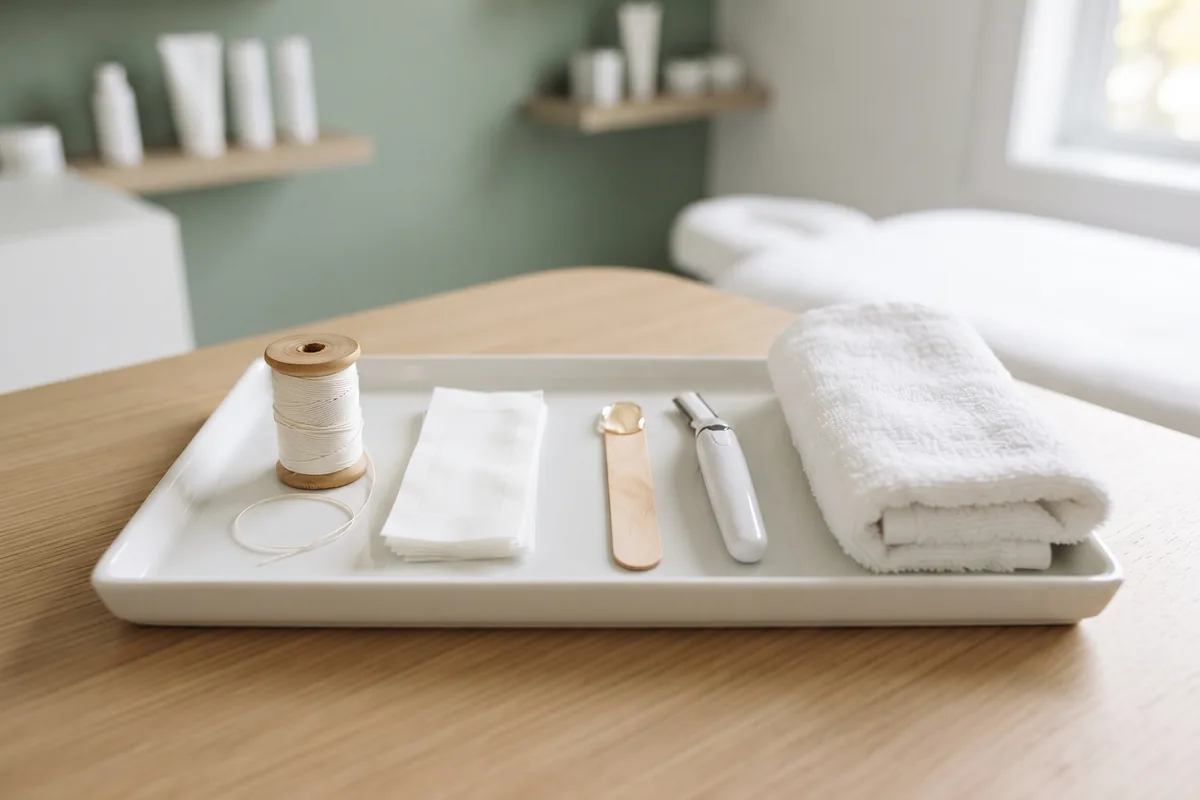
Temporary options for the upper lip: thread, wax and a trimmer. All of them need repeating.
Threading and Waxing: Which Is Better for the Lip?
Both methods remove the hair from the follicle, so regrowth takes longer than with shaving. The differences are in precision and skin impact.
Threading
A twisted cotton thread catches hairs and pulls them out in rows. It handles fine, short hairs well, and there is no wax residue or heat on the skin. It is popular for brows and the upper lip for those reasons. Discomfort is brief but sharp, and redness or small bumps are common afterward. Skill varies a lot between practitioners, so watch how clean the technique looks.
Waxing
Wax grips the hair and lifts it out, which covers the whole lip quickly. At my studio a facial wax zone is $15 for 15 minutes, which makes waxing a common starting point. The trade-offs are that hair has to grow to a few millimeters before the next appointment, and that wax can lift the top layer of thin skin, especially if the skin is dry or recently exfoliated.
Check this before you wax or thread
Do not wax or thread if you use isotretinoin (Accutane), a prescription topical retinoid on the area, or have recently had a chemical peel or dermaplaning. Skin in these situations can tear or burn. If you are on any prescription skin medication, ask your physician or prescriber first.
A pattern I see often: clients who wax or thread the same lip for years and notice hairs growing in at odd angles, or a darker shadow above the lip. Repeated pulling can irritate follicles and, in some people, leave pigmentation behind. That is a reason to consider a longer-term plan, not a reason to panic. You can read how I approach the numbers in How Much Does Electrolysis Cost in Orange County?
What to Do After Waxing or Threading the Lip
Skin above the lip is thin and stays reactive for a day or two after hair is pulled out. These habits keep the redness short.
Do not touch, rub or pick at the area, and wash your hands before applying anything.
Skip retinol, glycolic acid, scrubs and other actives on the lip for the next 24 to 48 hours.
Avoid hot showers on the face, saunas and hard workouts for the rest of the day.
Apply sunscreen when you go outside. Irritated skin can pick up pigment easily.
If small whiteheads or ingrown hairs appear, leave them alone and use a gentle cleanser. Do not squeeze.
If the same lip is reddening every time or you see darker patches forming, that is a good moment to ask whether a longer-term option fits.
What Temporary Methods Add Up To Over a Year
Take waxing, since it is the most common choice for the lip. A facial wax zone at my studio is $15. If you return every four weeks, that is 13 visits a year, or $195, and five years of the same routine comes to $975. Threading, bleaching and creams have their own costs, and the total keeps growing for as long as the hair does. Electrolysis for the upper lip is $50 per 20-minute visit, and it stops when the treated follicles are gone. Nobody can say in advance how many visits your lip will need, which is why the free consultation matters. The arithmetic behind that is in my guide to electrolysis costs in Orange County.
Why Laser Often Disappoints on the Upper Lip
Laser works by sending light into the hair, where pigment absorbs it and heat damages the follicle. That means it needs contrast: dark hair, ideally on lighter skin. Upper lip hair is frequently the opposite of that. It is fine, sometimes blonde, and in many women it turns gray or white with age.
Three limits worth knowing:
Light hair has little pigment to absorb. Blonde, gray, white and red hairs often show little or no response.
Lasers cleared for hair removal are cleared for hair reduction. That is not the same as permanent removal of every hair.
Hormones can keep generating new hairs. Women with hormonal changes sometimes see fine hair return or even increase in treated areas. I cover that in Electrolysis vs. Laser Hair Removal.
Laser can be a reasonable choice if your lip hair is dark, your skin is light, and you are treating a larger area at the same time. For a small, delicate zone with mixed hair color, I most often see people end up looking for something else. If the question is why hair appears at all, my article on why facial hair grows explains the common causes.
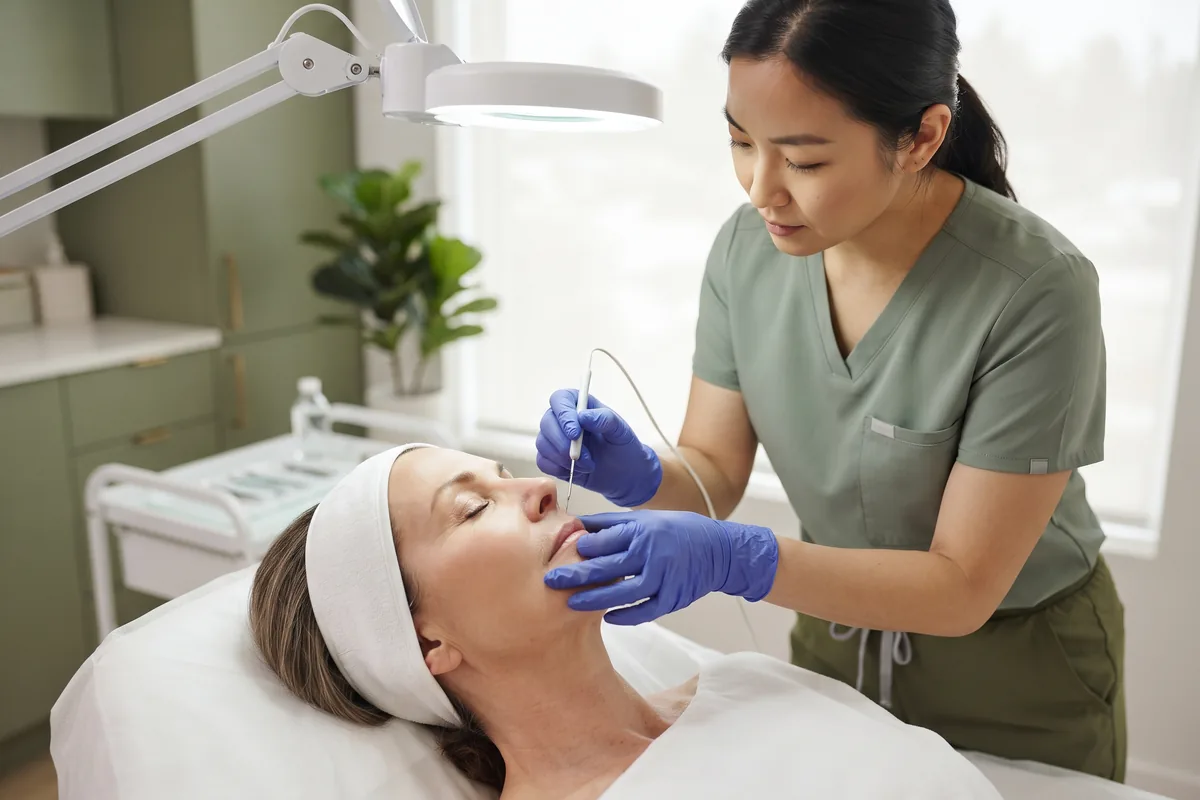
Electrolysis treats one follicle at a time under magnification, whatever the hair color.
Electrolysis on the Upper Lip: What to Expect
Electrolysis ignores hair color. A fine probe slides into each follicle beside the hair and delivers a small amount of current to the base, which is where the hair is made. Because it does not depend on pigment, it treats dark, blonde, red, gray and white hair the same way, on any skin tone. It is FDA-recognized permanent hair removal, which is why I recommend it when someone is done with maintenance.
The upper lip is a sensitive area. Skin is thin and nerve endings are close to the surface, so many clients use a topical numbing cream before the visit. I covered the sensation honestly in Does Electrolysis Hurt?. The treatment itself is quick per hair, and visits for the lip are short: 20 minutes at $50.
The honest part is the timeline. Each hair is treated individually, and hairs cycle through growth phases, so not every follicle can be reached on the same day. You come back in a series. How many visits depends on hair density, your history and your hormones, and nobody can promise a number. My guide on how many sessions you may need explains the logic.
Expect redness and slight puffiness for a few hours, and tiny scabs at some follicles for a couple of days. Do not pick them. Aftercare steps are in the aftercare guide.
What a Typical Upper Lip Visit Looks Like
A lip visit is short, so it helps to know the order.
I cleanse the area and remove any numbing cream you applied at home.
With the magnifying lamp over the lip, I look at where hairs are, how thick they are and how the skin looks.
I begin with a few low-energy insertions so you can feel the sensation before the real settings.
A sterile, single-use probe goes into one follicle at a time. The hair lifts out without resistance, and I move on to the next.
I soothe the skin and go through aftercare. Redness and a little puffiness for a few hours are common, and tiny scabs may form over a couple of days.
You can talk during the visit, and you can ask me to pause. The lip is one of the more sensitive zones, so I check in often.
Healing After a Lip Visit: What You See and What to Do
Healing is quick on the lip, but it follows a pattern, and knowing it keeps you from worrying or picking.
Time after the visit
What you may see
What helps
First few hours
Redness and slight puffiness around treated follicles
Leave the area alone. Wash hands before touching your face
Days 1 to 3
Tiny scabs at some follicles, mild tenderness
Do not pick. Use a gentle cleanser and sunscreen, and skip makeup on the lip for the first day
Weeks 1 to 3
Treated hairs shed, and hairs that were not ready on the day reach the surface
Do not pluck or wax. Keep the skin simple and moisturized
Between visits
Regrowth from follicles not yet treated
Let hairs show so they can be treated, and keep your appointment schedule
Contact the studio if you see pus, spreading redness, blistering or swelling that gets worse after 48 hours. Those are uncommon and deserve prompt attention. The full routine is in my electrolysis aftercare guide.
One habit makes a real difference on the lip: avoid exfoliating acids and retinol there until the skin looks and feels normal again, and wait until after your visit to start anything new. Irritated skin heals slower and shows pigment more easily, which is a nuisance to deal with later.
How to Choose for Your Situation
Use this as a quick filter. It is a general guide, not medical advice.
If this sounds like you
Consider
Event this week, hair is dark and a few millimeters long
Waxing or threading
Fine hair, sensitive skin, no medications that thin skin
Threading, or trimming between visits
Hair is gray, white, blonde or red
Electrolysis (laser is unlikely to help)
Hair is dark, skin is light, you also want other areas treated
Laser may be an option, electrolysis for leftovers
Tired of repeating the routine every few weeks
Electrolysis
New or fast-growing hair, or hair spreading beyond the lip
See your physician about hormones first, then plan treatment
Many clients combine methods. They keep waxing or trimming until they are ready to commit, then stop and let the hair grow just enough for electrolysis. We would discuss when to stop at your first visit. For anyone driving in from Newport Beach, Costa Mesa or Tustin, a 20-minute lip visit is easy to fit around a workday.
Special Cases: Light Hair, Cold Sores and Hormones
Some situations change the plan, and it is better to know them before booking.
Blonde, gray or white lip hair
This is the group laser misses most, and the reason many people end up on my table. Electrolysis treats the follicle, not the pigment, so the color of the hair does not limit it. Light hairs are hard to see, and I treat them under magnification. I go deeper into this in my guide to electrolysis for blonde, gray and red hair.
A history of cold sores
Treatment near the mouth can trigger an outbreak in some people who carry the virus. Tell me before the visit. Your physician may suggest a preventive medication, and we can time the appointment around it.
Hormonal changes
Fine hair on the upper lip is common. A sudden increase, or new hair together with irregular periods, acne or unexplained weight changes, deserves a visit to your physician, because conditions such as PCOS can be behind it. Electrolysis removes the hairs you treat. It does not address a cause. My article on why facial hair grows lists the usual reasons.
Medications and pregnancy
Isotretinoin, prescription retinoids and some other medications thin or sensitize skin. Pregnancy changes what is advised. Bring a medication list and ask your physician if you are unsure.
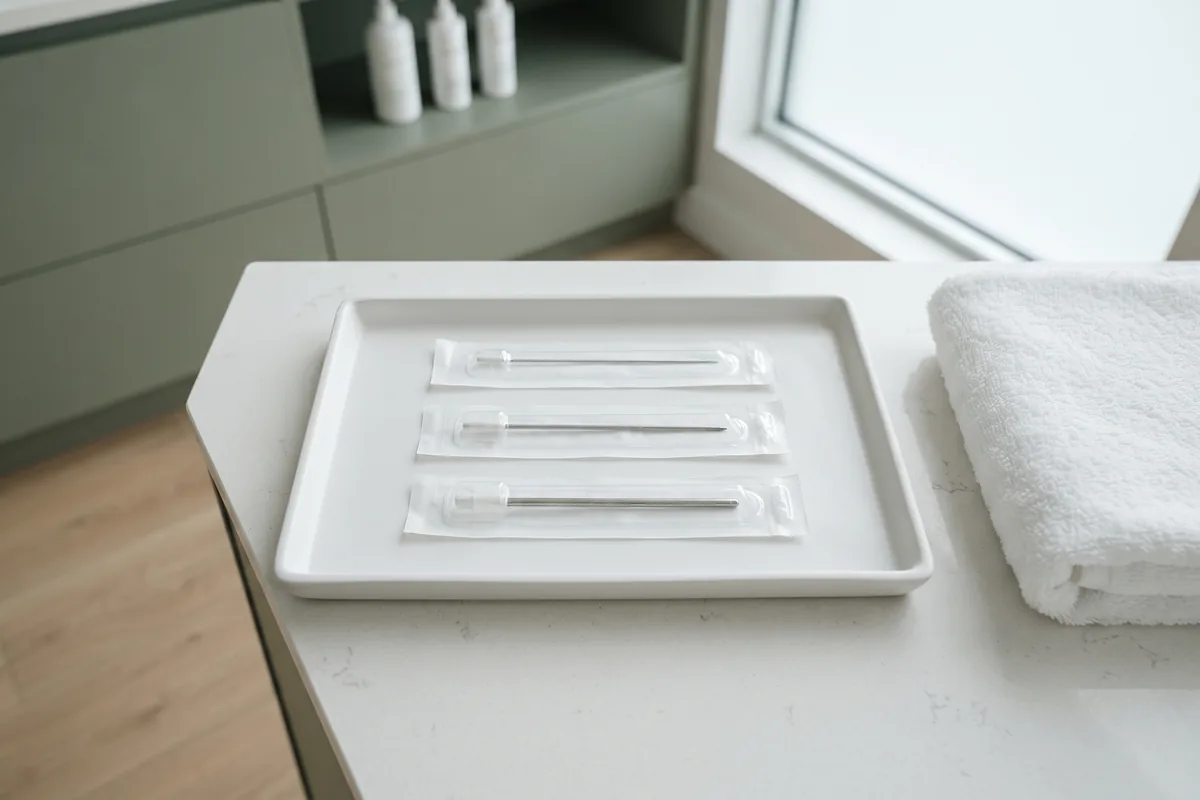
Probes come in several fineness levels, chosen to match the hair and follicle being treated.
Myths About Upper Lip Hair Removal
These come up often, and each one costs people time or money.
"Waxing makes hair grow back thicker." It does not change the follicle. Hair can look different when it regrows after being pulled, because a new hair has a blunt, full-width tip rather than a fine one.
"Threading is permanent." It is not. It removes hair from the follicle, and new hair grows from the same place in the usual cycle.
"Laser is the permanent fix for everyone." It reduces dark hair in many people, and it depends on pigment. It is not the same as FDA-recognized permanent hair removal.
"Electrolysis makes more hair appear." Treated follicles are destroyed. What you may see are untreated hairs, from other follicles, reaching the surface in the following weeks.
"Having lip hair means something is wrong." It is common. Only a sudden change or other symptoms need medical attention.
What to Do Before Your First Appointment
If you decide to try electrolysis, a few steps make the first visit more productive.
Stop plucking, waxing and threading the lip once you book, so the hairs are long enough to grasp. I will tell you how long to let them grow.
Skip retinol, glycolic acid and other actives on the lip for 48 hours before the visit.
Tell me about medications, pregnancy, past cold sores on the lip, and any laser you have had. A cold sore history matters because treatment can trigger an outbreak in some people, and your physician may suggest a preventive plan.
Ask about numbing cream and when to apply it.
The consultation is free in the studio. I examine the lip under magnification and tell you what I see. You can read more on the upper lip electrolysis page, or book a free consultation and bring your questions.
Frequently Asked Questions
+ What is the best way to remove upper lip hair permanently?
Electrolysis is the FDA-recognized permanent hair removal method. A fine probe treats each follicle individually, and it works on any hair color and skin tone. It takes a series of visits, and the number varies from person to person.
+ Is waxing or threading better for the upper lip?
Threading handles fine hair precisely and uses no wax, while waxing is fast and covers the whole lip at once. Both last a few weeks. Neither should be used on skin treated with isotretinoin or prescription retinoids, so check with your prescriber first.
+ Does laser work on a blonde or gray mustache?
Usually not well. Laser targets pigment in the hair, so light, gray, white and red hairs often respond little or not at all. Electrolysis does not depend on pigment and can treat those hairs.
+ Does shaving the upper lip make hair grow back thicker?
No. Shaving cuts the hair at the surface and does not change the follicle. The blunt tip can feel coarser as it grows out, which creates the impression of thicker hair.
+ How much does upper lip electrolysis cost in Irvine?
At Real Skin Beauty, upper lip electrolysis is $50 for a 20-minute visit. The total depends on how many visits your hair needs, which Aida estimates at your free in-studio consultation.
+ How long should I let upper lip hair grow before electrolysis?
Long enough to be seen and grasped, because the probe follows the hair into the follicle. The right length depends on your hair, so ask when you book and I will tell you at the consultation how long to wait after your last wax or threading.
+ Can I have upper lip electrolysis if I get cold sores?
Often yes, with planning. Treatment near the mouth can trigger an outbreak in some people, so tell your electrologist beforehand. Your physician may suggest a preventive medication.
+ Is upper lip hair a sign of a hormone problem?
Usually not. Fine hair on the upper lip is common. A sudden increase, or new growth together with irregular periods, acne or unexplained weight change, is worth discussing with your physician.
Licensed electrologist and cosmetologist with 20+ years of experience. Aida sees clients at Real Skin Beauty, 18021 Sky Park Circle, Suite N, Irvine, CA 92614.
Book a free consultation with Aida Khazieva at Real Skin Beauty in Irvine, CA. She will look at your upper lip hair under magnification and tell you honestly which option makes sense, including when waxing is the better choice.
This article is for informational purposes and reflects Aida Khazieva's practitioner experience. It does not replace a personalized medical consultation. Individual results vary.
Questions? Aida Answers Them All.
Visit our FAQ or book a free consultation to discuss your specific skin and hair concerns.