Electrolysis Aftercare: Complete Guide for Optimal Healing and Results
By Aida Khazieva·Electrolysis·10 min read·Real Skin Beauty, Irvine CA·Updated July 27, 2026
What you do in the 24 to 72 hours after each electrolysis session determines how cleanly your skin heals and, over the full course of treatment, contributes directly to how clear and even your final result looks. Aftercare is not complicated, but there are specific things that genuinely matter and things that seem harmless but create real problems. Here is everything you need to know, starting from the moment you leave your appointment.
Quick answer: For the first 24 to 72 hours, keep treated skin clean and calm. Wait at least 24 hours before makeup, avoid intense exercise and sweating for 24 to 48 hours, and do not pick. Tiny red dots, mild swelling and small scabs are normal and usually clear within 48 to 72 hours.
Why Aftercare Determines Your Final Results
Electrolysis creates a controlled micro-injury in each follicle it treats. The electrical current destroys the germinal tissue at the follicle base, and the follicle then undergoes a healing process over the following days. During that healing window, the follicle opening is essentially a tiny open wound, and the surrounding tissue is in an active inflammatory state.
How you manage that healing window matters on two levels.
First, it determines the immediate skin appearance. Poor aftercare in the first 24 to 48 hours can introduce bacteria into the treated follicles, causing breakouts or small pustules that are uncomfortable and visible. These are not inevitable. They are a failure of aftercare that is entirely preventable with simple precautions.
Second, it affects the long-term skin quality across your full treatment period. Electrolysis typically involves 10 to 30 or more sessions for most areas. Each session creates a set of micro-injuries that heal. If those healing events are managed poorly, repeatedly, over many sessions, the cumulative result can include post-inflammatory hyperpigmentation, uneven skin texture, or visible scarring. These are genuinely rare outcomes with proper aftercare but become much more likely when aftercare is consistently ignored.
Clients who take aftercare seriously throughout their treatment period end up with cleaner, more even skin as the final result. Clients who do not can achieve the same permanent hair removal outcome but with more post-treatment skin issues to address separately. Both outcomes are preventable or achievable with the same treatment, based purely on what happens after you leave my Irvine, CA studio.
The good news: the aftercare protocol is short, simple, and requires nothing expensive or elaborate. It is mostly about what you do not do in the first 24 to 72 hours, which most clients find easy once they understand the specific reasons behind each restriction.
The First 24 Hours: What to Do Right Now
The immediate post-treatment period is when the skin is most vulnerable. The follicle openings are at their most open, the tissue is inflamed, and the decisions you make in these first hours have the most impact on healing outcome.
Right after your session:
Apply witch hazel to the treated area. Witch hazel is a mild, natural astringent with genuine antibacterial and anti-inflammatory properties. Applied with a clean cotton pad immediately after treatment, it reduces surface bacteria and soothes the inflammatory response. It does not sting or sensitize the skin at the concentrations used in standard products.
Follow with pure aloe vera gel if the area feels warm or irritated. Aloe vera is cooling, anti-inflammatory, and well-tolerated by virtually every skin type. Pure aloe gel, not a product with fragrance and colorants added, is the appropriate choice here.
Keep the area clean and dry. Do not wash the treated area with hot water in the first few hours. Warm to cool water with a gentle, fragrance-free cleanser if cleansing is necessary. Avoid any rubbing or scrubbing.
Do not touch the treated area with unwashed hands. Your hands carry bacteria. Your face is freshly treated with open follicles. This is an obvious but consistently neglected precaution.
If treating the face: sleep on a clean pillowcase that night. Dirty pillowcases are a significant source of bacterial contact for freshly treated facial skin. This is a small detail that matters more than most clients initially realize.
For swelling: If an area is particularly swollen immediately after treatment, a clean cloth wrapped around a cold pack applied briefly to the area can reduce the inflammatory response. Do not apply ice directly to skin. 5 to 10 minutes of gentle cool application is sufficient and more is not better.
For redness: Redness at treatment sites is completely normal and expected. It does not need to be treated. It resolves on its own as the skin heals. Applying heavy topical agents to manage normal redness often does more harm than the redness itself.
The First Hour Rule
In the first hour after electrolysis, your treated follicles are at their most open and the surrounding skin is most susceptible to bacterial contamination. The single most protective thing you can do is apply witch hazel on a clean cotton pad and then leave the area alone. No touching, no makeup, no other products. The less you apply in that first hour, the better the skin heals.
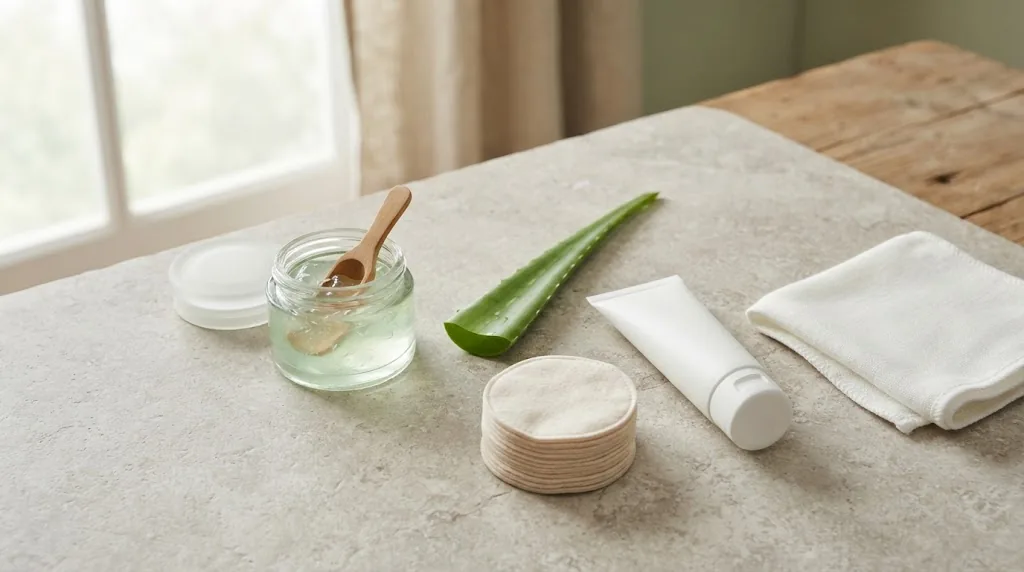
Aftercare needs very little: clean hands, aloe vera or a soothing cream and soft cotton pads.
What to Avoid After Electrolysis and Why Each Matters
Each restriction in the post-treatment period has a specific clinical reason. Understanding the reason makes it easier to follow the instruction reliably and to make good decisions in situations I have not specifically anticipated.
Makeup for 24 hours (except mineral powder): Liquid, cream, and powder foundation products are applied with brushes and sponges that carry bacteria. They also tend to contain oils, preservatives, and colorants that can block and irritate freshly treated follicle openings. If coverage is truly necessary in the first 24 hours, loose mineral powder applied with a clean brush is the safest option because it is finely milled, does not contain oil, and sits on the skin surface rather than occluding pores.
Exercise and sweating for 24 to 48 hours: Sweat carries surface bacteria from one area of skin to another. On normally closed pores and follicles, this is not a problem. On freshly treated follicle openings, sweat is essentially a transport mechanism that introduces bacteria directly into the treated site. The resulting breakouts are not a skin type issue. They are a direct consequence of bacterial contamination of open follicles. Light walking generates minimal sweat and is fine. Spinning class, hot yoga, and weight training in a warm gym are not appropriate for 24 to 48 hours post-treatment.
Hot tubs, saunas, and steam rooms for 48 hours: These environments combine heat, humidity, and, in the case of hot tubs, significant bacterial loads. Heat alone dilates blood vessels and increases the inflammatory response in treated tissue. Combined with moisture and potential bacteria, these environments create optimal conditions for post-treatment breakouts and skin irritation.
Active skincare ingredients for 72 hours: Retinol, glycolic acid, lactic acid, salicylic acid, benzoyl peroxide, vitamin C serums, and similar active ingredients are appropriate for normal, uninjured skin. On freshly treated skin with micro-injured follicle sites, these ingredients irritate rather than treat. They can delay healing, increase redness, and potentially cause hyperpigmentation at treatment sites in clients who are prone to it. Wait a full 72 hours before resuming any active ingredients in your skincare routine.
Sun exposure without protection: Covered in full in the sun protection section below, but the summary: direct UV exposure on freshly treated skin is one of the most reliable ways to cause post-inflammatory hyperpigmentation at follicle sites. This is particularly true for darker skin tones and for the cheeks and upper lip, which have the highest UV exposure in daily life.
Picking, scratching, or rubbing the treated area: Scabs and papules that form at follicle sites in the days after treatment are part of the normal healing process. Picking or scratching them off prematurely prolongs the healing process, increases infection risk, and significantly raises the likelihood of permanent pigmentation changes at those sites. Leave them alone. They resolve completely within 3 to 7 days in virtually every case.
Products That Help vs. Products That Harm Healing
The product selection for post-electrolysis care does not need to be complicated or expensive. The goal is to support healing without introducing irritants, bacteria, or occlusive agents into freshly treated tissue.
Products that genuinely help:
Witch hazel (alcohol-free): The alcohol-free version is gentler on freshly treated skin while retaining the astringent and antibacterial properties. Thayers is a widely available brand; any alcohol-free witch hazel toner works well. Apply with a clean cotton pad immediately post-treatment and once or twice in the first 24 hours.
Pure aloe vera gel: Look for 99 to 100 percent pure aloe gel without added fragrance, colorants, or alcohol. Cooling, anti-inflammatory, and appropriate for all skin types. Apply a thin layer over the treated area after witch hazel if redness or warmth is present.
Fragrance-free, minimal-ingredient moisturizer: For the 24 to 72 hours after treatment when active ingredients are off the table, a simple fragrance-free moisturizer keeps the skin barrier supported. CeraVe, Vanicream, and La Roche-Posay Toleriane are commonly available options with appropriate formulations. Avoid anything with a complex active ingredient list during this period.
Mineral sunscreen (zinc oxide or titanium dioxide): See the sun protection section for full detail, but physical sunscreens are preferred over chemical ones in the days following treatment because they sit on the skin surface rather than being absorbed into tissue.
Products to avoid after treatment:
Heavy facial oils (coconut oil, olive oil, rosehip oil): These occlude pores and follicle openings, trapping bacteria and creating ideal conditions for post-treatment breakouts. Even oils with good general skin benefits are not appropriate for freshly treated follicle sites.
Anything with fragrance: Fragrance is the most common cause of contact dermatitis and skin sensitization. On freshly treated skin, fragrance ingredients increase inflammation and can cause or exacerbate post-inflammatory hyperpigmentation.
Vitamin C serums and brightening treatments: These active ingredients, while beneficial for normal skin, are irritating to freshly treated tissue. Wait at least 72 hours before resuming them, and longer if the treated area still shows any redness or healing.
Exfoliants of any kind: Physical scrubs, washcloths used with friction, chemical exfoliants, and exfoliating cleansers all disrupt the healing surface and should be completely avoided for at least 5 to 7 days after treatment in the treated area.
The Simplest Post-Treatment Routine That Works
Witch hazel on a clean cotton pad immediately after treatment. Pure aloe vera if the area is warm. Fragrance-free moisturizer once the skin has calmed. Physical SPF the next morning. That is the complete aftercare protocol for most clients, most of the time. Elaborate routines with multiple products introduce more potential irritants without improving outcomes.
Sun Protection After Electrolysis: Non-Negotiable
Sun protection during electrolysis treatment is not optional advice. It is one of the two or three most important factors determining whether your final skin result is clean and even or marked with hyperpigmentation.
Here is the specific mechanism: when the follicle is treated with electrical current, the surrounding tissue experiences a local inflammatory response. Melanocytes, the cells responsible for skin pigmentation, are stimulated by that inflammation. When UV radiation reaches these already-stimulated melanocytes, the pigmentation response is amplified, producing dark spots at follicle sites that can persist for months or years. This is post-inflammatory hyperpigmentation, and the combination of electrolysis micro-injury and UV exposure is a reliable way to produce it in susceptible skin types.
All skin types can experience PIH, but it is most common and most pronounced in Fitzpatrick skin types III through VI. If you have medium to dark skin, sun protection is especially important throughout your entire treatment period, not just immediately after each session.
What adequate sun protection means in practice:
SPF 30 minimum every morning on the treated area, regardless of whether you plan to be outdoors. UV exposure through windows counts, and Irvine, CA has significant ambient UV even in winter.
SPF 50 is the more appropriate choice for facial treatment, particularly for medium to darker skin tones.
Physical sunscreen (zinc oxide, titanium dioxide, or both) is preferred over chemical sunscreens in the first 24 to 48 hours after treatment because physical filters sit on the skin surface rather than being absorbed into tissue. After the initial healing window, either type is appropriate as long as it is used consistently.
Reapply every 2 hours with outdoor sun exposure. A single morning application is not sufficient for a full day outdoors in the California sun.
Continue sun protection throughout your entire treatment period. This is not just a one-week aftercare measure. The skin is in a recurring cycle of micro-injury and healing throughout treatment, and UV protection throughout that period determines the final skin quality.
I work with clients across Orange County who spend significant time outdoors for work and lifestyle reasons. The sun protection conversation is one I have at every first consultation. The clients who are diligent about it throughout treatment have markedly better skin quality at the end of their treatment compared to clients who manage it inconsistently.
Caring for Sensitive Skin Between Sessions
The days between treatment sessions, once the initial 72-hour healing window has passed, do not require dramatic changes to your skincare routine. But there are a few specific considerations that support both skin health and treatment progress.
Resume your normal skincare routine after 72 hours. Active ingredients, including retinol, vitamin C, AHAs, and BHAs, can be resumed once the initial healing is complete. These ingredients are actually beneficial for maintaining skin quality between sessions and can help with any residual hyperpigmentation.
For the treatment area specifically, keep the routine simple. Even after the acute healing period, treated follicle sites are in a longer-term healing phase. Heavy, occlusive products and high-concentration active ingredients are still more likely to cause irritation in the treatment area than elsewhere on the face or body. A lighter touch in the treatment zone is appropriate even in the weeks between sessions.
If breakouts occur after a session: Small pustules at follicle sites within 2 to 5 days of treatment are almost always the result of bacterial contamination of the treated follicle opening. They are not a skin type problem and they are not caused by the electrolysis technique. They are a sign of aftercare that should be adjusted: check makeup application timing, exercise habits in the first 48 hours, and hand contact with the treated area. A brief spot application of diluted tea tree oil or a benzoyl peroxide spot treatment (2.5 percent concentration) can help these resolve. Do not apply these broadly across the healing treatment area, only as a targeted spot treatment.
Maintain adequate hydration. Well-hydrated skin heals faster and responds more effectively to electrolysis treatment. Drink adequate water throughout your treatment period. This is basic but genuine. Dehydrated skin is more reactive, heals more slowly, and tends to show post-treatment redness longer.
Between sessions: shave or trim, do not tweeze or wax. Between electrolysis appointments, the only appropriate hair management method is shaving with a clean razor or trimming with scissors. Tweezing removes the hair shaft from the follicle and prevents the probe from accurately entering the follicle at your next session. Waxing removes multiple hair shafts simultaneously and distorts follicle direction. Neither is appropriate at any point during electrolysis treatment. If this is the only rule you remember from this guide, remember this one.
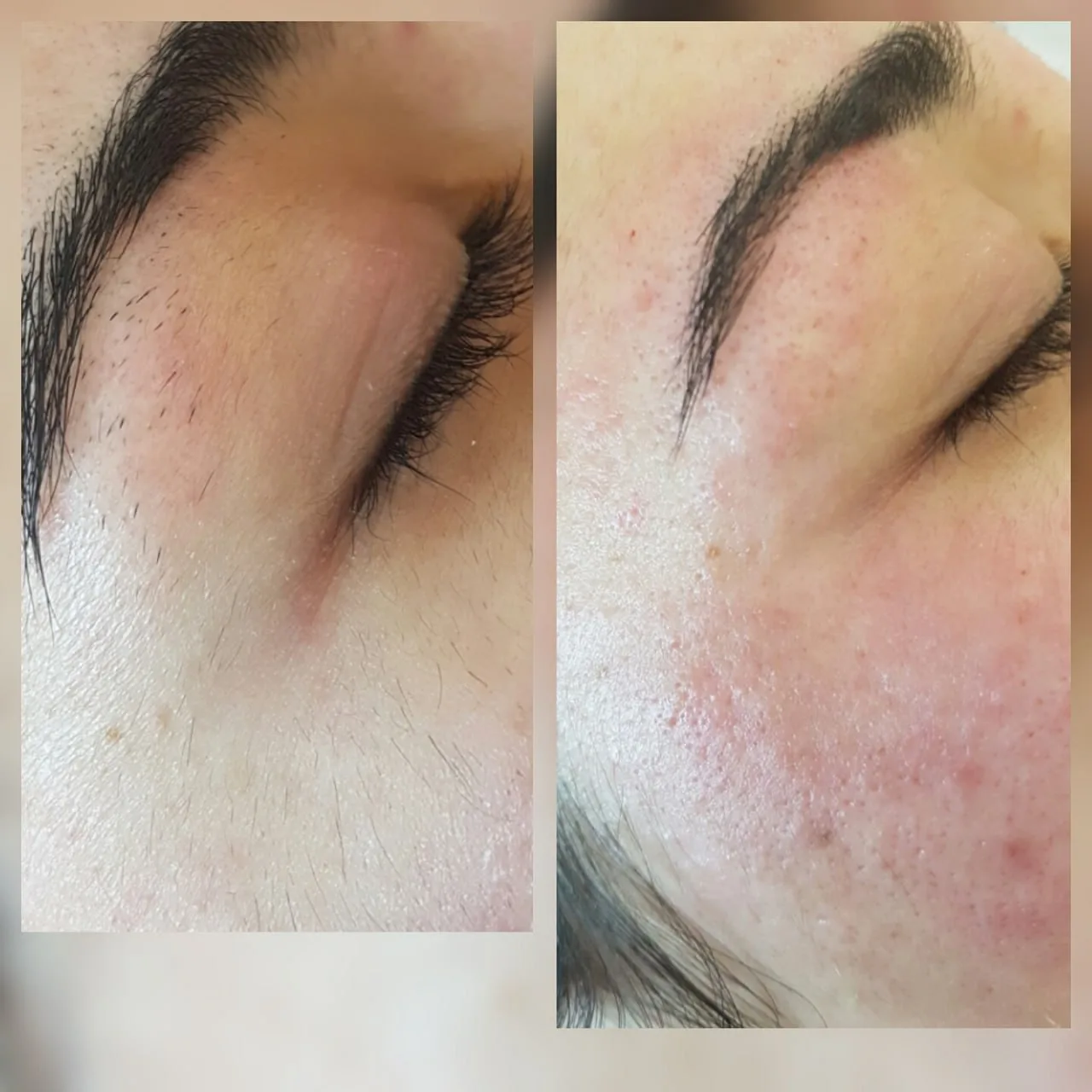
Cheek area before treatment and after the skin has healed. Mild redness usually settles within a few days.
Normal Healing vs. Warning Signs That Need Attention
Knowing which post-treatment observations are normal prevents unnecessary anxiety, and knowing which signs actually warrant contact ensures that the rare genuine problems are caught early. The two categories are more distinct than many clients realize.
Completely normal, expected, and not requiring any intervention:
Small red spots or overall flushing of the treated area immediately after treatment
Minor swelling that peaks in the first 12 to 24 hours and then reduces
Tiny scabs or crusts forming at individual follicle openings over the first 24 to 72 hours
Skin that looks more irritated in the first 24 hours than it does at 72 hours (this is the correct direction; it should improve consistently)
Hairs that appear to push through the skin surface in the 1 to 3 weeks after treatment. These are treated hairs shedding, not new regrowth. They look like short hairs emerging from the skin but they will not grow longer. They shed out or can be wiped away gently.
Mild tenderness to touch in the treated area for 24 to 48 hours
Signs that warrant contact with my office:
Pus or discharge from follicle sites beyond the first 24 hours of minor surface crusting. True purulent discharge indicates bacterial infection that needs attention.
Swelling that continues to worsen after 48 hours rather than improving. Normal swelling peaks and then consistently decreases.
Redness that spreads beyond the immediate treatment area and is accompanied by warmth. This pattern can indicate infection spreading through the surrounding tissue.
Blistering or deep tissue pain rather than surface tenderness. This would indicate an adverse reaction that needs to be assessed directly.
Fever in the 24 to 48 hours following treatment, which can indicate systemic infection from bacterial contamination.
Hyperpigmentation or darkening that appears at treatment sites and is not resolving after 4 to 6 weeks. This can be managed but needs to be addressed before continuing treatment in a way that keeps contributing to it.
True complications from electrolysis performed with proper sterile technique are uncommon. In my practice in Irvine and across Orange County, the problems I see are almost exclusively aftercare-related rather than technique-related, which means they are preventable. When you follow these guidelines consistently, the list of warning signs above remains theoretical for most clients through their entire treatment course.
Long-Term Habits That Support Faster Progress
Beyond the immediate aftercare protocol, certain habits maintained throughout your entire electrolysis treatment period affect both the speed of your progress and the quality of your final result. These are not dramatic changes. They are modest, consistent practices that compound across many sessions.
Keep your scheduled appointments. This is the most impactful long-term habit of all. The hair growth cycle does not adjust to an inconsistent schedule. Follicles cycle into their treatable active phase on their own timeline. Missing appointments means missing the window to treat those follicles, which extends your total treatment timeline proportionally and sometimes disproportionately. More on this in the session count guide.
Stop tweezing and waxing permanently, not just occasionally. Some clients understand this rule but continue tweezing "just one hair" between sessions. One tweezed hair means one follicle without a guide shaft for probe insertion at the next appointment. More importantly, it means one follicle being stimulated and distorted by repeated pulling rather than being treated properly during electrolysis. The rule is complete cessation for the duration of treatment.
Build a stable daily sunscreen habit. The clients who reach the end of electrolysis treatment with the cleanest, most even skin are the ones who made daily SPF application automatic throughout their treatment period. In the California climate, this is a reasonable year-round habit regardless of electrolysis, but it matters specifically and directly for treatment skin quality.
Tell me about changes in your health, medications, or skincare routine. New medications, hormonal changes, skincare product changes, and changes in your health that might affect skin sensitivity are all relevant to your electrolysis treatment. I adjust intensity, technique, and scheduling recommendations based on current circumstances. A client who started a new medication with photosensitizing effects and did not mention it to me is a client whose aftercare needs to account for increased UV sensitivity that I did not know about. Communication between sessions prevents problems that silence allows to develop.
For any questions about aftercare or your specific treatment situation, the FAQ page covers the most common concerns between appointments. If you are treating a specific area and want guidance on the aftercare protocol for that zone, book your free consultation at my Real Skin Beauty studio in Irvine and we will cover it as part of your initial session planning.
Frequently Asked Questions
+ How long after electrolysis can I apply makeup?
Wait at least 24 hours before applying regular foundation, concealer, or cream products. The follicle openings are essentially micro-wounds immediately after treatment, and product application introduces bacteria and occludes the healing tissue. If you genuinely need coverage sooner, loose mineral powder applied with a clean brush is the safest option because it does not contain oil and sits on the skin surface rather than being worked into pores. Avoid liquid or cream formulas for the full 24-hour window.
+ Can I exercise after electrolysis?
Avoid intense exercise that produces significant sweat for 24 to 48 hours after treatment. Sweat carries bacteria from the skin surface directly into the freshly treated follicle openings, which is a reliable pathway to post-treatment breakouts. Light walking, gentle stretching, or any activity that does not produce meaningful sweat is perfectly fine. Spin classes, hot yoga, weight training in a warm gym, and outdoor exercise in the California heat should wait until the 48-hour mark at minimum.
+ My skin looks worse right after treatment. Is that normal?
Yes, completely and consistently normal. The skin immediately after electrolysis shows redness, sometimes minor swelling, and tiny marks at follicle sites. This is the normal inflammatory healing response and looks most pronounced in the first 12 to 24 hours. By 48 to 72 hours, the large majority of clients see significant resolution. The skin should consistently improve from the 24-hour mark onward. If it is worsening after 48 hours rather than improving, that is a signal worth noting and potentially contacting my office about.
+ What should I apply to my skin after electrolysis?
The simplest effective protocol: alcohol-free witch hazel on a clean cotton pad immediately after treatment, followed by pure fragrance-free aloe vera gel if the area feels warm or irritated, followed by a plain fragrance-free moisturizer once the acute reaction has settled. In the morning after your session, apply a physical sunscreen with SPF 30 or higher. Avoid retinol, AHAs, BHAs, heavy oils, fragrance, and any other active skincare ingredients on the treated area for at least 72 hours. Simpler is better during the healing window.
+ Should I stop waxing between electrolysis sessions?
Yes, completely and permanently for the duration of your treatment. Waxing removes the hair shaft from the follicle, and the probe needs that shaft present to track accurately into the follicle channel at your next session. Waxing between sessions also distorts the follicle channel, making probe insertion less accurate, and stimulates blood flow to the follicle area. The same applies to tweezing and depilatory creams. Between electrolysis appointments, shave with a clean razor or trim with scissors only. Neither of these removes the hair shaft from the follicle, so the probe can work correctly at your next session.
Licensed electrologist and cosmetologist with 20+ years of experience. Aida sees clients at Real Skin Beauty, 18021 Sky Park Circle, Suite N, Irvine, CA 92614.
Book a free consultation with Aida Khazieva at Real Skin Beauty in Irvine, CA. She will walk you through the full aftercare protocol for your specific treatment area and skin type.
This article is for informational purposes and reflects Aida Khazieva's clinical experience. It does not replace a personalized medical consultation. Individual results vary.
Questions? Aida Answers Them All.
Visit our FAQ or book a free consultation to discuss your specific skin and hair concerns.