Your First Electrolysis Appointment: How to Prepare and What Happens
By Aida Khazieva·Electrolysis·14 min read·Real Skin Beauty, Irvine CA·Updated October 12, 2026
For your first electrolysis appointment, arrive with clean, makeup-free skin on the treatment area, stop plucking and waxing so the hairs are long enough to treat, and skip retinol and acids for 48 hours. Expect a consultation, a skin and hair check under magnification, a few low-energy test insertions, then treatment of the first area. Redness and tiny scabs for a day or two are normal. Here is the sequence at my Irvine studio, step by step, so nothing surprises you.
Quick answer
The in-studio consultation is free and takes about 30 minutes. An online consultation is $50.
Before: no plucking or waxing, no retinol or acids for 48 hours, skip heavy caffeine, eat beforehand.
During: skin check, medical questions, test insertions, then treatment one follicle at a time.
After: expect redness and small scabs, avoid sun, makeup and picking. Aftercare steps are in the aftercare guide.
Consultation First, Treatment Second
Most people start with the consultation. It is free in the studio, lasts about 30 minutes, and there is no obligation to book treatment that day. If you live far from Irvine, an online consultation is $50 and works from photos.
At the consultation I look at your hair under magnification, check your skin type, and ask about your history. We cover what you have tried (shaving, waxing, laser), where the hair is, and what bothers you most. Then I tell you what I think: which area to start with, how often to come, and what price per visit to expect. A guide to the price list is in How Much Does Electrolysis Cost in Orange County?
Ask when you book whether treatment can follow the consultation on the same day. If you want a longer first visit or a short one, say so at booking.
Bring photos of your hair before any previous removal if you have them, and a list of products you use on the area. Both save time. You do not need to arrive with a decision about how many areas to treat. Most people decide on one starting zone after we talk, and add others later once they know how their skin responds.
How to Prepare in the Week Before
Preparation is simple, but a few items matter more than people expect.
Do
Avoid
Why
Let hair grow a few days, as advised
Plucking, waxing, threading, epilating
The probe follows the hair into the follicle. No hair, nothing to follow.
Cleanse the area, no makeup on arrival
Retinol, glycolic acid, scrubs for 48 hours
Active ingredients sensitize skin and can make treatment feel stronger.
Eat and drink water
Heavy caffeine and alcohol the night before
Both can raise sensitivity.
Wear loose clothing for the area
Tight waistbands, fabric that rubs
Fresh follicles are tender.
Plan your schedule
Sunbathing, tanning beds, sun burn on the area
Sun-stressed skin heals slower and reacts more.
If your upper lip, bikini or another sensitive zone is on the list, ask about numbing cream. Over-the-counter lidocaine creams need time to work, 30 to 60 minutes depending on the product, so plan it before you leave home. I recommend bringing the question to the consultation rather than guessing. My article Does Electrolysis Hurt? covers what to expect and which products are typically used.
Day-of checklist:
Arrive five to ten minutes early with your medication list.
Come with the area clean and free of lotion, oil or makeup.
Eat something and drink water beforehand.
Bring a phone or book for after, since you may want a quiet moment before heading back to work.
Plan to avoid the gym and sun for the rest of the day.
What to Tell Me About Your Health
The medical questions are not paperwork. They change how I treat you. Be ready to tell me about:
Medications, especially isotretinoin (Accutane), blood thinners, and anything that makes skin photosensitive or slow to heal.
Pregnancy or the chance of it. Many practitioners prefer to wait, and your physician should be consulted.
Pacemakers or implanted electrical devices. Speak to your cardiologist first. Some electrolysis modalities use electrical current.
Hormonal conditions such as PCOS or thyroid disease, and recent changes in your periods.
History of keloid scars, cold sores, or skin conditions in the treatment area.
Past hair removal, including laser, IPL and dates.
If your hair growth is new, sudden or accompanied by other symptoms, see your physician. Electrolysis treats the hair. It does not treat the cause, and I would rather you know that first. The guide on why facial hair grows lists common causes.
What to Wear and What to Bring
Wear something comfortable that gives easy access to the area. For the face, a top with a loose neckline works, and hair tied back keeps it out of the way. For the underarm, back or legs, I provide towels and draping, and you choose what feels comfortable. Come without makeup, lotion or oil on the area, or plan a few extra minutes to remove it.
Bring your medication list, any photos from before past hair removal, and the names and dates of earlier treatments such as laser or IPL. A water bottle is useful, and so is a list of questions. Many people forget what they wanted to ask once they are in the chair, and writing them down fixes that.
The first visit starts with a conversation and a health questionnaire, not with the probe.
What Happens in the Room
Here is a typical sequence for a first treatment visit.
1. Skin check and cleansing
I cleanse the area and look again under magnification. If you used numbing cream, I remove it first.
2. Choice of modality and settings
Electrolysis has three modalities: galvanic, thermolysis and blend. I choose based on the hair type and your tolerance, and adjust as we go. In practice that means I may change settings between areas in the same visit.
3. Test insertions
I begin with a few insertions at low energy in a less sensitive spot, so you can feel the sensation before treatment intensity. Most clients relax after that.
4. Treatment, one follicle at a time
A sterile, single-use probe goes into the follicle beside the hair. A short pulse of current is delivered, and the hair lifts out without resistance. I move from hair to hair. You feel a brief warmth or sting on each one, and nothing between them.
5. Soothing and aftercare
When we finish I soothe the skin and go over your aftercare. You leave with clear instructions and a schedule for the next visit.
If you are nervous, say so at the start. Nerves raise how strongly you feel the first few insertions, and a first session is usually the most anxious one. I can slow down, change the energy, or pause for a moment. Nothing about the treatment requires you to push through discomfort in silence. Most people tell me the second visit feels easier simply because they know what is coming.
The Three Modalities in One Paragraph
Galvanic electrolysis uses a chemical reaction to destroy the follicle and works slowly. Thermolysis uses high-frequency energy to heat it and works quickly. Blend uses both together. Each has strengths, and the choice depends on your hair, the area and how your skin responds, not on a fixed preference. I explain the reasoning during your visit, and my full comparison is in the guide to the three types of electrolysis.
Staying Comfortable During Treatment
Position matters. I set the bed so your head and neck are supported and your muscles can relax, because tension makes sensation sharper. Breathing slowly through the first few insertions helps, and so does telling me what you feel. I can lower the energy, change the order of the hairs, or give you a short pause. Topical numbing cream is an option for sensitive zones, and I would rather you ask about it ahead of time. The full picture, area by area, is in my article Does Electrolysis Hurt?
How Long the First Visit Takes and What It Costs
Visit length depends on the area, and so does the price. These come from the Real Skin Beauty price list.
Area
Visit length
Price per visit
Upper lip
20 min
$50
Chin
30 min
$65
General facial zone
30 min
$75
Cheek, neck, hairline or underarm
45 min
$90
Chest and decollete
45 min
$100
Bikini or PCOS treatment
1 hr
$110
Arm or back
1 hr
$120
Brazilian
1 hr
$130
Leg
1 hr
$150
Many first-time clients choose a shorter visit on a smaller area. It lets you feel the process before planning a longer session. You do not have to treat everything at once. The total depends on how many visits your hair needs, and I cannot promise a number. My guide on how many sessions you may need explains the variables.
Choosing Your First Area
If you have several areas in mind, start with the one that bothers you most, or with a small one if you want to learn how your skin heals before planning more. Short facial visits are the lowest-priced: the upper lip is $50 for 20 minutes, the chin is $65 for 30 minutes, and cheeks, neck or hairline are $90 for 45 minutes. You can add areas later once you know how your skin responds. The reasoning behind pricing and planning is in How Much Does Electrolysis Cost in Orange County?
What You Will Feel and See Afterward
The first thing most people notice is redness at the treated follicles. Mild swelling is common on the upper lip. Tiny scabs may form over 24 to 72 hours. All of this is part of normal healing.
Do not pick or scrub the scabs. Let them fall off.
Keep makeup off the area for the first day, or use clean products as advised.
Avoid sun, saunas, heavy workouts and swimming pools for the first 24 hours, or as I advise.
Use only gentle skincare. No retinol or acids until the skin has calmed.
Apply sunscreen to treated skin that is exposed once healed.
Call me if you see pus, spreading redness, worsening swelling after 48 hours, blistering or fever. Those are not common, and they deserve prompt attention. The full routine is in Electrolysis Aftercare.
A Quick Reference You Can Screenshot
Keep this on your phone for the days around your first visit.
Before the visit
After the visit
Stop plucking, waxing and threading the area
Do not pick scabs or scrub the skin
Skip retinol and acids on the area for 48 hours
Avoid sun, saunas, pools and heavy workouts for the first 24 hours
Arrive with the area clean and free of makeup or lotion
Use gentle skincare only until the skin has calmed
Bring a medication list and photos of past hair removal
Call the studio about pus, spreading redness, blistering or fever
If you are ever unsure, send a photo and ask. A quick question costs nothing and saves worry.
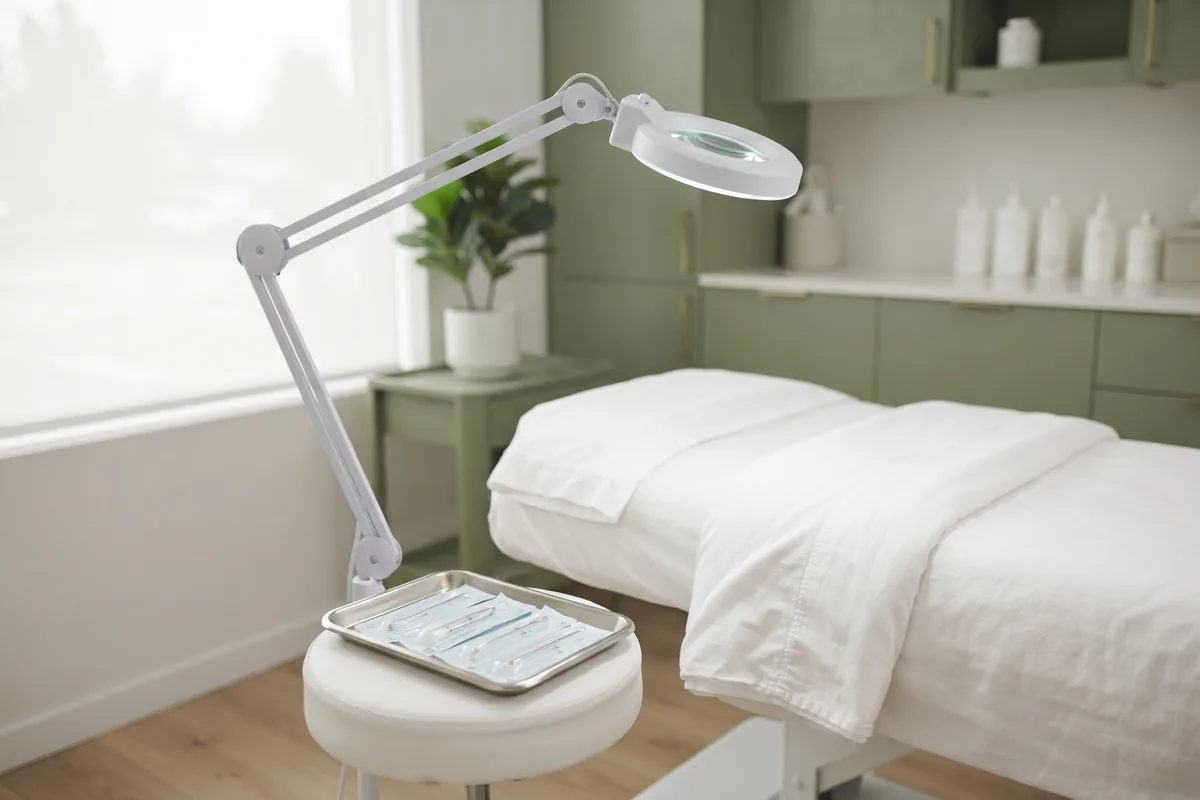
The room is set before you arrive: magnifier, sterile single-use probes and fresh linens.
Your First Three Months: A Realistic Picture
The first visit is a starting point. The plan unfolds over the weeks that follow, and this is the general shape. It is an outline and not a promise.
Time
What usually happens
What you can do
Visit 1
Consultation, test insertions, first treatment of the chosen area
Follow aftercare and note how the skin feels
Next few weeks
Treated hairs shed. Hairs that were not ready surface and are treated at later visits
Do not pluck or wax. Keep visits regular
First months
Visits are closer together while many hairs are active
Take photos in the same light every few weeks
Later
Fewer hairs appear and gaps between visits stretch
Keep your appointments until the area is quiet
If your hair is affected by hormones, medication or past waxing, the schedule may run differently from the outline above. Your plan is adjusted as we go. A consultation gives the best starting estimate, and it is always an estimate.
How Visits Are Spaced
Spacing depends on the area and on how your skin heals. A small facial area is often seen more frequently at the start, since the skin recovers quickly and many hairs are active. Large body areas are usually spaced further apart, because the skin needs time to settle between visits. I set the schedule from what I see at each appointment, and I change it as the hair thins. If a gap has to be longer than planned, do not worry. It slows progress a little, and it does not undo it.
Mistakes That Slow Down a First Series
Most delays come from habits, not from the treatment. These are the ones I see at the start.
Plucking, waxing or threading between visits. It removes the hair I need to find and can distort the follicle.
Long gaps. Hairs mature during a long break, and you end up treating ground you already covered.
Picking at scabs. It can leave marks. Let them fall off on their own.
Sun on healing skin. Irritated skin picks up pigment easily, so cover or protect it.
Starting new actives too soon. Retinol and acids can sting treated skin. Wait until it has calmed.
Expecting a smooth result after one visit. The first visit begins the process. It does not finish it.
Comparing your pace with someone else's. Hair density, hormones and past hair removal differ for each person.
Mistakes happen, and none of them ends the plan. If you waxed by accident, tell me, and we wait for the hair to grow back to a treatable length. If you picked a scab, keep the spot clean, leave it alone from then on, and protect it from sun. If you missed a visit, rebook as soon as you can. I would always prefer an honest account of what you did over a polite guess, because it lets me adjust settings and spacing to what your skin has actually been through.
Special Situations to Mention Before You Come
Some details change how I plan the visit. Raise them at booking, or at the very latest at the consultation.
Pregnancy. Many practitioners prefer to wait, and your physician should be consulted before treatment.
Pacemaker or implanted device. Speak to your cardiologist first, since some modalities use electrical current.
Blood thinners. They can make small marks more likely. Tell me what you take, and do not change a prescription on your own.
Isotretinoin or recent peels. Skin may be thin and reactive. Ask your prescriber and tell me the dates.
Keloid scarring or cold sores. Both change the plan, so mention them early.
Your menstrual cycle. Some clients find their skin more sensitive at certain times of the month. If you notice a pattern, tell me, and we can schedule around it.
Aftercare is simple: a gentle cleanser, a plain moisturizer and sunscreen once the skin has healed.
What to Expect From the Next Few Weeks
Hairs that were treated shed over one to three weeks. During that time some may seem to push up to the surface. That is the old hair leaving, not regrowth. Other hairs, which were in a different growth phase on the day, will appear, and they are treated at later visits.
That is why electrolysis comes in a series. Early on, visits are closer together. As hair thins, the gaps stretch. Clients in Irvine, Tustin, Newport Beach and the rest of Orange County usually find the schedule fits into a normal routine, since the visits are short.
Keep a note of what you notice, such as which spots healed slowly, which hairs came back and how the skin felt, and bring it to the next visit. Those details help me adjust settings and spacing. If something looks different from what I described, send a photo and ask. A quick check is better than worry.
What a Good First Visit Feels Like
From your side, a good first visit is unhurried. The practitioner explains what is about to happen before it happens, opens sterile supplies in front of you, asks about your health with real interest, and answers your questions without rushing. You should leave knowing what area you started with, how often to return, what to do at home and who to contact if something looks wrong. You should not leave feeling pushed to buy something you did not plan to. If any of that is missing at a studio you try, trust the feeling and ask again, or look elsewhere. Good practitioners expect these questions and welcome them. My guide on how to choose an electrologist goes through red flags to watch for.
Questions to Ask at Your First Visit
Is the practitioner licensed in California?
Are the probes sterile and single-use, and will I see them opened?
+ Do I need a consultation before my first electrolysis treatment?
A consultation is recommended. At Real Skin Beauty in-studio consultations are free and last about 30 minutes, and an online consultation is $50. It covers your skin, hair, health history and a starting plan.
+ Should I shave before my first electrolysis appointment?
Do not wax or pluck. Hair needs to be long enough for the probe to follow it into the follicle. Ask for specific guidance when you book, because the ideal length depends on the area and hair.
+ What should I avoid before electrolysis?
Avoid plucking, waxing, retinol, acids, tanning and heavy caffeine in the day or two before. Tell your practitioner about medications such as isotretinoin, pregnancy, pacemakers and any recent laser.
+ How long does a first electrolysis appointment take?
Visit length depends on the area: 20 minutes for the upper lip, 30 minutes for the chin, 45 minutes for cheeks, neck or hairline, and up to one hour for larger body areas. A consultation takes about 30 minutes.
+ What will my skin look like after the first session?
Expect redness, mild swelling and small scabs at treated follicles for a day or three. Do not pick them. Contact the studio if you see pus, spreading redness, blistering, worsening swelling after 48 hours or fever.
+ Can I wear makeup to my first electrolysis appointment?
Arrive with the treatment area clean and free of makeup, lotion or oil. If you wear makeup on other parts of your face, that is fine. Skip makeup on the treated area for the first day afterward.
+ Will my first visit include treatment, or only the consultation?
That depends on how you book. The consultation is free in the studio and takes about 30 minutes, and treatment can follow if you book a treatment slot as well. Ask when you schedule.
+ When can I go back to work or exercise after the first visit?
Most people go back to normal activities the same day, and redness is usually mild. Avoid heavy workouts, saunas, swimming pools and sun on the treated area for the first 24 hours, or as your electrologist advises.
Licensed electrologist and cosmetologist with 20+ years of experience. Aida sees clients at Real Skin Beauty, 18021 Sky Park Circle, Suite N, Irvine, CA 92614.
Book a free consultation with Aida Khazieva at Real Skin Beauty in Irvine, CA. She will check your hair and skin, answer your questions and explain exactly what the first treatment will involve.
This article is for informational purposes and reflects Aida Khazieva's practitioner experience. It does not replace a personalized medical consultation. Individual results vary.
Questions? Aida Answers Them All.
Visit our FAQ or book a free consultation to discuss your specific skin and hair concerns.