Numbing Cream for Electrolysis: What Works and How to Use It
Topical numbing cream can make electrolysis more comfortable, mostly on sensitive areas such as the upper lip, bikini line and underarm. Over-the-counter creams containing lidocaine are the usual choice. They need a thick layer, usually covered, and 30 to 60 minutes to work, so you apply them before you arrive, and you tell your electrologist what you used. They do not work for everyone, and they have safety limits, especially on large areas. Here is how to use them well, and when to skip them.
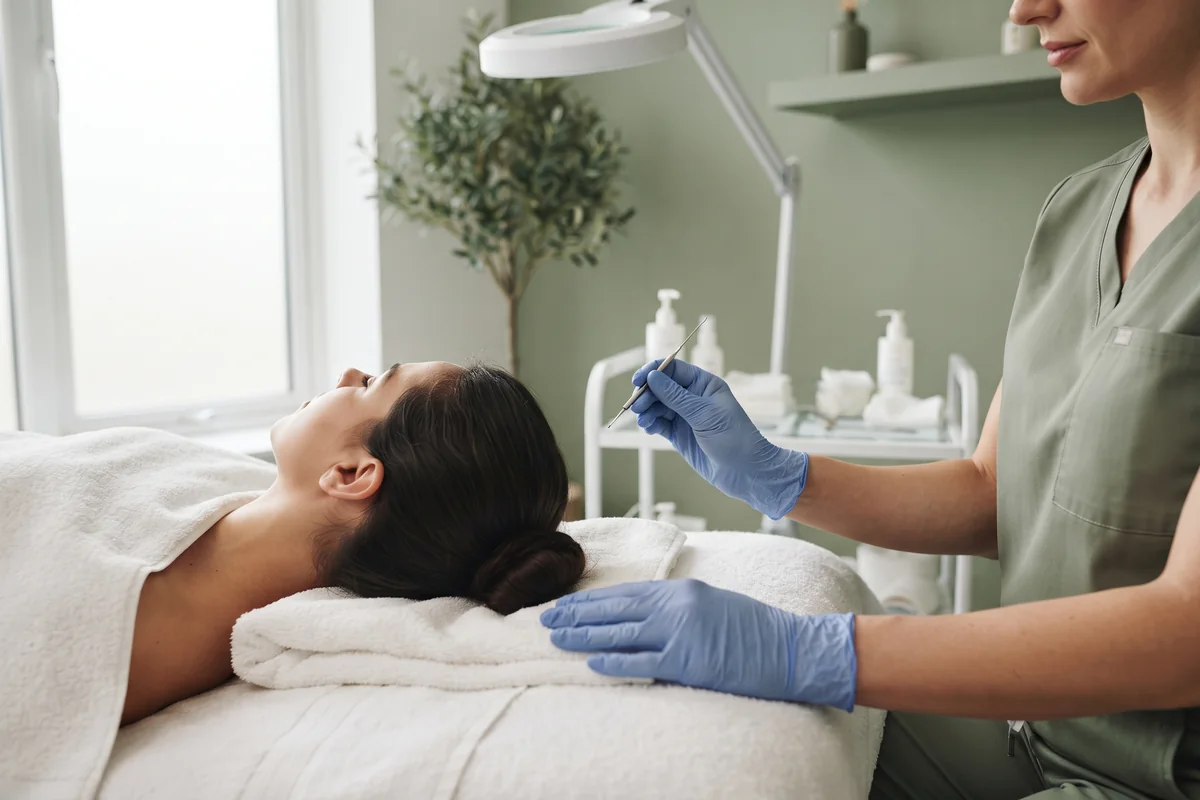
- Numbing creams reduce surface sensation. They do not remove all feeling, and they work less well on deeper pinch or heat sensations.
- Over-the-counter lidocaine products are the most common. Follow the label, use a thick layer, and plan 30 to 60 minutes or what the product says.
- Safety first: do not use on broken skin, do not use large areas without medical advice, and watch for allergic reactions.
- Tell your electrologist what you used and when. Ask at booking, since some practitioners have their own policy.
Does Numbing Cream Help During Electrolysis?
It can. Many people find that a topical anesthetic takes the sharpest edge off treatment, especially on the upper lip, around the bikini line, on the underarm and on the neck. Some people feel a big difference, and some feel only a small one. A few feel nothing at all, because their sensitivity is not at the skin surface.
Electrolysis is a brief, repeated sensation. The probe goes into the follicle, a small amount of current is delivered for a moment, and then the hair lifts out. What you feel is a quick warmth, a prickle or a snap, and then nothing until the next hair. Numbing cream works on the nerve endings in the top layers of skin. It reduces how much of that sensation reaches you, but it cannot reduce all of it, because treatment happens a little below the surface.
Whether it is worth using depends on you and on the area. If you are just starting, I suggest asking at the consultation before buying anything. How much pain you feel is also affected by settings, modality and your own state on the day. My longer guide, Does Electrolysis Hurt?, goes through area by area.
Who Benefits Most
- People with high sensitivity or anxiety about pain, who tense up before the first insertion.
- People treating thin-skinned or nerve-rich areas, such as the upper lip, bikini line or underarm.
- First-time clients who want a gentler start.
- People who are likely to be more sensitive at certain times of the month.
Who May Not Need It
- People treating less sensitive areas, such as the chin or the legs, who find the sensation manageable.
- People who have a reaction to creams or who do not want to apply anything to the skin before a visit.
- Anyone told by a physician to avoid topical anesthetics.
How Topical Numbing Cream Works
Most over-the-counter numbing creams contain lidocaine, a local anesthetic. It blocks sodium channels in nerve endings, which stops them from sending pain signals for a limited time. Some products combine lidocaine with a second ingredient to extend the effect. Strengths of products sold without a prescription are limited by regulation, and the label tells you what yours contains. I do not recommend brands, and I cannot tell you which one suits you. Read the label and ask your pharmacist if you are unsure.
Prescription products may contain stronger concentrations or a combination of two anesthetics. They are prescribed by a physician, and the instructions that come with them matter. Do not use someone else's prescription, and do not use a prescription product on a bigger area than your physician specified. Some compounded creams are marketed online with very high strengths. That is a point where more is not better. Higher strengths increase absorption into the bloodstream, and the risks rise with them.
What the Cream Does Not Do
- It does not numb the deeper feeling of warmth and pressure completely.
- It does not remove every sensation on bony or very sensitive spots.
- It does not make the treatment faster or more effective.
- It does not replace good technique and settings.
How to Apply Numbing Cream Before Electrolysis
The steps below are a general description. The label of your product has the final word on time, amount and limits, and your physician or pharmacist is the person to ask if you have a health condition or take other medications.
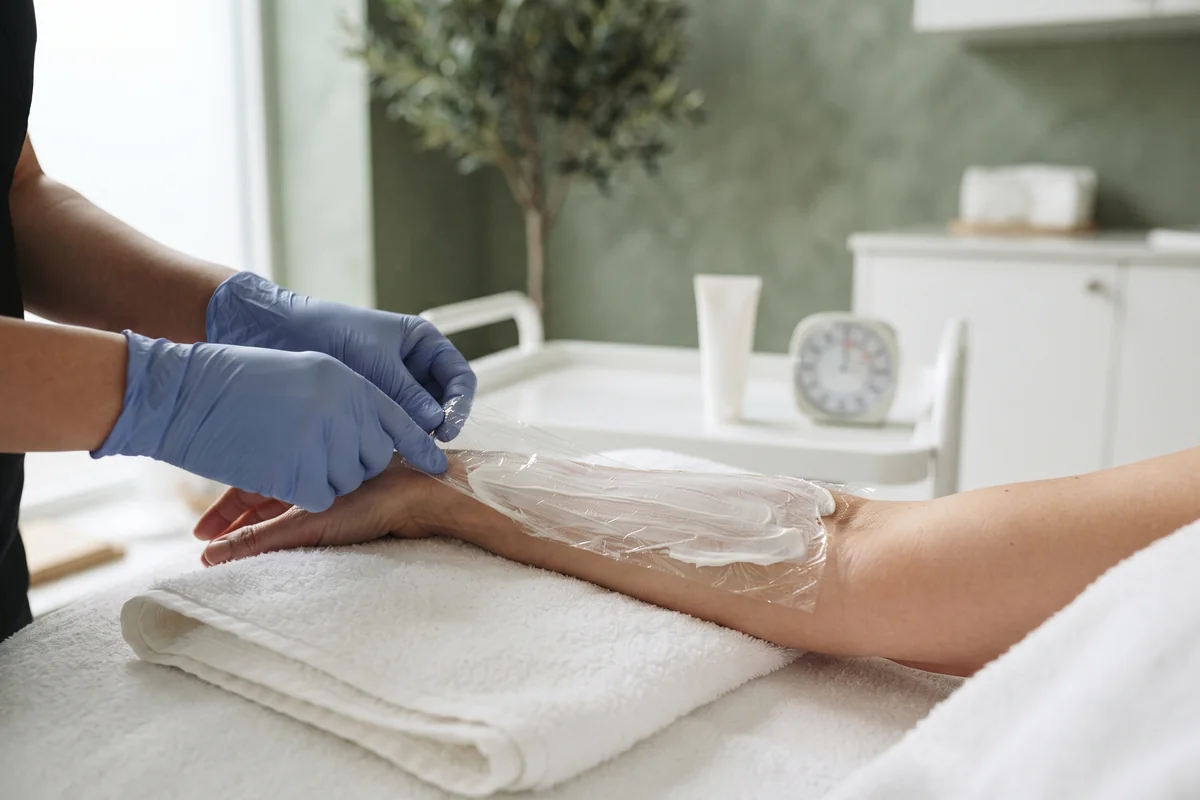
1. Check the area. Skin should be clean, dry and unbroken. No cuts, rashes, sunburn or active irritation. 2. Wash your hands and clean the area. Remove makeup, lotion and oil first, since they block absorption. 3. Apply a thick layer. Most products work best when you apply a visible layer, not a thin rub-in. Follow the amount on the label. 4. Cover it if the label allows. Many people cover the cream with plastic wrap or a clear dressing to hold it on the skin. Check whether your product permits it, since covering increases absorption and is not suitable for every product or area. 5. Wait the full time. Many creams take 30 to 60 minutes, and some longer. If you arrive early with the cream on, you will not gain much. 6. Do not rub it in afterward or wash it off in a hurry. Follow the label. 7. Tell your electrologist. Say what you used, how much, how long ago, and where.
Timing Around Your Visit
Plan the application so the cream has done its job by the time the probe touches your skin. For a 20 to 30 minute drive, that may mean applying it at home. Remember that the cream is removed and the skin cleaned before treatment starts, which takes a few minutes. If you are coming from Irvine, Newport Beach, Costa Mesa or farther away and your timing is tight, ask me whether to apply at home or in the studio. I cannot promise a specific plan without knowing the product you use.
Common Mistakes That Make It Useless
Most disappointing experiences with numbing cream come from a small set of mistakes.
| Mistake | What happens | What to do instead |
|---|---|---|
| --- | --- | --- |
| Thin layer | Not enough product reaches the nerve endings | Apply a visible, thick layer as the label describes |
| Too short a wait | The cream has not had time to act | Allow the full time on the label, often 30 to 60 minutes |
| Rubbing it all in | Less product stays on the surface | Leave the layer on the skin |
| Applying over lotion or makeup | Barrier blocks absorption | Clean the area first |
| Skipping the cover | Cream dries or wipes away | Cover if the label allows |
| Applying on a very large area | Raises the risk of absorption into the body | Limit to the area on the label and speak to a physician |
| Not telling the electrologist | Missing information can affect safety and skin assessment | Tell me what you used and when |
Safety: What You Need to Know
Numbing creams are widely sold, and they are low-risk when used as directed on small areas of intact skin. That is not the same as risk-free. Things to keep in mind:
- Allergic or irritant reactions. Redness, itching, swelling or a rash can happen. If you have never used a product before, try a small patch on another area first and watch for a reaction.
- Absorption. Applying a lot of cream to a large area, covering it, or leaving it on for longer than directed increases how much enters the bloodstream. In rare cases that can cause serious side effects, and for lidocaine, the label usually lists warning signs. Follow the label, and if you feel dizzy, have a ringing in the ears, a metallic taste, a racing heart or numbness around the mouth, remove the cream and seek medical help.
- Broken or inflamed skin. Absorption is higher, and the risk of a reaction goes up. Do not apply on cuts, rashes or sunburn.
- Eyes, mouth and mucous membranes. Keep it away from them unless the product is made for that use. For the upper lip and brow areas, take particular care.
- Pregnancy and breastfeeding. Ask your physician before using any numbing product. Many practitioners also prefer medical approval for the treatment itself.
- Medications and medical conditions. Heart rhythm problems, liver disease, certain medications and methemoglobinemia are examples of situations where a physician's advice matters before using lidocaine. Ask your physician or pharmacist.
- Children and teens. Do not use on a minor without a pediatrician's guidance.
I am an electrologist and not a physician, so I cannot tell you which product is safe for you. What I can do is ask the right questions at the consultation and make sure what you used is on my notes.
Which Areas Benefit Most
Sensitivity differs by area and by person. This is a general guide to where clients commonly ask about numbing, and it is not a rule.
| Area | Typical comfort concern | Numbing cream often considered |
|---|---|---|
| --- | --- | --- |
| Upper lip | Thin skin, close to the nose and teeth | Often yes |
| Chin and jawline | Moderate, varies by hair density | Sometimes |
| Underarm | Sensitive, especially close to the skin fold | Often yes |
| Bikini line and Brazilian | High sensitivity for many people | Often yes, with extra care on mucous membranes |
| Neck | Varies, sensitive near the front | Sometimes |
| Back, arms and legs | Usually moderate | Rarely needed |
Prices at Real Skin Beauty depend on the area and the visit length, not on whether you use numbing cream. Examples: upper lip $50 for 20 minutes, chin $65 for 30 minutes, underarm $90 for 45 minutes, bikini $110 and Brazilian $130 for an hour. You can read more on the pages for upper lip electrolysis, underarm electrolysis and bikini electrolysis.
Other Ways to Make Treatment More Comfortable
Numbing cream is one tool. Others are free, and some do more than a cream does.
Settings and Modality
Electrolysis comes as galvanic, thermolysis and blend. Each feels a little different. The settings can be raised or lowered, and a gentle start gives you time to adjust. The comparison is in the three types of electrolysis. If something feels sharper than expected, say so. Settings can change in seconds.
Pace and Pauses
I can slow down, treat a few hairs and pause, or change which hairs I take first. Treating an area in short rounds with breaks is often easier than one long stretch. It is also fine to say "I need a minute."
Breathing and Body Position
Tension makes sensation sharper. A supported head, relaxed shoulders and slow breathing out through each insertion help more than people expect. It sounds simple, and it works for many.
Timing in Your Cycle
Some clients notice more sensitivity just before or during their period. If you see a pattern, schedule around it when you can.
Food, Sleep and Caffeine
Eat beforehand, drink water, and go easy on coffee. Both low blood sugar and heavy caffeine can raise sensitivity and nerves.
Over-the-Counter Pain Relievers
Some people take an oral pain reliever before a visit. I cannot advise on medicines or doses. Ask your physician or pharmacist whether it is suitable for you, and tell your electrologist what you took.
Cold
Brief cooling of skin before or between rounds can take the edge off. Ask your electrologist what is available in the studio, and do not apply ice for long periods on your own, since cold can damage skin.
Does Numbing Cream Affect Treatment Results?
For most clients, a numbing cream does not stop treatment from working. Still, a few points are worth knowing:
- Skin appearance can change. Some creams make skin look blanched or puffy, which can make it harder to see the hair and the follicle opening. I check the area when I clean it.
- Feedback is reduced. Your reaction to the current is useful information about settings. A heavily numbed area gives me less of that feedback. It does not mean I cannot treat, but I may go carefully.
- Settings should not be raised only because you are numb. The goal is to treat the hair effectively and not to push through with higher energy because you cannot feel it. Higher settings can increase irritation and the risk of marks, whether or not you feel them.
- Healing is the same. Redness, swelling and tiny scabs after treatment follow the same pattern. Numbing cream does not speed or slow healing.
Because of these points, some electrologists prefer clients to use light numbing or none, and others are happy with it. Ask when you book. At Real Skin Beauty, I ask you to tell me before the visit, so that I know what to expect.
Numbing Cream vs No Cream: How to Decide
A short checklist can help you decide.
- Is this your first visit, and are you nervous? Cream can help you relax.
- Is the area one of the most sensitive ones for you, such as the upper lip, underarm or bikini line?
- Do you have time to apply it properly and wait the full time?
- Have you used this product before without a reaction?
- Is the area small and the skin intact?
- Have you asked your physician if you have a condition or take a medication that may matter?
- Have you told the studio what you plan to use?
If you answered yes to most of these, a cream is a reasonable thing to try. If you are unsure, start without it on a small area, see how it feels, and decide for the next visit. Many clients find the sensation more manageable than they feared, and the second visit is often easier because the unknown is gone.
After the Visit: Skin Care When You Used Numbing Cream
Numbing cream does not change aftercare, but a few details matter.
- Wash off any leftover cream gently, as directed, and pat dry.
- Remember that skin may stay numb for a while after the cream is gone. Do not apply hot compresses or very hot water, because you may not feel a burn.
- Avoid scratching or picking at the area as feeling returns.
- Skip retinol, acids and scrubs until the skin is calm.
- Follow the steps in electrolysis aftercare, including sun protection once the skin has healed.
Contact the studio if you see blistering, pus, spreading redness, worsening swelling after 48 hours or fever. The same applies if you see a rash that looks like a reaction to the cream, such as itching, hives or swelling beyond the treated spots. For anything that feels like a systemic reaction, call a physician or emergency services.

What to Ask at Your Consultation
Bring these questions to the consultation, which is free in the studio and takes about 30 minutes.
- Do you allow numbing cream, and do you have a preference for how it is used?
- Should I apply it at home or arrive early?
- How long before the visit, and how long should I wait?
- Is there an area where you do not recommend it?
- What settings will you start with on my skin?
- What other comfort options do you offer?
If you plan to treat a larger area, such as the back, arms or legs, the conversation is different. Large areas are usually not numbed, because of the risk of absorption, and the visits are planned around what you can comfortably take. The first appointment guide explains what to expect at your first visit.
A Practical Plan for Your First Visit
If you decide to try numbing cream for a sensitive area, here is a simple plan.
1. Ask the studio at booking whether it is fine, and what they prefer. 2. Check the label and talk to your pharmacist or physician if you have any health question. 3. Do a small patch test a few days before, on a different spot, if you have never used the product. 4. Apply the cream as directed, thick and covered if the label allows, with enough time before your appointment. 5. Arrive with the area clean of any makeup or lotion, and tell me what you used. 6. Speak up during the visit. Settings and pace are adjustable. 7. After the visit, skip the heat, keep the skin clean and follow the aftercare plan.
If you have not decided, you can book a free consultation and bring your questions. You can also read more on the electrolysis page. Many people in Irvine, Tustin and across Orange County find that a short, calm first visit answers most of their worries.
Frequently Asked Questions
It can reduce surface sensation, especially on thin-skinned areas such as the upper lip, underarm and bikini line. It does not remove all feeling, because treatment happens slightly below the surface. Results vary from person to person.
Many over-the-counter creams take 30 to 60 minutes to work, and some take longer. Follow the label on your product and plan the timing so the cream has had its full time before your visit.
Most people use over-the-counter creams containing lidocaine. Some physicians prescribe stronger products. Ask your pharmacist or physician what suits you, and tell your electrologist what you used.
It is low-risk when used as directed on small areas of intact skin. Risks rise with large areas, long wear, broken skin or high strengths. Ask a physician if you are pregnant, take medications or have a health condition.
Many people do, because covering holds the cream on the skin and can increase its effect. Covering also increases absorption, so only do it if your product label allows it and keep to the area and time on the label.
Treatment still works, but numb skin gives your electrologist less feedback about settings, and some creams change how the skin looks. Settings should not be raised only because you cannot feel them.
Large areas raise the risk of the body absorbing too much of the product, so they are usually not numbed this way. Ask your physician before using any numbing cream on a large area.
Ask for a gentler start, slower pace and short pauses, breathe out during each insertion, eat beforehand, limit caffeine and schedule around the sensitive days of your cycle. Settings can change within seconds if something feels too sharp.

Licensed electrologist and cosmetologist with 20+ years of experience. Aida sees clients at Real Skin Beauty, 18021 Sky Park Circle, Suite N, Irvine, CA 92614.
Related treatment at the studio: electrolysis. Book a free consultation.
Ask About Comfort Before You Book
Book a free consultation with Aida Khazieva at Real Skin Beauty in Irvine, CA. Tell her how sensitive you are, and she will explain the settings, the pace and the comfort options for your area.
Book Free ConsultationThis article is for informational purposes and reflects Aida Khazieva's practitioner experience. It does not replace a personalized medical consultation. Individual results vary.
Questions? Aida Answers Them All.
Visit our FAQ or book a free consultation to discuss your specific skin and hair concerns.