Does Electrolysis Hurt? A Realistic Pain Guide by Treatment Area
By Aida Khazieva·Electrolysis·11 min read·Real Skin Beauty, Irvine CA·Updated July 27, 2026
The pain question is the one I hear most often from people considering electrolysis for the first time. Online descriptions range from "completely painless" to "absolutely excruciating," and neither is accurate for most people. After 20 years of performing electrolysis in Irvine and across Orange County, I can give you a genuinely honest answer: it is a real sensation, it varies significantly by body area, and most first-time clients are surprised that it is more manageable than they expected. Here is the complete picture.
Quick answer: Electrolysis causes brief discomfort, not continuous pain. Most clients describe a quick warmth, sting or heat flash lasting a fraction of a second per hair, with nothing between insertions. The upper lip and bikini area are usually most sensitive, the chin is in the middle, and legs, arms and back are well tolerated. Numbing cream helps.
What Electrolysis Actually Feels Like: A Clinical Description
Understanding what creates the sensation during electrolysis helps make the experience less surprising and more predictable. The discomfort is not random. It has a specific cause and a specific character that most people find easier to tolerate once they understand what is producing it.
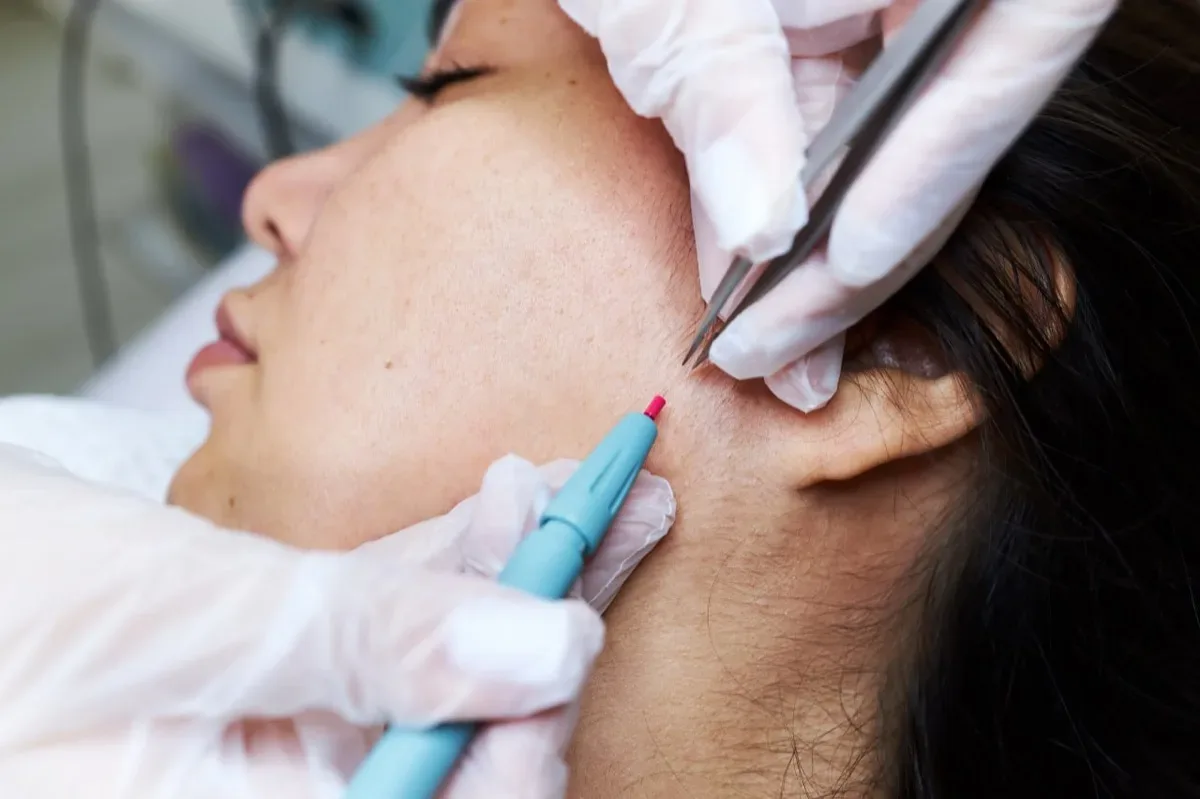
A fine metal probe is inserted alongside the hair shaft into the follicle opening. The probe travels down the follicle channel to the base where the papilla and germinal cells are located. An electrical current is then delivered through the probe for a fraction of a second. That current generates heat (in thermolysis and blend modalities) or a chemical reaction (in galvanic), which destroys the follicle tissue at the base.
The sensation you feel corresponds to that energy delivery. Most clients describe it as:
A brief, sharp warmth or heat flash at the follicle site
A quick sting or prickling sensation lasting under a second
Something like the feeling of a very fine needle plus brief heat, all in one moment
Occasionally a slight zap or twitch if the probe is near a nerve ending
What the sensation is not: it is not a burning feeling that lingers after the insertion. It is not a pulling or tearing sensation. It does not continue between insertions. The moment the current stops, the feeling stops. Between each probe insertion, while I am repositioning to the next hair, you feel nothing at all.
This is a meaningful distinction from waxing, which creates a sustained tearing sensation across a strip of skin simultaneously. With electrolysis, each event is extremely brief and localized to a single follicle. Many clients find this intermittent, contained quality more tolerable than a treatment that creates sustained discomfort over a larger area.
The hair removal itself, after the current is applied, should be effortless. A properly treated follicle releases the hair with essentially no resistance. The hair simply slides out cleanly. If a hair requires any tugging or pulling to remove, the follicle was not adequately treated and will regrow. I monitor every single hair removal for this reason. A hair that needs to be pulled is a signal to re-treat that follicle at the appropriate energy level.
Pain Scale by Body Area: Ratings from My Clients
After 20 years of asking clients to describe their experience, certain patterns are consistent enough to be useful as a guide. These ratings reflect the most common experience, not the absolute extremes. Your individual experience can fall higher or lower depending on factors I describe in the next section.
Upper Lip
Most sensitive facial area; nerve density is high. Numbing cream recommended.
Bikini / Brazilian
Most sensitive body area overall. Numbing cream standard for this zone.
Chin
Moderate. More tolerable than upper lip for most clients.
Underarm
Moderate to sensitive. Coarse hair in this area adds to intensity.
Neck
Generally tolerable. Varies by side of neck and hair density.
Cheeks
Usually well-tolerated. Fine hair in this area reduces intensity.
Arms
Among the easiest areas. Most clients find it very manageable.
Legs
Generally well-tolerated. Shins slightly more sensitive than thighs.
A few important notes on interpreting these ratings: first, individual variation is real and substantial. I have clients who find the upper lip manageable without numbing, and clients who find the legs surprisingly sensitive. The ratings above reflect the most common experience, not a guarantee. Second, the same person will often report very different experiences on different areas in the same session. Upper lip and cheek in the same appointment can feel like two completely different procedures.
The most consistent predictor of discomfort is hair coarseness. Coarser, deeper follicles require more current intensity to destroy effectively. More current intensity means more sensation. This is why the bikini area and underarm, which contain particularly coarse follicles, rank among the most sensitive despite not being the most nerve-dense areas of the body.
Facial electrolysis in progress: a fine probe treats one follicle at a time.
Why the Sensation Varies So Much Between People
Two clients with identical hair type and treatment area can report substantially different experiences. This is not random. Several factors create this variation, and most of them are predictable once you know what to look for.
Individual pain threshold: This is the most straightforward factor. People genuinely differ in their baseline sensitivity to pain. Some of this is neurological and partly genetic. If you tend to feel procedures more intensely than others (dental work, injections, tattoos), expect a similar pattern with electrolysis. If you tend to handle procedures easily, that will likely carry over.
Skin thickness by area: Thinner skin has less insulation between the probe and the surface nerves. The upper lip skin is notably thin, which contributes to its high sensitivity rating. The upper back and thighs have thicker skin and tend to be more buffered from the sensation.
Hair coarseness and follicle depth: As noted above, coarser hair requires more current. More current creates more intense sensation. This is a direct relationship. Fine vellus hair, even in large quantities, requires very low current intensity and most clients barely register the treatment of fine hair.
Hormonal cycle timing: Pain sensitivity in many people increases in the days before and during menstruation. If you notice you feel procedures more intensely at certain times of the month, this is the likely reason. Scheduling sessions for the week after your period, when sensitivity tends to be lower, can make a meaningful difference for clients who are cycle-sensitive.
Caffeine and dehydration: High caffeine intake before a session can increase sensitivity. Caffeine is a stimulant that heightens neural reactivity, which includes pain perception. Clients who come in after several cups of coffee often report a more intense experience than they had in previous sessions. Staying well-hydrated the day before and day of your appointment helps skin respond better to treatment.
Anxiety and anticipatory tension: This one is underestimated. Anticipatory anxiety causes muscle tension, heightened nerve sensitivity, and a lower subjective pain threshold. Clients who arrive extremely anxious about what they are about to feel consistently report a worse experience than clients who arrive calm. First sessions are often the most anxious. Second and subsequent sessions, when the client knows what to expect, are almost always described as more manageable.
The Anxiety Factor
Anticipatory anxiety genuinely amplifies pain perception. The most consistent thing I observe is that first-session clients who were very nervous describe their actual experience as less bad than they expected, and their second session as noticeably easier. Knowing exactly what is coming and having experienced it once is itself a meaningful comfort measure.
Topical Numbing: What Works and What to Expect
Topical anesthetic cream is genuinely effective for electrolysis and I recommend it routinely for sensitive areas. Understanding how it works and how to use it correctly makes the difference between it being helpful and it making no difference at all.
How it works: Topical anesthetics, most commonly lidocaine and prilocaine in a cream form, block sodium channels in the sensory nerve endings in the skin. Applied properly and with adequate time to absorb, they reduce the ability of those nerves to signal pain. They do not completely eliminate sensation for everyone, but they consistently reduce the intensity enough that most clients describe previously difficult areas as much more manageable.
Timing is critical: The most common mistake is not allowing enough absorption time. EMLA cream and similar products need 45 to 60 minutes under occlusion (covered with plastic wrap or a Tegaderm patch) to penetrate deeply enough to be effective. Applied 20 minutes before the session and wiped off, it will have minimal effect. Applied correctly with enough time, the difference is noticeable.
Coverage: The cream needs to cover the entire area to be treated, applied in a thick layer. A thin smear is not sufficient. Think generous coat, not a light rub-in.
Available options:
EMLA cream (lidocaine 2.5% + prilocaine 2.5%): Available over the counter at most pharmacies. Well-tolerated by most clients. Apply 60 minutes before appointment under occlusion.
Compounded lidocaine cream (higher concentration, 4-10%): Available by prescription from a compounding pharmacy. More potent than OTC EMLA for particularly sensitive areas. I can provide a recommendation at consultation if this option is appropriate for you.
LMX4 (liposomal lidocaine 4%): Available OTC. Does not require occlusion, which makes it more convenient for some clients. Apply 30 to 45 minutes before the session.
What numbing does not do: It does not eliminate all sensation for everyone. Very coarse, deep follicles in highly sensitive areas may still produce some sensation even with good numbing. Numbing also does not prevent post-treatment redness and minor swelling, which are responses in the tissue rather than pain per se. But for most clients on most areas, proper topical anesthetic applied correctly reduces the session from something they were dreading to something they describe as quite manageable.
For clients at my Real Skin Beauty studio treating upper lip, bikini, or Brazilian, I recommend numbing as a default. For other areas, I discuss it at consultation based on your expressed concerns and the specific area being treated.
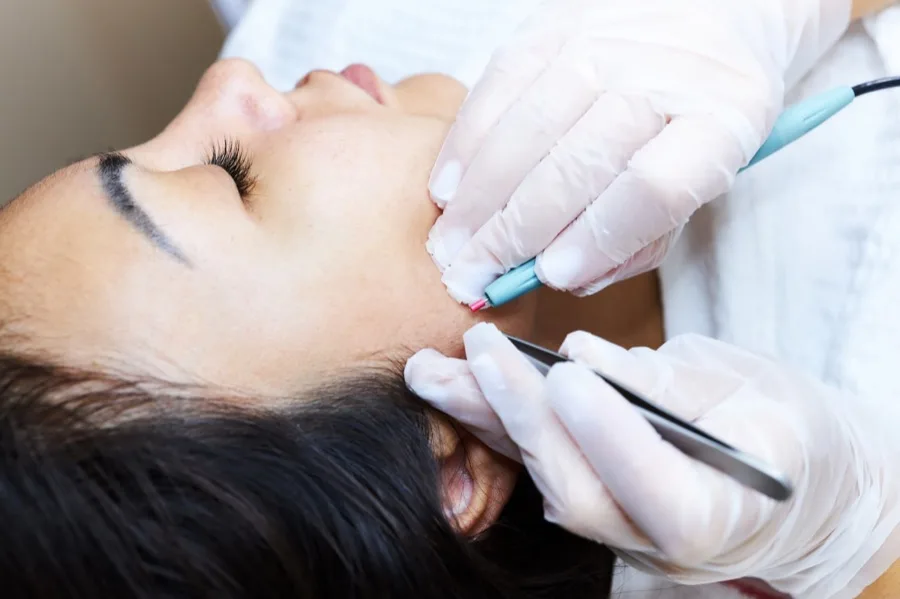
The chin and jawline are among the most commonly treated areas and are usually well tolerated.
How Technique and Equipment Affect Your Comfort
Electrolysis discomfort is not entirely about the client. Practitioner technique and equipment choices have a direct impact on the experience, and this is worth understanding when choosing a provider.
Probe size: Probes come in multiple sizes. A probe that is correctly matched to the follicle diameter causes less insertion trauma and follows the follicle channel more accurately. Using a probe that is too large for a fine hair creates unnecessary tissue disturbance. A skilled electrologist selects probe size based on the hair being treated, not just habit or convenience.
Insertion accuracy: The probe must enter the follicle channel, not pierce surrounding tissue. An accurate insertion follows the natural angle of the hair into the follicle. An off-angle insertion causes unnecessary discomfort and misses the target. Accurate insertion also means the current reaches the papilla at the base rather than dissipating in the follicle wall, which means you need less total energy per follicle to achieve effective treatment. Less energy used = less sensation experienced.
Modality selection: Different electrolysis modalities produce slightly different sensations. Thermolysis (high-frequency current) creates a rapid heat sensation that is over very quickly. Galvanic current creates a chemical reaction that is slower but often perceived as a lower-intensity experience by sensitive clients. Blend uses both. The appropriate modality depends on the hair type and client tolerance, and a skilled practitioner adjusts the choice based on client feedback.
Current intensity calibration: More current is not always better. The goal is the minimum effective current that destroys the follicle, not the maximum the client can tolerate. Skilled practitioners calibrate intensity to the specific follicle being treated. Over-treating with excessive current causes unnecessary surface trauma and more intense sensation without improving the permanence of the result. Under-treating misses the target. Finding the right level per follicle per client is a skill that improves with practice and experience.
Session pacing: Working at a pace that allows the client to signal discomfort or take brief pauses as needed keeps the overall experience manageable. Feeling obligated to stay completely still through excessive discomfort because the provider is working too fast creates an experience clients do not return for. At my Irvine, CA studio, I always check in with first-time clients about their comfort level throughout the session and adjust accordingly.
Timing Your Sessions to Minimize Sensitivity
Several scheduling choices can meaningfully reduce how sensitive you feel during a session. None of these are essential, but clients who pay attention to them consistently report more comfortable experiences.
Avoid sessions before or during menstruation: The days immediately before and during the first two days of a menstrual period represent peak sensitivity for many people. If you are consistently finding sessions difficult, track the timing relative to your cycle. Scheduling for the follicular phase, roughly days 7 to 14 of a typical cycle, often produces the most comfortable sessions.
Limit caffeine on the day of your session: Try to limit coffee or other stimulants to one cup or none on the day of your appointment if you tend to be sensitive. This is not always practical, but for clients who find sessions variable in difficulty, caffeine intake is often a contributor.
Stay hydrated: Well-hydrated skin responds better to electrolysis in terms of probe conductivity and healing. Drink adequate water the day before and morning of your session. Avoid alcohol the night before, which can increase skin sensitivity the following day.
Start with shorter sessions when new to treatment: First-time clients at my Orange County studio often start with a 30-minute session rather than a 60-minute session. Shorter initial sessions serve two purposes: they let you experience the procedure before committing to a longer appointment, and they limit cumulative sensitivity, since the same area can become more sensitive as a session progresses.
Avoid immediately pre-treating with anything irritating: Do not apply retinol, glycolic acid, or any other active skincare ingredients to the treatment area in the 48 hours before your session. These sensitize the skin and can amplify the treatment sensation.
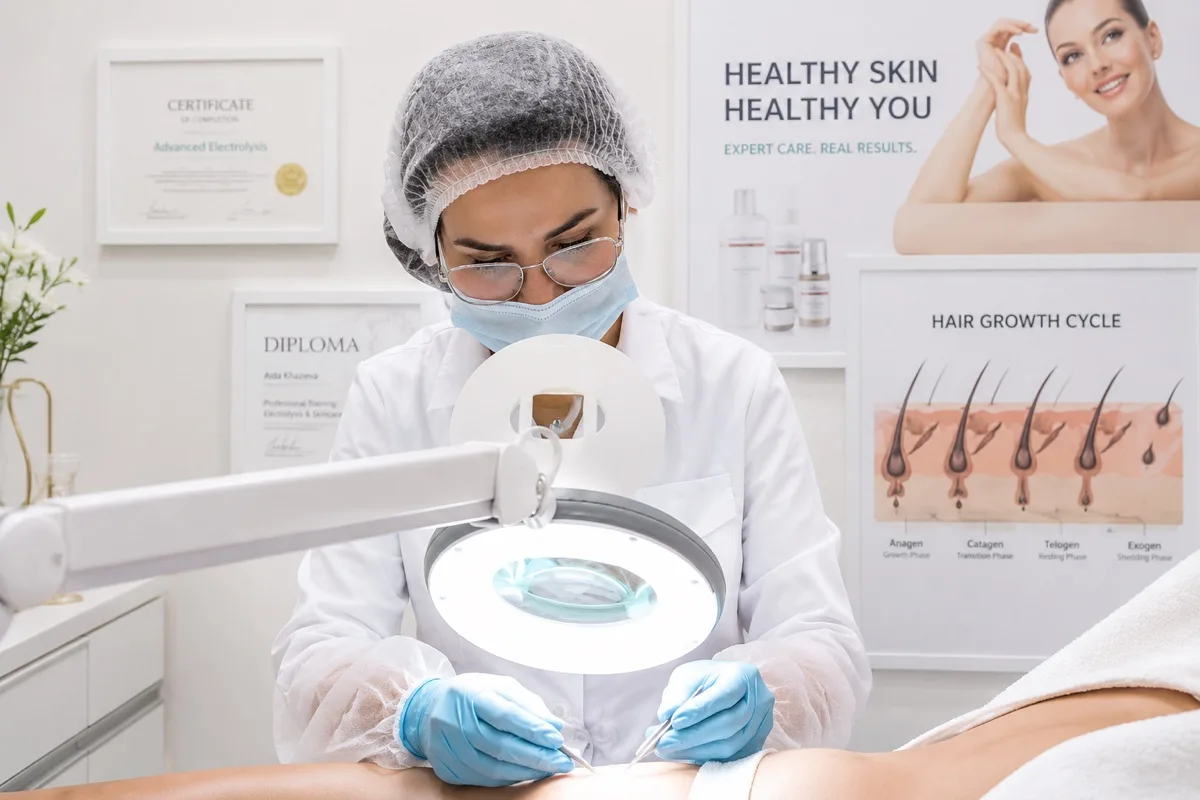
Aida Khazieva working under magnification at her Irvine studio.
What First-Timers Usually Experience
I want to describe what actually happens during a typical first session at my studio, because the anticipation is almost always worse than the reality and knowing this in advance helps.
You come in, we review the treatment area, I explain what the sensation will feel like before starting. I typically do a few test insertions in a less sensitive spot in the area, at low current, so you can calibrate what the sensation feels like at a low intensity before I am working at treatment intensity. This eliminates the shock of the first real treatment pulse. Most clients respond with some version of "Oh, that's what that feels like. OK."
For the first few minutes of actual treatment, you are still calibrating your expectations. You are anticipating each insertion. This is the most psychologically intense part of the session for most first-timers. By 10 to 15 minutes in, most clients have settled into a rhythm and are no longer startled by each insertion.
Common first-session experiences from my clients:
"It was way less bad than I thought it would be based on what I read online."
"I was really nervous and then it started and I thought, I can do this."
"The upper lip was more intense than I expected, but it was still manageable."
"I was holding my breath at first and then I realized if I breathe normally it's easier."
"My second session was so much easier than the first. I wasn't anxious anymore so it just felt different."
If during your first session you find the discomfort genuinely too intense, say so. I can adjust the current intensity, take short breaks, apply ice between insertions, or stop early and schedule a shorter follow-up. Nothing about the process requires white-knuckling through excessive discomfort. A session you can manage comfortably is always more valuable than a session where you decided never to come back.
The Second Session Rule
Almost without exception, clients find their second session noticeably easier than their first. The primary driver is knowing exactly what to expect and arriving without anxiety. When you have already experienced the sensation once and returned, the anticipatory fear is gone and the same treatment intensity simply feels less significant. The first session is always the benchmark for what it felt like when you were most anxious.
Normal Reactions After Treatment vs. Warning Signs
Knowing what to expect after treatment prevents unnecessary worry and helps you identify the rare situations that do need attention. Almost everything people notice immediately after an electrolysis session is a normal part of the healing process.
Normal reactions that are expected:
Redness at treatment sites: Small red spots or general redness across the treated area is normal and expected. This is the follicle's inflammatory response to treatment and is part of the healing process.
Minor swelling: Slight puffiness in the treated area, particularly on the upper lip and bikini zone, is normal and typically resolves within a few hours.
Small scabs or crusts at follicle openings: Tiny scabs forming at individual follicle sites over the first 24 to 72 hours are a normal part of healing. Do not pick or scrub them. Let them resolve naturally.
Skin that looks worse before it looks better: The 24 to 48 hours immediately after a session can look more pronounced in terms of redness than the underlying situation warrants. Most clients see significant clearing by 48 to 72 hours post-session.
Temporary increased hair appearance: Treated hairs shed over the 1 to 3 weeks following treatment. During this shedding period, hairs that were treated may push to the surface as they work their way out. This is not regrowth. These are the treated hairs completing their exit.
Warning signs that warrant contact:
Significant pus or discharge from follicle sites (more than minor surface crusting)
Swelling that worsens after 48 hours rather than improving
Spreading redness or warmth that extends beyond the immediate treatment area, which could indicate infection spreading through surrounding tissue
Blistering or skin that feels burned rather than mildly irritated
Fever in the 24 to 48 hours following treatment
True infections or adverse reactions following electrolysis are uncommon with proper sterile technique but can occur. If you experience any of the warning signs above, contact my office directly. Do not assume it will resolve on its own. For complete guidance on caring for your skin after each session, read the Electrolysis Aftercare guide. For questions about the overall process, the FAQ page covers the most common post-treatment concerns. If you are ready to start your treatment at my Irvine studio, book a free consultation and we can discuss your specific skin type and what to expect for your particular treatment area.
Frequently Asked Questions
+ How would you describe electrolysis pain in simple terms?
Most clients describe it as a brief warmth, sting, or heat flash lasting a fraction of a second per hair. The sensation is not continuous. Between each probe insertion there is no discomfort at all. The procedure is a series of very brief individual events rather than a sustained painful experience. Most people who have been nervous about the pain find themselves thinking during their first session that it is more manageable than what they expected based on descriptions they had read online.
+ Which body area hurts the most during electrolysis?
The upper lip and bikini area are consistently the most sensitive for most clients. The upper lip has high nerve density and thin skin. The bikini area combines high nerve density with coarse, deep follicles that require more current intensity. The legs, arms, and back are generally well-tolerated. Chin and jawline fall in the moderate range. Individual tolerance varies meaningfully, and the same person can have a very different experience treating different areas in the same session.
+ Can I use numbing cream before electrolysis?
Yes, and I recommend it for sensitive areas. Topical anesthetic applied in a thick layer 45 to 60 minutes before your session under plastic wrap occlusion significantly reduces discomfort. EMLA cream is available over the counter. Compounded higher-strength lidocaine is available by prescription for more sensitive situations. The key is adequate application time. Applied too shortly before treatment, it has minimal effect. Applied correctly, most clients describe a meaningful difference in their comfort level.
+ Does electrolysis hurt more than laser?
They feel different rather than one being universally more painful. Electrolysis is a brief heat flash per individual hair, localized to one follicle at a time. Laser is a rubber band snap sensation across a larger skin area. Many clients who have experienced both describe a preference for electrolysis because the sensation is contained and very short-lived, even when an individual insertion is more intense than a single laser pulse. Laser on very sensitive areas can be quite intense as a broad-area snap.
+ Does the pain lessen as treatment progresses?
Yes, consistently. As hair becomes finer and sparser with each session, the current intensity required to treat each remaining follicle decreases. Less current means less sensation. Clients in their later sessions, treating the fine residual hairs that remain toward the end of treatment, regularly describe those sessions as almost trivial compared to early sessions. The treatment literally becomes easier as it progresses, which is the opposite of what many clients expect.
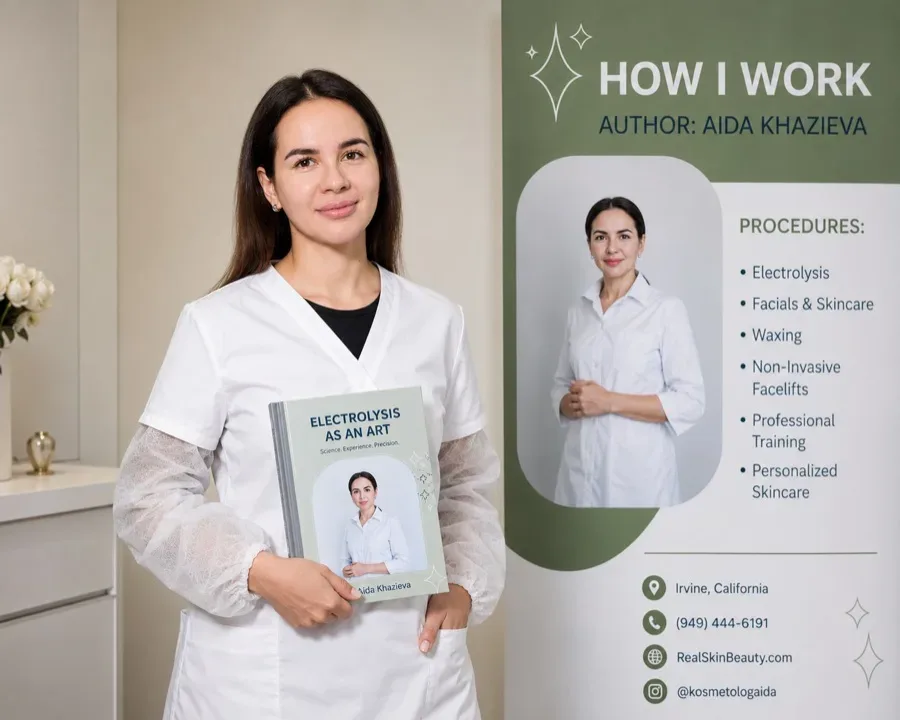
Licensed electrologist and cosmetologist with 20+ years of experience. Aida sees clients at Real Skin Beauty, 18021 Sky Park Circle, Suite N, Irvine, CA 92614.
Book a free consultation with Aida Khazieva at Real Skin Beauty in Irvine, CA. She will assess your specific concerns and create a personalized treatment plan, including numbing recommendations for your treatment areas.
This article is for informational purposes and reflects Aida Khazieva's clinical experience. It does not replace a personalized medical consultation. Individual results vary.
Questions? Aida Answers Them All.
Visit our FAQ or book a free consultation to discuss your specific skin and hair concerns.