Electrolysis for Teens: Age, Consent and How to Start Gently
By Aida Khazieva·Electrolysis·14 min read·Real Skin Beauty, Irvine CA·Updated October 19, 2026
There is no single minimum age for electrolysis. What matters is whether the hair is established, whether a doctor has checked fast or unusual growth, whether the teen wants it, and whether a parent or guardian consents. Anyone under 18 needs an adult involved. Hormones keep changing teen hair into the early twenties, so new hairs may appear. A gentle start means a small first area, short visits and a clear signal to stop. Here is how I handle it at my Irvine studio.
Quick answer
No fixed minimum age. Readiness, medical input and parent or guardian consent decide.
See a pediatrician first for rapid growth, irregular periods, severe acne or very early puberty.
Teen hair can keep changing into the early twenties, so maintenance visits may be needed.
Start with a small area: upper lip $50 for 20 minutes or chin $65 for 30 minutes.
The in-studio consultation is free, and a parent attends with the teen.
Is There a Minimum Age for Electrolysis?
There is no single age at which electrolysis becomes appropriate. What matters is the person: whether the hair is established, whether a physician has looked at the cause, whether the teen wants it, and whether a parent or guardian agrees. Electrolysis is a series of visits that asks for stillness, patience and a willingness to follow aftercare. Some 15-year-olds manage it well, and some adults do not.
For anyone under 18, a parent or legal guardian has to be involved. At my Irvine studio I want that adult at the consultation and I need their consent before any treatment. I also want a physician to have looked at sudden or fast hair growth first. If a teen is coming because of bullying or distress about hair, I treat that seriously, and I go slowly.
Quick rule for parents
Gradual hair growth in a teen who is well otherwise is normal. Sudden or heavy growth, missed periods, severe acne or very early puberty warrants a pediatrician visit before any hair removal.
This guide is written for parents and for teens themselves. It covers why teen hair behaves the way it does, when to see a doctor, how to tell if your child is ready, what a gentle start looks like, and what to do about the time before treatment. It is general information from an electrologist and does not replace advice from your pediatrician.
Why Hair Changes During the Teen Years
Puberty is when the body starts to make adult levels of sex hormones, including androgens in all genders. Androgens convert fine, pale vellus hair into thicker, darker terminal hair in certain areas. In girls this typically begins with the pubic area and underarms, and later affects the legs and forearms, upper lip and sometimes the chin. Boys follow a different timetable and pattern. It is not unusual for hair patterns to keep changing into the early twenties.
Teen concern
What is commonly behind it
Notes
Dark hair on the upper lip
Pubertal androgens, family pattern
Very common, often noticed first at 12 to 15
A few chin hairs
Hormones and genetics
Often stable, sometimes increase
Hair along the jaw or sideburns
Genetics, ethnic background
Differences between families are large
Rapid growth over months
Could be hormonal, medical or medication related
See a pediatrician first
Hair with irregular periods and acne
PCOS is one possibility among several
Medical evaluation recommended
Hair before other signs of puberty
Early puberty or other causes
Pediatrician or endocrinologist
Genetics matters more than most families expect. If a mother, aunt or grandmother has noticeable facial hair, a teen may have the same pattern. This is normal variation, and it is nothing she did or did not do. My article on PCOS versus normal hair growth sets out the differences in a plain way.
Everything here applies to teen boys too, whose facial hair and neckline growth also follows its own timetable, and who sometimes want shaping of a unibrow or a cleaner hairline. Gender-diverse teens may have specific goals, and a family doctor can help plan around them. If that is your situation, my article on electrolysis for transgender clients explains the process, and the same rules about consent and medical input apply for a minor.
Because hormones are still settling, hair may not be finished changing. Electrolysis permanently removes the hairs that are treated. It cannot prevent new hairs from appearing if the body is still creating them. This is the single most useful thing for a family to understand before deciding on timing.
When to See a Pediatrician First
Most teen hair growth is normal, and a physician visit is not usually a hardship. It simply makes sure nothing medical is hiding behind the hair. I ask for a doctor's input in these situations:
Hair growth that appeared fast, over a few months.
Periods that are irregular, very heavy or absent after they should have started.
Moderate to severe acne together with hair growth.
Rapid weight change, darkened velvety skin at the neck or armpits, or fatigue.
A deepening voice or other signs of masculinization.
Pubic or underarm hair at a very young age, before the usual start of puberty.
New hair growth after starting a medication or supplement.
A pediatrician, adolescent medicine doctor or endocrinologist can examine, order tests if needed and advise on treatment. PCOS is often first recognized in the teen years, and I discuss what electrolysis can do in that setting in hirsutism: causes, medical treatment and where electrolysis fits. If acne is part of the picture, you may find hormonal acne treatment helpful as background.
If your child takes isotretinoin or has had a recent peel, laser or strong acne treatment, mention it. Skin can be thin and reactive for months afterward, and I check with the prescriber before treating.
For a minor, the first visit is a conversation with a parent or guardian present, not a treatment.
Is Your Teen Ready? A Checklist for Families
Readiness has more to do with maturity than with the calendar. I use these questions when a family comes in, and I suggest parents ask them at home first.
Question
Why it matters
Does the teen want this, or is it mostly a parent's idea?
Treatment goes better when the person on the bed has chosen it. Reluctance raises pain and drop-out.
Can they lie still for 20 to 30 minutes and speak up if something hurts?
Treatment is one hair at a time. Wriggling and silent suffering both make it harder.
Do they understand it is a series of visits and not a single event?
Unrealistic expectations lead to disappointment.
Will they follow aftercare, including sunscreen and not picking?
Healing skin needs a few simple habits.
Is the hair stable, or still changing quickly?
Fast-changing hair is a reason to see a doctor and to wait.
Is there a medical question that a physician should answer?
Cause matters more than cosmetics.
Can the family manage the schedule, cost and travel?
Skipped visits slow progress.
Are they comfortable with a practitioner they have met first?
Trust helps them relax.
If the answer to most of these is yes, a consultation is a sensible next step. If several answers are no, waiting a year is not a problem. Hair does not become harder to treat with age, and the teen's confidence may grow in the meantime. A good practitioner will tell you honestly when to wait, and mine are the answers I give at the consultation.
Some teens are ready for the idea long before they are ready for the experience. A consultation with no treatment is a way to meet the room, the equipment and the person. Many teens relax simply by seeing that the probe is very fine and the studio is quiet.
Consent, Privacy and the Parent's Role
For a minor, consent is a parent or guardian's decision. In practice I do the following, and families should expect similar from any reputable studio.
The parent or guardian comes to the consultation. We talk together. I explain what electrolysis is, what the visit involves and what the risks are. I also speak with the teen directly, because the teen is the patient.
Written consent is signed before any treatment. A teen cannot consent alone.
The teen's comfort sets the pace. If they want a parent in the room, the parent stays. If they prefer privacy for a small facial area, we can talk about it with the parent's agreement. It is the family's decision, and I ask the teen what they want.
Respect for the body. For facial areas there is nothing to undress. For other areas, towels and draping are used, and only the treated area is exposed. I do not treat sensitive body areas on teens.
Clear information goes home. A parent should leave with the aftercare instructions and contact details.
If you are looking at a studio for your child, ask what the policy is for minors. A studio with no policy, or one that is happy to treat a young teen without a parent present, is a red flag. My guide on how to choose an electrologist gives other questions to ask, including licensing and sterile supplies.
A word to parents: how you talk about the hair matters. A teen who hears "this is a problem to be fixed" may feel ashamed. A teen who hears "this is a normal part of growing up, and there are options if it bothers you" can make a calmer choice. If your child brought the topic up, listening is already a good first step.
How to Start Gently
For a first treatment on a younger client, I have a few habits. They apply to adults too, and I lean on them more when the client is nervous.
1. Start with a small area
The upper lip is the most common starting point. At Real Skin Beauty upper lip electrolysis is $50 for 20 minutes, and chin electrolysis is $65 for 30 minutes. A short visit on a small area lets a teen feel the sensation without a big commitment.
2. Test insertions
I begin with a few insertions at low energy so the teen can feel the sensation before real treatment. I explain each step before I do it.
3. Agree on a signal
A raised hand or a spoken word means pause. I stop at once, with no questions. A teen who knows they can stop usually does not need to.
4. Keep visits short at first
Ten or fifteen minutes of actual treatment is enough for a first visit, even when the booked slot is longer. Concentration and tolerance build with practice.
5. Breathe and talk
Breathing slowly through the first insertions helps. Talking about music, school or a favorite show also helps. I am happy to chat if it keeps a nervous client calm.
6. Decide about numbing together
Topical numbing products are an option for sensitive areas, but I ask for a parent's agreement and I suggest checking with the pediatrician or pharmacist about the specific product for a young patient. I do not suggest dosages or brands. My article on whether electrolysis hurts covers pain in more detail.
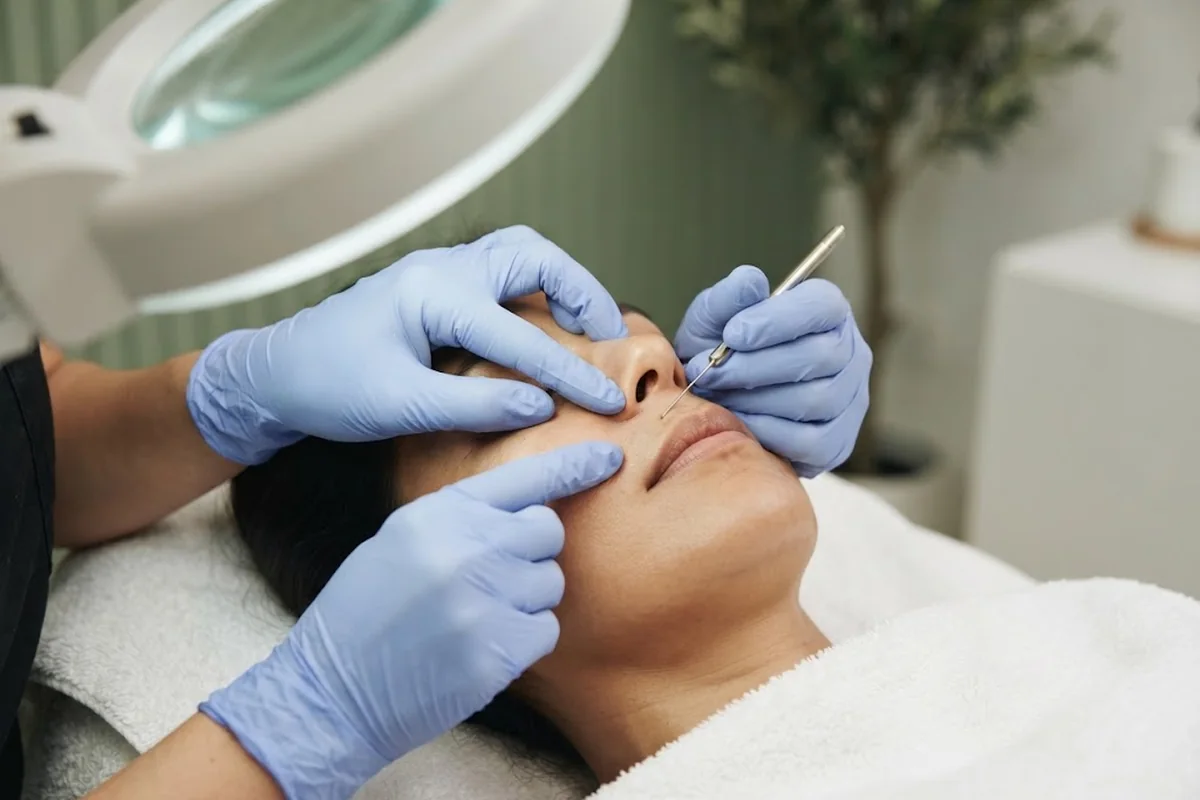
A small first area, such as the upper lip, lets a new client feel the sensation and the pace before planning more.
What It Feels Like, and How to Talk About It
Honest preparation reduces fear more than reassurance does. I tell young clients the truth: each hair gives a quick warm sting or a small pinch, then it is over. The upper lip is one of the more sensitive facial areas. Most people describe the sensation as tolerable, and it varies from person to person and from day to day. A cycle day, lack of sleep, or caffeine can make it feel stronger.
Parents can help in simple ways before the first visit.
Talk through the plan, without minimizing it. "It will sting a bit, and you can stop any time" works better than "it won't hurt."
Make sure your teen has eaten and drunk water, and avoid caffeine on the day.
Choose a time that does not clash with exams or sports matches.
Let them choose what to wear and whether to bring headphones or a friend to the waiting area.
Do not promise results. Say that you will see how it goes and adjust.
After the first visit, ask what it was like. If the answer is that it was fine, plan the next. If the answer is that it was awful, take that seriously and decide together whether to wait. You can read what the first visit involves in Your First Electrolysis Appointment. It is written for adults, and the steps are the same.
Electrolysis, Laser, Waxing and Shaving for Teens
Parents often ask whether another method is better for a teenager. Here is the comparison I give.
Method
Pros
Cons for teens
Shaving
Free, quick, painless
Stubble returns in a day or two. Often a stopgap
Waxing
Smooth for weeks
Pain, skin lifting, irritation, ingrown hairs. Keeps hairs in a cycle
Threading
Precise on small areas
Pain, redness, repeated visits
Depilatory cream
Painless
Chemical burns on facial skin, so patch test and ask a pharmacist
Laser or IPL
Fewer visits for suitable hair
Needs dark hair on lighter skin, does not suit blonde, gray or red hair, may stimulate fine hair in some, hormones can bring new hairs
Electrolysis
FDA-recognized permanent hair removal, works on every color and skin tone
Treats one hair at a time, takes a series of visits, new hairs may appear while hormones settle
None of these is right for every teen. Shaving is a perfectly good choice for a teen who just wants smooth skin for now. Electrolysis fits when the hair is dark, bothersome and established, and when the family accepts that it is a long game. For a clear comparison of the two permanent-ish options read electrolysis vs laser. If laser has been done already and fine hair has started to thicken, see More Hair After Laser?
Whatever you choose, avoid starting a waxing habit on the upper lip if electrolysis is likely later. Repeated pulling can distort follicles, and the hairs must be long enough to treat. Shaving or trimming in the meantime keeps the options open. The guide on shaving, plucking and waxing between electrolysis sessions goes into the details.
School, Sports, Sun and Aftercare
Teens live full schedules, so a plan should fit school life.
Timing. Book after school or on a free day, not before a test or a game. Redness and tiny scabs on the upper lip can last a day or two.
Makeup. A teen who wears makeup should skip it on the treated area for the first day and then use clean products. Do not use heavy concealer on fresh scabs.
Sports and swimming. Avoid sweaty workouts, pools and saunas for the first 24 hours. A chlorinated pool on healing skin stings.
Sun. Protect treated skin. Irritated skin picks up pigment easily in the sun. Daily sunscreen is a habit worth building.
Picking. Scabs fall off on their own. Picking can leave marks.
Acne products. Pause strong acne treatments on the treated area as advised, because they can sting treated skin.
The full routine is in Electrolysis Aftercare. In short, keep the skin clean, calm and covered from the sun.
Aftercare is short and plain: a gentle cleanser, moisturizer and sunscreen, with no scrubs or strong actives.
Teens with acne need special care. Treating hair in an area with active inflamed acne is not a good idea, because the follicles are irritated. I would wait until the skin is calmer, and I coordinate with the family's dermatologist if there is one.
Costs, Visits and Planning Around the School Year
Per-visit prices at Real Skin Beauty are set by area and time. For teen starting points: upper lip $50 for 20 minutes, chin $65 for 30 minutes, and the general facial zone $75 for 30 minutes. The consultation is free in the studio, and an online consultation is $50 if you live far away. The number of visits depends on the hair, and I do not promise a total. The article on how many sessions you need explains the variables.
A few planning thoughts for families:
Early visits are closer together, and spacing widens as hair thins. A teen with a busy calendar should plan for regular visits for the first months.
Summer break or winter break can be a good time to start, since there is less schedule pressure and less need to cover redness at school.
Hormonal changes can bring new hairs. Maintenance visits are part of the picture for many people with hormonal hair.
If PCOS or another medical condition is diagnosed, the doctor and electrologist can work together. Our electrolysis for PCOS page explains that visit.
Families from Irvine, Tustin, Mission Viejo and across Orange County often start with the free consultation and decide later. That is a sensible approach: nothing is lost by asking. When you are ready, book a free consultation, or read the main electrolysis page first.
Frequently Asked Questions
+ What is the youngest age for electrolysis?
There is no single minimum age. It depends on the individual, the stability of hair growth, a physician's input and a parent's consent. Anyone under 18 needs a parent or guardian involved, and I advise a pediatrician visit first for sudden growth.
+ Does a parent need to be there?
For minors, yes. A parent or guardian should attend the consultation and give written consent. The teen's comfort sets the pace, and the family decides whether the parent stays in the room for treatment.
+ Is electrolysis safe for teenagers?
Electrolysis is low-risk when done by a licensed practitioner with sterile single-use probes. Teens need a physician's input when growth is sudden, a careful gentle start, and good aftercare. Individual results vary.
+ Should my daughter see a doctor before electrolysis?
Yes, if hair growth is rapid, periods are irregular or missed, acne is severe, or puberty began unusually early. A pediatrician can check for PCOS or other causes. Gradual growth in a healthy teen is usually normal.
+ Will hair keep coming back while hormones are changing?
Treated follicles should not regrow, but hormones can activate new ones, and teen hair patterns can keep changing into the early twenties. New hairs are treated at later visits. Maintenance is common with hormonal hair.
+ Is laser a better choice for a teenager?
Laser needs dark hair on lighter skin and does not suit blonde, gray or red hair. It reduces hair rather than removing it, and in some people it may stimulate fine hair to grow thicker. Electrolysis works on every color.
+ How much does teen electrolysis cost?
Prices are per visit: upper lip $50 for 20 minutes, chin $65 for 30 minutes, general facial zone $75 for 30 minutes. The consultation is free in the studio. The total depends on the number of visits, which varies by person.
+ Can a teen use numbing cream?
Ask the pediatrician or a pharmacist about the specific product for a young patient. Numbing creams must be applied in advance, and a parent should be involved. I do not recommend products or doses in this guide.
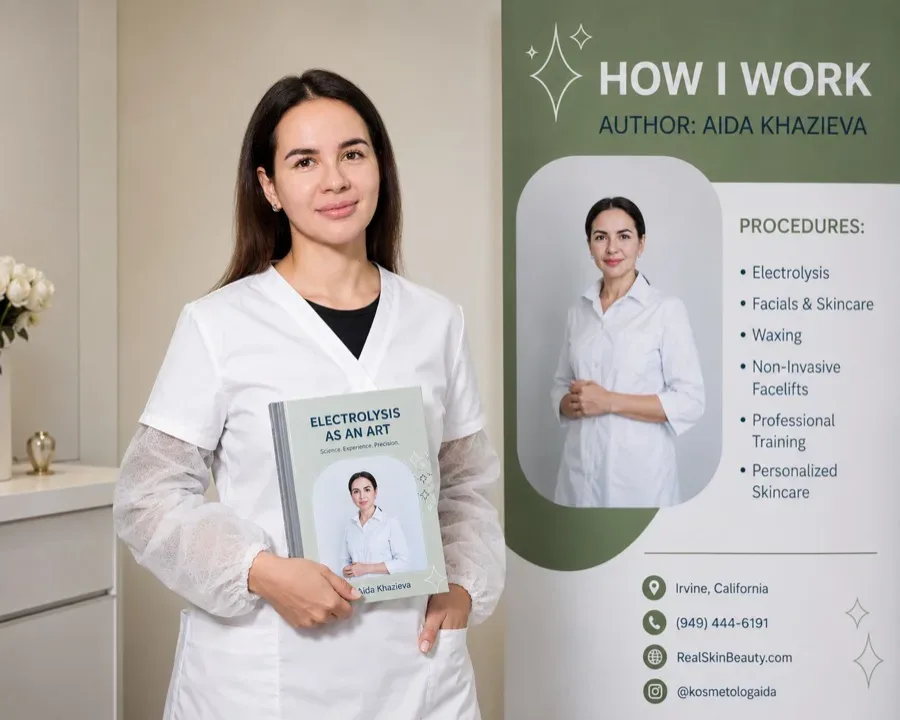
Licensed electrologist and cosmetologist with 20+ years of experience. Aida sees clients at Real Skin Beauty, 18021 Sky Park Circle, Suite N, Irvine, CA 92614.
Book a free consultation with Aida Khazieva at Real Skin Beauty in Irvine, CA. Bring your teen, ask every question, and decide later. No treatment is needed on the first visit.
This article is for informational purposes and reflects Aida Khazieva's practitioner experience. It does not replace a personalized medical consultation. Individual results vary.
Questions? Aida Answers Them All.
Visit our FAQ or book a free consultation to discuss your specific skin and hair concerns.