Hirsutism in Women: Causes, Medical Treatment and Where Electrolysis Fits
By Aida Khazieva·Electrolysis·14 min read·Real Skin Beauty, Irvine CA·Updated October 18, 2026
Hirsutism is coarse, dark hair in a woman, growing where male-pattern hair usually grows, such as the chin, upper lip, jaw, chest or abdomen. PCOS is the most common identified cause, but thyroid problems, adrenal conditions, medications and menopause can also play a part, so a physician should look for the reason first. Medication slows new growth over months. Electrolysis permanently removes the hairs already there. Here is how the pieces fit together, from an Irvine electrologist.
Quick answer
Hirsutism means coarse, dark, androgen-pattern hair in women. It is a sign for a doctor to investigate, not a diagnosis.
See a physician soon for rapid onset, a deepening voice, missed periods or severe acne.
Medication reduces new growth slowly and usually does not remove existing thick hairs.
Electrolysis is FDA-recognized permanent hair removal that works on any color, but it does not treat hormones.
At Real Skin Beauty, electrolysis for PCOS is $110 for one hour. The in-studio consultation is free.
What Hirsutism Is, and What It Is Not
Hirsutism means excess coarse, dark hair in a woman, growing in places where men typically grow it: the upper lip, chin, jawline, chest, abdomen, lower back and inner thighs. The hair is terminal hair, the thick and pigmented type, not the fine pale peach fuzz that every woman has. In most cases the follicles are reacting to androgens, the hormones that drive male-pattern hair, either because levels are raised or because the follicles are more sensitive than average.
Three terms get mixed up, so here is the difference.
Term
What it means
Where it shows
Hirsutism
Coarse, dark hair in an androgen-dependent pattern
Excess hair of any type, not tied to androgens, often fine or over the whole body
Anywhere, sometimes after certain medications or illness
Normal variation
Hair that is a bit more visible because of genetics, ethnicity or skin tone
Often upper lip, arms, legs, a few chin hairs
Normal variation matters because it is the largest group. Hair patterns differ across families and ethnic backgrounds. A woman of Mediterranean, Middle Eastern or South Asian descent may naturally have more visible dark facial hair than a woman of Northern European descent, with no hormonal condition at all. A few chin hairs after 40 are common. I explain how to tell ordinary from unusual in PCOS vs normal hair growth.
Hirsutism is a sign, not a diagnosis. It tells a physician to look for a reason. I am an electrologist, not a doctor, so my role in this story is the hair itself. I can tell you what electrolysis can do, and I will tell you plainly when I think you should see a physician first. Everything below about causes and medication is general information to help you ask better questions, not a substitute for medical advice.
How Doctors Assess Excess Hair
A physician usually starts with a conversation. When did the hair start? Was it gradual over years or sudden over months? How regular are your periods? Is there acne, scalp thinning, weight change, or a family history of PCOS or diabetes? Which medications and supplements do you take?
Many doctors score the hair using the modified Ferriman-Gallwey scale, which rates nine body areas from 0 to 4 based on how much terminal hair is present. A total at or above a certain cutoff, commonly cited as 8 in studies of white women, suggests hirsutism, though cutoffs differ between populations and between guidelines. The score is a tool to standardize the description, and it does not replace judgement.
Depending on the picture, a physician may check blood tests. These often include androgen levels such as total and free testosterone and DHEA-S, 17-hydroxyprogesterone for a milder form of adrenal enzyme deficiency, prolactin, thyroid function, and sometimes blood sugar markers. A pelvic ultrasound may be ordered when PCOS is suspected. Which tests apply to you is your doctor's call, and timing within the menstrual cycle can matter for some of them.
It helps to know that a normal blood test does not mean your concern is invalid. Many women have hirsutism with normal circulating androgens, because the follicles themselves are more sensitive. The result is the same on the face, and it still deserves a plan.
Common Causes of Hirsutism
These are the causes physicians consider. I list them so you know the range of possibilities, not so you can diagnose yourself.
Cause
What it involves
Typical clues
Polycystic ovary syndrome (PCOS)
The most common identified cause. Ovaries and metabolism produce an androgen-heavy pattern
Irregular or absent periods, acne, scalp thinning, trouble with weight or blood sugar
Idiopathic hirsutism
Normal androgen levels and regular cycles, but follicles that respond strongly
Gradual growth, family pattern, regular periods
Nonclassic congenital adrenal hyperplasia
A milder inherited difference in adrenal hormone production
Onset around puberty, family history, sometimes irregular cycles
Thyroid or prolactin problems
Hormone imbalances that affect cycles and sometimes hair
Fatigue, cycle changes, milk discharge in the case of high prolactin
Cushing syndrome
Prolonged high cortisol
Weight gain around the trunk, easy bruising, wide purple stretch marks
Androgen-producing tumors
Rare tumors of the ovary or adrenal gland
Rapid, severe change, voice deepening, signs of masculinization
Medications
Androgenic steroids, some anti-seizure drugs and other medicines, depending on the person
Hair growth that began after starting or changing a drug
A physician visit comes first when hair growth is new or fast: bring dates, symptoms and a list of medications.
Medication is easy to overlook. If your hair changed after starting a new prescription, bring the question to your physician. Do not stop a prescribed medication on your own. Your doctor can weigh the benefit of the drug against the side effect.
Signs That Mean You Should See a Doctor Soon
Slow, steady growth that started years ago is a good reason for a routine appointment. Some patterns call for a prompt one. Please see a physician without delay if you notice:
Hair growth that appeared or worsened over a few months, not years.
A deepening voice, rapid muscle growth, enlargement of the clitoris, or a receding hairline in the male pattern. These are signs of virilization, and they need medical attention.
Periods that stopped or became very irregular.
Sudden weight gain around the middle, easy bruising or wide purple stretch marks.
Severe new acne together with fast hair growth.
Hair growth after you began a new medication, supplement or hormone product.
Hair growth in a teen who is not yet through puberty, or in a girl whose periods have not started when expected. A pediatrician is the right first contact.
When someone arrives at my studio with fast changes, I ask them to see their doctor before we start electrolysis. This is not a refusal to help. The reason is simple: if a treatable cause is driving the hair, treating the cause is more important than removing the hair, and the follicles I destroy are only part of the picture. We can plan electrolysis in parallel once you have medical guidance.
Medical Treatment: What Doctors Commonly Use
The first-line approach depends on the cause and on whether you plan a pregnancy. I list the usual tools so you recognize them in a conversation with your physician. I do not give doses or advise starting, stopping or combining anything.
Approach
How it works
Points to discuss with your doctor
Combined oral contraceptives
Lower ovarian androgen production and raise a protein that binds androgens
Not suitable for everyone, for example people with certain clotting or migraine histories
Anti-androgens such as spironolactone
Block androgen action at the follicle
Reliable contraception is generally required because of risk to a developing fetus, and blood pressure and potassium are monitored
5-alpha-reductase inhibitors such as finasteride
Reduce conversion of testosterone to a stronger form
Less commonly used, with pregnancy precautions
Metformin
Improves insulin sensitivity in some people with PCOS
Helps cycles and metabolism more than hair
Topical eflornithine cream
Slows hair growth on the face while it is used
Does not remove the follicle, hair returns after stopping
Lifestyle and weight management
Lower insulin and androgen levels when weight is a factor
Individual, supported by your physician
Two points about timing matter for the way you plan hair removal. First, medications act on the hair growth cycle, so changes show up slowly. Doctors commonly tell patients to expect improvement over many months, not weeks, because hairs already growing finish their cycle and new ones come in finer. Second, medication slows or reduces new growth, but it does not usually erase hairs that are already thick. Those established hairs are what people want gone, and that is a job for hair removal.
It is also worth saying that medical treatment does not suit or interest everyone. Some women prefer to manage the hair alone. That is a legitimate choice, and electrolysis can work whether or not you take medication, provided your physician has ruled out something that needs care.
Where Electrolysis Fits
Electrolysis is the FDA-recognized method of permanent hair removal. A very fine sterile probe is placed into the follicle beside the hair, and a controlled pulse of current damages the follicle so that it should not regrow. It treats one hair at a time, so it works on any color and skin tone: dark, gray, blonde, red, coarse or fine. That matters for hirsutism, where hair is often mixed in color and where skin tone and hair color vary widely.
What electrolysis does in hirsutism
It removes the individual terminal hairs that are already present, which medication usually cannot do.
It does not change hormones or treat the underlying cause.
If hormones remain high, follicles that were dormant can wake up and produce new hairs over time. Those new hairs are treated with additional visits. This is why electrolysis for a hormonal condition tends to be a longer series, with maintenance visits that become fewer.
The two approaches work well as a pair. Medication, when your doctor prescribes it, tries to reduce the signal that creates new hairs. Electrolysis permanently removes the follicles that are already producing them. Together, many clients find the work gets easier as time passes, because fewer new hairs appear. I never promise an outcome, and I cannot say how many visits any person will need. For a fuller look at the numbers, read how many electrolysis sessions you need, and for the meaning of permanent see is electrolysis permanent.
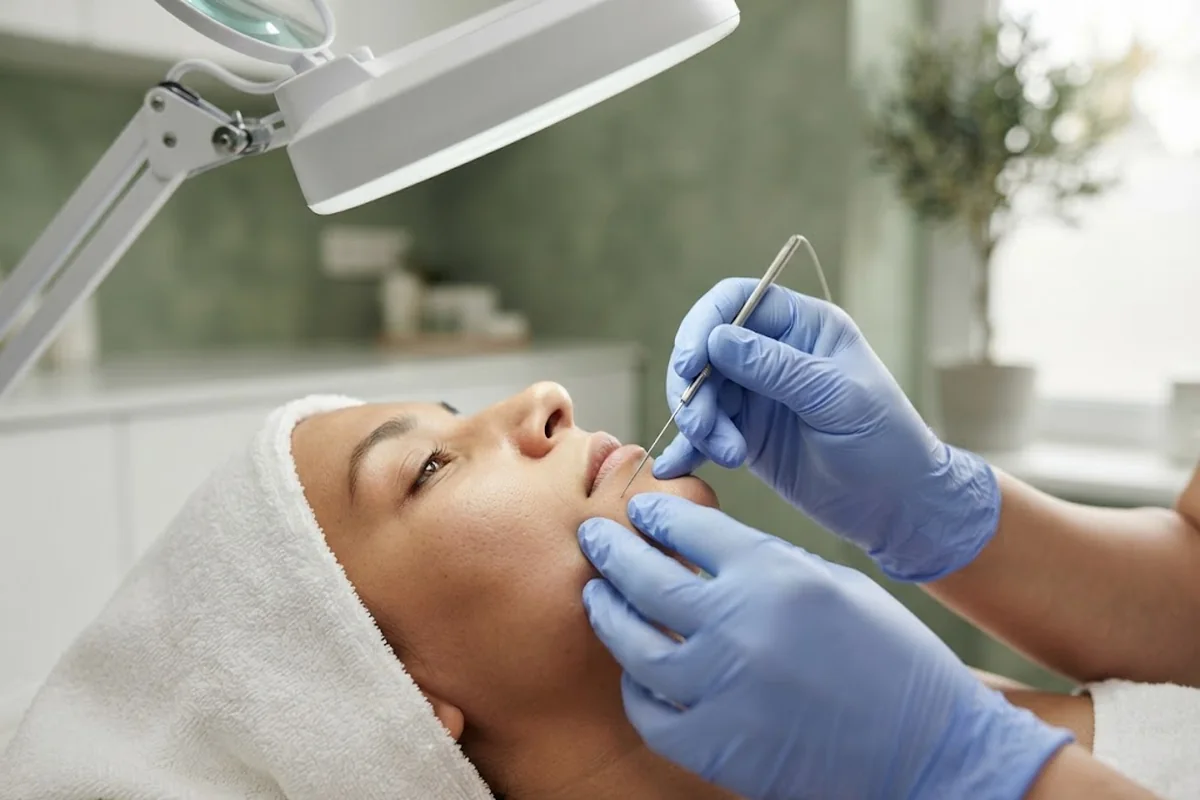
Electrolysis treats each hair individually under magnification, whatever its color, and works alongside medical care.
Why laser is often not the answer here
Laser and IPL need pigment in the hair and contrast with the skin. They are not suited to blonde, gray or red hair, and they do not suit every skin tone. They also reduce hair rather than remove it, and in some people, particularly on the face, light treatments have been reported to stimulate fine hair to grow thicker. If you have been through laser and are seeing more hair, read More Hair After Laser?. For a straight comparison of the two methods see electrolysis vs laser.
What a Treatment Plan Can Look Like
When a client with suspected or diagnosed hirsutism comes to me, we usually sort the plan into four pieces: medical review, areas to treat first, visit rhythm, and long-term maintenance. This is a general outline.
Stage
What happens
Notes
Medical check
You see your physician about the cause and any treatment
I ask for this first when growth is new, fast or comes with other symptoms
Consultation
I examine hair and skin under magnification, ask about medications, cycles and past hair removal
In-studio consultations are free and take about 30 minutes
Priority area
We pick the area that bothers you most, often chin or upper lip
Smaller areas let you see how your skin heals
Close-together visits
Early visits are closer together because many hairs are active
Spacing is set by what I see on your skin
Wider spacing
As hairs thin, gaps lengthen
Medication changes can alter this, so tell me about them
Maintenance
Occasional visits for new hairs
Depends on your hormones and genetics
At Real Skin Beauty, the electrolysis for PCOS visit is $110 for one hour, which is used for hormonal growth across multiple areas. If you only need a small area, the upper lip is $50 for 20 minutes, the chin is $65 for 30 minutes, and the general facial zone is $75 for 30 minutes. Cheeks, neck and hairline are $90 for 45 minutes. Body areas are priced by time. The price per visit is clear, but the total depends on the number of visits, so I explain the estimate at your consultation rather than guess in an article.
Living with hirsutism means managing the hair you have while treatment takes effect. What you do between visits affects how smoothly electrolysis goes.
Shaving is acceptable on most areas. It does not change hair growth, and it does not make hair thicker. I explain what to do around appointments in shaving, plucking and waxing between sessions. Follow the length guidance I give you for each area, since hair must be long enough to treat.
Avoid plucking and waxing. They remove the hair that I need to see, and repeated pulling can distort the follicle.
Trim if you prefer. Small scissors or a trimmer can shorten hair without cutting at skin level.
Cover temporarily if needed. A tinted concealer or color corrector works over stubble for events.
Protect from sun. Healing follicles pick up pigment easily.
The emotional side
I want to say something plainly here, because it is part of why people wait years to ask for help. Excess hair can wear on confidence. Women tell me about checking the mirror in car light, avoiding close conversations, and shaving daily. These feelings are common, and they are reasonable. They are not vanity. If hair concerns are affecting your mood, sleep or social life, mention that to your physician as well, who can connect you with support. A good practitioner treats your hair and your worry as equally real.
It also helps to track what you see. A simple monthly note about cycles, new hairs and medication changes gives your doctor and me a record to work from. Photos in the same light every four weeks tell the story more reliably than memory.
Notes on cycles, hair growth and medication changes help both your doctor and your electrologist plan.
Pregnancy, Plans for Pregnancy and Hirsutism Treatments
If you are pregnant, planning a pregnancy or breastfeeding, tell both your physician and your electrologist before any treatment. Several medical hirsutism treatments are avoided in pregnancy, which is why your doctor discusses contraception when prescribing them. Hormones also shift during pregnancy and can change hair growth, usually temporarily.
For electrolysis, many practitioners postpone treatment or ask for a physician's clearance during pregnancy, and galvanic current is generally avoided. I wrote a separate article on this topic: electrolysis during pregnancy. The short rule is to check with your doctor first.
If you are thinking about getting pregnant, ask your doctor how that interacts with your hirsutism treatment plan. It may influence when and how you start medication, and electrolysis can usually be fitted around it with a break during pregnancy.
Questions to Ask at Each Appointment
For your physician
Could this be PCOS or another hormonal condition, and which tests do you recommend?
Do any of my current medications affect hair growth?
If medication is an option, what are the benefits, risks and pregnancy precautions?
How long should I wait before judging whether it is working?
Is there any reason I should not have electrolysis?
For your electrologist
Are you licensed in California, and are probes sterile and single-use?
Do you work with hormonal hair growth regularly?
Which modality will you use on my hair and skin?
How will we adjust if my medication changes?
What does a maintenance phase usually look like?
My guide on how to choose an electrologist goes into licensing and red flags. Clients across Irvine, Tustin, Costa Mesa and Newport Beach come to the studio for this combination of medical care and permanent hair removal. If you are ready to begin, book a free consultation, or read the main electrolysis page first.
Frequently Asked Questions
+ What causes hirsutism in women?
The most common identified cause is polycystic ovary syndrome. Other causes include nonclassic adrenal hyperplasia, thyroid or prolactin problems, certain medications, menopause and, rarely, tumors. Many women have no clear cause, called idiopathic hirsutism. A physician can sort out which applies.
+ Is hirsutism the same as normal facial hair?
No. Normal variation includes fine or sparse hair that differs by genetics and ethnicity. Hirsutism means coarse, dark hair in an androgen-dependent pattern, such as the chin, jaw, chest or abdomen. A physician decides, and a scoring system helps.
+ When should I see a doctor about excess hair?
Soon, if growth is sudden, rapid, or comes with a deepening voice, missed periods, severe acne or weight changes. A routine visit is reasonable for slow growth that has bothered you for years. Teens should start with a pediatrician.
+ Can medication cure hirsutism?
Medication can reduce new hair growth over many months, but it usually does not remove established thick hairs and it does not suit everyone. Any prescription is a decision between you and your physician, including pregnancy precautions.
+ Does electrolysis work for hirsutism?
Electrolysis can permanently remove treated hairs of any color on the face and body. It does not treat hormones, so new hairs may appear while the cause remains active. Many clients combine it with medical care and maintenance visits.
+ Is laser better than electrolysis for hormonal hair?
Laser needs dark hair on lighter skin and does not suit blonde, gray or red hair. It reduces hair rather than removing it, and in some people it may stimulate finer hair to grow. Electrolysis treats any color, one follicle at a time.
+ How much does electrolysis cost for hirsutism at Real Skin Beauty?
The electrolysis for PCOS visit is $110 for one hour. Smaller areas are priced by zone, such as $50 for the upper lip, $65 for the chin and $75 for the general facial zone. The total depends on the number of visits, which is explained at your free consultation.
+ Can I have electrolysis while taking spironolactone or birth control?
Many people do, but you should tell your electrologist about every medication, and check with your prescriber if you have questions. Medication can change how hair grows, so the treatment schedule may adjust over time.
Licensed electrologist and cosmetologist with 20+ years of experience. Aida sees clients at Real Skin Beauty, 18021 Sky Park Circle, Suite N, Irvine, CA 92614.
Book a free consultation with Aida Khazieva at Real Skin Beauty in Irvine, CA. She will examine your hair, ask about your medications and cycles, and tell you honestly when a doctor should come first.
This article is for informational purposes and reflects Aida Khazieva's practitioner experience. It does not replace a personalized medical consultation. Individual results vary.
Questions? Aida Answers Them All.
Visit our FAQ or book a free consultation to discuss your specific skin and hair concerns.