Can You Shave, Pluck or Wax Between Electrolysis Sessions?
By Aida Khazieva·Electrolysis·16 min read·Real Skin Beauty, Irvine CA·Updated October 12, 2026
You can shave or trim between electrolysis sessions. Do not pluck, wax, thread, sugar or use an epilator. Pulling a hair out removes the guide the probe follows into the follicle, and it can stretch your treatment out by weeks. Shaving cuts the hair at the skin surface and leaves the follicle alone, so it does not interfere. The only catch is timing: hair has to be visible at your appointment. Below I explain the reasoning, give an area-by-area guide, and list what to do if you already waxed last week. This is the advice I give clients at my Irvine studio, and it applies anywhere in Orange County.
Quick answer
Shaving and trimming: yes. Plucking, waxing, threading, sugaring and epilators: no, at least two weeks before an appointment and throughout treatment. Stop shaving about 3 to 5 days before a session so the hair is long enough to treat. If you pulled hairs recently, tell your electrologist and expect to wait for regrowth.
Why Electrolysis Has Different Rules Than Laser
If you have read hair removal advice online, you have probably seen "shave the day before." That rule belongs to laser. A laser needs the hair in the follicle to absorb light, so the surface hair is shaved off to keep the energy from burning it. Electrolysis has nothing to do with light.
In electrolysis I slide a fine, sterile probe into the follicle alongside the hair. A small amount of current disables the cells that make the hair, and then the hair lifts out with tweezers. The hair itself is my guide. It shows the angle and direction of the follicle, and it tells me where the opening is. When the hair is gone, I am aiming at a skin pore with no map.
There is a second reason. I can only treat hair I can see. Not every follicle is producing a visible hair at the same time, because hair grows in cycles. Each session catches the hairs that are showing, and the rest are caught as they surface over the following weeks. That is why treatment takes many visits, which I cover in the guide to how many electrolysis sessions you need. Anything that wipes out the visible hairs between visits, or confuses the follicle, makes that schedule less predictable.
Electrolysis also treats every hair color, including blonde, gray and red, so there is no pigment contrast to worry about. What matters is length and a follicle that has not been disturbed.
How Hair Growth Cycles Decide Your Schedule
Every hair follicle moves through a repeating cycle. In the growth phase the follicle actively builds a hair. In a short transition phase it stops growing and starts to shrink. In the resting phase the old hair sits loosely in place until a new one pushes it out and the cycle begins again. Electrolysis generally works best on hairs that are in the growth phase, because the hair is firmly anchored and the follicle is at its fullest.
At any moment, only a share of the hairs in an area are in that growth phase. The rest are resting, or still below the surface where I cannot see them. The share differs by body area and from person to person, and it shifts with hormones, medications and age. This is why one session never clears an area, and why the gap between sessions is planned around the cycle rather than around how smooth your skin looks.
It also explains the whole shaving question. The hairs you can see on treatment day are the hairs I can treat. Letting a visible crop grow in before each visit means I treat as many active hairs as possible in that appointment. Shaving only trims the visible part, so the cycle keeps running at its natural pace and the schedule we planned stays valid. Pulling a hair out disturbs the follicle in a way that is harder to predict.
A very smooth shave on the morning of your appointment feels like good preparation, but it costs you time. If I cannot see the hairs, I cannot treat them, and the visit is mostly wasted. Shaving on the day itself is the most common timing mistake I see.
Shaving Between Sessions: Fine, With Two Conditions
Shaving is the one hair removal habit that works with electrolysis. A razor cuts at skin level. It does not touch the follicle, does not pull on the root and does not change the hair cycle.
It also does not make hair grow back thicker, darker or faster. A shaved hair has a blunt tip instead of the natural taper, so the stubble feels coarse for a few days. That is the whole effect. The follicle underneath is unchanged.
The two conditions:
Use a clean, sharp blade and no pressure. Dull blades and dry shaving cause razor burn and in-grown hairs, and you do not want irritated skin on treatment day.
Stop shaving in time. Most people need about 3 to 5 days of growth before an appointment, so there is enough hair to see and grip. Face hair grows slowly, so it often needs the full five. Your electrologist will tell you the right interval for your hair at the consultation.
After a session, leave the treated area alone until redness and tiny scabs have settled. My electrolysis aftercare guide covers exactly when it is reasonable to pick up a razor again.
Trimming Is Often Better Than Shaving
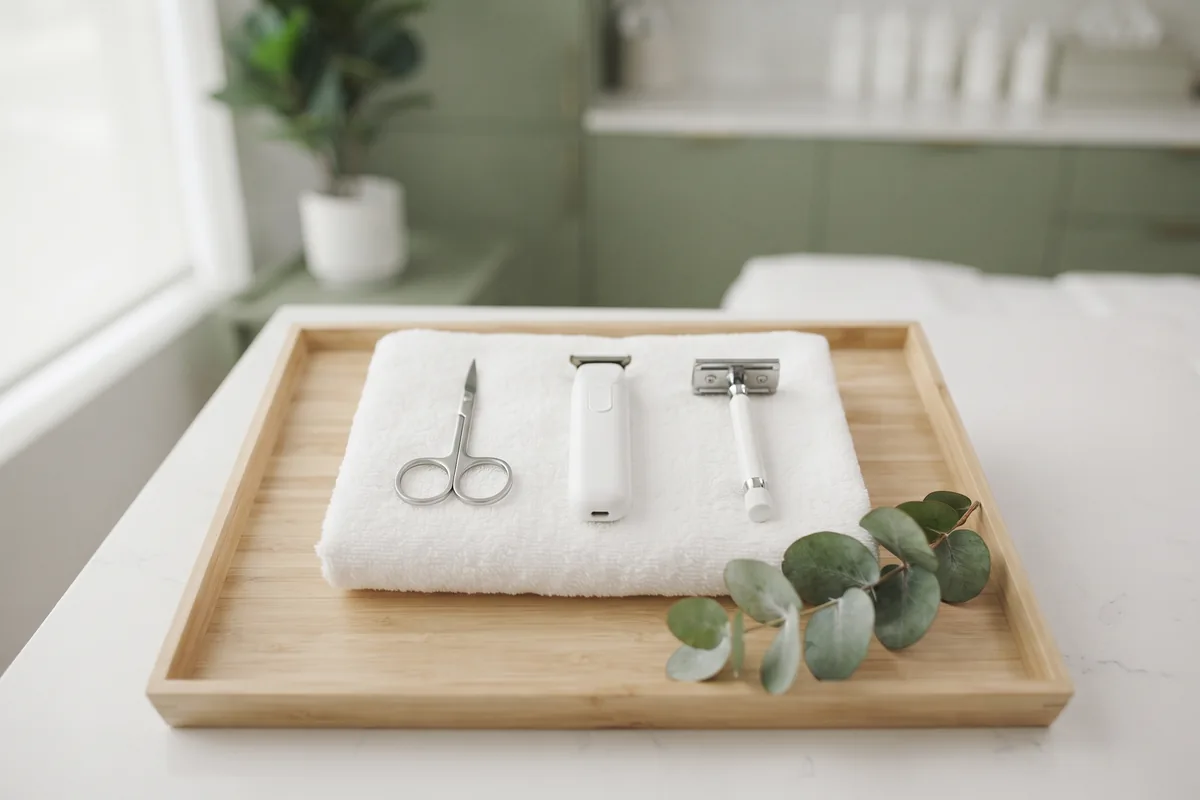
For large or sensitive areas, I often suggest trimming. Small scissors or an electric trimmer leave a little length, never scrape the skin and remove the risk of razor bumps. This works well on the bikini line, the underarm and the chest.
Here is how every common method stacks up between sessions:
Method
Between sessions?
Why
Shaving
Yes
Cuts at the surface, root untouched. Stop 3 to 5 days before a session.
Trimming
Yes
No skin contact, hair stays visible.
Tweezing or plucking
No
Pulls the hair out of the follicle.
Waxing and sugaring
No
Removes many hairs at once, roots included.
Threading
No
Pulls hairs out in a row.
Epilator
No
Mechanical tweezing at high speed.
Depilatory cream
Better to skip
Dissolves hair at the surface but can irritate skin we are about to treat.
Shaving and trimming are the two safe ways to manage hair between electrolysis sessions.
Myths and Facts About Hair Between Sessions
These are the statements I hear most often at consultations. Some are half true, which makes them harder to shake.
What people say
What is actually true
Shaving makes hair grow back thicker and darker.
Shaving changes the tip of the hair, not the follicle. A blunt tip feels coarser while it grows out, and that is the whole effect.
Waxing weakens the hair, so electrolysis will go faster.
Pulling removes the hair I need to follow. Some electrologists find that years of waxing leave follicles bent or distorted, which can make treatment slower, not faster.
Hair removal cream is gentle, so it is fine between sessions.
Cream dissolves the hair at the surface and leaves the root alone, but the chemicals can irritate skin. It is better to skip it, or at least stop several days before a visit.
My skin has to be perfectly smooth for treatment.
I need visible hair, not smooth skin. A few days of growth is the goal.
One pulled hair ruins the whole course.
It does not. A single accidental pluck only delays that follicle. Tell me and we continue.
I have to stop shaving for weeks.
Not for shaving. Most people need 3 to 5 days of growth. The longer break of at least two weeks applies to pulling methods.
The common thread is simple: anything that cuts the hair is acceptable, and anything that pulls it is not.
What Plucking and Waxing Do to Your Treatment
Pulling methods pull the hair from the follicle. The follicle then goes quiet while it rebuilds a new hair, and that can take weeks. During that time there may be nothing at the surface for me to treat. You arrive for an appointment, and the area looks cleaner than it really is. A few weeks later the hairs return all at once, on a schedule that no longer matches your treatment plan.
Repeated pulling can also irritate the follicle. Some electrologists find that hairs that have been plucked for years grow at a changed angle or with a bend, which makes the channel harder to follow with the probe. It does not make treatment impossible, but it can make it slower. That is one reason electrologists, including me, ask for a clear break from pulling methods. The guidance on my electrolysis page is at least two weeks before an appointment and none during the course of treatment.
Waxing adds one more problem: skin that is freshly waxed is often slightly inflamed. Treating inflamed skin the same day can mean more redness and a slower recovery. If you have a regular wax habit, there is a middle path. Keep waxing areas that are not in your treatment plan, and stay off the areas that are. For comparison pricing and what each waxing visit costs over time, see electrolysis vs waxing: the real long-term cost.
None of this means a single wax ruins treatment. It means the schedule shifts. I would rather you tell me than hide it.
Area-by-Area Guide
The right habit depends on where you are treating. This is the guidance I give most often:
Upper lip and chin: Trim with small scissors or let the hair grow out. If you shave, stop 4 to 5 days ahead. Stop threading and tweezing completely. See upper lip electrolysis for what to expect.
Eyebrows and hairline: Stop tweezing the area being treated. You can keep shaping hairs in zones we are not treating, but tell me which ones.
Underarm: Shaving is fine up to about 3 to 5 days before. Skip deodorant with heavy fragrance on the day. More in the underarm electrolysis section.
Bikini and Brazilian: Trim instead of shaving where possible. These areas are prone to ingrown hairs and irritation, and a trimmer avoids both.
Legs and arms: Hair is spread over a large area, so I often work in sections. Trim or shave the whole zone, then let it grow to a visible length before your appointment.
Back and chest: An electric trimmer, with help from a partner for the back, gives the most even length.
Beard and neck: Daily shaving works against you here. Plan a few days of growth before sessions, and ask for the right timing based on how fast your beard grows.
You Already Waxed or Plucked. Now What?
It happens often. A wedding, a vacation or a bad hair day, and a quick pluck seems harmless. Here is how I handle it.
Tell your electrologist. Say which area and how long ago. Do not wait until you are in the chair.
Do not pull again. Each pull restarts the clock on that follicle.
Let hair come back to a visible length. That commonly takes a few weeks, but it varies a lot by body area and by person.
Rebook once hair is back. Skin that is red or tender from waxing is not ready for treatment, so we may move the date.
You lose time, not progress. The sessions you have already done remain done.
If you have an event coming up and cannot grow hair out, tell me at the start of treatment. We can plan the schedule around it, and in some cases shave or cover the area on the day.
At a consultation we go over which areas to leave alone and how long to grow hair out.
A Realistic Timeline Between Two Appointments
Spacing between sessions depends on the area, the density of the hair and your plan, so I set it with you at the consultation. Whatever the spacing, the cycle of care between visits looks about the same.
When
What to do
Session day
Leave treated skin alone. Follow the instructions in the aftercare guide.
Days 1 to 3 after
No shaving, no scrubs and no heavy products on the treated area. Skip pulling methods.
Days 4 to 10 after
Treated hairs begin to shed. Do not pluck them. Shave only if the skin has fully settled, or trim instead.
Middle of the gap
Maintain the area with a trimmer or a careful shave. Moisturize.
3 to 5 days before the next visit
Stop shaving. Let the hair reach a visible length.
Day of the appointment
Come with clean skin, no heavy lotion and hair long enough to see and grip.
If an area is slow to grow, tell me. Some hairs take a week or more to reach a treatable length, and I would rather wait a few days than treat a field of stubble. Sparse regrowth between visits is also a good sign, because it usually means fewer active hairs are left in that area.
I always check the calendar with new clients before the first session. A planned vacation, a photo shoot or a big family event can change which area we start with, and it costs nothing to build around it.
How to Shave Without Irritating Skin You Are About to Treat
If you shave between sessions, technique matters because irritated skin can mean a postponed appointment. This is the routine I suggest.
Start with clean, warm skin. A warm shower softens the hair and opens the surface so the blade glides.
Use a fresh blade. A blade that tugs or drags is done. Replace it instead of pressing harder.
Use a plain shave gel. Fragrance-free is a safer choice for reactive skin. Skip products with strong menthol or alcohol.
Shave with the direction of growth. Going against the grain gives a closer cut, and it is also what produces razor bumps and trapped hairs.
Use light strokes and do not stretch the skin. Pulling the skin taut lets the blade cut the hair below the surface.
Rinse, pat dry and moisturize. A bland, fragrance-free lotion is enough.
Electric foil shavers and trimmers are gentler still. They leave a small amount of length, which is useful for you and for me. Rinse and dry any tool after use, and do not share razors or trimmers.
If shaving leaves bumps that keep coming back, the problem may be ingrown hairs rather than technique. My article on why ingrown hairs keep coming back explains the causes and when to see a physician.
Special Situations: Events, Travel and Fast-Growing Hair
Weddings and big events. Tell me at the start. Skin that has just been treated can be pink for a day or two, so I schedule important dates with a gap of several days, and we sometimes begin with an area that is easier to cover.
Travel and vacations. A missed session delays progress. It does not undo it. Hairs that were treated stay treated, though untreated follicles keep cycling, so a long gap means a larger crop to deal with when you return.
Fast-growing hair. Hormonal hair on the chin and jawline can reach a treatable length in only a few days. If your hair grows quickly, a shorter wait may be enough. The chin electrolysis page explains how those sessions work.
Very fine or light hair. Pale hair is harder to see and grip, so I may ask for a slightly longer growth period. I work under a magnifying lamp, and electrolysis does not depend on hair color.
Sensitive or acne-prone skin. Trimming usually beats shaving here, since it never touches the skin surface.
Medications and pregnancy. If you take isotretinoin or are pregnant, talk to your physician before starting, and tell me at the consultation.
If you wax or thread regularly and plan to move to electrolysis, the transition is easier when you plan it. Stop the pulling habit two weeks or more ahead, and use the waiting time to decide which area to start with. If cost is part of the decision, my breakdown in electrolysis vs waxing: the real long-term cost shows how the numbers work.
Marking the shaving stop date on a calendar makes it easy to arrive with hair at the right length.
Five Mistakes That Cost Sessions
Shaving the morning of the appointment. No visible hair, no treatment. Stop 3 to 5 days ahead.
A quick pluck or thread before a photo. It feels harmless, but it resets that follicle and can leave redness on treatment day.
Using an epilator or home wax to help. Both are pulling methods, and both work against the course.
Picking at scabs and shedding hairs. Treated hairs loosen on their own over a week or two. Picking healing skin can leave marks.
Not telling the electrologist. I cannot adjust the plan around something I do not know about. Nobody is judged. A pulled hair is a scheduling detail, and it is easy to work around if I hear about it before the appointment.
The simplest rule is to ask before you do anything unusual. A text or a call to the studio takes a minute, and it can save you a postponed visit.
After a Session: Leave Treated Hairs Alone Too
Treated hairs do not always fall out right away. In the days after a session, some of them work their way to the surface and shed over one to three weeks. This looks like regrowth, but it is the treated hairs leaving. Plucking them out disturbs healing skin and can leave small marks. Let them go on their own, or trim them gently once the skin has settled.
New hairs that appear between visits are often ones that were not yet visible last time. That is normal and expected. Do not chase them with tweezers. Leave them for the next session, and keep a mental note of the areas that bother you, because I can usually find them on the day.
The same applies to scabs. A few tiny crusts at follicle openings are part of the normal healing process. Picking them can cause marks and pigment changes. I go through the full list of normal and not-normal reactions in the guide to electrolysis pain and what to expect.
Before Your Appointment: A Short Checklist
No waxing, sugaring, threading, plucking or epilator use on the treatment area for at least two weeks.
Stop shaving 3 to 5 days before, or as your electrologist advises for that body area.
No retinol, glycolic acid or scrubs on the area for 48 hours.
Avoid sunburn on the treatment area.
Arrive with clean skin and no heavy lotion on the treatment area.
Bring a list of medications and any recent skin treatments, so we can plan safely.
Not sure how long to grow your hair out? A free consultation takes care of that. I look at your hair, tell you what length I need, and write the schedule for the first sessions. Visitors from across Orange County, from Newport Beach to Lake Forest, come to the Irvine studio for this.
Frequently Asked Questions
+ Can I shave between electrolysis sessions?
Yes. Shaving cuts hair at the surface and does not affect the follicle. Use a clean blade, and stop shaving about 3 to 5 days before your next appointment so the hair is long enough to treat. Your electrologist can adjust that timing for your body area.
+ Can I wax or pluck during electrolysis?
No. Waxing, plucking, threading, sugaring and epilators pull the hair out of the follicle, so there is nothing for the probe to follow. Stay off pulling methods for at least two weeks before an appointment and throughout treatment. If it happens by accident, tell your electrologist and let the hair regrow before rebooking.
+ How long should my hair be for electrolysis?
Long enough to see and grip with tweezers. For most people that is about 3 to 5 days of growth after shaving, though it varies by body area and by person. Facial hair tends to need the longer end of that range.
+ Does shaving make hair thicker and delay results?
No. Shaving leaves a blunt tip that feels coarser while it grows out, but the follicle underneath does not change. Shaving does not slow electrolysis or affect permanence.
+ What if I plucked hairs a few days before my session?
Tell your electrologist before the appointment. The plucked hairs may not have grown back enough to treat, and the skin may be tender. You will most likely need to wait a few weeks for regrowth, then rebook.
+ Can I use hair removal cream between electrolysis sessions?
It is better to skip it. Cream dissolves hair at the surface and does not pull the root, but the chemicals can irritate skin that is about to be treated. If you do use it, stop several days before your appointment and tell your electrologist.
+ Should I shave on the morning of my appointment?
No. Shaving the same day leaves nothing visible to treat. Stop shaving about 3 to 5 days beforehand, or follow the interval your electrologist gave you for that body area.
+ How long after waxing can I start electrolysis?
Wait at least two weeks, and longer if the hair has not grown back to a visible length. Skin that is still red or tender from waxing should heal first. Your electrologist will check at the consultation.
Licensed electrologist and cosmetologist with 20+ years of experience. Aida sees clients at Real Skin Beauty, 18021 Sky Park Circle, Suite N, Irvine, CA 92614.
Book a free consultation with Aida Khazieva at Real Skin Beauty in Irvine, CA. She will tell you exactly how to prepare each area, how long to grow hair out and how to manage it between sessions.
This article is for informational purposes and reflects Aida Khazieva's professional experience. It does not replace a personalized medical consultation. Individual results vary.
Questions? Aida Answers Them All.
Visit our FAQ or book a free consultation to discuss your specific skin and hair concerns.