By Aida Khazieva·Electrolysis·15 min read·Real Skin Beauty, Irvine CA·Updated October 22, 2026
Usually yes with a tan, no with a sunburn. Electrolysis sends energy into each follicle through a fine probe, so it does not depend on skin pigment the way laser does. A calm tan is generally fine. Sunburned, red or peeling skin should heal first. After every session, I ask clients to keep the treated area out of strong sun and use daily sunscreen.
Quick answer
A settled tan usually does not stop electrolysis, because the probe targets the follicle, not pigment.
A sunburn means postponing until redness, warmth and peeling are gone.
Self-tanner is fine, ideally applied a few days before or after the session, not on fresh treatment.
Sun on freshly treated skin may cause temporary dark spots, so protect the area for the first days.
In sunny Orange County, plan sessions around beach days rather than stopping for the summer.
The Short Answer: A Tan Is Usually Fine, a Sunburn Is Not
People often ask me this in late spring, right before beach season in Orange County. The worry usually comes from laser hair removal, where a tan really can be a problem. Electrolysis works differently, so the rules are different too.
Electrolysis treats one follicle at a time. A very fine probe slides into the natural opening of the hair follicle, and a small amount of energy is delivered at the root. The energy does not need to find pigment in the hair or skin. It goes exactly where the probe is placed. That is why skin color, and a tan, does not decide whether the treatment can work.
A sunburn is a different story. Sunburned skin is inflamed and injured. Adding heat or current to skin that is already red, hot, tender or peeling may increase irritation and the risk of marks. So my general rule is simple: if you have a tan, we can usually go ahead; if you have a sunburn, we usually wait until the skin has fully calmed down.
Skin situation
Usual approach for electrolysis
Why
Natural, settled tan
Usually fine to treat
The probe targets the follicle, not pigment
Fresh tan from the last day or two
Often fine, checked first
Skin may still be warm or sensitive
Mild pinkness from sun
Often postponed a few days
Inflamed skin reacts more
Sunburn (red, hot, tender)
Postponed until healed
Treating injured skin may raise risk of marks
Peeling or blistering
Postponed, see a physician if severe
The skin barrier is broken
Self-tanner
Usually fine, ideally applied after the visit
It colors the top layer only
This is a general guide based on my practice. Every client gets a skin check before treatment, and I decide on the day, together with you, whether your skin is ready.
Why a Tan Matters for Laser but Not the Same Way for Electrolysis
Laser and light-based hair removal rely on pigment. The light is absorbed by melanin in the hair, turns into heat and damages the follicle. The problem is that melanin also sits in the skin. When the skin is tanned, it absorbs more of that light. Many laser providers ask clients to avoid tanning for a period before and after sessions, or lower their settings, because tanned skin can be at higher risk of burns and pigment changes.
Electrolysis does not use light. The probe is inserted into the follicle and the energy is delivered inside it. The color of the skin around it does not change how the energy reaches the root. I explain this in more detail in my article on electrolysis vs laser hair removal. Our studio does not offer laser, so I am not comparing my own services here, only how the two methods work.
Question
Laser hair removal
Electrolysis
Does it rely on pigment?
Yes, melanin absorbs the light
No, energy goes into the follicle
Is a tan a concern?
Often yes, many providers ask you to avoid tanning
Usually not, as long as skin is not burned
Is sunburn a concern?
Yes
Yes
Works on blonde, gray, red hair?
Often limited
Yes
Sun care after treatment?
Needed
Needed
So the honest summary is this: a tan is mostly a laser issue, a sunburn is an issue for both, and sun protection after treatment matters for both.
What Counts as a Sunburn, and Why I Postpone
A sunburn is an inflammatory reaction. The skin is red, it may feel hot to the touch, and it can sting when you wash or put on clothing. A day or two later it may itch or peel. Even a mild burn means the outer layers of the skin have been damaged.
During electrolysis I work through the skin surface into each follicle. Normal skin handles this well and settles within hours to a few days. Skin that is already inflamed is more reactive. In my experience it tends to turn redder, it may swell more and it can take longer to calm down. There is also a reasonable concern that extra inflammation on top of a burn may raise the chance of temporary dark marks, especially in skin that tans easily.
There is a comfort side as well. Sunburned skin is sore. Treatment on sore skin is less pleasant, and clients who are already uncomfortable often want to stop early. You do not get a better result by pushing through. If you want to know more about sensations during a normal session, my guide on whether electrolysis hurts covers it.
How long should you wait after a sunburn?
There is no single number that fits everyone. As a general guide, I wait until the redness has gone, the skin no longer feels warm or tender, and any peeling has finished. For a light burn that may be several days. For a stronger burn it may be a week or two or longer. If you have blisters, swelling, fever or chills, that is not a beauty question anymore. Please see a physician.
My rule at the studioIf the area I am going to treat is burned, red or peeling, I reschedule. If the burn is somewhere else on the body and the treatment area looks normal, we can usually go ahead.
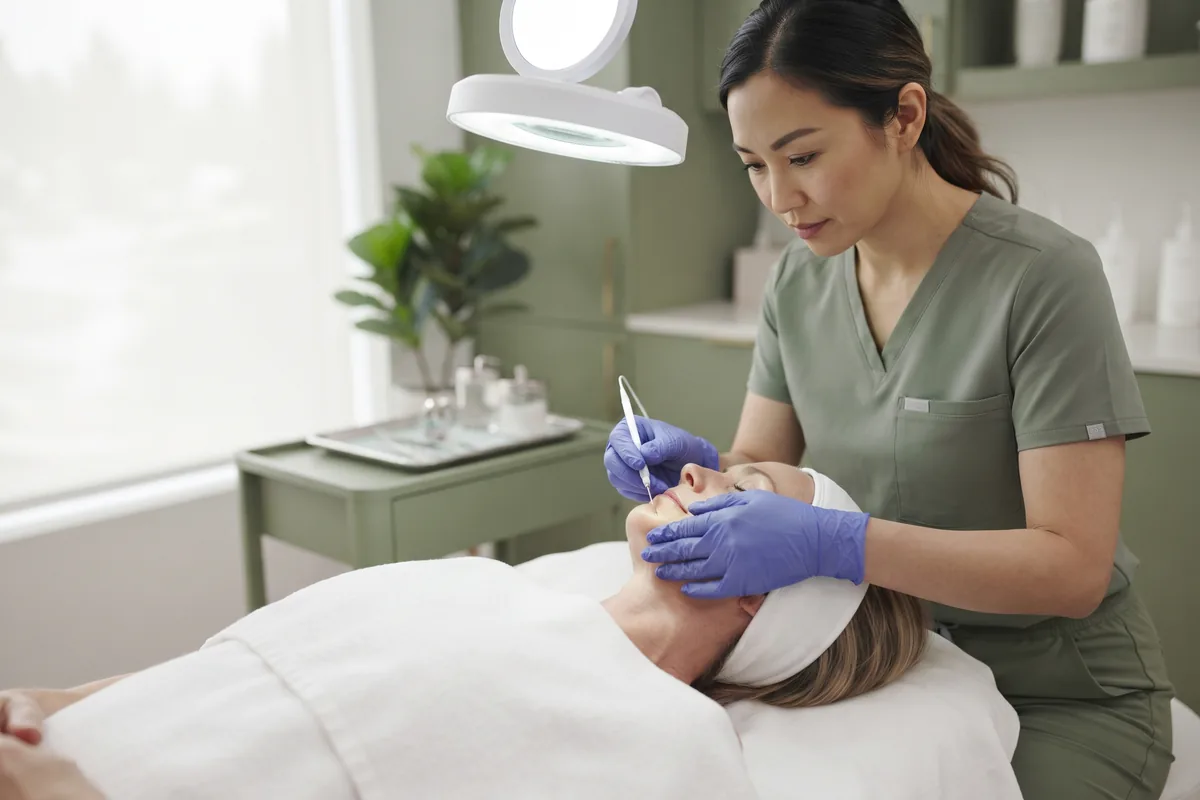
Electrolysis places energy inside each follicle, so a calm tan usually does not change the treatment.
Getting Electrolysis With a Tan
If your skin is tanned but calm, electrolysis can usually go ahead as planned. I still look at the skin first under the magnifying lamp. I check for leftover redness, dryness, flaking and any spots where the sun hit harder, like the top of the cheeks, the nose or the shoulders.
A few things can change with a tan, even though the treatment itself works the same way:
Visibility. On tanned skin, light hairs can be a little harder to see. Good magnification and light solve most of this.
Dryness. Sun dries the skin. Dry skin can feel tighter after treatment. A plain moisturizer the days before helps.
Pigment response. Skin that tans easily often also darkens easily after irritation. That makes good aftercare and sun protection after the session even more important.
Clients with deeper skin tones ask similar questions all year round. The principles are the same, and I cover them in my article on electrolysis on dark skin.
Should you stop tanning during an electrolysis course?
You do not have to stop living your life, and you do not have to stay pale for electrolysis to work. But I do ask clients to avoid deliberate tanning on the areas we are treating, both for skin health and to lower the chance of post-treatment marks. Daily sunscreen and shade are much easier than fixing pigment afterward.
Self-Tanner, Spray Tans and Bronzers
Self-tanners color the very top layer of the skin with an ingredient that reacts with dead skin cells. They do not change the follicle and do not change how electrolysis works. Still, there are practical reasons to plan around them.
Product
Before a session
After a session
Self-tanning lotion or mousse
Better to apply a few days earlier, not the same morning
Wait until the skin is fully settled, usually a few days
Spray tan
Plan it after the session if you can
Wait until redness and tiny scabs are gone
Body bronzer or makeup
Come with clean skin on the area
Skip on treated areas for at least a day or as advised
Tanning oils with fragrance
Skip on the treatment day
Skip until skin is calm
Why the timing? A fresh layer of self-tanner sits on the surface and can make the skin look streaky after cleansing, because I wipe the area with antiseptic before working. It can also make it harder to see fine hairs and small skin details. After the session, the follicle openings are slightly irritated for a short time. Putting a product with fragrance, alcohol or dye on top can sting and may irritate. Waiting a few days is the safer choice.
If you have an event and need both, my usual order is electrolysis first, then the spray tan several days later once the skin looks normal again.
Sun Exposure After Electrolysis
This is the part people forget. The question is not only "can I come in with a tan" but also "what do I do with the sun afterward".
After electrolysis, the treated area can be pink, slightly swollen and may form tiny pinpoint scabs over the following days. This is a normal healing response. During this time the skin is more sensitive to UV light. Sun on freshly treated skin may lead to post-inflammatory hyperpigmentation, which means small dark spots that appear where the skin was irritated. They are usually temporary, but they can take weeks or months to fade, and they are more common in skin that tans easily or has a medium to deep tone.
My general sun guidance after a session
Avoid direct, long sun exposure on the treated area for the first few days. Beach days, pool days and long hikes can wait.
Do not use tanning beds on treated areas during your course.
Once any tiny scabs have fallen off on their own, use a broad-spectrum sunscreen every day on that area.
For the face, a wide-brim hat and shade make a real difference, not only sunscreen.
Do not pick at scabs. Picking plus sun is the most common route to marks I see.
Some practitioners prefer mineral sunscreen right after treatment because it tends to be gentler on irritated skin. My guide to mineral vs chemical sunscreen explains the difference if you are choosing one. My full aftercare steps are in electrolysis aftercare.
A hat, shade and sunscreen protect treated skin during sunny Orange County weekends.
Planning Electrolysis Around Summer in Orange County
Living in Irvine means sun most of the year. Clients go to Laguna, Newport and Huntington on weekends, and summer vacations often mean even stronger sun. Electrolysis is a course of sessions over many months, so it is not realistic to avoid the sun the whole time. It is realistic to plan.
Situation
What I usually suggest
Beach trip this weekend
Book the session after the trip, or several days before so the skin settles
Vacation in a sunny place next week
Treat at least several days to a week before you leave, or after you return
Wedding or event with a spray tan
Electrolysis first, spray tan later, once the skin looks normal
Outdoor job or daily sports
Treat on days before rest days, use a hat and daily sunscreen
Body areas like legs or underarms in summer
Cover treated areas from direct sun for a few days, then sunscreen
Coming back sunburned
Reschedule the session until the burn has healed
Many clients find fall and winter easier for large body areas, simply because clothing covers the skin and sun is lower. Facial work goes on all year. The important thing is consistency. Hair grows in cycles, and regular sessions catch the hair in the right phase. I explain that in how many electrolysis sessions you need. Skipping a month because of a burn is fine. Skipping three months because of summer slows the whole plan.
Body areas and summer
Underarms, bikini, legs and arms are the areas most exposed at the beach. If you are working on them, try to schedule so that the first few days after each session fall on a week with less sun. Loose clothing that does not rub helps too. If you are interested in the underarm or bikini area, the service pages for underarm electrolysis and bikini electrolysis list times and prices.
Post-Inflammatory Hyperpigmentation: Who Is at Higher Risk
Post-inflammatory hyperpigmentation, often shortened to PIH, is darkening that appears after any skin irritation: a pimple, a scratch, a burn, waxing, and occasionally electrolysis. The skin produces extra pigment as part of healing. Sun on that area tells the pigment cells to keep working.
In my experience these factors raise the chance of marks:
Skin that tans quickly or has a medium to deep tone
Recent sunburn or heavy sun exposure on the area
Picking or scratching treated skin
Strong exfoliants, retinoids or acids used right before or right after the session on the same area
Fragranced products applied to freshly treated skin
A history of dark marks after pimples or waxing
If you know your skin tends to keep dark marks, tell me at the consultation. I adjust how much I treat in one area in a single session, how I space the follicles and how I plan visits. Most marks, if they appear, fade with time and sun protection. If a mark does not fade or you are worried, a dermatologist can advise you. You can read more about fading marks in my guide on how to fade hyperpigmentation.
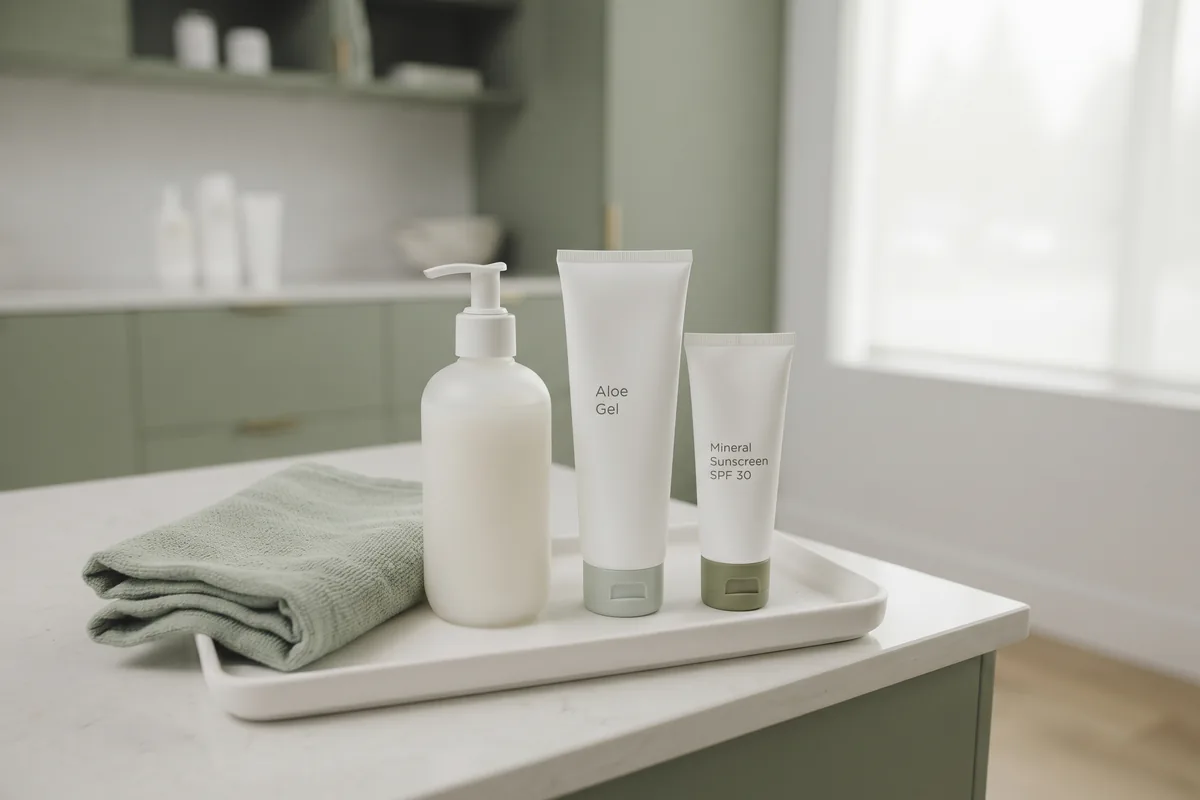
Gentle cleanser and daily sunscreen help treated skin heal without dark marks.
How to Prepare Your Skin in Sunny Months
A little preparation makes sessions more comfortable and helps the skin recover faster.
Protect the area for the week before. Daily sunscreen and shade on the area we will treat.
Moisturize. Sun and air conditioning dry the skin. A simple fragrance-free moisturizer keeps it comfortable.
Pause strong actives on the area. Retinoids, strong acids and scrubs on the treatment area can make the skin more sensitive. Ask your physician before stopping anything prescribed.
Do not wax or pluck. I need the hair visible above the skin to treat it. My guide on shaving between sessions explains what is fine.
Drink water and eat before the visit. It helps you feel more comfortable during longer sessions.
Tell me about any sun you had. Even if the skin looks fine to you, I want to know about a beach day or a run in the sun the day before.
Coming in with clean skin, without makeup, self-tanner or body oil on the area, makes the session easier for both of us.
What I Check Before Treating Sun-Exposed Skin
At every visit I look at the area under magnification. With summer clients I pay extra attention to a few things:
Any redness or warmth that suggests a recent burn
Peeling, flaking or broken skin
New dark spots or uneven pigment from previous sun
Moles or spots that look different, which I suggest you show to a physician
How quickly the skin turns pink when I touch it, which tells me how reactive it is today
If something looks wrong, I would rather move your appointment than risk irritation. A short delay does not undo your progress. The follicles we already treated stay treated.
I have done electrolysis for more than 20 years, and I wrote about the method in my book "I Am an Electrologist". The habits that protect the skin are always the same: treat calm skin, be gentle and keep the sun away while it heals.
Common Mistakes With Sun and Electrolysis
Booking the day after a beach day. Even without a visible burn, skin may be more reactive.
Going straight to the beach after a session. The first few days after treatment are when sun matters most.
Using a tanning bed during a course. It adds UV on top of healing skin.
Applying self-tanner on fresh treatment. It can sting and may irritate the follicles.
Skipping sunscreen on cloudy days. UV passes through clouds, and Orange County "June gloom" still means UV.
Picking scabs to make the skin look smooth for the weekend. This raises the risk of marks.
Assuming electrolysis cannot be done on tanned skin. That belief comes from laser, and it keeps some people from starting.
If you are not sure whether your skin is ready, call the studio at (949) 444-6191 before your appointment, or send a photo when you confirm. I am happy to tell you whether to come in or wait a few days. A free consultation is also a good time to plan your sessions around summer.
Frequently Asked Questions
+ Can you get electrolysis if you have a tan?
Usually yes. Electrolysis delivers energy directly into each follicle through a fine probe, so it does not depend on pigment the way laser does. If the tanned skin is calm, not red or peeling, treatment can generally go ahead after a skin check by your electrologist.
+ Can you get electrolysis with a sunburn?
Most electrologists postpone treatment on sunburned skin. A burn is already inflamed, and adding treatment may increase redness, discomfort and the risk of dark marks. Wait until redness, warmth and peeling are gone. If a burn blisters or comes with fever, see a physician.
+ How long after a sunburn can I get electrolysis?
It depends on how strong the burn was. A light burn may settle in several days, a stronger one may need a week or two or more. The skin should look normal, feel cool and not peel before treatment. Your electrologist will check the area at the visit.
+ Can I go in the sun after electrolysis?
Avoid long direct sun on the treated area for the first few days, while it may be pink or have tiny scabs. After that, use a broad-spectrum sunscreen daily and a hat for facial areas. Sun on freshly treated skin may cause temporary dark spots.
+ Is self-tanner okay before electrolysis?
Self-tanner only colors the surface, so it does not stop electrolysis from working. It is better to apply it a few days before the session, not the same morning, and to come with clean skin. After treatment, wait until the skin has fully settled before applying it again.
+ Why is a tan a problem for laser but not electrolysis?
Laser relies on light being absorbed by melanin, and tanned skin absorbs more of it, which can raise the risk of burns. Electrolysis does not use light. The probe places the energy inside the follicle, so skin color does not change how it reaches the root.
+ Can electrolysis cause dark spots in summer?
It can, mainly when treated skin gets sun before it heals or when scabs are picked. This is called post-inflammatory hyperpigmentation and it is usually temporary. Daily sunscreen, shade and leaving scabs alone lower the risk, especially for skin that tans easily.
+ Should I stop electrolysis sessions during summer?
Most people do not need to stop. Plan sessions so the first few days after each visit fall on lower-sun days, protect the area, and reschedule only if you get burned. Regular sessions matter for progress, so long breaks are usually not necessary.
Licensed electrologist and cosmetologist with 20+ years of experience. Aida sees clients at Real Skin Beauty, 18021 Sky Park Circle, Suite N, Irvine, CA 92614.
Book a free consultation with Aida Khazieva at Real Skin Beauty in Irvine, CA. She will check your skin, tell you if it is ready today and plan your sessions around summer and travel.
This article is for informational purposes and reflects Aida Khazieva's practitioner experience. It does not replace a personalized medical consultation. Individual results vary.
Questions? Aida Answers Them All.
Visit our FAQ or book a free consultation to discuss your specific skin and hair concerns.