Best Facial for Dry Skin: Treatments That Actually Hydrate
By Aida Khazieva·Facials·12 min read·Real Skin Beauty, Irvine CA·Updated July 27, 2026
Dry skin clients come to me having tried every moisturizer their budget allows, and their skin still feels tight by midafternoon. The problem is not always that they need better products. Often it is that the dead cell buildup preventing those products from absorbing has never been properly addressed, or that the skin is missing the delivery mechanism that gets water-binding ingredients past the outer barrier where they actually do their work. Professional facials for dry skin address those specific problems in ways that moisturizer alone cannot. Here is what works, what does not, and why the distinction matters.
Quick answer: The best facial for dry skin depends on whether it lacks oil (dry) or water (dehydrated). Hydrating facials built around hyaluronic acid, plus light enzyme or low-dose lactic peels that clear dead cell buildup, help both. Avoid high-concentration glycolic or TCA peels, which can strip an already weak barrier.
Dry vs. Dehydrated Skin: Why This Distinction Determines Your Treatment
The terms dry and dehydrated are used interchangeably in most skin care conversations, but they describe fundamentally different conditions that require different professional interventions. Treating dehydrated skin like dry skin, or vice versa, is one of the most common reasons clients with skin moisture concerns do not see improvement from professional treatments despite consistent appointments.
Dry skin is a skin type, a chronic physiological condition in which the sebaceous glands produce insufficient quantities of sebum. Sebum is the oil that forms the outermost layer of the skin's natural barrier, slowing transepidermal water loss and maintaining the protective acid mantle. When sebum production is low, this barrier is insufficient, water evaporates from the skin surface faster than it can be replaced, and the skin chronically feels tight, looks dull, and shows fine lines that reflect light differently than well-hydrated skin. Dry skin is a constitutional characteristic; it does not change based on seasonal conditions or hydration habits, though it can worsen in low-humidity environments.
Dehydrated skin is a temporary condition, not a skin type, that occurs when the skin's water content is depleted. It can affect any skin type, including oily skin. Dehydrated skin occurs when water is lost from the epidermis faster than it is replenished, which happens from low-humidity environments, air travel, forced-air heating and cooling, certain medications, alcohol consumption, and inadequate topical hydration. The skin appears dull, feels tight even shortly after moisturizer application, and may show superficial fine lines that are not present when skin is well-hydrated. Unlike dry skin, dehydration can be resolved relatively quickly with appropriate hydration treatment and improved habits.
The clinical significance of this distinction: dry skin needs oil-based replenishment to replace what the sebaceous glands are not producing adequately. Dehydrated skin needs water-binding humectants to restore water content and occlusive ingredients to prevent further transepidermal water loss. Many clients have both conditions simultaneously, in which case the treatment addresses both, but identifying the primary driver determines which ingredient categories are most important in the facial protocol and at home.
At my Irvine studio, I assess skin under magnification before every session. Dry skin typically shows very fine pores, thin translucent quality, and sometimes visible surface micro-scaling. Dehydrated skin shows a crepey surface texture with fine dehydration lines, often alongside oiliness in certain zones that is the skin's overcompensation response to water loss. This visual assessment changes which treatment protocol I select even when two clients describe the same symptoms to me verbally.
The Oily-Dehydrated Combination
Oily skin can absolutely be dehydrated, and this combination is one of the most misunderstood presentations in skin care. The sebaceous glands are producing plenty of oil, but the skin is simultaneously lacking water. Using drying acne treatments without adequate humectant hydration is a common cause. These clients need hyaluronic acid and other water-binding ingredients just as much as dry skin clients, but they need them delivered in oil-free formulations that do not add to their sebum burden.
What Dry Skin Actually Needs From a Professional Facial
The goals of a professional facial for dry or dehydrated skin are specific and different from what an oily or combination skin client needs from a session. Understanding those goals helps you evaluate whether the facial you are receiving is actually designed for your skin type or whether it is a standard protocol being applied regardless of your specific presentation.
Dry skin needs a professional facial to accomplish three things in sequence: remove the dead cell buildup that is blocking product absorption and contributing to dullness, deliver water-binding and moisture-supporting ingredients at concentrations and through delivery methods not available in home-care products, and seal those ingredients behind a barrier-repair occlusive layer that prevents their immediate evaporation.
The dead cell removal step requires particular care for dry skin. Dry skin has a thinner stratum corneum than oily skin, and its lipid barrier is already insufficient. Aggressive exfoliation that strips additional lipids or disrupts the barrier makes the dryness worse, not better, even while it temporarily improves the skin's appearance by removing visible surface scaling. The appropriate exfoliation for dry skin is gentle and targeted: enzyme peels, low-concentration lactic acid, or ultrasonic exfoliation rather than high-concentration glycolic, TCA, or aggressive mechanical exfoliation.
The ingredient delivery step is where professional treatment produces results that home care cannot. The concentrations of hyaluronic acid, peptides, and ceramides used in professional treatment serums significantly exceed what is available in retail products. Professional delivery methods, including electroporation, iontophoresis, and ultrasonic penetration, push these ingredients through the stratum corneum to the living layers of the epidermis where they actually bind and function. Applying a hyaluronic acid serum at home works on the skin surface; professional delivery works at the layer where the ingredient's binding capacity is most relevant.
The sealing step ensures that the moisture delivered during the treatment stays in the skin rather than evaporating immediately. A well-chosen occlusive mask or moisturizer applied as the final treatment step captures the hydration delivered during the session and gives it time to be bound and retained by the epidermis. This is one of the clearest differentiators between a facial designed for dry skin and a standard protocol: the final step for dry skin should be rich, protective, and barrier-supportive, not light or gel-textured.
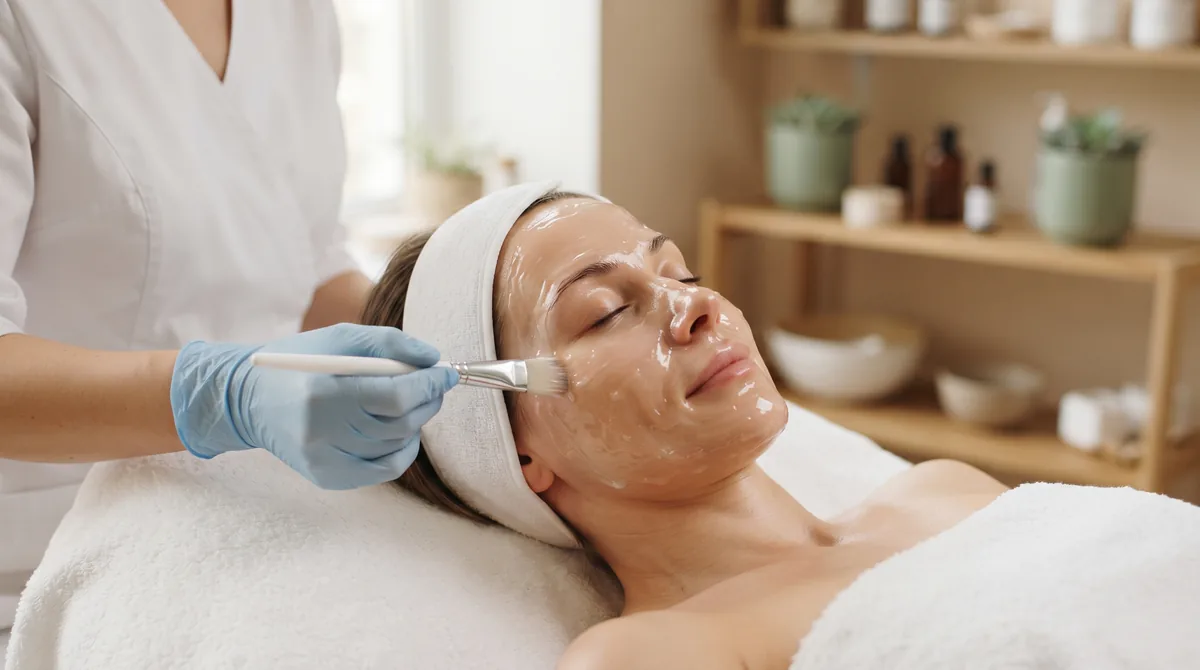
A hydrating mask is the central step of a facial for dry skin and is left on long enough to let the skin absorb moisture.
Hyaluronic Acid Infusion Facials: How They Work
Hyaluronic acid infusion facials are the treatment I recommend most frequently to new dry skin clients who are asking what will produce the most immediate and noticeable difference. Hyaluronic acid is a glycosaminoglycan, a naturally occurring molecule in human skin and connective tissue, that has the remarkable ability to bind and retain water at up to 1000 times its own weight. This binding capacity is what makes it the most effective humectant available in skin care.
The problem with hyaluronic acid in over-the-counter products is delivery. Hyaluronic acid molecules in standard serums are large enough that they sit on the skin surface rather than penetrating into the epidermis where they would be most effective. They still provide some benefit by drawing moisture from the air to the skin surface, but the effect is more superficial and shorter-lasting than what professional delivery achieves.
Professional hyaluronic acid infusion facials address this limitation through several mechanisms. First, they use low-molecular-weight hyaluronic acid, which is fragmented into smaller chains that penetrate the stratum corneum more effectively than the standard high-molecular-weight form. Second, they use delivery technologies including electroporation (which temporarily opens microchannels in the skin through electrical current) and ultrasonic drivers (which use sound waves to push molecules through the barrier) that physically transport the ingredient into the living epidermal layers. Third, they apply these infusions after gentle exfoliation that has already removed the dead cell barrier, so the ingredient is not contending with the same penetration resistance it would encounter on un-exfoliated skin.
The immediate result of a well-executed hyaluronic acid infusion facial is visible and tactile: skin appears plumper, fine dehydration lines are visibly reduced, and the tight sensation that characterizes dry or dehydrated skin is significantly relieved for days to weeks following treatment. My Irvine clients with dry skin consistently rank this facial type as producing the most immediately noticeable difference of any treatment they receive.
The lasting result from a series of hyaluronic acid infusion facials is improved intrinsic skin hydration over time. Repeated professional hyaluronic acid delivery gradually improves the skin's own water-retention capacity as hyaluronic acid accumulates in the dermis and supports the health of skin cells that produce their own hyaluronic acid naturally. This is a slower benefit that unfolds over a series of treatments rather than from a single session.
Enzyme Peels for Dry Skin Without Over-Stripping
Dry skin still accumulates dead cells, just as any other skin type does, and that dead cell accumulation is a significant contributor to why dry skin looks dull and why moisturizers feel like they are sitting on top of the skin rather than absorbing into it. Addressing this accumulation requires exfoliation, but the type of exfoliation matters enormously for dry skin. Enzyme peels are the most appropriate exfoliating option for this skin type.
Enzyme peels use proteolytic enzymes, most commonly papain from papaya or bromelain from pineapple, to digest the keratin proteins that hold dead skin cells together. Unlike acid-based peels, which work through a chemical reaction that changes the pH environment of the stratum corneum, enzyme peels work through a biochemical mechanism that does not alter pH and does not penetrate beneath the dead cell layer. They digest only the non-living cells of the stratum corneum, leaving the living epidermal layers completely undisturbed.
This targeted action is what makes enzyme peels ideal for dry skin. They clear the dead cell barrier that is blocking moisturizer absorption without disrupting the living epidermis or stripping the already-insufficient lipid layer. The result is noticeably improved product penetration after the treatment, which means the hyaluronic acid infusion or hydrating mask applied after the enzyme peel reaches significantly deeper than it would on un-exfoliated dry skin.
I also use low-dose lactic acid peels for dry skin clients who need slightly more exfoliation than an enzyme peel provides, particularly for clients with visible surface scaling or fine textural roughness that enzymes alone do not fully resolve. Lactic acid at 20 to 30 percent provides meaningful exfoliation while its humectant properties partially compensate for the barrier disruption the acid creates. The net effect on dry skin is typically less drying than equivalent concentrations of glycolic acid, which is why lactic is preferred over glycolic for this skin type.
What I consistently avoid for dry skin: high-concentration glycolic acid (above 30 percent), TCA peels, dermaplaning as a standalone primary exfoliation method, and any mechanical exfoliation with rough texture or suction that removes surface lipids along with dead cells. Each of these removes more from a dry skin barrier than dry skin can afford to lose at one session, and the resulting tightness and sensitization set back the hydration goals of the treatment rather than supporting them.
Ultrasonic and Electroporation for Deep Hydration Delivery
Two device-based technologies significantly improve the outcome of professional facials for dry and dehydrated skin by solving the penetration problem that limits what topical products can do on their own. Both are available at Real Skin Beauty in Irvine and are components of my standard dry skin facial protocol.
Ultrasonic infusion uses high-frequency sound waves at frequencies typically between 1 and 3 MHz to create a temporary loosening of the lipid structure of the stratum corneum, allowing product molecules to pass through more readily. The sound waves also create a mechanical pumping effect at the skin surface that drives product physically into the outer skin layers. For hyaluronic acid and peptide serums applied during facial treatment, ultrasonic delivery increases penetration depth significantly compared to simple topical application. The treatment feels like a smooth, slightly warm vibrating device being moved across the skin. It is entirely comfortable and most clients find it pleasant.
Electroporation uses brief, controlled electrical pulses to temporarily create openings in cell membranes, allowing larger molecules to pass through barriers they could not otherwise cross. Unlike iontophoresis, which drives charged molecules through skin using continuous electrical current and is limited to small, charged molecules, electroporation can deliver larger molecules including high-molecular-weight peptides and fragments of hyaluronic acid that would otherwise not penetrate the stratum corneum at all. The sensation during electroporation is a mild tingling or pulsing on the skin surface. Some clients describe slight sensitivity in areas with very thin skin (around the eyes), which resolves immediately after the device is removed from that area.
I use both ultrasonic infusion and electroporation in my dry skin facials, typically in sequence. Ultrasonic is applied first with humectant serums to begin the deep hydration delivery. Electroporation follows with a peptide-rich or ceramide-heavy serum to deliver barrier-building ingredients that benefit from the enhanced penetration electroporation provides. The two technologies are complementary rather than redundant, addressing different aspects of the delivery challenge.
Clients who have received dry skin facials with and without these technologies consistently report a noticeable difference in how long the hydration benefit lasts. A facial using only topical products may produce 2 to 4 days of improved skin comfort. A facial incorporating ultrasonic and electroporation delivery typically produces 7 to 14 days of improved skin comfort and noticeably better product absorption in the following weeks.
Microcurrent for Dry Mature Skin
Dry skin and mature skin frequently appear together, and the combination creates a specific set of concerns that microcurrent therapy addresses alongside hydration-focused treatments. As skin ages, it loses not only moisture-retention capacity but also muscle tone, electrical charge within cells, and ATP (adenosine triphosphate) production at the cellular level. Microcurrent therapy targets all three of these changes directly.
Microcurrent devices deliver gentle electrical currents in the microampere range (millionths of an ampere, not milliamperes) that closely mirror the body's own bioelectrical signals. These currents stimulate muscle fibers in the face to re-educate their position and improve tone, stimulate fibroblast activity to increase collagen and elastin production, and increase ATP production within skin cells, which provides the cellular energy needed for repair and regeneration processes that slow with age.
For dry, mature skin specifically, microcurrent provides benefits that hydration-focused treatments alone cannot deliver. Hydration treatments address the water and lipid content of the skin. Microcurrent addresses the structural and cellular energy changes that occur with aging and that no topical ingredient can adequately substitute for. The two work together: hydration restores the skin's medium, and microcurrent supports the biological processes that maintain the skin's structure within that medium.
The results of consistent microcurrent treatment for dry mature skin include:
Improved facial contour definition as muscle groups are re-educated toward more lifted positions over a series of sessions
Reduction in the appearance of fine lines as improved hydration from concurrent treatment and increased cellular energy production improve surface quality
Better absorption of topical products as ATP production increases and cellular function improves at the site of application
Improved lymphatic drainage which reduces morning puffiness and supports the skin's natural detoxification processes
Progressive improvement in skin firmness and elasticity over a 6 to 12-week series of weekly or biweekly sessions
Microcurrent results require a series of sessions to establish and maintenance sessions to sustain. The initial response to a single microcurrent session is pleasant but temporary: a lifted, tighter appearance that lasts 24 to 72 hours. The lasting structural changes that clients photograph and remark on require 6 to 12 sessions at regular intervals before they become stable. I discuss this timeline at consultation because clients who expect microcurrent to produce permanent results from a single session will be disappointed, while clients who commit to a full series typically report results they find genuinely satisfying.
Combining Microcurrent and Hyaluronic Infusion in One Session
For dry, mature skin clients, I frequently combine microcurrent and hyaluronic acid infusion in a single session. The two treatments complement each other practically: hyaluronic acid provides the conductive medium that microcurrent needs for optimal skin contact, while microcurrent's increase in cellular ATP production amplifies the binding and retention of the hyaluronic acid delivered during the same session. The result is better than either treatment alone.
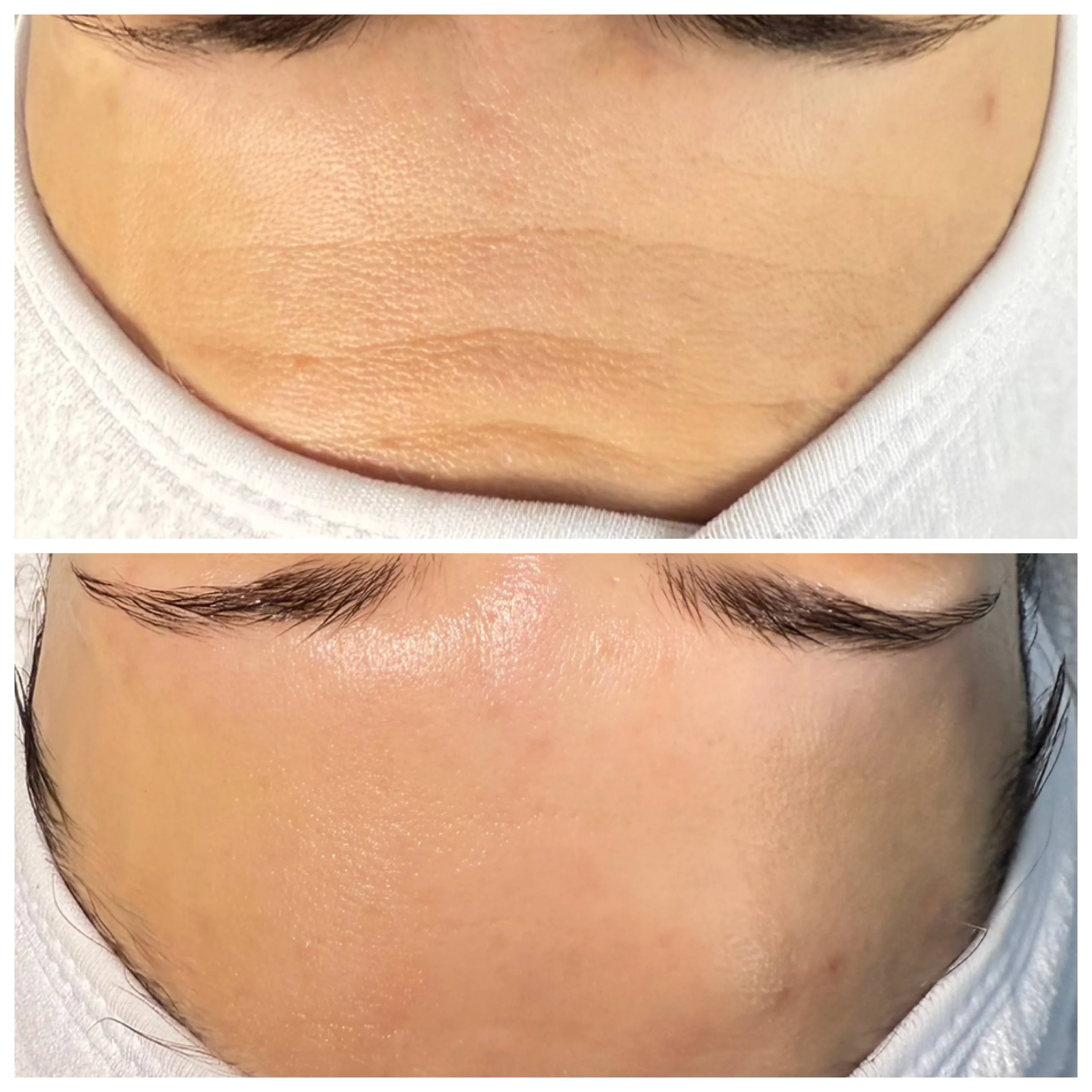
Dehydrated forehead skin before and after an electroporation treatment at Real Skin Beauty.
Key Ingredients to Request for a Dry Skin Facial
Knowing which ingredients to look for, and which to request explicitly if you are booking at a studio you have not visited before, puts you in a better position to ensure your dry skin facial actually delivers what your skin needs. Not all estheticians automatically adjust their standard protocol for dry skin unless you specifically communicate what you need.
The ingredients that produce the most meaningful results in professional dry skin facials are:
Hyaluronic acid (multiple molecular weights). As the primary humectant of choice, hyaluronic acid should appear in the treatment serums. Professional-grade products include both high-molecular-weight HA (for surface film and immediate comfort) and low-molecular-weight HA or HA fragments (for deeper penetration and more lasting hydration).
Ceramides. Ceramides are lipid molecules that make up a major component of the stratum corneum's protective barrier. Dry skin is deficient in ceramides. Professional ceramide-rich masks and serums replace what the skin is missing and directly repair the structural gaps in the barrier that allow moisture to escape.
Squalane. A lightweight, elegant oil derived from olives or sugarcane, squalane closely mimics the skin's own sebum. It replenishes the lipid layer without feeling heavy or comedogenic and is appropriate for all skin types including dry skin that also has sensitivity.
Peptides. Short chains of amino acids that signal fibroblasts to increase collagen and elastin production, peptides also support cellular communication and barrier repair. For dry, mature skin, peptides address the collagen decline alongside the moisture deficit.
Niacinamide. Vitamin B3 in skin care performs multiple functions relevant to dry skin: it reduces transepidermal water loss by strengthening the ceramide-rich layer of the barrier, reduces inflammation, and regulates sebum production without drying skin. It is one of the most versatile and well-tolerated active ingredients available.
Panthenol (Provitamin B5). Panthenol is both a humectant and a skin-soothing agent. It draws water into the skin and supports the healing of the micro-damage that occurs in compromised dry skin barriers. Many professional calming and hydrating serums include it as a core ingredient.
When booking a facial for dry skin, request specifically that the esthetician use hydrating serums before masking, that the mask selected is occlusive or cream-based rather than clay or mud, and that any exfoliation is gentle and enzyme-based rather than mechanical or high-acid. These specific requests cost nothing and can determine whether the facial actually addresses your skin's needs or simply runs through a standard protocol designed for an average skin type.
What to Avoid if You Have Dry or Dehydrated Skin
For dry skin, what a facial leaves out is sometimes as important as what it includes. Standard facial protocols contain several elements that produce good results for oily and combination skin but that actively worsen dry skin outcomes. Knowing what to communicate before your appointment protects you from a session that takes more from your barrier than it gives back.
Treatments and ingredients to specifically avoid or request modifications for if you have dry or dehydrated skin:
High-concentration glycolic acid peels (above 30 percent). Glycolic acid at higher concentrations produces a degree of barrier disruption that is appropriate for oily skin's thicker, more resilient stratum corneum. For dry skin with a thin, already-compromised barrier, this level of disruption worsens the moisture deficit rather than improving it. If exfoliation is needed, enzyme peels or low-concentration lactic acid are appropriate substitutes.
Clay or kaolin masks. Clay masks are designed to absorb excess sebum. For oily skin, this absorbency is beneficial. For dry skin, it draws lipids out of a barrier that already has too few, producing post-facial tightness that can last hours. Always confirm the mask type your esthetician plans to use if you have dry skin.
Alcohol-based toners or astringents. These are routinely included in standard facial protocols designed for oily or acne-prone skin to control sebum and close pores post-extraction. For dry skin, they strip the lipid layer immediately after treatment, undoing barrier work done earlier in the session. Request specifically that no alcohol-based products be used on your skin during the session.
Aggressive steam exposure. While steam does temporarily increase skin surface hydration, its net effect on dry skin is often negative. The heat promotes transepidermal water loss during and after the steaming period, and the high temperature can worsen any sensitivity already present in dry skin. Cool or room-temperature hydration delivery is preferable for dry skin clients.
Mechanical exfoliation tools with rough texture. Spin brushes, rough exfoliation sponges, and coarse scrub products remove lipids alongside dead cells in a manner that enzyme or chemical exfoliation does not. The ratio of benefit to barrier disruption is less favorable for dry skin than for skin types with more abundant sebum production.
Retinol applied during the facial session. While retinol is a valuable at-home ingredient for many dry skin clients when used appropriately, applying it during a professional session onto skin that has already been exfoliated and barrier-opened increases the likelihood of irritation and does not provide additional benefit over using it at home on un-treated skin.
For clients in Orange County who want a professional facial protocol genuinely designed for dry or dehydrated skin rather than a modified version of a standard protocol, I encourage booking a consultation at Real Skin Beauty in Irvine before your first treatment appointment. A 15-minute consultation allows me to assess your specific skin condition, identify whether you are dealing with dry skin, dehydration, or both, and design a treatment and home-care plan that addresses the actual problem. Visit our facials page for details on available treatments, or book directly online. Our FAQ covers common dry skin questions in more detail.
Frequently Asked Questions
What is the difference between dry skin and dehydrated skin? +
Dry skin is a chronic skin type where sebaceous glands produce insufficient oil, leaving the barrier lipid-deficient. Dehydrated skin is a temporary condition of water deficit that can affect any skin type, including oily skin. Many people have both simultaneously. Dry skin needs oil-based lipid replenishment to replace what sebaceous glands are not producing. Dehydrated skin needs water-binding humectants like hyaluronic acid to restore water content and occlusives to prevent further water loss.
Which facial ingredient is most important for dry skin? +
Hyaluronic acid is the cornerstone humectant for dry and dehydrated skin, capable of binding up to 1000 times its weight in water. Professional facials infuse it at higher concentrations using delivery technologies including ultrasonic infusion and electroporation that achieve penetration depths significantly beyond what any topical product applied at home can reach. Combined with ceramides for barrier repair and squalane for lipid replenishment, hyaluronic acid forms the core of an effective dry skin treatment protocol.
Should dry skin get chemical peels? +
Gentle enzyme peels using papain or bromelain and low-concentration lactic acid peels at 20 to 30 percent are appropriate and beneficial for dry skin. They remove dead cell buildup that prevents moisturizers from absorbing effectively, without stripping the already-thin lipid barrier. Avoid high-concentration glycolic acid above 30 percent and all TCA peels for dry skin, as these disrupt the barrier more than dry skin can restore between sessions.
How often should dry skin get a facial? +
Every 4 to 6 weeks. The slightly extended interval compared to normal or oily skin allows the barrier more time to recover and rebuild between sessions. Avoid over-treating with frequent extractive or exfoliating facials that progressively strip moisture from an already-compromised barrier. Prioritize hydrating and barrier-repair treatments at every session rather than rotating in aggressive protocols.
What should I tell my esthetician if I have dry skin? +
Be specific. Tell them your skin feels tight after cleansing, that moisturizer stops absorbing effectively within hours, and that you want maximum hydration focus. Ask them to use enzyme rather than acid exfoliation, to skip clay masks in favor of cream or gel-pack masks, to avoid alcohol-based toners, and to finish with a thick occlusive moisturizer as the final treatment step. These specific requests meaningfully change what the session does for your skin.
Licensed electrologist and cosmetologist with 20+ years of experience. Aida sees clients at Real Skin Beauty, 18021 Sky Park Circle, Suite N, Irvine, CA 92614.
Book a free consultation with Aida Khazieva at Real Skin Beauty in Irvine, CA. We will identify whether your concern is dry skin, dehydration, or both, and design a treatment protocol that actually addresses what your skin needs.
This article is for informational purposes and reflects Aida Khazieva's clinical experience. It does not replace a personalized medical consultation. Individual results vary.