Dry vs Dehydrated Skin: How to Tell and What to Do
By Aida Khazieva·Facials and Skin Care·15 min read·Real Skin Beauty, Irvine CA·Updated October 20, 2026
Dry skin is a skin type: it lacks oil (lipids). Dehydrated skin is a condition: it lacks water, and any skin type can have it, including oily skin. Dry skin feels rough and flaky most of the time. Dehydrated skin feels tight, looks dull and shows fine surface lines, and it may still get shiny. The fixes differ: dry skin needs oils and creams, dehydrated skin needs water-binding ingredients and a gentler routine. Here is how I tell them apart in my Irvine studio.
Quick answer
Dry = lack of oil. Look for flaking, roughness, constant discomfort, small pores.
Dehydrated = lack of water. Look for tightness after washing, dullness, fine lines that fade when you pinch, shine and breakouts at the same time.
Many people have both. A skin check under magnification separates them.
Dry skin needs emollients and occlusives. Dehydrated skin needs humectants, a gentler cleanser and a sealing moisturizer.
The Short Answer: Oil Versus Water
The words "dry" and "dehydrated" get used as if they mean the same thing. They do not, and the mix-up is why people spend months applying richer creams to skin that needed water, or loading up on hyaluronic serums when what they needed was oil.
Dry skin
Dehydrated skin
What is missing
Oil (lipids)
Water
Is it a skin type?
Yes. It is part of your baseline
No. It is a temporary condition any skin type can have
How it feels
Rough, uncomfortable most of the day
Tight, especially after washing. Comfortable after moisturizer for a short time
How it looks
Flaky, scaly patches, small pores, dull
Dull, tired, fine lines on the cheeks and around the eyes, uneven texture
Oil and breakouts
Rarely oily; fewer breakouts
Can be oily, shiny and congested at the same time
Pinch test
Skin feels dry and rough but may bounce back
Fine lines appear and then slowly smooth out
What helps
Creams, oils, balms, ceramides
Humectants, gentle cleansing, a sealing moisturizer, fewer irritants
Both can happen at once. Dry, dehydrated skin is common in winter, in air conditioning and with age. That is why a professional look is useful when the answer is not clear. I use a magnifying lamp and a few simple tests, and I ask about the products you use. The picture usually becomes clear in a few minutes.
Signs of Dry Skin
Persistent roughness or flaking, even after moisturizer
Small, fine pores
A feeling of tightness that comes back within an hour of moisturizing
Skin that looks dull and shows white scale on the cheeks, hands or shins
Itchy patches, especially after hot showers
Rare shine or breakouts
Cracking at the corners of the mouth, heels or knuckles in cold weather
Makeup that clings to flaky patches
Dry skin runs in families and can change with age, hormones and medication. The skin makes less oil over time, and after menopause the drop is more noticeable. Some medications, including isotretinoin, make skin very dry, and you should talk to your prescriber about management. If the skin is cracked, painful, weeping or red and scaly, see a physician, because eczema, psoriasis and contact dermatitis can look like simple dryness.
Why dry skin is dry
Skin has a natural barrier made of cells and lipids, a bit like bricks and mortar. In dry skin, the mortar (ceramides, cholesterol and fatty acids) is thin or damaged. Water escapes easily through the gaps, and the surface cracks and flakes. That is why the best treatments restore the lipid layer instead of simply adding water.
Signs of Dehydrated Skin
Tight feeling after cleansing that eases after moisturizer
Dull, gray or tired-looking complexion
Fine lines on the cheeks, forehead and around the eyes that look worse in the afternoon
Oily T-zone with dry cheeks
Makeup that looks patchy or settles into lines
Sensitivity to products that did not bother you before
Breakouts that appear even though your skin feels tight
Dark circles that look more shadowed
The pinch test
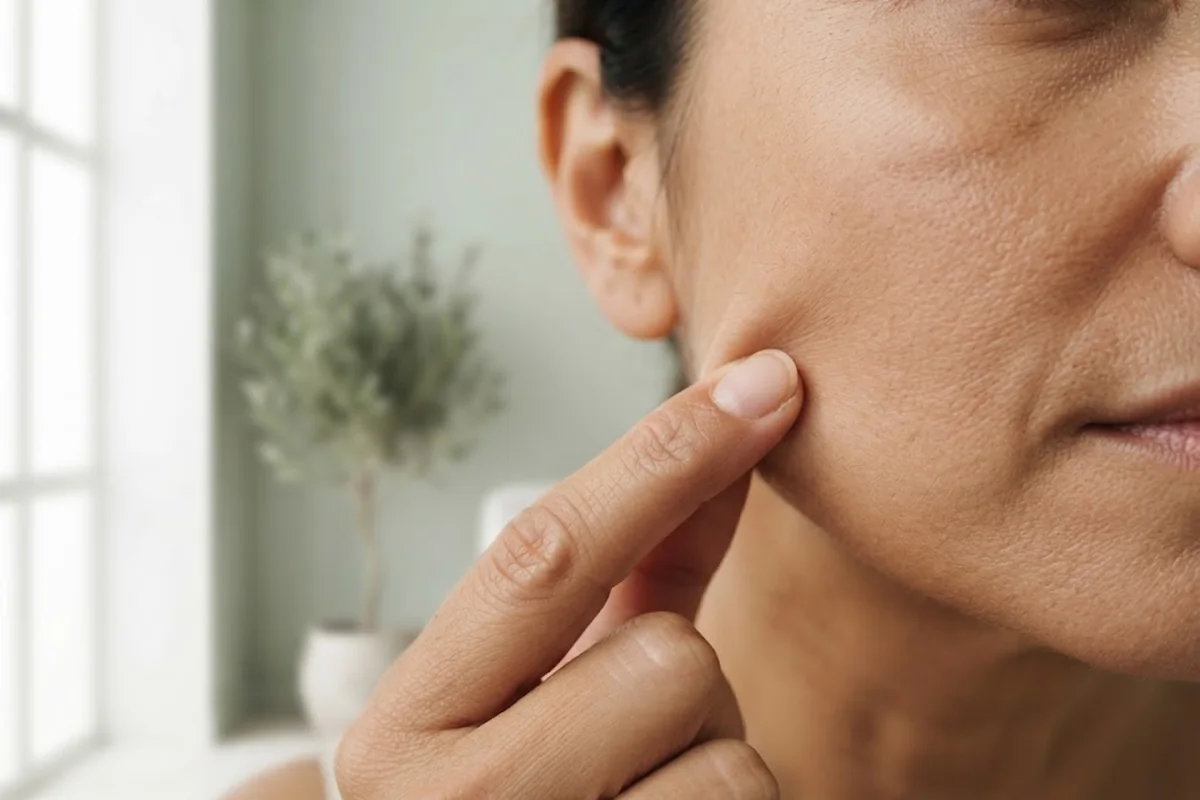
Gently pinch a small fold of skin on the cheek or the back of the hand and release. If you see tiny wrinkles that stay for a moment before smoothing, the skin may be dehydrated. Healthy hydrated skin snaps back almost immediately. It is a rough guide only, because age and elasticity affect it, and a skin check by a professional is more reliable.
The bare-face test
Wash with a gentle cleanser, pat dry and wait 30 minutes without applying anything. If the skin feels tight, it is lacking water or lipids. Check the shine afterward. If your forehead and nose look shiny and your cheeks feel tight, that points to dehydration rather than dryness. If everything looks matte and feels rough, dry skin is likely.
The gentle pinch test: dehydrated skin shows fine surface lines that smooth out within seconds.
What Causes Each One
Cause
Dry skin
Dehydrated skin
Genetics and age
Yes, strongly
Less so
Harsh cleansers and hot water
Strips lipids
Strips both oil and surface water
Over-exfoliation (acids, scrubs, brushes)
Damages the lipid barrier
Increases water loss
Retinoids and acne treatments
Can dry the skin
Often a cause of tight, flaky skin
Low humidity, heating, air conditioning
Worsens
A common trigger
Sun exposure
Damages lipid layer
Increases water loss
Not enough water or high caffeine and alcohol
Minor effect
Can contribute, but not the main cause
Medical conditions (thyroid disease, eczema, diabetes)
Possible
Possible
Orange County has its own pattern. Coastal air is mild and humid, yet inland cities such as Irvine, Tustin and Yorba Linda get dry stretches, offshore Santa Ana winds and heavy air conditioning. I see clients whose skin is in good shape in July and tight in October with no change in routine, because the air changed.
A common cause is the routine itself. People layer a foaming cleanser, a scrub twice a week, an acid toner and a retinol, and then wonder why their skin is tight and flaky. The skin is not dry by nature. It is damaged by too many actives. I explain the retinol side of this in my retinol beginners guide.
What to Do for Dry Skin
Switch to a creamy or milky cleanser. Avoid foaming gels and hot water. Wash once a day in the evening, rinse in the morning.
Moisturize on damp skin with a cream containing ceramides, cholesterol or fatty acids. Add squalane or shea butter if you like.
Add an occlusive at night. A thin layer of balm or petrolatum-based product over cream locks in moisture.
Limit exfoliation to once a week at most, with a gentle lactic acid or enzyme product, and skip it entirely if the skin is flaking or stinging.
Use sunscreen every morning, because sun damage dries the skin and slows repair.
Shorten showers and use lukewarm water. Apply body cream within three minutes of drying.
Humidify the bedroom during dry months.
Give the routine four weeks before judging. If dry patches persist or become red, itchy or cracked, see a physician. I cover professional options in the best facial for dry skin.
Ingredients that help dry skin
Ingredient
What it does
Ceramides, cholesterol, fatty acids
Rebuild the lipid barrier
Squalane, jojoba, shea butter
Soften the surface and reduce water loss
Glycerin, urea (low strength)
Attract water and soften scale
Petrolatum, dimethicone
Seal the surface (occlusives)
Colloidal oatmeal
Soothes irritation and itch
Lactic acid at low strength
Gently smooths flakes; use cautiously
What to Do for Dehydrated Skin
Simplify. Stop scrubs and strong acids for two weeks. Use only a gentle cleanser, a hydrating serum and a moisturizer.
Apply a humectant to damp skin. Hyaluronic acid, glycerin, panthenol or aloe-based serums work well. My guide on how to use hyaluronic acid gives the method.
Seal with a moisturizer. A light gel cream for oily skin, a richer lotion for combination skin.
Avoid alcohol-heavy toners and fragranced products.
Reintroduce actives slowly, one at a time, once the skin feels comfortable for two weeks.
Protect from sun daily. Sun adds water loss.
Check your environment. Air conditioning, long flights and heated cars all pull water out of the skin.
Dehydrated skin often improves faster than dry skin, because the skin structure is intact and the problem is the water level. Many clients feel a difference within a week of simplifying. Fine lines caused by dehydration soften. Lines caused by sun and age do not disappear this way, but they look less prominent when the surface is well hydrated.
If your skin is oily and tight at the same time, do not strip it further with oil-control products. Niacinamide, a gentle cleanser and a hydrating gel cream do far more good. My niacinamide guide explains how it supports the barrier without drying.
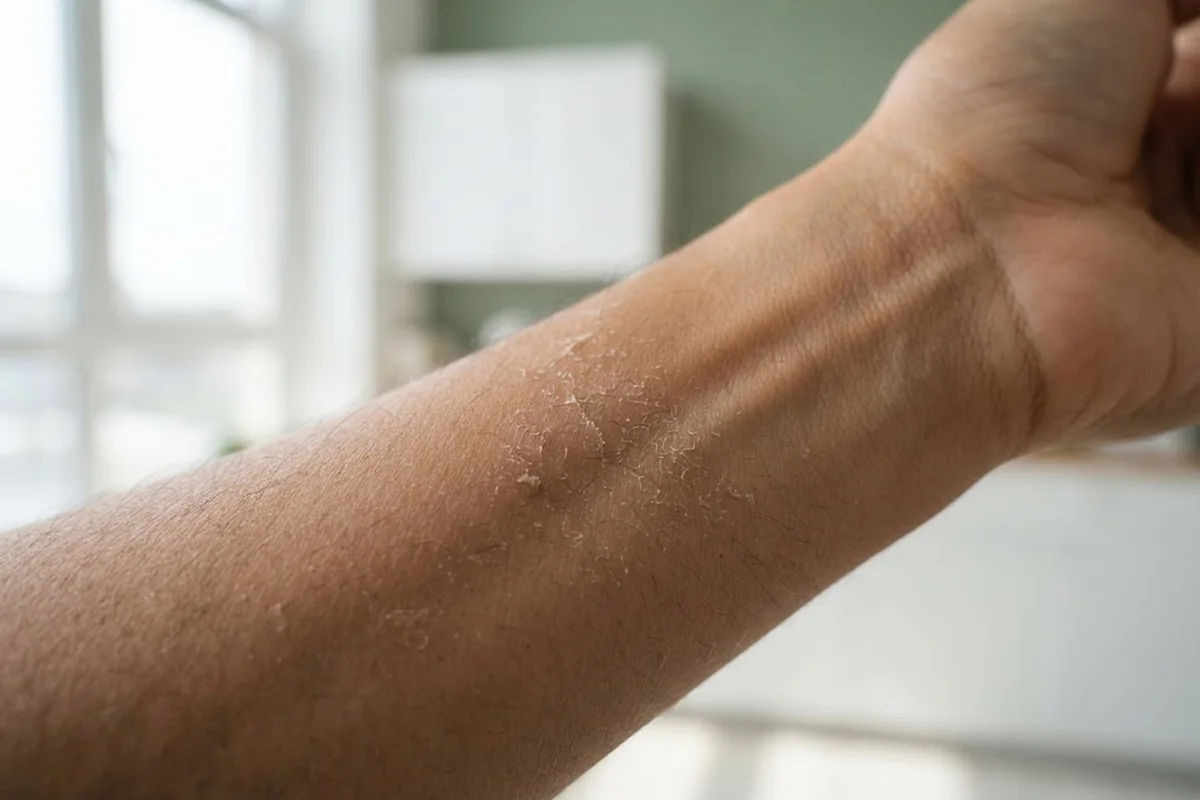
True dry skin looks rough or flaky because the surface lacks oils, not only water.
Dry and Dehydrated at the Same Time
Combination of both is very common. Skin that is naturally dry also loses water faster, and dehydration makes dry skin look worse. Treat both layers.
Step
What to use
Why
Cleanse
Cream or milk cleanser, lukewarm water
Does not strip lipids or surface water
Hydrate
Humectant serum on damp skin
Adds water to the upper layers
Replenish
Cream with ceramides and fatty acids
Rebuilds the lipid barrier
Seal
Thin balm over cream at night
Holds everything in
Protect
Sunscreen in the morning
Prevents more water and lipid loss
Layer in that order and keep it for four weeks without adding anything new. People who improve fastest are the ones who resist the urge to change products every few days.
Facials and Professional Options in Irvine
A facial can reset the skin, but it cannot fix a routine that keeps drying it out. For clients with dehydrated or dry skin, I look at three goals: gentle cleansing, light exfoliation to remove dead skin that blocks absorption, and a hydrating treatment that delivers humectants and lipids.
I choose the service after looking at the skin, not from the price list. If your barrier is irritated, I skip exfoliation and focus on calming and hydration. If your pores are congested, a gentler deep cleansing may be added. Do not book a peel or a strong exfoliating treatment for dehydrated skin without a consultation. The treatment can make the problem worse, as I explain in the peel recovery timeline.
Ask these questions at any consultation: Is my skin dry, dehydrated or both? Which of my current products might be drying it? Do I need a calming service first? How soon can I restart my actives? What should I do between facials? A good practitioner answers without pushing a package, and a first visit that ends with a simpler home routine is a sign of honest advice. Bring the products you use, in the bottles, because the ingredient lists tell me as much as the skin does.
For frequency, most people do well with a facial every four to six weeks, and my guide on how often to get a facial explains how to adjust. A series of closer visits can be useful in seasons of dry air.
How Season, Age and Lifestyle Change the Picture
Factor
What it does to your skin
What to adjust
Autumn and winter
Lower humidity and indoor heating increase water loss; dry skin gets drier
Richer cream, balm at night, humidifier, lukewarm showers
Summer and beach days
Sun, salt and chlorine strip lipids and water; skin can feel tight yet shiny
Gentle rinse after swimming, light humectant, daily sunscreen
Your 20s and 30s
Oil production is usually highest; dehydration often comes from over-treating acne
Do not strip. Use a gentle cleanser and a light hydrating gel
Your 40s and 50s
Oil production slows; hormonal shifts reduce lipids
Add ceramide creams and an evening balm; review exfoliation
Menopause and beyond
Skin makes less oil and holds less water; dryness is more constant
Switch to richer creams, hydrating facials and strict sun protection
Travel and flying
Cabin air is very dry; skin loses water in hours
Hydrating mist, humectant serum, thin balm, plenty of fluids
New medication
Some drugs, including isotretinoin and certain diuretics, dry the skin
Ask your prescriber; use a gentle routine and a rich moisturizer
Stress and poor sleep
Can disturb the barrier and make skin reactive
Simplify routine; sleep, rest and gentle products help
Skin does not stay in one category. Many of my clients in Irvine call themselves oily because they were oily at 18, and then they use the same harsh routine at 38 when their skin has changed. Check how your skin feels at the end of the day, not just how it looks in the morning. A pattern of tight cheeks and a shiny nose means your routine needs less stripping and more water. A pattern of rough patches everywhere means oils and creams.
What about the body, hands and lips?
The same logic applies below the neck. Hands and shins dry out first because they have fewer oil glands. Lips have none. Use a cream or ointment right after washing while the skin is damp, a balm on the lips and sunscreen on exposed areas. Hot showers and frequent hand washing are the usual culprits. If the skin on your hands cracks or itches persistently, a physician can check for contact dermatitis.
Does diet or water intake matter?
General health supports the skin, and severe dehydration shows in the body as well as the face. For most people, though, a serving of extra water does not turn a dehydrated face into a hydrated one. Skin dehydration is mostly about water loss through a weakened barrier. Fix the barrier first. A balanced diet with healthy fats can support skin lipids over time, and it is worth asking your physician if you suspect a deficiency.
Common Mistakes With Dry and Dehydrated Skin
Using oil on dehydrated skin and calling it done. Oil seals but does not add water.
Skipping moisturizer because the skin is oily. Oily skin can be dehydrated and needs a light cream.
Over-washing. Washing three or four times a day removes lipids and water.
Scrubbing flakes. Rubbing flaky skin makes it more irritated. Use a gentle exfoliant or none.
Hot water. It feels good and strips the barrier.
Layering every active. Fewer products, better results.
Drinking more water as the only fix. Good hydration matters, but drinking extra does not repair a damaged skin barrier by itself.
A last mistake is assuming the skin type you had at 20 is the skin type you have now. Hormones, weather, medication and stress change skin. Reassess every season and after any big change in your routine.
Dry skin usually needs a cream or balm with emollients. Dehydrated skin needs water first.
When It Is Not Just Dryness: See a Physician
Dry and dehydrated skin are cosmetic concerns in most cases. Some signs point to something else, and a doctor should look.
Red, scaly, itchy patches that do not respond to moisturizer after two weeks
Cracks that bleed or look infected
Sudden dryness together with fatigue, weight change or hair loss, which may suggest a thyroid issue
Intense itching at night
Dryness that began with a new medication
Skin that burns or swells when you apply products
Eczema, psoriasis, contact dermatitis, thyroid disease and some medications all cause dry skin. An esthetician can help with the routine, but diagnosis belongs with a physician or dermatologist.
If your concern is more about makeup, texture or a tired look, I can help in person. Book a free consultation at the Irvine studio. I will check your skin under magnification, ask about your products, and tell you plainly whether you need oil, water or a simpler routine.
A Month-by-Month Plan to Rehydrate Your Skin
Time
What to do
What to expect
Week 1
Switch to a gentle cleanser, stop scrubs and strong acids, add a humectant serum on damp skin and a simple moisturizer
Less tightness after washing; skin may still look dull
Week 2
Add a sealing balm at night if the skin is dry, humidifier in the bedroom
Flaking begins to settle
Weeks 3 to 4
Keep the routine; avoid new actives; consider one hydrating facial
Smoother surface, makeup sits better
Weeks 5 to 6
Reintroduce one active, such as niacinamide or low-strength retinol, every other night
Skin handles it comfortably; if not, pause
If nothing improves after six weeks, or if the skin gets worse, see a professional. In Orange County, a mild climate lulls people into thinking skin will cope on its own. Skin still needs water, lipids and protection.
Frequently Asked Questions
+ What is the difference between dry skin and dehydrated skin?
Dry skin lacks oil and is a skin type, with roughness and flaking. Dehydrated skin lacks water and is a temporary condition any skin type can have, with tightness, dullness and fine surface lines.
+ Can oily skin be dehydrated?
Yes. Oily skin can lack water while producing plenty of oil. Signs include shine with tightness after washing, dull skin and breakouts. A gentler cleanser and a light hydrating routine usually help.
+ How do I do the pinch test for dehydrated skin?
Gently pinch a small fold of skin on your cheek or the back of your hand and release. Fine lines that linger for a moment before smoothing suggest dehydration. It is a rough guide, not a diagnosis.
+ Does drinking more water cure dehydrated skin?
Staying hydrated supports general health, but extra water alone rarely fixes skin dehydration. Gentler cleansing, humectant serums applied to damp skin and a sealing moisturizer make more difference.
+ Which ingredients help dry skin and which help dehydrated skin?
Dry skin responds to ceramides, fatty acids, squalane and occlusives that rebuild and seal the lipid barrier. Dehydrated skin responds to humectants like hyaluronic acid and glycerin, followed by a moisturizer to hold water in.
+ Can I have dry and dehydrated skin at the same time?
Yes, and it is common in winter, in air conditioning and with age. Use a humectant on damp skin, a ceramide cream, and a balm at night, and protect with sunscreen in the morning.
+ What facial is best for dehydrated skin?
A hydrating facial is a common choice, with gentle cleansing, light exfoliation and humectant masks. Sensitive or over-exfoliated skin may need a calming facial first. A skin check helps choose the right one.
+ When should I see a doctor about dry skin?
See a physician for red, scaly or itchy patches that persist, cracked or bleeding skin, sudden dryness with other symptoms such as fatigue or hair loss, or skin that burns or swells when you apply products.
Licensed electrologist and cosmetologist with 20+ years of experience. Aida sees clients at Real Skin Beauty, 18021 Sky Park Circle, Suite N, Irvine, CA 92614.
Book a free consultation with Aida Khazieva at Real Skin Beauty in Irvine, CA. She will check your skin under magnification and tell you whether it needs oil, water or both.
This article is for informational purposes and reflects Aida Khazieva's practitioner experience. It does not replace a personalized medical consultation. Individual results vary.
Questions? Aida Answers Them All.
Visit our FAQ or book a free consultation to discuss your specific skin and hair concerns.