Facials for Sensitive Skin: What to Ask For and What to Avoid
By Aida Khazieva·Facials·12 min read·Real Skin Beauty, Irvine CA·Updated July 27, 2026
Sensitive skin is the most commonly mistreated skin type in standard facial protocols. A client tells the esthetician she has sensitive skin. The esthetician notes it, then proceeds through a standard protocol that includes steam, manual extractions, a glycolic acid exfoliant, and a fragrance-heavy mask. The client leaves red and reactive, and concludes that facials are not for her. The problem was not facials. It was a protocol designed for someone else's skin. This guide covers exactly what a sensitive skin facial should and should not include, and what to ask before you book.
Quick answer: Ask for a calming, barrier-focused facial with ingredients such as niacinamide, centella asiatica and green tea, and red LED light. Avoid steam, extractions, high heat, glycolic acid and aggressive massage, which can trigger flushing and flare-ups. Reactive or rosacea-prone skin often does better with facials every 6 to 8 weeks.
What Makes Skin Truly Sensitive vs. Reactive
Sensitive skin and reactive skin are terms that overlap in everyday conversation but describe meaningfully different underlying conditions that determine the appropriate professional approach. Understanding which category applies to your skin shapes everything from treatment selection to product choice to how frequently professional treatment is appropriate.
Truly sensitive skin is a genetic predisposition in which the skin's sensory nerve fibers are more densely distributed or more easily activated than in average skin. This heightened neurogenic sensitivity means the skin responds to stimuli that would not register in less sensitive skin: temperature changes, certain textures, pressure, and specific ingredients cause stinging, itching, or burning sensations even when no visible reaction occurs. Truly sensitive skin often has a thinner, more translucent quality, visible fine capillaries near the surface, and limited tolerance for environmental changes.
Reactive skin, by contrast, describes skin that produces visible inflammatory responses to triggers. Redness, flushing, hives, blotchiness, or breakouts that appear after product application, temperature change, UV exposure, or stress are the hallmarks of reactive skin. Reactive skin typically has a compromised or inadequate barrier function. The lipid-deficient stratum corneum allows irritants, allergens, and environmental factors to penetrate to living skin layers where they trigger immune and inflammatory responses. Reactive skin can improve significantly with consistent barrier repair; truly sensitive skin typically requires long-term management rather than correction.
Many clients have elements of both. The practical implication for professional facial treatment is that truly sensitive skin needs stimulus reduction above all else: the gentlest possible exfoliation, minimal product contact time, no high-temperature or high-intensity modalities, and very careful ingredient selection. Reactive skin needs barrier repair as its primary goal: ceramides, niacinamide, and lipid-replacing ingredients to gradually rebuild the barrier that is allowing inflammatory triggers to penetrate.
I ask every new client at Real Skin Beauty to describe their skin reactions in specific terms during consultation: what triggers reactions, what those reactions look like, how long they last, and whether they tend to occur in particular facial zones or across the whole face. This history changes the protocol I select more than any other piece of information I gather at the start of a client relationship.
Common Triggers in Standard Facial Treatments
Standard professional facial protocols are designed for normal-to-combination skin. Applied unchanged to sensitive or reactive skin, they contain multiple elements that are reliably triggering for this skin type. Clients who have had bad experiences with professional facials often attribute the reaction to facials generally when the actual cause was specific triggering elements in that standard protocol that a sensitive-specific protocol would not include.
The most common triggers in standard facials for sensitive skin are:
Steam. The heat of facial steam vasodilates blood vessels in the face, producing the flushing and sustained redness that sensitive skin is prone to. For rosacea-prone skin specifically, steam is one of the most reliable and rapid triggers for flares. Standard facials use steam for 5 to 10 minutes before extractions. Sensitive skin protocols eliminate it entirely.
Fragrance in professional products. Fragrance is the leading cause of allergic contact dermatitis in cosmetics globally. Professional facial products routinely include fragrance for client experience reasons. For sensitive and reactive skin, fragrance components produce irritation ranging from mild redness to full inflammatory reactions. I use fragrance-free products exclusively for sensitive skin clients.
High-concentration AHAs. Glycolic acid at 40 percent or above, and lactic acid at 50 percent or above, produce a meaningful inflammatory response in the treated skin as part of their mechanism of action. For normal skin with an intact barrier, this response is manageable. For sensitive or compromised barrier skin, the inflammatory response from a standard-concentration peel can produce sustained redness, burning, and in some cases, post-inflammatory pigmentation.
Manual extractions on reactive skin. Extractions involve direct pressure on follicular openings. On sensitive skin, particularly skin with active rosacea or eczema, this pressure triggers local inflammatory responses that can spread beyond the extracted area and produce redness that lasts 24 to 48 hours after the session.
Vigorous massage techniques. Standard facial massage increases circulation and skin temperature through friction. Both effects worsen flushing and redness in sensitive or rosacea-prone skin. A gentle effleurage with cool product application is more appropriate than deep pressure massage for this skin type.
Alcohol-based products. Used in many standard protocols as toners or surface preparations, alcohol-based products strip lipids from the barrier and produce immediate stinging and redness on sensitive skin. They have no appropriate role in sensitive skin treatment.
Essential oils. Lavender, eucalyptus, tea tree, peppermint, and other essential oils are frequently included in professional facial products for their scent and perceived therapeutic benefit. Many essential oil components are potent sensitizers that produce contact reactions in sensitive skin at concentrations well below what would cause visible reactions in normal skin.
Fragrance Is the Biggest Hidden Trigger
When a sensitive skin client tells me a facial made their skin worse, the first thing I ask is whether they know if the products used were fragrance-free. Fragrance is present in the majority of professional facial products under names including "parfum," "fragrance," and individual essential oil components listed separately in ingredient lists. Specifically requesting fragrance-free products before your appointment is one of the most effective protective measures for sensitive skin in any professional setting.
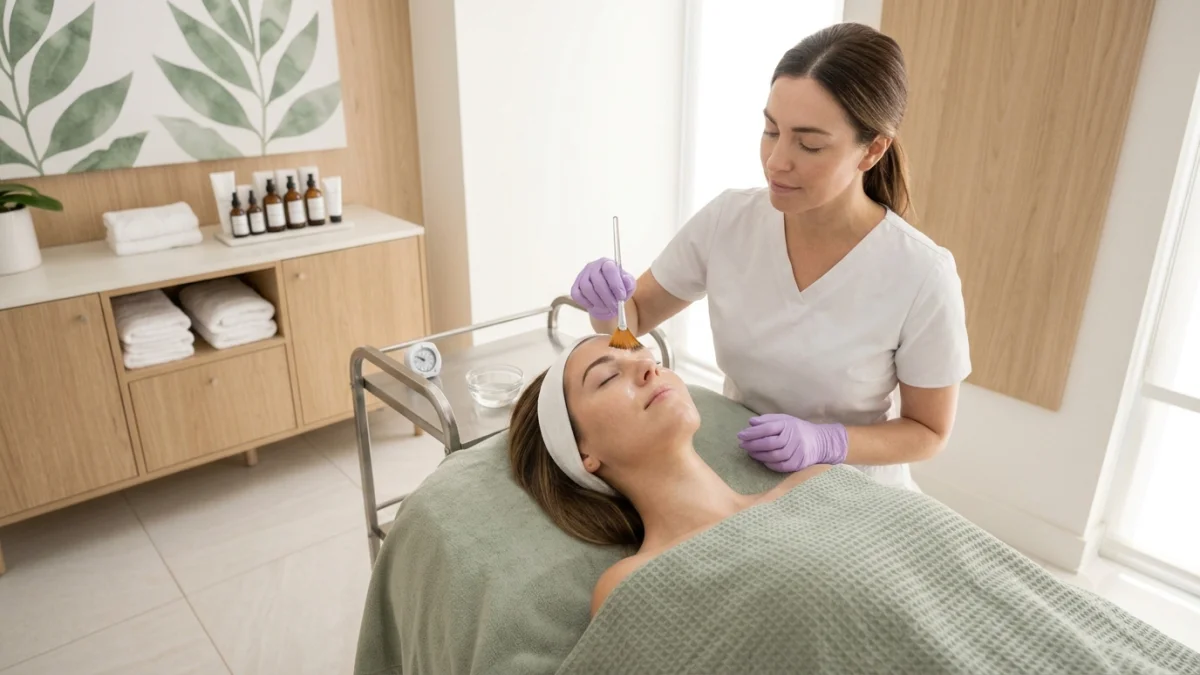
Sensitive skin needs a slower, gentler protocol and products chosen for the individual client.
Ingredients That Calm and Protect Sensitive Skin
The right professional facial for sensitive skin is built around a specific set of ingredients with documented calming, barrier-supporting, and anti-inflammatory properties. These ingredients reduce the inflammatory response, rebuild the compromised barrier that allows triggers to penetrate, and support the skin's own regulatory functions rather than overriding them with aggressive chemical action.
Centella asiatica (Cica). One of the most extensively studied calming ingredients in contemporary skin care, centella asiatica contains triterpenoids including asiaticoside, asiatic acid, and madecassoside that inhibit inflammatory cytokines, promote wound healing, and stimulate collagen synthesis. In professional facial serums and masks, centella reduces the degree of reactive redness during and after treatment and supports barrier recovery in compromised sensitive skin. I include centella asiatica serums in every sensitive skin protocol I perform.
Niacinamide. Vitamin B3 in skin care reduces transepidermal water loss by increasing ceramide production in the stratum corneum, directly addressing one of the primary vulnerability factors in reactive skin. It also reduces the inflammatory signaling that drives redness and blotchiness, and has demonstrated the ability to reduce overall skin reactivity with consistent use over 8 to 12 weeks. Niacinamide at 5 to 10 percent is a core ingredient in my sensitive skin serums.
Ceramides. The compromised barrier of reactive skin is lipid-deficient. Ceramides are the primary lipid family of the stratum corneum, making up over 50 percent of its total lipid content. Topical ceramide application directly replenishes what is missing, closing the gaps in the barrier structure through which irritants enter and moisture escapes. Professional ceramide-rich masks provide a concentrated dose of this barrier repair in a single session.
Beta-glucan. A polysaccharide derived from oats and other sources, beta-glucan has potent anti-inflammatory and skin-soothing properties. It activates macrophages to support wound healing, reduces inflammatory cytokine production, and forms a film on the skin surface that soothes and protects during and after treatment. It is one of the gentlest active ingredients available for professional use on sensitive skin.
Allantoin. Derived from comfrey root, allantoin promotes cell turnover through gentle keratolysis without the irritation potential of acids, and has significant skin-soothing properties. It appears in many professional calming formulations for its ability to reduce redness and support healing of minor irritation without any meaningful sensitization risk.
Green tea extract (EGCG). Epigallocatechin gallate from green tea is a potent antioxidant with documented anti-inflammatory properties at the skin surface. It reduces the inflammatory response to UV and environmental stressors that is disproportionately strong in sensitive skin and provides antioxidant protection that reduces the cumulative barrier damage that drives ongoing reactivity.
Red LED light therapy. Not a topical ingredient but one of the most effective professional tools for sensitive and rosacea-prone skin. Red light at 630 to 660 nm reduces inflammatory cytokine production, supports mitochondrial function in skin cells, and promotes the healing response without any thermal or chemical stimulation of the skin. I include it in every sensitive skin session as a concluding treatment step.
Rosacea vs. Sensitive Skin: Different Problems, Different Approaches
Rosacea and sensitive skin share symptoms, particularly redness and reactivity, but they have different underlying mechanisms and require meaningfully different professional treatment approaches. Treating rosacea-prone skin with a standard sensitive skin protocol, or treating sensitive skin with a rosacea-specific protocol, produces suboptimal results in both cases. This distinction matters practically because rosacea has specific triggers that sensitive skin without rosacea may tolerate without issue.
Rosacea is a chronic inflammatory vascular condition characterized by recurrent flushing, persistent redness, visible blood vessels (telangiectasias), and in some subtypes, papules and pustules resembling acne. The underlying mechanism involves abnormal vasodilation of facial blood vessels in response to a wide range of triggers, combined with dysregulated innate immune responses and, in many cases, elevated skin surface mite (Demodex) populations. Rosacea is not a barrier deficiency condition primarily; it is a vascular and immune dysregulation condition that happens to produce barrier compromise as a secondary effect of chronic inflammation.
Sensitive skin without rosacea is primarily a barrier compromise condition. The skin reacts because its insufficient barrier allows irritants to penetrate to immune-active layers. Address the barrier, and reactivity typically reduces significantly over months of consistent treatment. Rosacea, by contrast, does not resolve with barrier repair alone because the vascular dysregulation that drives flushing and redness is not caused by barrier compromise. It requires management of its specific triggers and, in many cases, dermatological treatment for the vascular component alongside the professional skin care.
The practical implications for professional facial treatment:
Both conditions require fragrance-free, alcohol-free products and no high-concentration acids
Rosacea requires specifically no steam, no heat-generating massage, and avoidance of any treatment that vasodilates facial vessels
Sensitive skin without rosacea may tolerate gentle steam in short duration; rosacea skin should not receive steam under any circumstances
Rosacea skin requires specific avoidance of Demodex-feeding ingredients (many fatty acids and oils) when Demodex overpopulation is a confirmed component of the presentation
Both benefit from LED red light therapy and calming barrier-support masks, but the treatment sequencing differs based on the primary concern at each session
Rosacea clients require discussion of their current dermatological management, including any prescription azelaic acid or metronidazole, before professional treatment because these medications change how the skin responds to professional facial interventions
At my Irvine studio, I ask all clients who describe redness and reactivity whether they have a formal rosacea diagnosis from a dermatologist. Clients who have been told they have rosacea get a different protocol than clients who describe general sensitivity without the specific vascular and flushing patterns that characterize rosacea. Getting this right produces meaningfully better outcomes and avoids the facial-triggered flares that make some rosacea clients avoid professional skin care entirely when the correct protocol would actually help them.
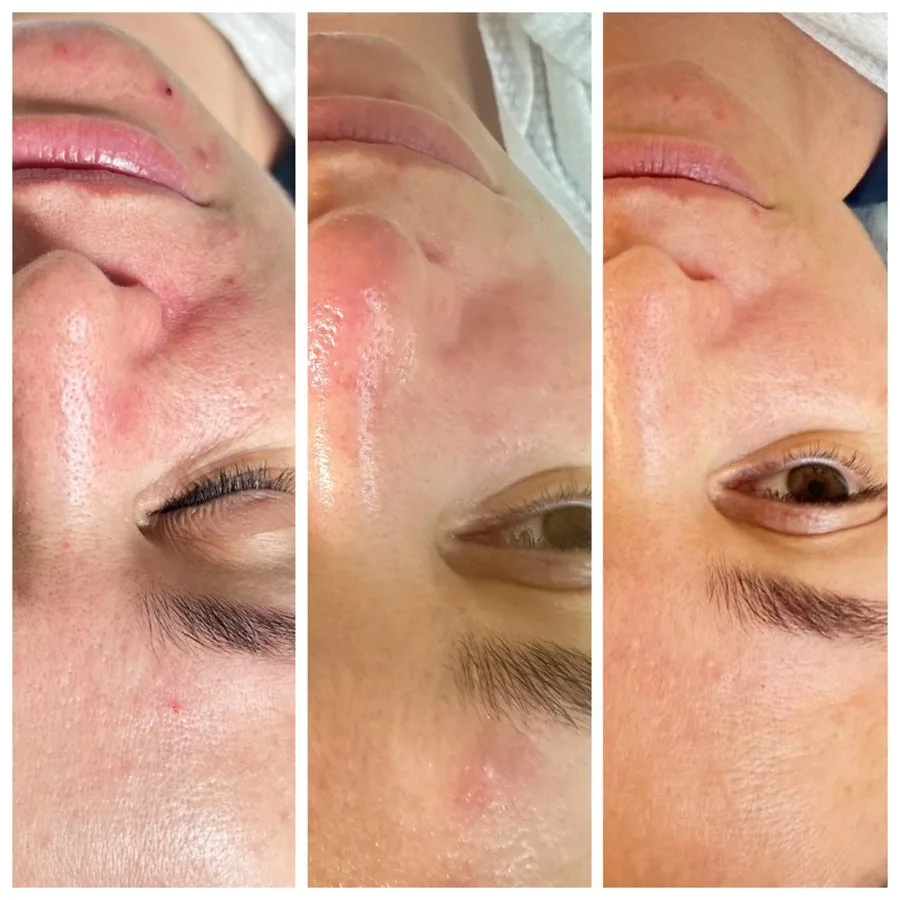
Redness-prone skin before and after a calming treatment series. Individual results vary.
What a Sensitive-Skin-Safe Professional Facial Looks Like
A professional facial genuinely designed for sensitive or reactive skin looks different from a standard facial in almost every step. Knowing what those differences are lets you evaluate whether the protocol you are receiving is actually appropriate for your skin or whether you are receiving a standard protocol with a few modifications.
A correctly designed sensitive skin facial at Real Skin Beauty follows this structure:
Consultation and trigger review. Before any product touches the skin, I review the client's specific reactions, known triggers, current home care, and any relevant medical history including diagnosed inflammatory conditions. This takes 5 to 10 minutes and shapes every decision in the session that follows.
Gentle double cleanse with fragrance-free, sulfate-free cleanser. Cool or tepid water temperature. No rotating brush, no exfoliating cleanser, fingertip application only with minimal pressure.
Enzyme or low-concentration lactic exfoliation (optional, condition-dependent). For sensitive skin that is not currently in a reactive phase, a brief enzyme peel or 20 percent lactic acid peel applied for 1 to 2 minutes provides the cell turnover benefit needed for product absorption without the barrier disruption of standard acid peels. For skin in an active flare, exfoliation is skipped entirely.
Calming serum application. Centella asiatica, niacinamide, beta-glucan, or hyaluronic acid depending on the primary concern at that session. Applied cool, patted gently without friction.
Limited targeted extractions (if skin is stable and not actively reactive). Only on non-inflamed areas, with pre-extraction softening and minimal pressure. This step is skipped when the skin is reactive, red, or in a flare period.
Barrier mask. A ceramide-rich, fragrance-free cream or gel-pack mask applied for 10 to 15 minutes. No clay, no active acid components, no fragranced ingredients.
LED red light therapy. 10 to 15 minutes of 630 to 660 nm red light applied after masking to reduce inflammation, support healing, and close the treatment with a calming modality rather than an active one.
Fragrance-free SPF 50 mineral sunscreen to close. Applied gently before the client leaves the treatment room.
What to Say Before You Book
When booking at any studio, ask specifically: "Do you have a sensitive skin protocol and does it exclude steam, fragrance, and high-concentration acids?" A studio that answers yes confidently and can explain what the protocol includes is prepared to treat your skin appropriately. A studio that says "we can just skip a few things from the regular facial" is telling you they do not have a dedicated protocol and are likely to miss triggers you have not specifically named.
Steam: Yes or No for Sensitive Skin?
Steam is one of the most debated components of professional facial treatment for sensitive skin, and the debate exists partly because the answer is not the same for every client in the sensitive skin category. My position on steam for sensitive clients is based on the specific type and mechanism of their sensitivity rather than a blanket rule that applies to everyone.
For sensitive skin without rosacea or active inflammatory conditions, very brief, cool or warm (not hot) steam at a distance for 2 to 3 minutes is sometimes tolerable and can be useful for softening the skin surface before gentle extractions. I assess client response by watching for flushing during the steam application and stop immediately if redness increases beyond a mild baseline pink. If a client has never had a steam facial, I use a patch-style steam exposure (brief, directed to a small area) before applying it to the full face, and I always use lower temperatures than standard steam protocols recommend.
For rosacea-prone skin, steam is contraindicated without qualification. The mechanism of rosacea involves chronically dilated facial blood vessels that are triggered to flush by heat, among other stimuli. Steam raises facial skin temperature reliably and rapidly. Even a brief steam application will trigger vasodilation and flushing in active rosacea, potentially provoking a flare that lasts hours to days after the appointment. No potential benefit from softening pores or improving product penetration justifies this risk. All steam is eliminated from rosacea client sessions at my studio.
For eczema-affected skin in or near the treatment area, steam is similarly contraindicated during active flares. The heat and humidity can worsen acute eczema presentations. During remission periods, very brief, low-temperature steam may be appropriate but requires individual assessment.
The alternative to steam for sensitive skin that needs some degree of barrier softening before extraction or product application is cool or room-temperature hydrating sprays of thermal water or aloe-based mist. These provide surface hydration without the thermal stimulation of steam and are well-tolerated by essentially all sensitive skin types including rosacea.
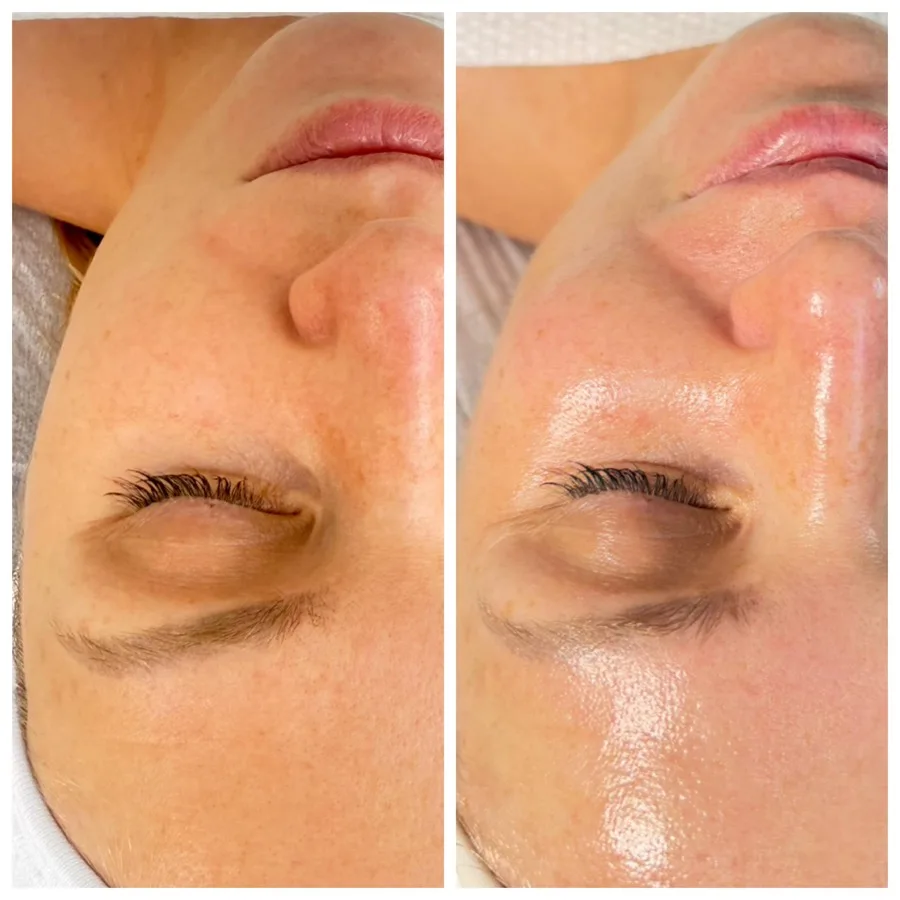
Dull, tired skin before and after a brightening facial at Real Skin Beauty.
Extractions: When They Are Safe and When to Skip
Extractions in professional facials clear the contents of congested pores, blackheads, and closed comedones. For oily and combination skin with intact barrier function, professional extractions are a significant component of the facial benefit and are generally well-tolerated. For sensitive skin, the appropriateness of extractions depends on the skin's current state, the type of congestion present, and the technique used.
Extractions are appropriate for sensitive skin when all of the following conditions are met:
The skin is not currently in an active reactive phase, meaning no elevated baseline redness, no active eczema flares, no rosacea flare in progress
The congestion is located in areas that are not actively inflamed, not near visible broken capillaries, and not over areas of eczema or psoriasis
The extraction technique uses minimal pressure, wrapping tissue around the fingertips rather than fingernails, and releases immediately if the comedone does not clear with gentle pressure
The skin has been properly softened with a short hydrating phase before extractions begin, reducing the force required and the resulting micro-trauma
Extractions should be skipped entirely for sensitive skin when:
The skin is currently flushed or red above its baseline
Active rosacea papules or pustules are present (these are not comedones and should not be extracted)
The client reports that past extractions have caused redness that lasted more than 2 hours or produced new breakouts in the following days
Eczema or psoriasis is active in or near the planned extraction area
The client is on blood-thinning medications that increase bruising risk
When extractions are appropriate but need to be more limited than standard, I use the rule of minimal necessary intervention: clearing only the most superficial and most visibly problematic congestion, leaving deeper or more difficult comedones rather than applying the additional pressure needed to clear them. The marginal benefit of clearing a stubborn comedone does not outweigh the inflammatory cost for sensitive skin that is not resilient enough to recover from forceful extraction without reaction.
Building Long-Term Skin Resilience Through Consistent Care
One of the most encouraging things I tell sensitive skin clients is that with the right consistent approach, their skin's reactivity can genuinely reduce over time. True rosacea requires ongoing management rather than resolution, but general sensitive or reactive skin that is being driven primarily by barrier compromise responds to barrier repair. A skin that is reacting to half a dozen triggers today can be reacting to one or two of them 6 months from now with consistent professional and home care support.
The mechanism is straightforward: barrier repair reduces the penetration of triggers to immune-active skin layers. As the barrier strengthens, the threshold for triggering a reaction rises. Mild stimuli that currently cause visible reactions fall below the reactive threshold. The skin becomes measurably less reactive in response to the same stimuli that previously caused significant reactions. Clients frequently describe this change as their skin "calming down" over time, which is an accurate description of what the biology is doing.
Building that resilience requires three things: consistent professional treatment at appropriate intervals, consistent home care that supports the barrier between sessions, and the patience to allow the process to unfold over the months it takes for skin biology to change meaningfully.
The professional treatment component for resilience-building focuses on barrier repair at every session: ceramide masks, niacinamide serums, and LED red light therapy rather than active acids or aggressive modalities. The home care component mirrors this: a gentle cleanser, a ceramide and niacinamide-containing moisturizer morning and night, mineral SPF 50 every morning, and no active ingredients until the barrier has stabilized enough to tolerate them without reaction. I introduce actives like retinol and vitamin C gradually once the baseline reactivity has reduced, typically after 3 to 4 months of consistent gentle care.
My Orange County clients who commit to this approach consistently over 6 months see a qualitative change in their skin that they describe as their skin finally feeling like it belongs to them: comfortable, predictable, and responsive to products in the way they expected before reactivity made skin care feel impossible. For a consultation to build a plan tailored to your specific sensitivity, visit our facials page to see available treatments, book a consultation directly, or check our FAQ for answers to common sensitive skin questions.
Frequently Asked Questions
What is the safest facial type for rosacea? +
A calming, barrier-focused facial that eliminates all thermal stimulation and uses only fragrance-free, anti-inflammatory ingredients. The core elements are centella asiatica and niacinamide serums, a ceramide-rich mask, and red LED light therapy at 630 to 660 nm. Steam, extractions over inflamed areas, high-concentration acids, vigorous massage, and any heat-generating modality are all contraindicated for rosacea and should be absent from the protocol entirely.
Is dermaplaning safe for sensitive skin? +
It depends on the specific sensitivity type. Dermaplaning is physical exfoliation using a surgical-grade blade to remove dead cells and vellus hair from the skin surface. Many clients with general sensitivity but no active inflammatory conditions tolerate it well and find it less irritating than chemical exfoliants. Rosacea skin with visible vessels, active flushing, or papules should avoid dermaplaning entirely due to the risk of physical stimulation triggering a vascular response and the potential for blade contact to worsen fragile capillaries.
Why did my sensitive skin break out after a standard facial? +
Standard facial protocols regularly include elements that trigger reactions in sensitive skin: steam that raises skin temperature and provokes flushing, manual extractions that traumatize sensitive tissue, high-concentration acids that produce inflammatory responses the barrier cannot manage, fragrance in professional products, and heavy moisturizing masks that occlude irritated follicles. A sensitive-specific protocol eliminates all of these elements and replaces them with calming, barrier-supporting alternatives. The reaction was to the protocol, not to facials as a category.
What should I tell an esthetician before a facial if I have sensitive skin? +
State clearly that you have sensitive or reactive skin and list your known triggers specifically. Ask what their sensitive skin protocol includes and confirm explicitly that the products are fragrance-free, that no high-concentration acids are planned, that steam will not be used, and that extractions will be limited to non-inflamed areas. If the esthetician cannot answer these questions confidently, ask to see the product ingredients or request that they use only the gentlest options in their inventory.
Can regular facials help reduce skin sensitivity over time? +
Yes, with the right approach. Consistent gentle facials using ceramide masks, niacinamide serums, and LED red light therapy progressively rebuild the compromised barrier that drives most reactive skin conditions. As the barrier strengthens, the threshold for triggering visible reactions rises and the skin becomes measurably less reactive to the same stimuli over 3 to 6 months of regular appropriate treatment. This applies to barrier-driven reactivity; true rosacea requires ongoing management rather than cure.
Licensed electrologist and cosmetologist with 20+ years of experience. Aida sees clients at Real Skin Beauty, 18021 Sky Park Circle, Suite N, Irvine, CA 92614.
Book a free consultation with Aida Khazieva at Real Skin Beauty in Irvine, CA. We will assess your specific sensitivity, identify your triggers, and design a professional facial protocol that your skin will actually respond well to.
This article is for informational purposes and reflects Aida Khazieva's clinical experience. It does not replace a personalized medical consultation. Individual results vary.