Electrolysis on Dark Skin: Is It Safe, and How to Avoid Dark Marks
Yes. Electrolysis can be used on every skin tone, including deep brown and black skin, because it destroys the follicle with current and does not depend on contrast between hair and skin the way laser does. The real risk on darker skin is not that it fails. It is post-inflammatory hyperpigmentation, a dark mark that can follow irritation. With low starting settings, a test spot, no picking and daily sun protection, that risk can be lowered, though not removed. Here is how I approach it in my Irvine studio.
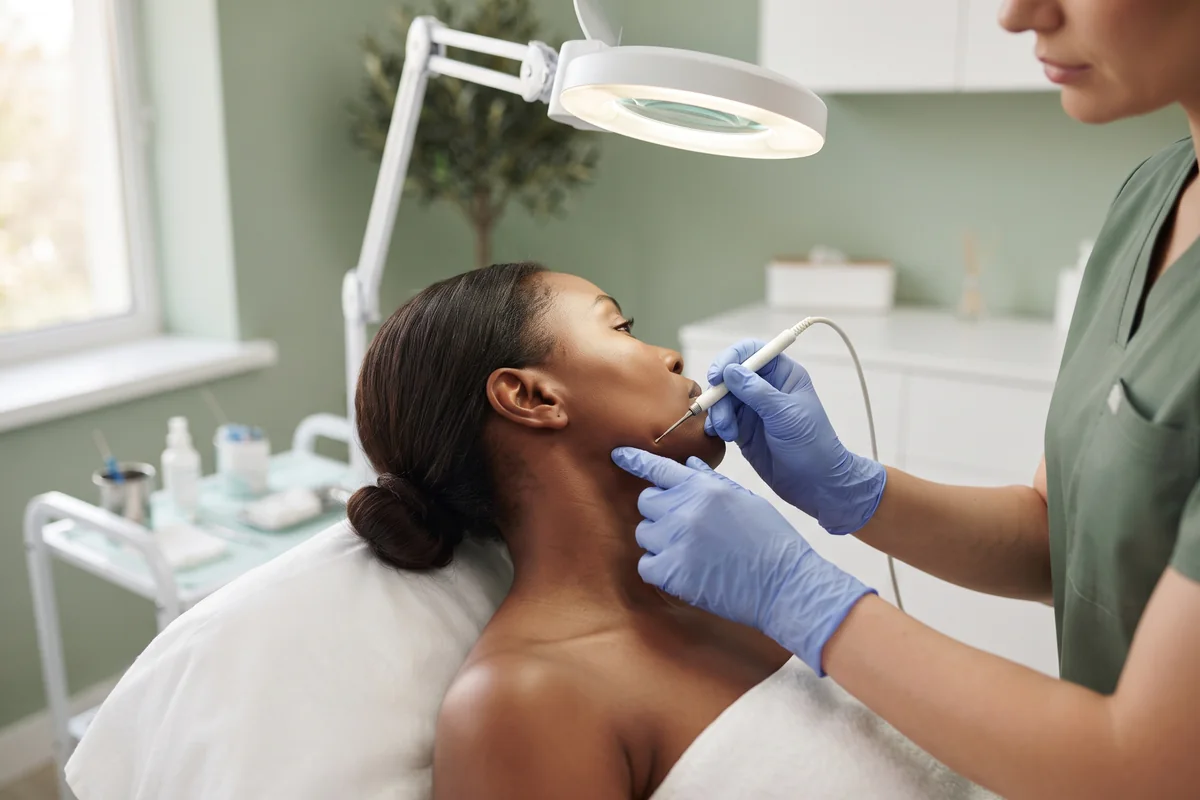
- Electrolysis is an FDA-recognized permanent hair removal method and does not need pigment contrast, so it suits all skin tones.
- The main risk on darker skin is post-inflammatory hyperpigmentation (dark marks), plus a smaller chance of keloid scarring in people prone to it.
- Lower the risk: test spot first, conservative settings, no picking, no sun on healing skin, gentle aftercare.
- Tell your electrologist about past dark marks, keloids, melasma, isotretinoin and any bleaching or fading products.
Does Electrolysis Work on Dark Skin?
Yes, and this is the main reason I recommend it to people with deeper skin tones who were told laser is not an option. Electrolysis treats one follicle at a time. A fine, sterile probe slides in beside the hair, and a small amount of current damages the cells that grow it. The machine never looks at color. It does not matter whether the hair is black, brown, gray, red or blonde, and it does not matter whether the skin around it is pale or very dark.
Laser works differently. It sends light that is absorbed by pigment, which means it needs a dark hair against lighter skin to aim at. On deep brown skin the pigment in the skin competes with the pigment in the hair, and the light can heat the skin itself. That is why many laser clinics limit or decline treatment on darker tones, and why some people arrive at electrolysis after laser gave them burns, dark patches or no change at all. You can read the full comparison in electrolysis vs laser.
Electrolysis is recognized by the FDA as a permanent hair removal method. That recognition does not depend on skin tone. What does change with skin tone is how carefully the treatment has to be adjusted and how seriously aftercare needs to be taken, and that is what the rest of this article covers.
Why Skin Color Matters Less Than You Might Expect
Skin tone comes from melanin, and melanin is the thing that makes light-based devices tricky. Electrolysis bypasses that problem completely because the energy is delivered inside the follicle through the probe. The skin surface is not the target.
The skin is still affected, though. Every insertion is a tiny controlled injury, and the skin heals it. In skin with more active pigment cells, healing sometimes comes with extra pigment. That is the real topic of this article.
What Are Dark Marks After Electrolysis?
The dark marks people worry about have a name: post-inflammatory hyperpigmentation, often shortened to PIH. It happens when skin is inflamed or injured and the pigment cells respond by producing more melanin in that spot. The result is a flat patch or dot that is darker than the surrounding skin. It is not a scar in the usual sense, because the skin texture stays smooth.
PIH can follow acne, eczema, insect bites, waxing, shaving bumps, burns and many other things. Electrolysis is one more possible trigger, and darker skin tones are more prone to it than lighter ones. Dermatology references describe this pattern widely. It is a tendency, not a certainty, and many people with deep skin go through a full course of electrolysis with no marks at all.
Two other terms are worth knowing:
- Hypopigmentation: a lighter patch. It is less common after electrolysis and tends to be linked to heavier injury to the skin.
- Keloid or raised scar: thick scar tissue that grows beyond the original wound. People with a personal or family history of keloids need a physician's input before treatment, because even tiny wounds can trigger one in a susceptible person.
How Long Do Dark Marks Last?
When PIH happens, it commonly fades over weeks to months without treatment, and deeper marks can take longer. Sun exposure can darken it and slow fading. A physician or dermatologist can suggest fading options if a mark stays. I do not diagnose or prescribe, and I will tell you straight away if something on your skin looks like it needs a medical opinion. My guide to how to fade hyperpigmentation covers the general options.
Why Darker Skin Is More Likely to Mark
Pigment cells, called melanocytes, exist in every skin tone. In deeper skin they are more reactive and produce more melanin when they receive an inflammatory signal. A small injury that would pass without notice on fair skin can leave a visible dot on brown skin. This is a biological pattern, not a flaw in the person and not a sign that electrolysis was done wrongly.
Several things raise the odds on any skin, and they matter more when the skin is prone to darkening:
| Factor | Why it raises the risk | What helps |
|---|---|---|
| --- | --- | --- |
| High energy settings | More heat or chemical reaction in the follicle means more inflammation | Start low and increase only if needed |
| Repeated treatment of the same spot | Skin gets no time to settle | Space out visits and treat in a pattern |
| Picking scabs | Reopens the wound and restarts inflammation | Leave scabs alone, they fall off on their own |
| Sun on healing skin | UV stimulates pigment cells already on alert | Cover or protect treated areas |
| Plucking or waxing between visits | Adds irritation and distorts follicles | Trim only, as advised |
| Active ingredients too soon | Retinol and acids sting and inflame healing skin | Wait until skin is calm |
| Existing melasma or recent sun damage | Pigment cells are already overactive | Mention it at the consultation |
None of these is dramatic on its own. The risk comes from stacking several of them together, for example a hot week outdoors right after a visit, with a retinol serum on top.
How I Lower the Risk in the Studio
Every practitioner has their own method. This is my general approach on skin that tends to darken, and it is a description of principles rather than a promise of a result.
1. A Real Consultation First
I ask whether you have had dark marks after waxing, shaving, acne, bug bites or earlier hair removal. Your answer is useful, because skin that has marked easily before is likely to mark again. I also ask about keloids, melasma, medications and any fading creams, including prescription ones. A free in-studio consultation takes about 30 minutes, and that conversation is part of it.
2. A Test Spot
On darker skin I prefer to start with a small test area in a less visible location, then look at how the skin responds over the following days before committing to a larger zone. It costs time at the start and often saves trouble later. If you are in a hurry before an event, tell me, and we can decide together whether a test spot makes sense.
3. Conservative Settings and the Right Modality
Electrolysis has three modalities: galvanic, thermolysis and blend. I choose based on the hair and on how the skin reacts, and I begin on the gentle side. Heat from high-intensity thermolysis can irritate more, and the slower chemical action of galvanic is gentler on the surface in some cases. There is no single best choice, and I explain my reasoning at the visit. The detail is in the three types of electrolysis explained.
4. Fine Probes and Precise Insertions
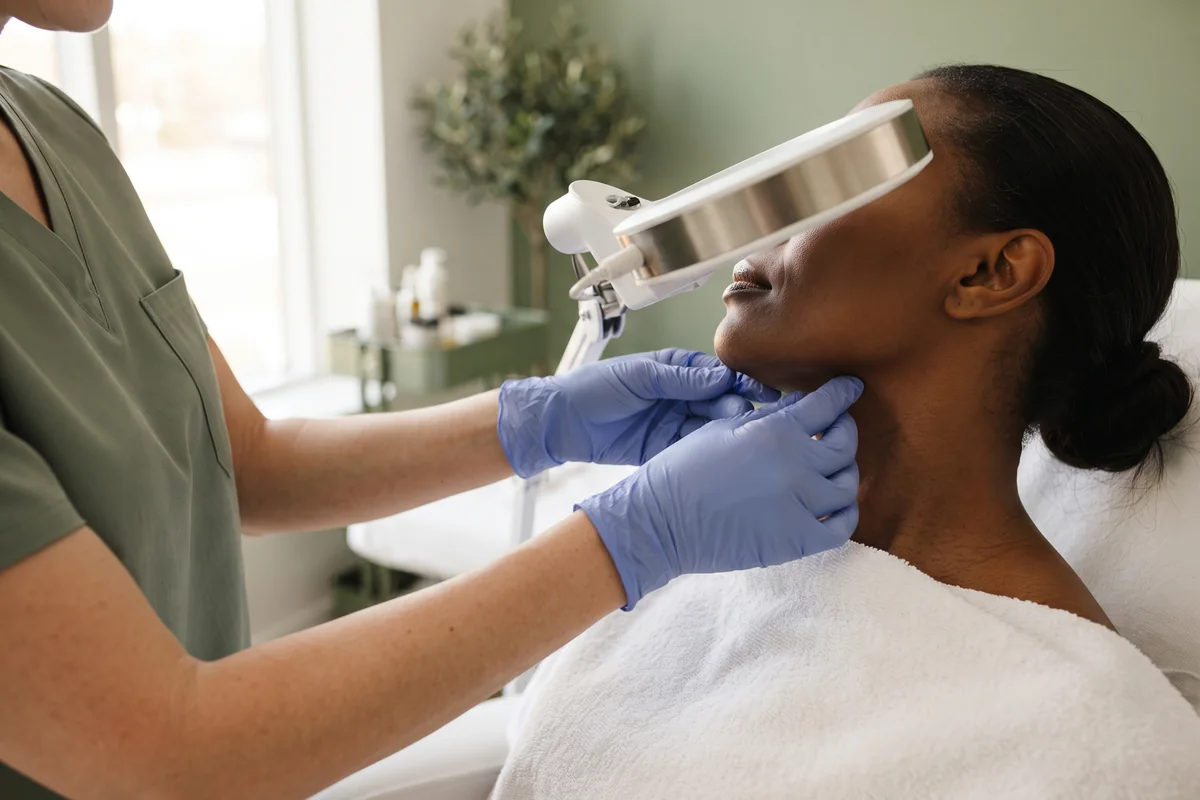
An accurate insertion that follows the hair straight down into the follicle causes less trauma than a rushed one. Good lighting and magnification are not decoration. They are what keep the skin around the hair untouched.
5. Smaller Sessions with Breaks
Treating every hair in a dense patch in one go can leave the skin inflamed. Spreading treatment across the area and across visits gives the skin time to settle between rounds. It may add visits, and for some skin types that tradeoff is worth it.
6. Calm Aftercare Instructions
Before you leave, I go through what to do at home, in writing if you like. The full routine is in electrolysis aftercare. The main points for darker skin are in the next section.
Aftercare for Dark Skin: The Part You Control
I cannot follow you home, so what happens in the first days depends on you. These steps matter on every skin tone, and a bit more on skin that tends to darken.
- Do not pick or scrub. Tiny scabs are normal for a few days. Picking is one of the most common and most avoidable causes of marks.
- Keep the area clean. Wash gently with a mild, fragrance-free cleanser. Pat dry with a clean towel.
- Avoid sun. Cover treated skin or stay in the shade for the first days. Once healed, use sunscreen daily on any exposed treated area.
- Skip actives. No retinol, glycolic or salicylic acid, scrubs or exfoliating brushes until the skin is calm. Ask me when it is safe to restart.
- Skip heat and friction. Hot tubs, saunas, steamy workouts, tight collars and chafing clothes can irritate fresh follicles.
- Do not apply random lightening products. If something looks dark, send me a photo first. Some fading products are strong and can irritate treated skin, so use them only under a physician's guidance.
- Moisturize simply. A plain, fragrance-free moisturizer is enough for most people.
When to Contact Me
Call or message if you see blistering, pus, spreading redness, worsening swelling after 48 hours or fever. Those are uncommon, but they need prompt attention. If you notice a patch turning darker at day 5 or day 10, send a photo. Early advice on skin that is darkening can help, and it is far easier to talk about it than to guess.
Sunscreen and Sun Habits
Sun is the biggest controllable factor in pigment changes. UV light stimulates melanocytes, and healing skin is already stimulated. A tan or sunburn on treated skin makes marks both more likely and slower to fade.
Plenty of people with deeper skin were told they do not need sunscreen. That is a myth. Deeper skin burns less easily, but it still gets sun damage and it still gets pigmentation that worsens with UV. Choose a broad-spectrum sunscreen you will actually wear daily. Some people with deep skin dislike a white or gray cast from mineral formulas, and there are tinted mineral options as well as modern chemical formulas without a cast. I do not recommend brands, but I am happy to talk through what to look for. A skin consultation can cover this as well.
On the face, hat and shade help more than people think. On the legs, arms and underarm, loose clothing in the first days is enough. If you spend a lot of time outdoors in Orange County, plan your treatment calendar around summer beach weeks when you can. You do not have to hide indoors, but a week at the beach right after a leg visit is the type of plan I would ask you to change.
What to Tell Your Electrologist Before You Start
A prepared client gets a better plan. These details change how I treat you.
| Tell your electrologist | Why it matters |
|---|---|
| --- | --- |
| Past dark marks after waxing, shaving, acne or bug bites | Shows how reactive your pigment cells are |
| Personal or family history of keloids | May require a physician's input before any treatment |
| Melasma or uneven pigment on the face | Inflammation can worsen it, so settings and timing are adjusted |
| Isotretinoin or recent peels | Skin may be thin and slow to heal, ask your prescriber |
| Prescription or over-the-counter fading creams | Some irritate skin and should be paused on the treated area only on medical advice |
| Hormonal conditions such as PCOS | Hair may be more active and need a longer series |
| Upcoming sun, travel or events | Helps plan visit timing around healing |
If melasma is part of the picture, read the melasma treatment guide as well. Melasma is hormone-linked and sensitive to heat and sun, and it deserves its own plan with your physician or dermatologist.
Common Myths About Dark Skin and Hair Removal
- Myth: Electrolysis does not work on dark skin. Fact: it works on every tone. The method does not rely on pigment contrast.
- Myth: Laser is just as good on dark skin. Fact: laser can work on some deeper skin tones with certain devices, but it needs dark hair, and it has a higher risk of pigment problems on deeper tones. It also does nothing for blonde, gray or red hair. See electrolysis for blonde, gray and red hair.
- Myth: Everyone with dark skin will get dark marks. Fact: many do not. It is a tendency, and careful technique and aftercare lower the odds.
- Myth: Marks are permanent scars. Fact: PIH usually fades over time, though it can take months.
- Myth: If it marks, you should stop forever. Fact: a mark is information. It is often a reason to lower settings, space visits or protect the skin better, and not necessarily a reason to quit. Decide together with your electrologist and, if needed, your physician.
- Myth: Sunscreen is optional for dark skin. Fact: sun is a key trigger for pigmentation on every tone.
Hair Growth, Ingrown Hairs and Dark Skin
Many people with deeper skin and coarse, curly hair deal with ingrown hairs and razor bumps, medically called pseudofolliculitis barbae when it appears in the beard area. Curved hairs can re-enter the skin, trigger inflammation and then leave dark spots. Removing the follicle ends the cycle, which is one reason electrolysis is often chosen for the neck, jawline and bikini line.
Be aware that curved follicles are harder to treat than straight ones. A curved follicle means the probe has to follow the bend, and a skilled electrologist uses technique and patience to do it. In some people the early visits involve more skipped or missed hairs, and a slightly longer series. I cannot promise a number of visits, and I would be wary of anyone who does. You can read more in how many electrolysis sessions you may need and ingrown hairs and when electrolysis helps.
If you have active bumps or dark marks from ingrowns today, do not squeeze them. Stop shaving the affected area for the time being, ask your electrologist how long to let hair grow, and bring the question to your consultation. Shaving, plucking and waxing all irritate the same skin that electrolysis later treats.

What a Course of Treatment on Dark Skin Looks Like
The general shape is similar to anyone else's, with more attention to spacing and healing. This is an outline, not a promise.
| Stage | What usually happens | What to watch |
|---|---|---|
| --- | --- | --- |
| Consultation | Skin and hair review, history, questions about marks and keloids | Be open about past reactions |
| Test visit | Small area treated at conservative settings | How the skin looks over the next 5 to 10 days |
| Early visits | Regular visits on the chosen zone while many hairs are active | Any darkening, itching or picking temptation |
| Middle phase | Settings adjusted as hair thins and skin response is known | Sun exposure and new skin products |
| Later visits | Fewer hairs appear and gaps between visits stretch | Keep appointments until the area is quiet |
At Real Skin Beauty, electrolysis is priced by area per visit. Examples from the studio price list are the upper lip at $50 for 20 minutes, the chin at $65 for 30 minutes, the general facial zone at $75 for 30 minutes, and cheeks, neck or hairline at $90 for 45 minutes. The consultation is free in the studio, and an online consultation is $50. Starting small, as with a test spot on a less visible area, is a sensible way to begin. The wider cost picture for the county is in how much electrolysis costs in Orange County.
Clients come from Irvine, Tustin, Newport Beach, Costa Mesa and across Orange County. If you are not sure that a drive to the studio is practical for a series, tell me at the consultation, and we can plan visit length and spacing around your schedule.
Questions to Ask Any Electrologist About Dark Skin
Whoever you choose, a good practitioner will welcome these.
- Do you treat darker skin tones regularly, and what do you do differently?
- Will you do a test spot before treating a full area?
- Which modality will you start with, and why?
- What are the signs of a problem, and how quickly can I reach you?
- How do you want me to handle sun, makeup and skincare afterward?
- What happens if a mark appears?
- Are probes sterile and single-use, and will I see them opened?
Also check that your practitioner is licensed in California. How to choose an electrologist lists more questions and red flags. If the answers are vague or you feel hurried, that is information too.
When to Pause and See a Physician
Electrolysis is a cosmetic procedure that treats hair, not a medical treatment for the cause. A few situations call for a physician first or alongside:
- Sudden new hair growth, especially on the face, chin or body, with irregular periods, acne or hair thinning. These can point to a hormonal cause. See why facial hair grows.
- A history of keloids or thick scarring.
- Active skin infection, eczema or rash in the treatment area.
- Pregnancy or the chance of it.
- Isotretinoin use or a recent course.
- Marks that darken, spread or do not fade over several months.
Hormone-related hair, such as in PCOS, often needs both: a physician for the cause and electrolysis for the hair. I would rather you know that from the start. A first visit with me costs nothing, and we can book a free consultation to look at your skin together. You can also read about the service on the electrolysis page.
Frequently Asked Questions
Electrolysis is a low-risk, FDA-recognized permanent hair removal method that works on all skin tones. The main concern on darker skin is post-inflammatory hyperpigmentation, a dark mark after irritation. Careful settings, a test spot and good aftercare lower the risk.
Laser targets pigment, so it needs strong contrast between dark hair and lighter skin. On deep skin tones the skin absorbs light too, which raises the risk of burns and pigment changes. Electrolysis treats the follicle directly with current and ignores color.
Not everyone gets them, but darker skin tones are more prone to post-inflammatory hyperpigmentation. Marks usually fade over weeks to months. Avoiding picking, sun and harsh products after treatment helps prevent them.
Keloids are rare, but people who have had them before or who have a family history are at higher risk. Tell your electrologist, and talk to your physician before treatment.
A test spot is a sensible step on skin that tends to darken. A small area is treated at conservative settings and watched for several days before a larger zone is started.
Mild post-inflammatory marks often fade within weeks to a few months, and deeper ones can take longer. Sun can darken them and slow fading. See a physician or dermatologist if a mark stays or spreads.
Skip products on freshly treated skin until it has calmed, then use a gentle sunscreen daily on exposed areas. Cover treated skin with clothing in the first days, and ask your electrologist what suits your skin.
Yes. Curved follicles are harder to follow with the probe, so early visits can take more skill and sometimes a longer series, but the method works on coarse, curly and straight hair. Your consultation gives a starting estimate.

Licensed electrologist and cosmetologist with 20+ years of experience. Aida sees clients at Real Skin Beauty, 18021 Sky Park Circle, Suite N, Irvine, CA 92614.
Related treatment at the studio: electrolysis. Book a free consultation.
Book a Skin Tone Consultation
Book a free consultation with Aida Khazieva at Real Skin Beauty in Irvine, CA. She will look at your skin and hair under magnification, talk through your history of dark marks and explain how she would start.
Book Free ConsultationThis article is for informational purposes and reflects Aida Khazieva's practitioner experience. It does not replace a personalized medical consultation. Individual results vary.
Questions? Aida Answers Them All.
Visit our FAQ or book a free consultation to discuss your specific skin and hair concerns.