Peach Fuzz on the Face: Remove It or Leave It Alone?
By Aida Khazieva·Electrolysis·18 min read·Real Skin Beauty, Irvine CA·Updated October 17, 2026
Peach fuzz is vellus hair, the fine pale hair almost everyone has on the face. You do not need to remove it, and removing it does not make it grow back thicker or darker. If it bothers you or affects your makeup, dermaplaning or a careful facial razor are the gentlest options. Dark, coarse hairs on the chin or lip are a different matter: that is terminal hair, and electrolysis is the permanent route. Here is how I sort the two at my Irvine studio.
Quick answer
Peach fuzz (vellus hair) is normal. Removing it is a cosmetic choice, never a medical need.
Shaving and dermaplaning do not change thickness or color. They only cut the hair at the skin.
Dermaplaning at Real Skin Beauty is $90 for 45 minutes and lasts about three to four weeks.
Skip depilatory creams, tweezing and facial epilators for fine fuzz.
Dark or coarse chin and lip hairs are terminal hair. That is where electrolysis fits. The consultation is free.
What Peach Fuzz Is and Why Everyone Has It
Peach fuzz has a proper name: vellus hair. It is the short, fine, usually pale hair that covers most of the face, including the cheeks, forehead, temples, jawline and the area above the lip. Almost everyone has it. It is not a sign that something is wrong, and it is not a hygiene problem. Vellus hair is part of how skin is built, and its job is modest: it helps with sensation and holds a thin layer of oil and moisture at the surface.
The hairs that people actually ask me to remove from the face are usually a different type, called terminal hair. These are longer, darker and thicker, and they grow where hormones tell the follicle to switch from fine to coarse. A single chin hair that is dark and wiry is terminal. The soft haze along the cheek that you notice in a car mirror is vellus. The two types can grow side by side, and the difference decides which removal method makes sense.
Chin, upper lip, sideburns, neck, sometimes cheeks after hormonal change
Follicle
Shallow and small
Deeper and larger
Driven by
Present from childhood
Hormones, especially androgens, plus genetics
Usual removal reason
Makeup texture, light catching the hair
Visible shadow, coarse feel, stubble
Does it need treatment
No, it is a cosmetic choice
Cosmetic choice, but sometimes worth a doctor's look if new or sudden
If the hair you are asking about is fine and pale, you are in the right article. If it is dark, coarse and in a spot where you did not have it a year ago, read the guide on why facial hair grows as well and mention it to your physician. If it is a mix, the sections below on dermaplaning and electrolysis will help you sort what goes where.
The short version of the whole article is simple. You do not have to remove peach fuzz. If you want to, there are safe, gentle ways to do it, and there are a few popular ways I would skip. The choice depends on your skin, how your makeup sits, and how much upkeep you are willing to do.
Remove It or Leave It? How to Decide
There is no medical reason to remove vellus hair. The decision is about how you feel when you look in the mirror and how your skin behaves with products. I tell clients to think about three practical questions before they pick up a razor.
Does it bother you in photos or in daylight?
Peach fuzz is most visible in strong side light, in close-up photos and on a bright day through a car window. If the only time you notice it is under a ring light, you may be looking at it far more closely than anyone else ever does. If you notice it in ordinary light and it bothers you every day, that is a good reason to remove it.
Does it affect how makeup sits?
This is the most common reason people come to me. Powder can cling to fine hair and make it look more obvious. Foundation can look patchy across the cheeks, and in some people the hair seems to catch the light under a satin or dewy finish. If you wear makeup most days and the finish bothers you, removing vellus hair often improves how products sit. If you do not wear makeup, the benefit is smaller.
How much upkeep will you accept?
Every removal method for vellus hair is temporary. The hair comes back, usually within a few weeks, and the schedule depends on the method. Dermaplaning and shaving need repeating about every three to four weeks for most people. If a monthly routine sounds like a chore, leaving the hair alone is a legitimate choice, not a failure.
My honest position
Fine facial hair is normal. I do not push anyone to remove it. I would rather you remove it because you want the smoother finish than because someone told you it looks wrong.
One more point belongs here. If you are asking about peach fuzz because you are worried about hair that is getting darker or thicker, that is a different question. Hair that changes character, especially together with irregular periods, acne or hair thinning on the scalp, is worth raising with a physician. Electrolysis can treat the hairs once the cause is understood, but it does not treat the cause. My article on PCOS versus normal hair growth explains what ordinary facial hair looks like and what is worth a conversation with a doctor.
Does Removing Peach Fuzz Make It Grow Back Thicker or Darker?
This is the question I hear most, and the answer is reassuring. Shaving, dermaplaning and similar surface methods cut the hair at the skin. They do not change the follicle underneath, and the follicle is what determines thickness, color and growth speed. The hair that grows back is the same hair, as fine as before.
The reason people believe the opposite is easy to understand. A natural hair has a soft, tapered tip. Once it is cut, the tip is blunt. A blunt hair feels coarser and looks a little darker because you see the cut end, not a soft taper. The stubble can feel prickly for a few days while it is short and stiff. Then it grows past that stage and feels soft again. Nothing about the follicle changed.
Hair that does change over time usually changes for another reason: hormones. Puberty, pregnancy, menopause, thyroid changes and conditions like PCOS can all shift fine hairs toward coarse ones, and people often start removing hair around the same time, so they credit the razor. Medications and some skin treatments can also play a part. If your fine hair is genuinely turning coarse, the cause is more likely biological than mechanical, and it is worth a conversation with your physician.
There is one surprising exception that has nothing to do with shaving. Light-based hair removal such as laser and IPL can, in a small share of people, stimulate fine facial hair to grow thicker and darker in the treated zone. This is called paradoxical hair growth. I wrote a full article on it: More Hair After Laser? If you have had a laser or IPL treatment on the face and now see more fuzz than before, that is the first thing to read.
The same logic, with a few extra details about waxing and plucking, applies to the rest of the body. For the specific question of how cutting differs from pulling, my article on shaving, plucking and waxing between electrolysis sessions covers what each method does to the hair and the follicle.
Side light is how most people first notice peach fuzz: pale, fine hairs that catch the light on the cheek and jawline.
Peach Fuzz Removal Methods Compared
These are the common options for vellus hair, with the points that matter in practice. None of them is permanent for fine hair, and I will explain why in a later section.
Method
How it works
Typical regrowth
Good for
Watch out for
Dermaplaning
A sterile blade held at a shallow angle skims hair and surface dead cells
About 3 to 4 weeks for most people
Smoother makeup base, glow, fine hair
Not for active acne, open lesions or some skin conditions
Facial razor
A small single-blade razor cuts hair at the skin
Days to a couple of weeks
Quick, low-cost, home use
Nicks, irritation, ingrowns if technique is rough
Facial waxing
Wax grips the hair and pulls it from the follicle
About 3 to 4 weeks
Upper lip and small zones
Burns and lifting of skin on thin or reactive skin, especially with retinoids
Threading
A twisted thread lifts hair from the follicle
About 3 to 4 weeks
Precise shaping, short sessions
Irritation, redness, hard to do on fine cheeks
Depilatory cream
A chemical softens the hair so it can be wiped off
About 1 to 2 weeks
Quick at-home option for some skin
Chemical burns on facial skin, always patch test
Epilator or tweezing
Pulls hairs out one by one or in rows
About 3 to 4 weeks
A few strays
Pain, ingrowns, follicle irritation, not practical for fuzz
Laser or IPL
Light heats pigment in the hair
Varies, hair needs pigment
Dark terminal hair on suitable skin
Does not treat pale fuzz, can cause paradoxical growth in a few people
Electrolysis
A fine probe treats one follicle at a time
Treated follicles do not regrow
Dark or stubborn terminal hairs
Impractical for the whole face of fine fuzz
That table does not tell you what to pick, so here is how I narrow it down. If your goal is a smoother face and better makeup, dermaplaning at a studio or a careful home razor does the job. If the hair is on a small zone like the upper lip and it is bothering you every week, waxing the zone or a short course of electrolysis may be more sensible than repeated shaving. If the hair is dark and growing in a pattern, treat it as terminal hair and go straight to the electrolysis section below.
For more detail on the upper lip, my guide on upper lip hair removal options compares threading, waxing, laser and electrolysis side by side.
Dermaplaning: The Studio Option for Fine Facial Hair
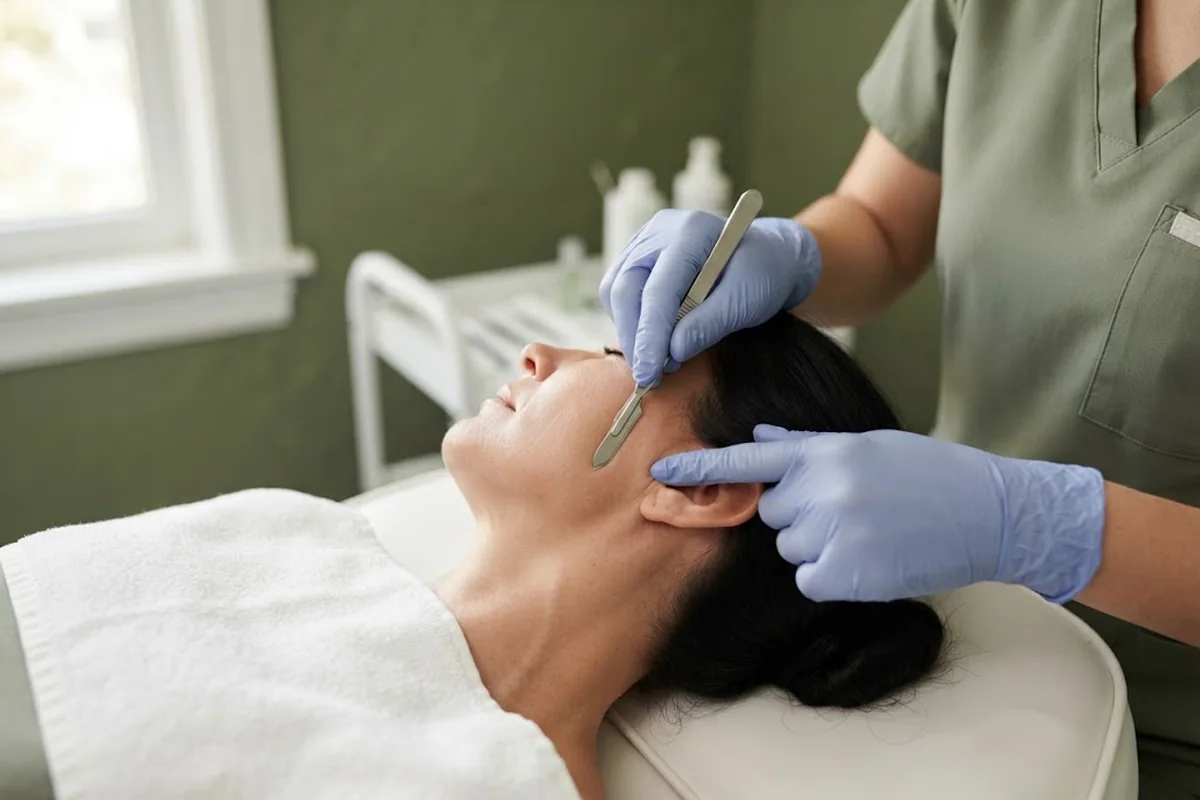
Dermaplaning is the treatment most closely matched to peach fuzz. A trained practitioner holds a sterile surgical-grade blade at a low angle and strokes it across clean, dry skin. The blade lifts away the fine hairs and the top layer of dead skin cells in the same pass. People notice two things afterward: the face looks brighter and smoother, and skincare absorbs a little more easily because there is less buildup on the surface.
At Real Skin Beauty, dermaplaning is $90 for a 45-minute visit. You can read the longer explanation in my complete guide to dermaplaning, including how it fits with facials and peels. Here is what matters for peach fuzz specifically.
What it does and does not do
It removes vellus hair and light surface flaking. It does not change the hair follicle, so the hair returns as fine as before, usually in three to four weeks. It does not shrink pores or remove deeper acne. It is a surface treatment, and it is best seen as a smoothing step.
Who should wait
Skin with active inflamed acne, open sores, cold sores or sunburn in the area.
Anyone who used isotretinoin recently. Check with your prescriber and tell me the dates.
Recent peels, laser or other treatments that leave the skin tender.
Very reactive conditions such as flaring rosacea or eczema on the face.
What I do before and after
I cleanse the face and check the skin. If there is a flare or an open lesion, we postpone. Afterward I apply soothing products and sunscreen. At home you should keep to gentle skincare for the first day or two, skip strong acids and retinol until the skin feels normal, and wear sunscreen daily. A freshly smoothed surface is more exposed to sun, so this part is not optional.
A practical tip: people often ask whether to do dermaplaning before a special event. Book it at least a few days ahead, not the same morning, so any pink flush settles. Many people like to combine it with a facial; ask when you book whether that is a good match for your skin.
Dermaplaning removes peach fuzz and surface dead skin together, and the hair grows back as it was.
Shaving and Other Home Methods Done Carefully
Many of my clients shave their face at home. It is perfectly reasonable when done with care. The method is quick, it costs very little and, contrary to the old myth, it does not make hair coarse. The risks are small cuts, irritation and ingrown hairs, and most of them come from technique.
A simple home routine
Start with a clean, dry face, or a freshly cleansed face dried with a clean towel. Dermaplaning-style stroking works best on dry skin, while a regular razor needs a little lubrication. Follow the instructions of the tool you use.
Use a new or well-cleaned single-purpose facial razor. Do not share it and do not use the same blade you use on your legs.
Hold the skin lightly taut with your free hand and stroke gently in the direction the hair grows, using short strokes with a very light touch.
Do not pass over active pimples, scabs, sunburn or irritated skin.
Rinse, pat dry and apply a plain moisturizer. Wear sunscreen in the morning.
Things I advise against
Depilatory creams on the face. Facial skin is thin. Chemical hair removers can burn it, and a patch test does not rule out a delayed reaction.
Home epilators and tweezing across the cheeks. Pulling hundreds of fine hairs causes irritation and ingrown hairs for little benefit.
Waxing while using retinol, retinoid prescriptions or strong acids. The wax can lift skin along with the hair. Stop actives as your provider advises.
Razor use on cold sores, active acne or rough scabs. It can spread irritation and bacteria.
Using a razor that is dull or rusty. Replace blades often.
If you tend to get ingrown hairs after shaving, wait and read my guide on ingrown hairs. They are more common on terminal hair than on fuzz, but they happen on the jawline and chin.
When It Is Not Peach Fuzz: Terminal Hair on the Face
Many people say "peach fuzz" when they mean a few hairs that are longer and darker than the rest. The word covers a lot of ground. Before choosing a method, look at the hair in good light and sort it into two piles.
Fine, short, pale hair across a broad area. This is vellus hair. Dermaplaning or shaving are reasonable.
Individual hairs that are longer, darker and noticeable from a distance. This is terminal hair. Shaving makes stubble, and plucking is a cycle.
Terminal hairs on the chin, upper lip and sideburns are what electrolysis is built for. A fine probe is placed into each follicle, and a short pulse of current damages the follicle so that it should not regrow. It works on any hair color, including blonde, gray and red, which is where laser struggles. I wrote about this in Electrolysis for Blonde, Gray and Red Hair. For the difference between the two approaches see electrolysis versus laser.
At Real Skin Beauty in Irvine, upper lip electrolysis is $50 for 20 minutes, and chin electrolysis is $65 for 30 minutes. The general facial zone is $75 for 30 minutes. These are per-visit prices, and the number of visits depends on your hair. A free consultation is how I give you an honest plan for your face.
Can electrolysis treat true peach fuzz?
Technically it can, since electrolysis treats the follicle regardless of hair color. In practice it rarely makes sense. Vellus hair is extremely numerous, each hair is tiny and fine, and treating every one would take a very large number of hours for a result most people can get with a razor or dermaplaning. I tend to recommend electrolysis for the terminal hairs and leaving true fuzz to simpler methods. There is one more reason for caution: treating the hairs that are growing coarser while the vellus hairs remain gives a more natural result than trying to remove every hair on the face.
There is a timing point too. Fine hairs along the jaw and cheeks sometimes darken over years, usually under hormonal influence. When a fine hair becomes a terminal hair, it becomes a good candidate for electrolysis. A consultation shows which ones are changing.
Skin Type, Makeup and Sensitive Skin
How you remove fuzz should depend on what your skin does. Here is how I think about the common groups.
Skin situation
Better choices
Skip or ask first
Dry or mature skin
Dermaplaning with good moisturizer afterward, careful razor
Aggressive scrubs the same week
Oily or acne-prone
Studio dermaplaning only when the skin is calm, a gentle routine
Razor over active pimples, heavy products right after
Sensitive or rosacea-prone
Leave fuzz alone or discuss with a professional first
Waxing, depilatory creams, scrubs
Darker skin tones
Gentle technique, sunscreen, patience
Aggressive pulling or waxing that irritates and may lead to dark marks
On retinoids or acids
Pause actives as advised, then use a razor lightly
Wax or threading while using retinoids
Recently tanned or burned
Wait until skin is fully healed
Any removal on burned or peeling skin
On darker skin tones, any repeated irritation can leave dark marks after it heals. That is why I prefer gentle, less traumatic methods for fuzz on these skin tones. If you use a razor, a light touch and sunscreen are essential. Avoid anything that pulls the skin hard.
Makeup and fuzz: practical tips
Apply a thin layer of a plain moisturizer or primer before foundation. A smooth base makes fine hair less noticeable.
Press powder in rather than sweeping it across the cheeks, since powder clings to hair.
Choose a slightly less matte foundation if you notice it highlighting fuzz.
Remove makeup properly each night. Residue around hair follicles can add to congestion.
I do not recommend specific brands, because what works depends on your skin. At a consultation I can look at your skin and suggest what to keep and what to drop in your routine.
If you remove peach fuzz at home, a clean single-purpose razor and a gentle cleanser are the whole kit.
Aftercare, Sun and What to Avoid Afterward
Any method that removes fine hair also removes a little of the surface layer of skin, or at least irritates it. For a day or two, the skin is more sensitive than usual. A short aftercare routine prevents most problems.
Keep the routine plain. A gentle cleanser, a simple moisturizer and sunscreen. Hold off on strong acids, scrubs and retinol until the skin feels normal. For many people that is one to two days.
Use sunscreen every morning. Freshly smoothed skin shows sun damage faster. A broad-spectrum sunscreen is the single best step you can add.
Skip heat for a day. Saunas, hot yoga and very hot showers can aggravate a flush.
Do not pick at anything. If a small nick scabs, leave it. If you notice pus, spreading redness, swelling or fever, contact a doctor.
Do not chase the next day's stubble. After shaving, short regrowth is normal. Repeated passes with the razor over irritated skin make things worse.
The aftercare logic for electrolysis is similar, with a few differences because the skin has small treated follicles. See Electrolysis Aftercare if you are treating terminal hair as well as removing fuzz.
Signs to stop and ask someone
Persistent burning or redness lasting beyond 48 hours.
Small bumps with pus, or a sore that does not heal.
Fine hair that suddenly gets darker and coarser, along with other symptoms such as irregular periods, new acne or scalp thinning. See your physician.
Dark patches appearing in the area after repeated irritation. Tell your esthetician and protect the area from sun.
A Simple Plan by Situation
When someone arrives with a face full of questions, I sort them into one of these plans. Use the one that fits you and skip the rest.
If this describes you
What I would try
What to avoid
Fine fuzz, no real bother, you just wondered
Leave it alone. No upkeep needed
Starting a routine just because of a close-up photo
Fine fuzz that affects your makeup
Dermaplaning every 3 to 4 weeks or a careful razor
Depilatory creams and tweezing
A few longer dark hairs on the chin or lip
A consultation about electrolysis, no plucking meanwhile
Repeated plucking and waxing that keep hairs cycling
Fuzz getting coarser, other symptoms
See your physician, then discuss electrolysis for the visible hairs
Self-treating without knowing why it changed
More hair after laser or IPL
Read about paradoxical hair growth, book a consultation
More laser sessions on the same fine hair
Very sensitive or rosacea-prone skin
Ask a professional first, or leave the fuzz
Any pulling or chemical method
Those are starting points. A consultation with a licensed practitioner replaces guessing with a plan, and the in-studio consultation at Real Skin Beauty is free. We look at the hair in magnification, check the skin, and I tell you plainly whether electrolysis, dermaplaning or doing nothing is the best use of your time and money. Clients from Irvine, Tustin, Newport Beach and the rest of Orange County come in with exactly this question.
A word about expectations. A dermaplaning visit gives you a smooth face for about a month. A razor gives you a smooth face for a few days. Electrolysis gives you permanent removal of the hairs it treats, but that is a gradual process that requires a series of visits, and I cannot promise how many. Every method has a right place, and mixing them is perfectly fine: for example, dermaplaning for the cheeks and electrolysis for a handful of chin hairs.
Myths About Peach Fuzz
Myth: Shaving makes hair darker and thicker. Fact: it only blunts the tip. Follicle and hair color are unchanged.
Myth: Peach fuzz means a hormone problem. Fact: vellus hair is normal for everyone. Changes in the character of the hair are what deserve attention.
Myth: Laser permanently removes peach fuzz. Fact: laser needs pigment to work, and pale fuzz has little. In a small share of people light-based treatment can make fine hair stronger.
Myth: Dermaplaning thins the skin. Fact: it removes dead surface cells and fine hair. Overdoing any exfoliation can irritate skin, which is why frequency matters.
Myth: You must remove it for makeup to work. Fact: many people wear makeup beautifully with fuzz. It is a preference.
Myth: Natural remedies like sugar scrubs remove it for good. Fact: scrubbing may move hair around for a day, and it does not alter the follicle. It may irritate skin.
Whatever you choose, keep it kind to your skin. A face that is red and sore from aggressive hair removal looks worse than a face with a little fuzz. If you want help choosing, book a free consultation, or read about electrolysis and dermaplaning on their service pages.
Frequently Asked Questions
+ Is peach fuzz normal?
Yes. Peach fuzz is vellus hair, a fine, pale hair found on the face and body of almost everyone. It has no health significance by itself. See a physician if fine hair turns dark and coarse, especially with irregular periods, acne or scalp thinning.
+ Does shaving peach fuzz make it grow back thicker?
No. Shaving cuts the hair at the skin and does not change the follicle, which controls thickness and color. The blunt tip can feel coarser for a few days, then the hair feels soft again.
+ What is the best way to remove peach fuzz?
Dermaplaning or a careful facial razor suits most people. Dermaplaning at Real Skin Beauty is $90 for 45 minutes. Skip depilatory creams and tweezing, which irritate thin facial skin and add little.
+ How often can I dermaplane?
Most people repeat it every three to four weeks, in line with how the hair regrows. Ask your esthetician about your skin, and pause during acne flares or after strong peels or laser.
+ Can electrolysis remove peach fuzz permanently?
It can treat any hair, but it is rarely practical for true vellus fuzz because there are so many tiny hairs. It is best for darker, coarser hairs on the chin, lip or jaw, where it targets each follicle.
+ Will laser remove peach fuzz?
Laser needs pigment, so pale fuzz usually does not respond. In some people, laser or IPL on the face may stimulate fine hair to grow thicker. This is called paradoxical hair growth and is uncommon.
+ Is it safe to remove peach fuzz with a razor on sensitive skin?
It can be low-risk with a clean single-purpose razor and a light touch, but sensitive, rosacea-prone or acne-prone skin may react. Avoid razors over active breakouts or scabs, and consider asking a professional.
+ Should I remove peach fuzz before a facial or peel?
Dermaplaning is sometimes combined with facials. Do not shave or wax right before a peel unless your esthetician advises it, since a fresh surface can react more. Ask when booking.
Licensed electrologist and cosmetologist with 20+ years of experience. Aida sees clients at Real Skin Beauty, 18021 Sky Park Circle, Suite N, Irvine, CA 92614.
Book a free consultation with Aida Khazieva at Real Skin Beauty in Irvine, CA. She will look at your facial hair under magnification and tell you honestly whether it needs treatment at all.
This article is for informational purposes and reflects Aida Khazieva's practitioner experience. It does not replace a personalized medical consultation. Individual results vary.
Questions? Aida Answers Them All.
Visit our FAQ or book a free consultation to discuss your specific skin and hair concerns.