Back Acne Treatment: What Works and What Your Esthetician Can Do
By Aida Khazieva·Acne & Breakouts·11 min read·Real Skin Beauty, Irvine CA·Updated July 27, 2026
Back acne, commonly called bacne, is arguably harder to treat consistently than facial acne for purely mechanical reasons. You cannot see your back clearly, you cannot reach it well with topical treatments, and it is in near-constant contact with fabric that traps sweat and heat. The back also has a higher density of sebaceous follicles than the face, with larger pores and higher sebum production per square centimeter. These structural factors mean that back acne rarely responds adequately to face-acne products applied inconsistently to an area most people cannot treat effectively on their own. In my studio in Irvine, CA, professional back treatment is one of the more impactful services I offer because it provides systematic, thorough treatment of an area where at-home care genuinely cannot replicate what a trained esthetician can accomplish in a single session.
Quick answer: Back acne is harder to clear than facial acne because back pores are larger, produce more oil and stay irritated by sweat and clothing. A professional bacne treatment combines deep cleansing, extraction, a salicylic acid peel across the back and blue LED light, usually as a series of 4 to 6 monthly sessions alongside home care.
Why Back Acne Is Different From Facial Acne
The same fundamental mechanisms drive back acne and facial acne: excess sebum production, follicular hyperkeratinization, P. acnes bacterial overgrowth and the inflammatory response that follows. But the skin environment on the back creates conditions that consistently make back acne more persistent and harder to control than equivalent facial acne in the same individual.
Larger pores and higher sebum output. The sebaceous follicles of the back, chest and shoulders are larger in diameter than facial follicles and produce proportionally more sebum. More sebum means faster follicular filling and more frequent comedone formation. The back can accumulate significant comedonal congestion rapidly, which is why untreated back acne often involves visible large blackheads and extensive widespread congestion rather than isolated breakouts.
Thicker skin. Back skin is significantly thicker than facial skin. The stratum corneum and dermis are both thicker, which means topical active ingredients require more time and higher concentrations to penetrate to the depth where they can affect follicular biology. Products formulated for facial skin at typical concentrations may be inadequate for effective follicular penetration on the back. Professional-grade concentrations and contact times matter more for back treatment than for facial treatment for this reason.
Constant mechanical occlusion. The back is rarely exposed to open air. Clothing covers it consistently, creating a warm, humid microenvironment that promotes bacterial growth. Sweat accumulates against the skin. Clothing friction repeatedly stimulates the follicular openings. The result is a skin environment that is almost purpose-built for persistent acne formation.
Accessibility for at-home treatment. Most people cannot reach their full back with any consistency. A product applied to the upper middle back by reaching over the shoulder is applied inconsistently and incompletely. The lower back requires a different reach entirely. The sides of the back are somewhat more accessible but still challenging. Systematic at-home treatment of the full back is not realistic for the majority of people, which is one of the most compelling practical arguments for professional treatment of back acne specifically.
Post-inflammatory hyperpigmentation and scarring. Back skin heals more slowly than facial skin, and back acne lesions, particularly cysts and nodules, have a higher probability of leaving post-inflammatory hyperpigmentation and shallow scarring. Once scarring develops on the back it is even more difficult to address than facial scarring because the area cannot be easily treated with the precision that facial scarring correction requires. Prevention through consistent treatment is significantly more effective than correction after the fact.
What Causes Bacne: The Real Contributing Factors
Back acne shares most of its causative factors with facial acne but has some specific contributors that are less relevant to the face. Understanding the full picture of what is driving back acne in a specific person guides the treatment approach more effectively than applying a generic protocol.
Hormonal drivers
The same androgen-driven sebum overproduction that causes hormonal facial acne also affects the back and shoulders. Androgens stimulate the sebaceous glands of the back, which are large and androgen-responsive. Back acne that follows the same cyclical pattern as hormonal facial acne in women, worsening before menstruation, is driven by the same luteal-phase androgen activity. Back acne in men, who tend to have higher baseline androgen levels than women, is often the most severe presentation of hormonally-driven acne because the larger back follicles are responding to consistently higher androgen stimulation.
Anabolic steroids, including testosterone used for muscle building and the androgenic compounds sometimes taken for athletic performance, directly stimulate the large sebaceous follicles of the back and are a well-documented cause of severe bacne in users. If a client mentions anabolic steroid use, this immediately explains the severity of back acne and also informs the limits of what esthetic treatment can achieve while the hormonal stimulus remains active.
Mechanical folliculitis
Not all "back acne" is comedonal or inflammatory acne driven by P. acnes. Pityrosporum folliculitis (also called Malassezia folliculitis) is a fungal infection of the follicle that produces acne-like breakouts on the back and chest that are resistant to standard antibacterial acne treatments. It is triggered by the warm, humid, occluded environment created by tight workout clothing over sweat-covered skin and is particularly common in clients who exercise intensely without prompt post-workout showering.
The clinical distinction matters because Malassezia folliculitis responds to antifungal treatment (ketoconazole shampoo applied as a body wash, or prescription oral antifungals from a dermatologist) rather than to the BHA peels and blue LED that are effective for P. acnes-driven acne. Clinically, Malassezia folliculitis often presents as uniform, small itchy papules across a broad area rather than the mixed comedonal and inflammatory pattern of bacterial acne. If a client's back breakouts itch, do not respond to standard acne treatment after 2 to 3 months of consistent application, and are concentrated in areas of highest sweat and clothing contact, a dermatologist evaluation for fungal folliculitis is warranted.
Mechanical friction and occlusion
Acne mechanica is the term for breakouts caused by friction, pressure and occlusion on the skin. Backpacks with tight straps, sports bras with broad elastic bands, compression athletic wear and workout equipment that contacts the back all create the repeated pressure and warmth that trigger follicular inflammation without requiring any hormonal or bacterial component. Acne mechanica breakouts appear specifically in the contact zones: along backpack straps, under bra bands and at equipment contact points. Identifying this pattern changes the treatment approach to include pressure relief and friction reduction as primary interventions alongside the clinical treatment.
Dietary and supplement factors
Whey protein supplements have the most documented connection to back and body acne specifically. Whey protein raises IGF-1 levels significantly, which increases androgen activity throughout the body. Back acne in regular gym-goers who consume large quantities of whey protein is a commonly observed pattern in my practice. When clients with otherwise-unexplained severe back acne are consuming multiple whey protein shakes daily, trialing a switch to plant-based protein for 8 to 12 weeks is a reasonable diagnostic and therapeutic step before more aggressive treatment.
The Access Problem Is the Core Problem
The single biggest practical factor that makes back acne harder to clear than facial acne is that most people cannot reach their full back consistently enough to apply any at-home treatment effectively. A salicylic acid body wash that sits on the skin for 30 seconds before rinsing in the shower provides fraction of the treatment a properly applied and timed professional peel delivers to the same area. Professional treatment for back acne is not a luxury. For many clients in my Irvine studio it is the only realistic way to get consistent active ingredient delivery to every affected area of the back.
Professional Treatments for Back Acne That Produce Results
A professional back acne treatment, sometimes called a back facial or bacne facial, is a clinical treatment session that delivers systematic, thorough active ingredient application and extraction to the entire back. Here is a detailed breakdown of what a proper professional back treatment at Real Skin Beauty includes and what each step is designed to accomplish.
Step 1: Full back cleanse
The client lies face down. I perform a thorough double cleanse of the entire back, first to remove surface oils, sweat and product residue, and second with a salicylic acid cleanser worked into the skin for 60 to 90 seconds to begin loosening follicular plugs. The full back is treated, not just the most visible breakout areas, because comedonal buildup is often present in areas that do not yet show visible surface lesions.
Step 2: Steam or warm compress
Warm, moist towels applied across the back soften the skin and begin loosening sebum plugs in preparation for extraction. The back skin, being thicker than facial skin, benefits from a longer softening period than the face typically requires, approximately 8 to 12 minutes of warm compression.
Step 3: Systematic extraction
Extraction of the back is performed systematically across all zones. I use sterile gloves and work methodically from one side to the other, clearing blackheads, whiteheads and ready pustules across the entire back surface. The access issue that prevents effective at-home management is exactly what makes this step so impactful: every part of the back receives consistent, thorough extraction attention. Clients who have been managing back acne inadequately at home for years frequently experience significant clearing from the first professional extraction session simply because the area has never previously received complete treatment.
High-frequency is applied over each extraction zone immediately after clearing it to reduce bacterial spread and inflammation at the extraction site.
Step 4: Salicylic acid peel across the full back
Following extractions, a professional-concentration salicylic acid peel is applied systematically across the entire back surface. The freshly extracted follicles are receptive to the BHA penetration, and the full-back coverage ensures that every sebaceous follicle, including those that did not produce extractable lesions today but are filling with sebum, receives follicular-clearing treatment. The peel is timed precisely and removed completely. For clients with thick, resilient back skin and significant congestion, I may use a higher concentration than I would for comparable facial treatment.
Step 5: Blue LED application
Blue LED at 405 to 420 nanometers is applied across the back for a full therapeutic session, typically 15 to 20 minutes. The antibacterial photodynamic effect targets P. acnes throughout the treatment area simultaneously. The back's larger surface area means the LED panel must cover the full area, which professional equipment designed for body treatment is configured to do. The blue LED significantly reduces the bacterial population that would otherwise re-colonize the freshly extracted and treated follicles rapidly in the warm, occluded back environment.
Step 6: Calming finish
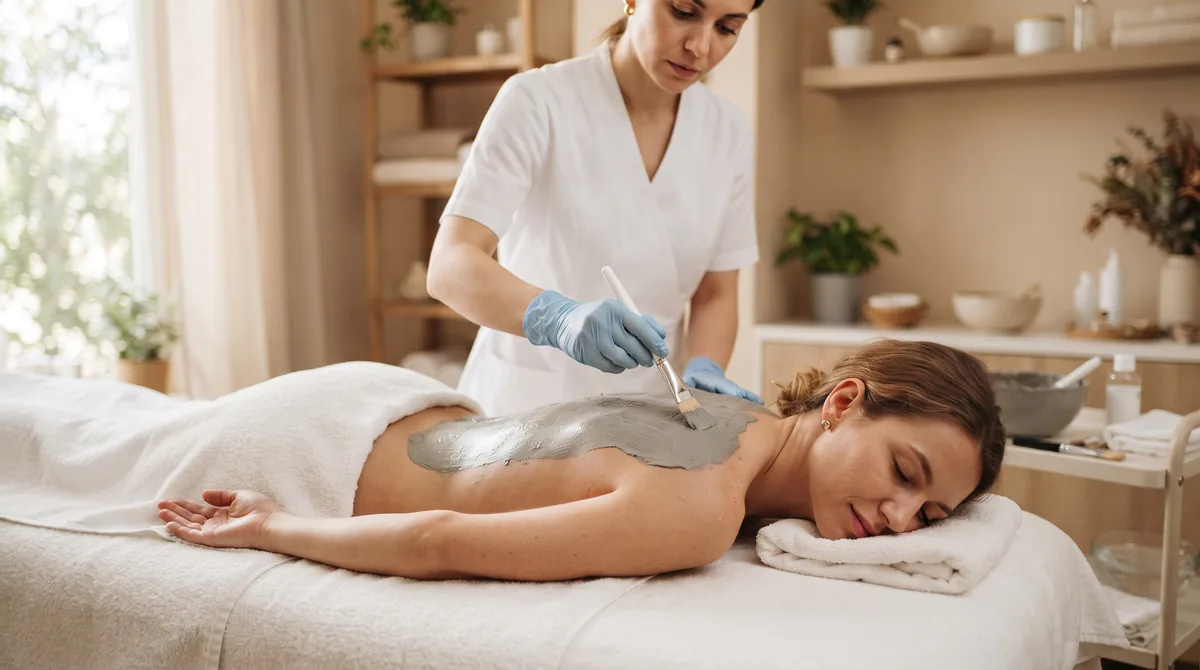
A non-comedogenic calming treatment is applied to the full back: a centella asiatica or niacinamide serum, or a calming clay mask left briefly and removed. No heavy creams or occlusive products. The back needs the same lightweight, non-comedogenic approach as acne-prone facial skin but even more consistently because the occluded environment of clothing is more constant than what facial skin experiences.
A standard back acne treatment session takes 75 to 90 minutes. A series of 4 to 6 monthly sessions produces the most significant results, with visible improvement in congestion typically apparent after the first 2 sessions. View the full range of skin treatment services and book a consultation to discuss whether a back treatment series is the right approach for your situation.
Building Your At-Home Routine for Back Acne
At-home care for back acne cannot fully replicate professional treatment, but it can significantly extend the results of professional sessions and slow the re-accumulation of congestion between appointments. The key is building a routine that is actually executable given the access limitations most people face with their own backs.
In the shower
Salicylic acid body wash at 2 percent concentration: This is the most important single at-home product for back acne. Apply it to the back using a long-handled shower brush or back scrubber to ensure you are actually reaching the full back consistently, not just the areas your hands can easily reach without the tool. Leave the wash on for 60 to 90 seconds before rinsing. The contact time matters. A body wash that hits the skin and immediately goes down the drain provides minimal active ingredient delivery. Using the brush also provides controlled physical exfoliation that helps clear the surface dead cell layer before the salicylic acid works on the follicle.
Showering order: Shampoo and condition your hair first, then wash your back. Hair products, particularly conditioners containing heavy silicones and oils, are a commonly overlooked contributor to back acne when they run down the back during rinsing. Washing the back as the last step ensures that whatever ran down from hair products is removed before you get out of the shower.
After shower
Benzoyl peroxide lotion at 5 percent: Applied to the back after showering using a partner, a reachable applicator tool or a spray product formulated for body application. Benzoyl peroxide on the back kills surface and follicular bacteria and prevents the rapid bacterial re-colonization that the warm, occluded back environment enables. It will bleach fabric, so wear a white cotton shirt or let it absorb fully before dressing.
Non-comedogenic body lotion with SPF if the back will be exposed: Particularly relevant in the Orange County climate where back-exposing clothing is worn year-round. Post-inflammatory hyperpigmentation from previous back acne is significantly worsened by UV exposure. An SPF 30 to 50 non-comedogenic body lotion protects clearing skin and prevents darkening of existing pigmentation.
The access challenge with back product application is real. Using a long-handled applicator or building a routine you can do consistently, even if imperfectly, is more effective than an optimal routine that you do not actually do. Partners can be helpful for back application. Some clients find spray formulations of benzoyl peroxide and salicylic acid products the most practical solution for solo application to the mid-back.
A professional back treatment combines deep cleansing, extractions where needed and a purifying mask.
What to Wear: How Fabrics and Friction Contribute to Bacne
Fabric choice is a more significant contributor to back acne than most people realize. The environment the clothing creates against the back skin, specifically in terms of moisture retention, breathability and friction, directly affects how quickly the follicular environment deteriorates between treatments.
Moisture-wicking vs. cotton for workouts
Cotton is absorbent, which means it retains sweat against the skin for extended periods during and after exercise. Sweat is warm, slightly acidic and provides an excellent growth medium for bacteria. Cotton workout clothing that becomes saturated during exercise and stays in contact with the back for 30 minutes or more post-workout creates significant bacne risk from this mechanism alone.
Moisture-wicking synthetic fabrics (polyester blends, nylon) move sweat away from the skin surface to the outer layer of the fabric where it evaporates more rapidly. The skin contact surface stays drier. For back acne management, wearing moisture-wicking fabrics during workouts is a meaningful intervention, not a minor detail. The caveat is that these fabrics must be washed after every single use because the bacteria-laden sweat that does contact them can be transferred to fresh skin at the next wearing if the garment is reworn before washing.
Tight vs. loose fit during workouts
Compression athletic wear creates constant pressure against the skin surface. This pressure, combined with sweat and warmth, produces the classic environment for acne mechanica on the back. Looser-fitting workout clothing that does not create constant contact pressure is preferable for back acne-prone clients when performance requirements do not absolutely require compression. For sports where compression wear is necessary, the post-workout shower becomes even more time-critical.
Backpack straps
Regular backpack use creates two problems for back skin: the straps create friction acne along specific contact lines, and the back panel of the bag creates an occluded, warm zone that traps heat and prevents sweat from evaporating. Clients who carry heavy backpacks daily and have back acne concentrated along strap lines or in the middle-back zone where the bag rests often find significant improvement by switching to a bag that sits lower or using a shoulder-strap arrangement that reduces back contact. When backpack use is unavoidable, wearing a thin, breathable layer between the bag and back skin and changing that layer promptly after extended carry reduces the contact acne contribution.
Pillowcase and bedding
For clients with back acne that extends to the upper back and shoulders, the contact surface during sleep is relevant. Conventional pillowcases and fitted sheets accumulate skin cells, sweat and bacteria. Washing bedding weekly in hot water reduces the bacterial load on the contact surface. Silk or bamboo pillowcases provide a smoother surface with reduced friction and better moisture management than standard cotton. These are not cures for back acne but they remove a contributing variable that is worth addressing once the primary treatment elements are in place.
The Post-Workout Shower Rule
The single most impactful daily habit for reducing back acne in clients who exercise regularly is showering within 30 minutes of finishing a workout, every time. Not eventually. Within 30 minutes. Sweat sitting on the back in a warm environment, combined with the bacteria that multiply in that environment, generates new comedones and inflammatory lesions at a rate that can undo professional treatment progress if it happens daily. The shower timing matters more than most products.
Diet and Lifestyle Changes That Support Clearer Skin
Dietary and lifestyle factors influence back acne through the same mechanisms as facial acne: hormonal, inflammatory and gut microbiome pathways. The interventions with the most evidence and the most consistent results in my clients are not extreme or complicated. They are specific, implementable and worth tracking systematically.
Post-workout nutrition choices
Whey protein is the most commonly implicated supplement in gym-associated back acne. Whey raises IGF-1, which increases androgen activity and sebum production. If back acne worsened when you started a serious workout program that included multiple whey protein servings daily, this connection is worth investigating with an 8-week elimination trial. Replace whey with plant-based protein (pea protein, brown rice protein, hemp protein) and track whether back acne severity changes. Pea protein in particular does not raise IGF-1 comparably to whey.
Creatine monohydrate, widely used for muscle building, is sometimes mentioned in relation to acne. The evidence for a direct causal link is much weaker than for whey protein, and the mechanism is less clear. If other dietary adjustments have been made and back acne remains severe in a client who uses creatine heavily, it is worth a trial elimination, but it is a lower-priority variable than whey, dairy and glycemic load.
Dairy and glycemic load
The same dietary factors relevant to hormonal facial acne apply to back acne. Dairy products contain androgens and IGF-1. High-glycemic foods raise insulin, which increases androgen activity. For clients with persistent back acne that does not respond adequately to topical treatment, a dietary elimination trial over 8 weeks addressing both dairy and high-glycemic foods provides useful diagnostic information about whether dietary factors are a significant driver for that individual.
Not every client sees dietary changes make a difference. Individual metabolic response varies considerably, and for some people the acne drivers are hormonal or structural in a way that diet does not meaningfully affect. The trial is low-risk and provides information that informs the overall treatment approach.
Sleep and stress
Cortisol, the primary stress hormone, stimulates androgen production. Chronic high cortisol from inadequate sleep and unmanaged stress directly worsens androgen-driven acne of all types, including back acne. Seven to nine hours of sleep per night reduces cortisol levels and reduces one of the systemic hormonal drivers of sebum overproduction. This is not a minor lifestyle note. It is a hormonal intervention that costs nothing and affects the same androgen pathway that spironolactone targets pharmacologically.
Gut microbiome considerations
The gut-skin axis is an area of active research with increasing evidence that gut microbiome composition affects systemic inflammation, hormone metabolism and skin condition. Dysbiosis, an imbalance in gut bacterial populations, can increase systemic inflammatory markers and alter the metabolism of androgens in ways that worsen acne. For clients with back acne that is resistant to standard topical and professional treatment over 3 to 4 months, consulting a functional medicine physician about gut health evaluation, food sensitivity testing and targeted probiotic supplementation may uncover contributing factors that topical treatment cannot reach.
Probiotic supplementation (specifically Lactobacillus rhamnosus GG and Lactobacillus acidophilus) has shown some evidence in small studies for reducing acne severity, likely through systemic anti-inflammatory mechanisms. The evidence is preliminary but the risk is low. For clients who want to try probiotics alongside professional treatment, I recommend consistency over at least 12 weeks before evaluating impact.
How Long Until Your Back Clears: Realistic Timeline
Realistic timeline expectations are one of the most important things I establish with new back acne clients before they begin a treatment series. Back acne clears more slowly than facial acne for reasons of skin thickness, follicle size and the chronic environmental factors (clothing, sweat, friction) that continue contributing to new lesion formation even during active treatment.
4 weeks after the first professional session
Most clients see visible reduction in the density of comedonal congestion after the first professional treatment. The large-scale extraction of congestion that has accumulated, combined with the initial salicylic acid peel application, produces a measurable surface improvement. Existing inflammatory lesions begin resolving. Some post-inflammatory hyperpigmentation from previous lesions may appear more visible temporarily as the surrounding skin improves in texture, making the dark spots relatively more apparent. This is normal and resolves as the full clearing progresses.
8 weeks (after the second professional session)
Clients who have implemented consistent at-home care between sessions, specifically the salicylic acid body wash with adequate contact time and post-shower benzoyl peroxide, show meaningfully less re-accumulation of congestion than those who have not. The second professional session builds on what the first cleared. By the 8-week mark, most clients are seeing a clear trajectory of improvement and can visually compare photographs to the starting condition with visible progress.
3 months (after the third professional session)
With consistent professional treatment and at-home support, the majority of clients in my Irvine practice show significantly clearer back skin at 3 months than at baseline. Not necessarily perfect, but the difference is substantial. The follicular environment is changing with consistent treatment: less buildup between sessions, less severe individual lesions, faster resolution of new ones.
4 to 6 months (full treatment series completed)
A full 4 to 6 session series over 4 to 6 months, combined with consistent home care and lifestyle adjustments appropriate to the individual's drivers, produces the clearest back skin most clients have experienced as adults. Maintenance from this point is monthly professional sessions combined with ongoing home care and the lifestyle factors that have proven relevant for that individual.
Clients who expect dramatic clearing from a single session and who do not implement consistent home care between professional appointments will see slower results. Back acne requires the same consistent multi-front approach as hormonal facial acne: professional treatment addresses what home care cannot, and home care sustains the progress between professional sessions.
What to Expect Before and After Professional Treatment
Preparation and aftercare for a professional back acne treatment are straightforward but important. Here is a specific list of what to do and avoid before and after your appointment.
Before your back treatment appointment
Shower that morning with your salicylic acid body wash, paying full attention to the back. Come to the appointment with clean, product-free skin on your back.
Do not apply any body lotion, oil or product to your back on the day of the appointment. Product residue affects peel penetration and extraction quality.
Avoid vigorous exercise for 24 hours before your appointment. Post-workout back skin has elevated bacterial load and increased inflammation that can affect treatment response.
Wear a loose, easily removable top. You will be lying face down with your upper body uncovered for the duration of the treatment. Tight, fitted tops are inconvenient. Button-front or wrap tops work well.
Disclose any current medications, particularly isotretinoin (current or within the past 6 months), topical prescriptions and any antibiotics. These affect what treatment is appropriate and at what intensity.
After your back treatment appointment
Do not shower or apply any product to your back for 6 to 8 hours after the treatment to allow the salicylic acid to continue its follicular activity without being washed away immediately.
Avoid tight clothing against the back for 24 hours. Loose, breathable fabric that does not create friction or pressure on the freshly treated skin.
Do not exercise for 24 hours. Sweat on freshly treated skin with recently opened extraction sites risks bacterial introduction and can cause reactivity to the treated areas.
Do not swim in chlorinated pools for 48 hours. Chlorine interacts with freshly peeled skin in ways that can cause irritation and hyperpigmentation, particularly in clients with darker skin tones.
Apply SPF to any back areas that will be exposed to sun. Back skin that has received a salicylic acid peel is photosensitive for 48 to 72 hours. Sun exposure during this window risks post-inflammatory hyperpigmentation in the treated areas.
Resume your salicylic acid body wash in the shower 24 hours after the appointment and maintain consistent daily use between professional sessions.
If you have back acne that has not responded to at-home management alone and you are in the Irvine or broader Orange County area, a professional back treatment series is a practical and consistently effective solution for an area where solo self-treatment is genuinely limited by access. You can book a free consultation at Real Skin Beauty to discuss your specific situation before committing to a series. The FAQ page covers common back treatment questions about preparation, aftercare, session frequency and combining back treatments with facial appointments. If you want to understand the full acne treatment picture including the role of professional facials for facial acne alongside back treatment, the complete acne facial guide covers that protocol in detail.
Frequently Asked Questions
Why is back acne harder to treat than face acne?
Back skin has larger pores, higher sebum production per follicle, thicker skin that requires higher concentrations for active ingredient penetration, and is nearly impossible to reach consistently for thorough at-home treatment. The back is also in constant contact with clothing that traps heat, sweat and bacteria, creating a chronically aggravated skin environment. Professional treatment is especially impactful for back acne precisely because it resolves the access problem and delivers systematic active ingredient treatment to every area of the back in a single session.
What professional treatments work for back acne?
A professional back acne treatment includes full-back double cleansing with salicylic acid cleanser, warm compress to soften follicular plugs, systematic extraction of comedones and ready pustules under sterile technique, salicylic acid peel application across the entire back, blue LED antibacterial light therapy and a non-comedogenic calming finish. The full-back coverage and professional concentration of the salicylic peel are what produce results that at-home products cannot replicate. A series of 4 to 6 monthly sessions produces significant clearing for the majority of clients.
Can I get a back treatment while I still have active breakouts?
Yes. Active breakouts are not a contraindication for professional back treatment. The extraction step targets ready pustules and comedones including active ones. The salicylic acid application and blue LED are particularly beneficial for active inflammatory lesions. The technique adjustments for active breakouts include avoiding heavy manual pressure over actively inflamed nodules and cysts that are not yet ready for extraction. Treating skin with active breakouts is different from treating clear or mildly congested skin, but it is safe and beneficial when technique is appropriate.
How important is showering immediately after exercise for back acne?
Very important, and specific in its timing requirement. Sweat sitting on the back in a warm, clothing-covered environment for more than 30 minutes after exercise creates ideal conditions for bacterial proliferation and follicular comedone formation. Showering within 30 minutes of finishing exercise, using a 2 percent salicylic acid body wash with adequate contact time on the back, and wearing moisture-wicking fabrics during workouts are the three daily habits that produce the most meaningful reduction in new bacne formation between professional sessions.
Is back acne related to gut health?
For some clients it is a meaningful contributing factor. Gut microbiome imbalance can increase systemic inflammatory markers and alter androgen metabolism in ways that worsen acne throughout the body including the back. If back acne has been resistant to consistent topical and professional treatment for 3 or more months without adequate improvement, evaluating gut health through a functional medicine physician, including food sensitivity testing and stool microbiome analysis, can identify dietary and microbiome factors that topical treatment cannot address. Targeted probiotic supplementation and dietary adjustment based on this evaluation helps a subset of treatment-resistant back acne clients significantly.
Licensed electrologist and cosmetologist with 20+ years of experience. Aida sees clients at Real Skin Beauty, 18021 Sky Park Circle, Suite N, Irvine, CA 92614.
Book a free consultation at Real Skin Beauty in Irvine, CA. I will assess your back skin, discuss your history and lifestyle, and explain exactly what a back treatment series would look like for your situation.
This article is for informational purposes and reflects Aida Khazieva's clinical experience. It does not replace a personalized medical consultation. Individual results vary.