Electrolysis for Men: Beard Line, Neck, Back and Ears
By Aida Khazieva·Electrolysis·15 min read·Real Skin Beauty, Irvine CA·Updated October 13, 2026
Yes, electrolysis works for men. It is the method the FDA recognizes as permanent hair removal, and it treats hair of any color, including gray and white, on any skin tone. It suits clean beard lines and necklines, hair on the ears and between the brows, and thinning a back or shoulders. Because every hair is treated one at a time, dense areas take many sessions, so I give you an honest estimate at your free consultation in Irvine before you commit to anything.
Quick answer
Best for: beard line and cheek edges, neckline, hairline and sideburns, ears, brow gap, shoulders, back, chest.
Less practical for: clearing a whole dense beard, because each follicle is done individually.
Works on: dark, light, gray, white and red hair, unlike laser.
Studio prices: cheek or neck $90 (45 min), chest $100 (45 min), back $120 (1 hr). Consultation is free.
What Men Ask Electrolysis to Fix
Most men who come to a studio like mine are not looking to get rid of all body hair. They want specific things gone for good: the stray hairs above a cheek line, the shadow that creeps down the neck a day after shaving, hair on the ears, a gap between the brows, or a back and shoulders they no longer want to wax every month.
Those goals fit electrolysis well. A fine sterile probe goes into one follicle at a time, so I can follow a line you have chosen exactly, down to the last hair, and leave everything beside it alone. That precision is what separates it from broad-area methods.
Here is how the common areas break down at the studio, using the current Square prices.
Beard Line and Neckline: Shaping Versus Full Removal
A beard is the hardest thing to take on with electrolysis and the easiest to shape. Male facial hair is coarse and dense, and the hairs sit close together. Clearing a full beard means treating a very large number of follicles individually, which is a long project and a real budget. Some men choose it, and it can be done. Most men I talk to want something smaller and decide differently once we look at the numbers.
The shaping approach works like this. We agree on a line, usually a straight edge from the sideburn to the corner of the mouth, or a clean curve under the jaw. I treat the hair outside that line and leave the beard inside it untouched. Over the sessions, the outside area thins out and then stays smooth, so you stop shaving that edge every day.
Three practical points before you decide:
Pick the line carefully. Once follicles are treated, that hair is gone. Take a few days to be sure about where the edge sits, and bring a photo of a look you like.
Think about your age and your hair. A line that looks right now may sit differently in ten years, so I tend to suggest a slightly conservative edge for younger clients.
Start with one zone. Treat the neckline first. You will see how your skin responds and how fast progress comes before you commit to cheeks or more.
I will tell you at consultation how much growth I want to see on the day, because that varies by area and hair type.
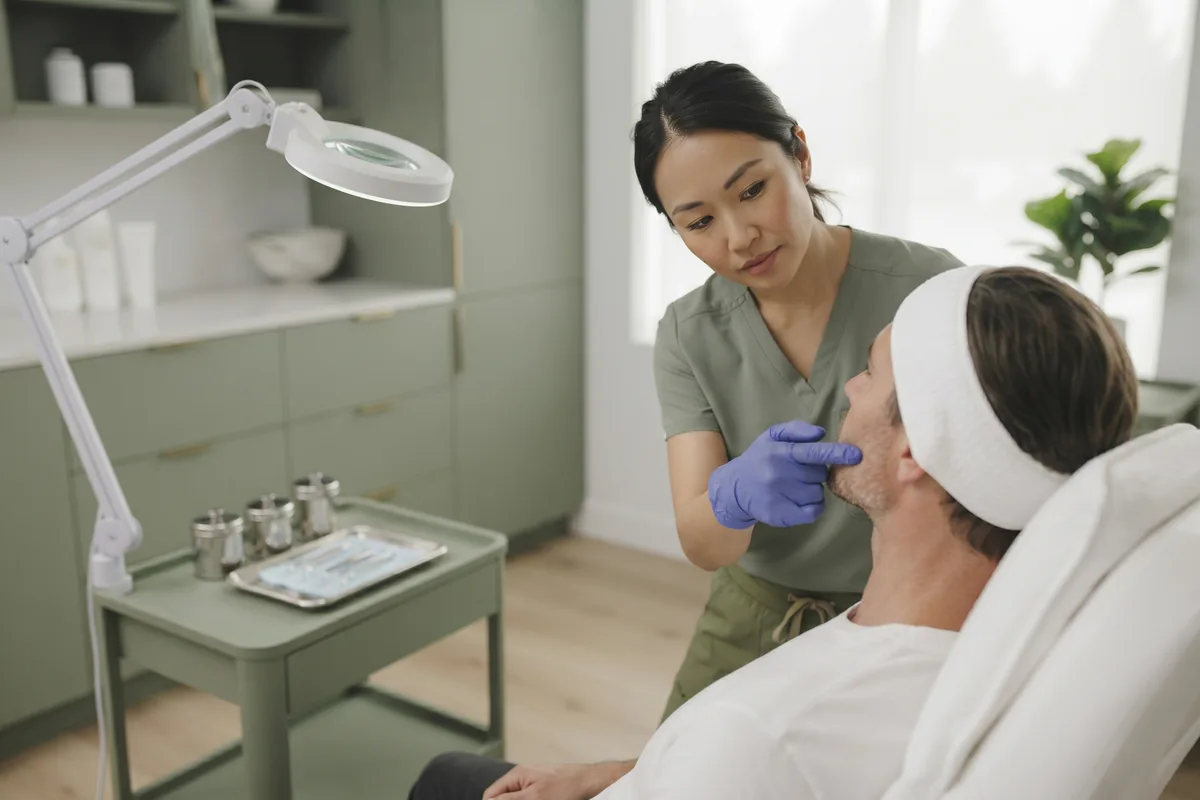
Agreeing on the beard line before any treatment begins.
Razor Bumps on the Neck and Why Electrolysis Helps
Many men are not trying to look different. They are tired of the bumps. Tightly curled hair can bend back and re-enter the skin after shaving, and the result is red, tender bumps along the jaw and neck. The medical name is pseudofolliculitis barbae, and it is common in men with curly or coarse beard hair.
Shaving closer or switching razors only manages it. Removing the follicle that produces the bending hair addresses the cause for that spot. When a follicle is destroyed, that hair stops coming back, and a hair that never grows cannot curl into the skin.
A few cautions are worth stating plainly:
If bumps are inflamed, pus-filled or painful, they need to calm down first. See a physician or dermatologist if they do not settle, since infection needs medical care, not a probe.
Tell me if you tend to form raised, thick scars (keloids). That history changes how carefully we plan, and a doctor may need to weigh in.
Do not pick or dig at ingrown hairs before an appointment. It raises the chance of marks.
For milder cases, many men see the neck calm down noticeably as the treated hairs thin out. I cannot promise a specific result for your skin, but the logic is sound: fewer hairs growing sideways means fewer bumps.
Who Is a Good Candidate, and Who Should Wait
Electrolysis suits men who know which hair they want gone and are willing to commit to a series of visits. The best candidates tend to share a few traits: a clear picture of the line or zone, patience with a process measured in months, and skin that is healthy in the area we plan to treat.
It also fits men for whom laser has been a dead end. Gray, white, blond and red hair, and any hair on skin that laser struggles with, are all treated the same way, because the probe goes to the follicle and ignores color.
A few situations mean waiting or checking with a physician first:
Infected or very inflamed skin. Pus-filled bumps, open sores and a fresh sunburn need to heal before any probe touches the area.
Sudden changes in hair growth. If hair is suddenly thicker, thinner or appearing in new places, get it checked. Hormones, thyroid problems and some medications can all play a role.
A pacemaker or other implanted electrical device. Tell me at the consultation and bring your doctor's guidance, since the equipment uses electrical current.
Moles, lesions or skin that looks changed. Anything that has grown, bled or changed color should be seen by a physician or dermatologist first, and I will not treat hair growing out of it.
Isotretinoin or other medications that make skin fragile. List everything you take. Some medications mean waiting or a gentler plan.
A history of keloids or thick scars. This does not always rule out treatment, but it changes how carefully we start.
One more point that is not medical. If you are unsure about the look, wait. A beard style that feels right at 28 may not feel right at 45, and treated follicles do not come back. Growing your hair out for a few weeks and photographing it from the front and side helps us choose a line you will still like in ten years.
Common Mistakes Men Make Before and Between Sessions
Most problems I see are not caused by the treatment. They come from habits around it. These are the ones worth avoiding.
Waxing, threading or plucking between visits. These pull the hair out by the root, so there is nothing for me to find. If you are unsure what is allowed, read my guide on shaving, plucking and waxing between sessions.
Shaving the area to bare skin right before the appointment. The hair needs a short stub above the skin so I can see it and follow its angle. Ask at the consultation exactly how much growth to bring, because it differs by area.
Choosing an aggressive line on day one. You can always move the line further in later. You cannot bring hair back.
Trying to do the whole beard or back at once. Starting with one zone shows you how your skin heals and how fast it thins. Then you can add zones with real information.
Picking at scabs or bumps. Small crusts after a session are normal and need to fall off by themselves.
Skipping sunscreen on a treated neck or ears. Freshly treated skin can mark more easily in the sun.
Trying a home device first. Home needle kits, tweezer gadgets and light devices rarely deliver what the box promises, and misplaced current can leave marks. I explain why in my review of at-home electrolysis devices.
If you slip on any of these, tell me. It is easier to adjust the plan than to guess why a patch is behaving differently.
Back, Shoulders and Chest
The back and shoulders are the most common body request I get from men. The area is large, hard to reach and awkward to shave, which is why people wax it, then dread the regrowth. Electrolysis turns it into a project with an end.
Because the area is big, we work in sections across several visits. A 1 hour session at $120 covers a meaningful block of the back, and the hair gets finer and sparser as follicles are treated, so later visits move faster. Shoulders are typically planned together with the back, and the chest, at $100 for 45 minutes, follows the same logic.
On comfort: the back tends to be one of the better-tolerated body areas, since the skin is thick. The chest can be more sensitive near the breastbone. If you are nervous, read my guide to electrolysis pain and ask about numbing cream at consultation.
Honest expectations matter here. A full back is not one afternoon. I would rather give you a realistic range at the consultation and let you decide whether to start with a smaller patch, such as the shoulders, than oversell it. For help estimating timelines, my article on how many electrolysis sessions you need explains how hair cycles drive the count.
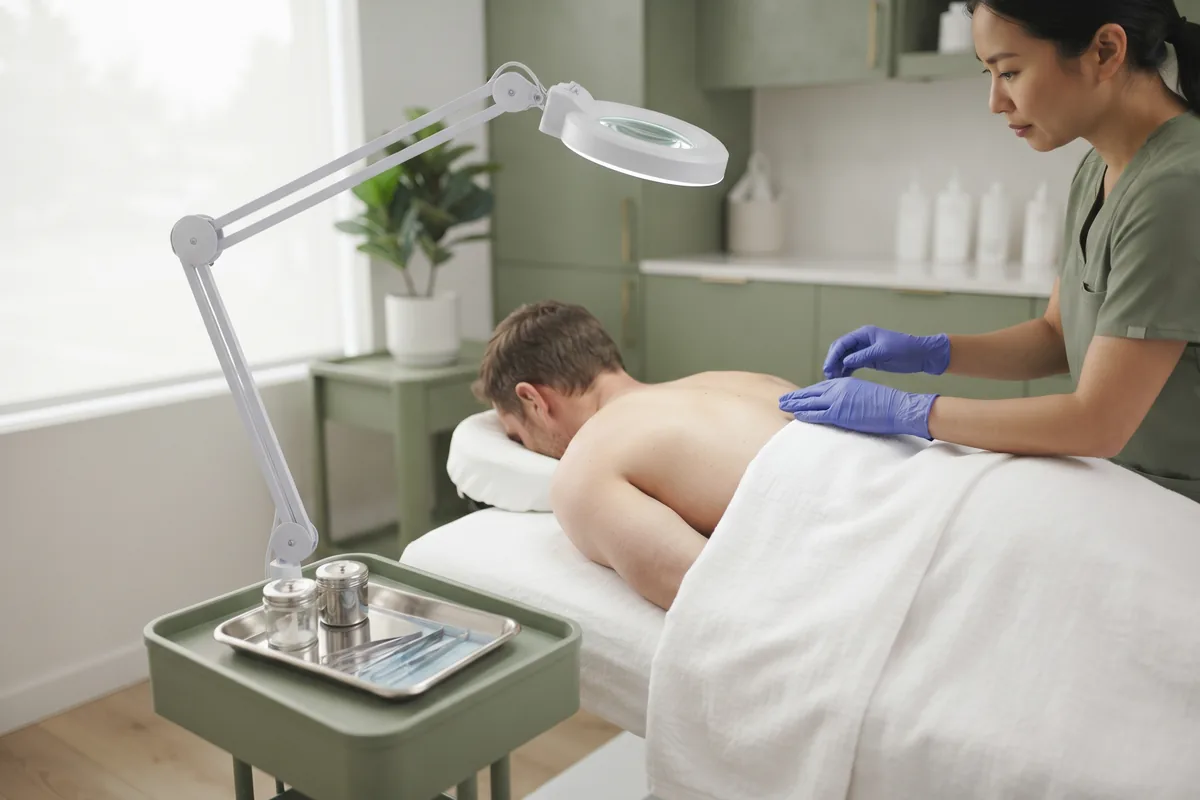
Back and shoulder hair is treated in sections across several visits.
Ears, Nose Bridge and the Gap Between the Brows
These are the quick wins. Hair on the outer ear, along the rim and lobe, is usually sparse but wiry, and it is easy to treat because the follicles are visible and the area is small. The same goes for hair across the bridge of the nose and the gap between the brows, where men often want a clean line without a visible gap of skin.
Two limits I want to be clear about. Hair inside the nostrils and deep inside the ear canal helps filter dust and debris, so it is not something I would clear. And if you have a mole, lesion or irritated spot with hair growing from it, have a physician look at it first.
Small areas are also a smart way to test the process. A few short visits on an ear or the brow gap show you exactly how treatment feels and heals, with very little time investment.
Electrolysis or Laser for Men
Laser is marketed heavily to men for backs and chests, so the comparison comes up constantly. The core difference is how each one finds the hair. Laser targets pigment, so it works best on dark hair against lighter skin. It does not respond well to gray, white, blond or red hair, because there is little pigment to absorb the light. Men with darker skin also need a device and settings chosen with care, since the light can affect skin pigment too.
Electrolysis does not depend on color. It works on the follicle itself, so gray beard strays, light chest hair and any skin tone are all treatable. The FDA recognizes electrolysis as permanent hair removal, while laser devices are generally cleared for permanent hair reduction. The tradeoff is time: laser covers wide areas quickly, and electrolysis goes one follicle at a time.
Many men end up using both. Laser thins a large dark patch, and electrolysis finishes what laser cannot touch. If you want the full breakdown, read electrolysis vs. laser hair removal.
Myths and Facts About Electrolysis for Men
Some beliefs keep men from asking about treatment at all. Here is how they hold up.
Myth
What is actually true
Electrolysis is only for women
Hair growth works the same in everyone. Men have denser, coarser hair in beard and chest zones, which affects how long treatment takes, not whether it works.
It leaves visible marks or a patchy beard
Done with correct technique, the treated area is left smooth. You choose the line, so there is no patchiness unless the line is badly chosen. Temporary pinkness and small scabs are normal.
Laser is always better for men
Laser is fast on large dark areas, but it depends on pigment. Gray, light and red hair, and some skin tones, are better served by electrolysis.
It will thin my whole beard
Only follicles that the probe reaches are treated. Hair outside the agreed line is untouched.
One or two visits will finish it
Hair grows in cycles, and not every follicle is active on the day of a session. Many visits over months are normal for dense areas.
It is too painful for men who are not used to it
Sensation varies with the area and hair coarseness. Most clients find it manageable, and numbing cream is an option. See the pain guide for area-by-area detail.
If you have heard something else and are unsure whether it applies to you, bring it to the free consultation. A direct answer based on your own hair is worth more than any generic claim.
What to Expect From Sessions, Healing and Hormones
At the first visit we talk through the area, any skin conditions and your medications. If hair growth changed suddenly, for example a rapid increase or loss, mention it and see a physician, since hormones and some medications play a role. After that, treatment is simple: you lie back under magnification, and I treat hair one by one.
Expect pinkness and tiny bumps after a session, usually fading within a day or two, and small scabs at some sites that fall off on their own. Do not pick them. The full routine is in my electrolysis aftercare guide. Follow the shaving instructions I give you afterward, since a fresh razor pass over irritated skin sets healing back.
Sessions repeat every few weeks, because hair grows in cycles and not every follicle is active on the day of treatment. Spacing and total count depend on density and area, and I set them with you in person.
If you live in Irvine, Tustin, Costa Mesa, Newport Beach or anywhere else in Orange County, the studio is at 18021 Sky Park Circle, Suite N. Book a free consultation and we will look at your zones, agree on a line and put a plan in writing.
A written plan with the zone, the line and the visit schedule keeps everyone on the same page.
Planning Your Visits: How the First Months Usually Go
Your exact schedule depends on density, area and how your skin responds, so I never promise a fixed count. Still, the shape of the process is consistent, and knowing it makes the early weeks easier.
Why it takes repeated visits. Hair grows in cycles. At any moment, some follicles are actively producing a visible hair, some are resting and some are about to restart. The probe can only treat a follicle that has hair in it. So I treat what is active today, and you come back as the next group surfaces.
First visit. Consultation, skin check, line choice and a small test area if you want one. Many men start treatment the same day.
Early sessions. Visits are usually spaced a few weeks apart. You will see hair that grows back, and that is expected. Some of it is hair I had not reached yet.
Middle stretch. Regrowth tends to look finer and sparser. Sessions often move faster because there is less to treat in each block.
Final clean-up. Stray hairs that surface late are picked off in short visits until the zone stays smooth.
Maintenance. Some men return once in a while for a stray hair or two as hormones and age change growth.
On budget, the math is simple and I do it with you openly. Each session is billed at the Square price for the zone: $90 for 45 minutes on the cheeks, neck or hairline, $100 for 45 minutes on the chest, and $120 for 1 hour on the back. Multiply by the number of visits we agree is realistic after I see your hair. I give that range at the free consultation and you pay only for sessions you book, with no pressure to prepay a package. For a general framework, see my article on how many electrolysis sessions you need and, for local pricing context, my guide to electrolysis cost in Orange County.
What to Bring to Your Consultation
A little preparation turns a 30-minute consultation into a real plan. This checklist is what I would bring myself.
A photo of a beard or neckline you like, and one you want to avoid.
A list of medications, including anything for skin, hormones or acne.
Notes on how you remove hair now and when you last shaved, waxed or lasered.
Questions about the zones you are considering, ranked by priority.
A realistic monthly budget and the number of visits you can commit to.
Any history of keloids, cold sores or slow-healing skin.
Choosing the right practitioner matters as much as choosing the zone. My article on how to choose an electrologist in California lists the license check, hygiene points and red flags I would use. The consultation is free, and an online consultation is $50 if you are not nearby.
Frequently Asked Questions
+ Can electrolysis permanently remove a man's beard?
Yes, each treated follicle stops producing hair, so electrolysis can clear a beard permanently. In practice a full beard is a very large project because every hair is treated individually. Most men choose to shape the cheek line and neckline, or clear a smaller zone, and decide on more after seeing their progress.
+ Does electrolysis work on gray or light hair in men?
Yes. Electrolysis treats the follicle, not the pigment, so gray, white, blond and red hair respond the same as dark hair. This is the main reason men with graying beards or light chest hair choose it over laser.
+ How many sessions does a neckline take?
It depends on how dense and coarse the hair is and how large the area is. A neck session at the studio is 45 minutes, and the plan runs over many visits spaced a few weeks apart. Aida gives a realistic estimate at the free consultation after looking at your hair.
+ Does electrolysis hurt more for men?
Not as a rule. Sensation depends on hair coarseness and the area treated, not gender. Coarse beard and underarm hair can feel stronger than fine hair, and numbing cream is an option. The back is usually well tolerated.
+ Can electrolysis help with razor bumps on the neck?
It often helps, because removing the follicle removes the hair that curls back into the skin. Inflamed or infected bumps should settle first and may need a physician. Aida reviews your skin at consultation before recommending a plan.
+ Should I shave before my electrolysis appointment?
Follow the instructions Aida gives at your consultation, since it varies by area. As a general rule, the hair needs to be long enough to be seen and treated, so a very recent close shave is not ideal. Do not wax, thread or pluck between sessions.
+ How much does it cost to treat the back or chest?
At Real Skin Beauty, back electrolysis is $120 for a 1 hour session and chest is $100 for 45 minutes. The total depends on hair density and how many visits are needed, so Aida gives a realistic estimate at the free consultation.
+ Will a treated beard line look unnatural?
Not when the line is planned carefully. Hair is treated only up to the edge you choose, so the beard keeps a natural look inside it. Starting with a slightly conservative line is a good idea, since you can always move it later but cannot bring treated hair back.
Licensed electrologist and cosmetologist with 20+ years of experience. Aida sees clients at Real Skin Beauty, 18021 Sky Park Circle, Suite N, Irvine, CA 92614.
Book a free consultation with Aida Khazieva at Real Skin Beauty in Irvine, CA. She will look at your hair and skin, agree on a line with you and give an honest estimate before you spend anything.
This article is for informational purposes and reflects Aida Khazieva's professional experience. It does not replace a personalized medical consultation. Individual results vary.
Questions? Aida Answers Them All.
Visit our FAQ or book a free consultation to discuss your specific skin and hair concerns.