Do At-Home Electrolysis Devices Work? An Electrologist's Honest Review
By Aida Khazieva·Electrolysis·15 min read·Real Skin Beauty, Irvine CA·Updated October 14, 2026
Mostly no. Home devices sold as electrolysis fall into three groups: needle kits, tweezer-style gadgets and light-based devices. None of them match what a licensed electrologist does with a sterile probe under magnification, and I would not trust any of them to give you permanent results. Some can trim down hair or tidy a few strays, but the risks of burns, infection and marks are real when you work on yourself without seeing the follicle. Here is the honest breakdown from someone who treats facial hair in Irvine every week.
Quick answer
Short answer: at-home devices are not a substitute for professional electrolysis.
Needle kits: hard to aim at your own face, no sterile workflow, higher risk of scarring and infection.
Tweezer devices: to my knowledge, no proof of permanent results.
Home light devices: a different technology (not electrolysis) that depends on hair color.
Safer path: a free consultation first, then professional sessions. Upper lip is $50 (20 min), chin is $65 (30 min).
What Counts as an "At-Home Electrolysis" Device
The phrase covers very different products, and the marketing blurs them together. Before judging whether they work, it helps to sort them.
Professional electrolysis means a fine sterile probe slides into the follicle alongside the hair, and a controlled current destroys the growth cells at the base. It is a skilled, hands-on procedure done by a licensed electrologist. The FDA recognizes it as permanent hair removal. Everything sold for home use is trying to imitate that result without the training, the lighting or the sterile setup.
In stores and online, you will find:
Home needle kits: a small control box and a fine wire or needle you insert into the follicle yourself.
Tweezer-style devices: a pair of tweezers that grips the hair and sends a small current down the shaft. Marketing often calls this "electrolysis."
Home light devices (IPL and laser): not electrolysis at all. They pulse light at pigment in the hair.
Radiofrequency or microcurrent gadgets: usually marketed for skin tightening, sometimes borrowed into hair removal claims.
I will cover each group below. If a product promises permanent removal in a few weeks with no side effects, treat that as a red flag. Real permanent removal takes time because hair grows in cycles, and every follicle has to be caught while it is active.
How Professional Electrolysis Works, and Why Home Versions Fall Short
To judge any home device, you need to know what the professional version actually does. Each hair grows from a follicle, a small pocket in the skin. At the bottom of it sits the bulb and the papilla, the cells that feed the hair and tell it to keep growing. Permanent removal means damaging those cells enough that the follicle stops producing hair.
A licensed electrologist slides a probe thinner than the hair itself into the follicle, along the hair, to the right depth. A measured dose of current then goes to the base. That current can be direct (galvanic), high-frequency heat (thermolysis) or a blend of both. If you want the differences, read the three types of electrolysis explained.
Four things have to go right at once, and home devices struggle with each of them:
Depth. Too shallow and the current never reaches the bulb. Too deep and it hits tissue that does not need treatment.
Angle. The follicle is not straight. The probe follows the path the hair takes, and that path changes from one hair to the next.
Dose. Current and time are set for the hair in front of me, then adjusted if the skin or the hair responds differently than expected.
Sterility. The probe, gloves and skin prep must be clean for every client, every time.
A professional also watches the skin as it reacts and removes the treated hair with light tweezers to confirm it slides out easily. A home user cannot do that reliably on their own face, and nothing in a mail-order box teaches the judgment that comes from treating thousands of hairs under a lamp.
There is also the timing problem. Hair grows in cycles, and only the follicles with an active hair can be treated. Even a perfect home device would have to be used repeatedly for months, and every session is another chance to cause a mark if the technique slips.
Why Needle Kits Are the Riskiest Option
A home needle kit looks closest to the real thing, and that is exactly the problem. The device works only if the probe goes down the follicle at the correct angle and depth. Miss, and you either treat nothing or damage the surrounding skin.
Here is what makes this hard to do on yourself:
You cannot see the follicle angle. Hairs on the chin and lip grow in different directions. In a mirror, you see the surface, not the path underground. I work under magnification and still adjust the angle hair by hair.
Your hand and your target are the same body part. Small tremors or a flinch move the probe. A flinch with a probe in the skin can mean a puncture where there was no hair.
Sterility is difficult at a bathroom sink. A probe that breaks the skin must be single-use and sterile. Reusing or poorly cleaning needles raises the chance of infection, and shared devices raise the risk of passing on bloodborne infections.
You cannot judge the energy. Too little current leaves the follicle alive. Too much burns skin and can leave a pitted mark or a dark spot that outlasts the hair you wanted gone.
Marks are the part that surprises people. A hair grows back in weeks. A scar or hyperpigmented spot on your upper lip can last far longer. If you have already tried a kit and have irritation, stop and speak with a physician if there is any sign of infection such as spreading redness, warmth, pus or fever.
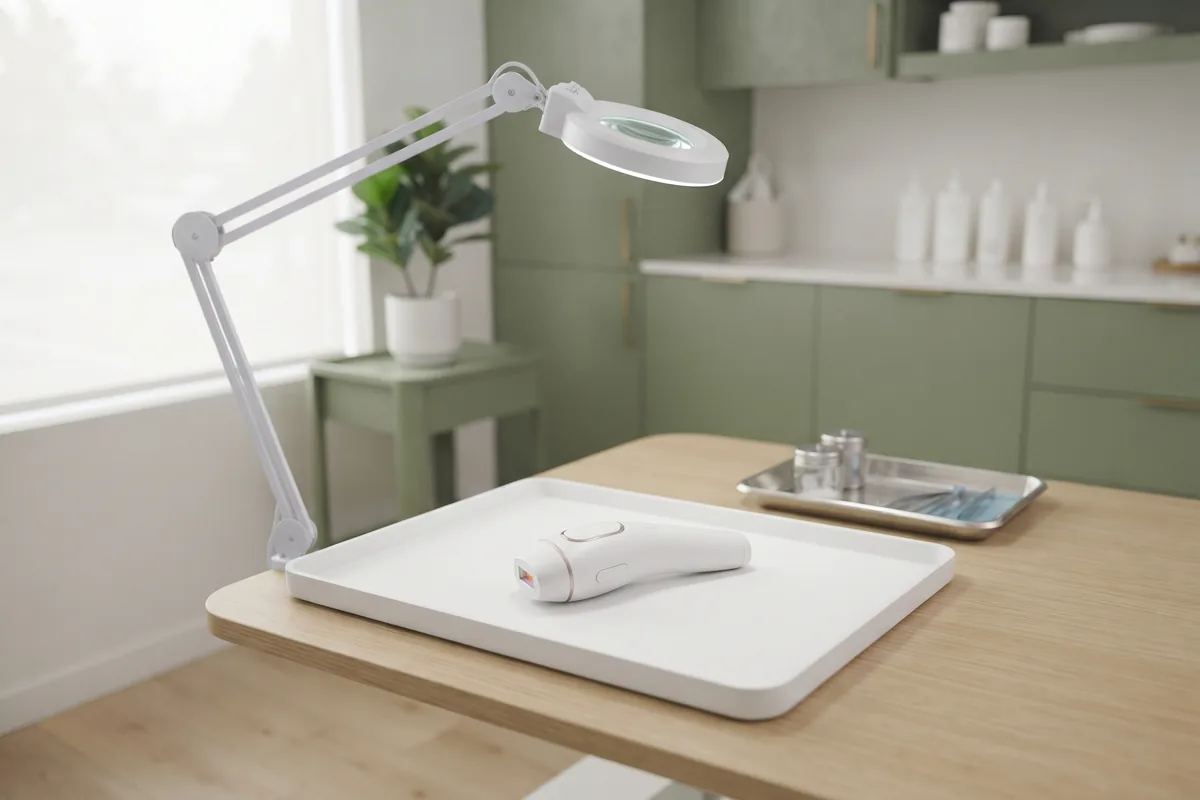
A consumer hair removal device beside the setup used in a professional electrolysis room.
Tweezer Devices and Home Light Devices
Tweezer-style devices. These grip a hair and deliver a small current through the shaft. The idea is that the current travels down to the root. In practice, the current has to reach the papilla at the base of the follicle in enough strength to destroy it, and a handheld tweezer does not control that. To my knowledge, these devices have not been shown to give permanent results the way a professional probe does. What you mostly get is plucking with extra steps, and plucking can distort the follicle and encourage ingrown hairs.
Home IPL and laser. These are a different category. They target pigment, so they work best on dark hair and lighter skin, and they do little for gray, white, blond or red hair. Some home devices are FDA-cleared for hair reduction, which is not the same as the FDA-recognized permanent hair removal that electrolysis offers. If you want the full comparison, read electrolysis vs. laser hair removal.
Home light devices can also carry risks on darker skin tones if used at the wrong setting. Read the manual, patch test and consider asking a professional before treating your face.
Myths About Home Hair Removal Devices
The marketing around home devices repeats a handful of claims. This table puts them next to what I see in practice.
Claim on the box
What I would say
Permanent hair removal at home
Permanent removal depends on accurately destroying each follicle. Without magnification and training, that is very hard to do on yourself.
Works on every hair color
Light devices need pigment, so gray, white, blond and red hair are usually a poor match. Needle and tweezer devices do not depend on color, but accuracy is the problem.
Painless
Any method that really treats the follicle will be felt. Painless often means the energy is too low to do much.
Salon results for a fraction of the cost
A device bought for the wrong job still costs money. Marks and repeated attempts add costs of their own.
Dermatologist tested
This phrase has no fixed meaning. Look for the specific regulatory clearance and the claim it covers.
Safe for all skin tones
Light devices carry a higher risk of pigment changes on darker skin if used at the wrong setting. Always read the guidance for your skin tone.
None of this means every home product is a scam. Some people get useful trimming or temporary smoothing from them. The problem is the word permanent, which is where most disappointment starts.
Home Devices vs Professional Electrolysis: Side by Side
A comparison makes the gap clear. The table covers what I see matter most to clients: what the device targets, who it works for and what can go wrong.
Home needle kit
Tweezer device
Home IPL / laser
Professional electrolysis
Technology
Current through a probe you insert
Current through hair shaft
Light pulse at pigment
Current through a sterile probe at the follicle
Works on gray, white, blond, red hair
In theory
Unclear
Generally no
Yes, it does not depend on color
Permanent claim
Not reliable at home
Not shown
Hair reduction at best
FDA-recognized permanent hair removal
Who does the work
You, without magnification
You
You
Licensed electrologist under magnification
Main risks
Scarring, infection, dark marks
Ingrown hairs, irritation
Burns, pigment change
Redness, tiny scabs, rare infection (low-risk with proper technique)
Cost
Device price plus repeat attempts
Device price
Device price
Upper lip $50, chin $65 per session
Two rows in that table matter most. The first is hair color. Anyone with light or gray hair is the person most tempted by home gadgets because laser fails them, and that is also the person for whom professional electrolysis works best. The second is the person doing the work. Facial hair is the hardest place to treat on yourself, because angles are tight and you are working in a mirror.
Burns, Infection and Dark Marks: Spotting Problems Early
If you have already used a home device, or you are thinking of it, know what trouble looks like. Mild pinkness that fades within a day is common after any hair removal. These signs are different:
Redness that spreads outward from the treated spot or keeps getting worse after two days.
Warmth, swelling or throbbing pain around a treated hair.
Pus, yellow crust or a bump that looks like a boil.
A fever or feeling unwell after treatment.
A dark spot or a pitted, indented mark that appears where hairs were treated.
Spreading redness, pus and fever call for a physician, not for more home care. Dark spots and pits are slower problems. They can take months to fade, and some marks become permanent. I do not treat damaged or infected skin until it has healed, and I may ask you to see a doctor first.
Do not pick, squeeze or dig out hairs. Wash gently, keep the area clean, avoid makeup over it and use sunscreen once the skin has closed. If a mark is bothering you, bring it to a consultation so we can look at it together.
What You Can Do at Home That Actually Helps
Home care is not useless. It just belongs on the supporting side of treatment. These are the habits I recommend to clients between appointments:
Trim, do not pluck. Plucking removes the hair I need to see and treat. If strays bother you, trim them with small scissors or a razor.
Keep growth visible. The follicle needs a short stub of hair above the surface so I can find it. Ask at your consultation how much to leave.
Follow aftercare. Keep treated skin clean, avoid picking scabs and use sunscreen. My electrolysis aftercare guide has the full routine.
Skip actives before a session. Pause retinol and acids on the treatment area for a couple of days before you come in.
Home numbing cream before a session is another useful tool. If pain is the reason you are looking at DIY, read my realistic pain guide first. Most people find it more manageable than expected, and a professional can adjust current and pacing as you go.
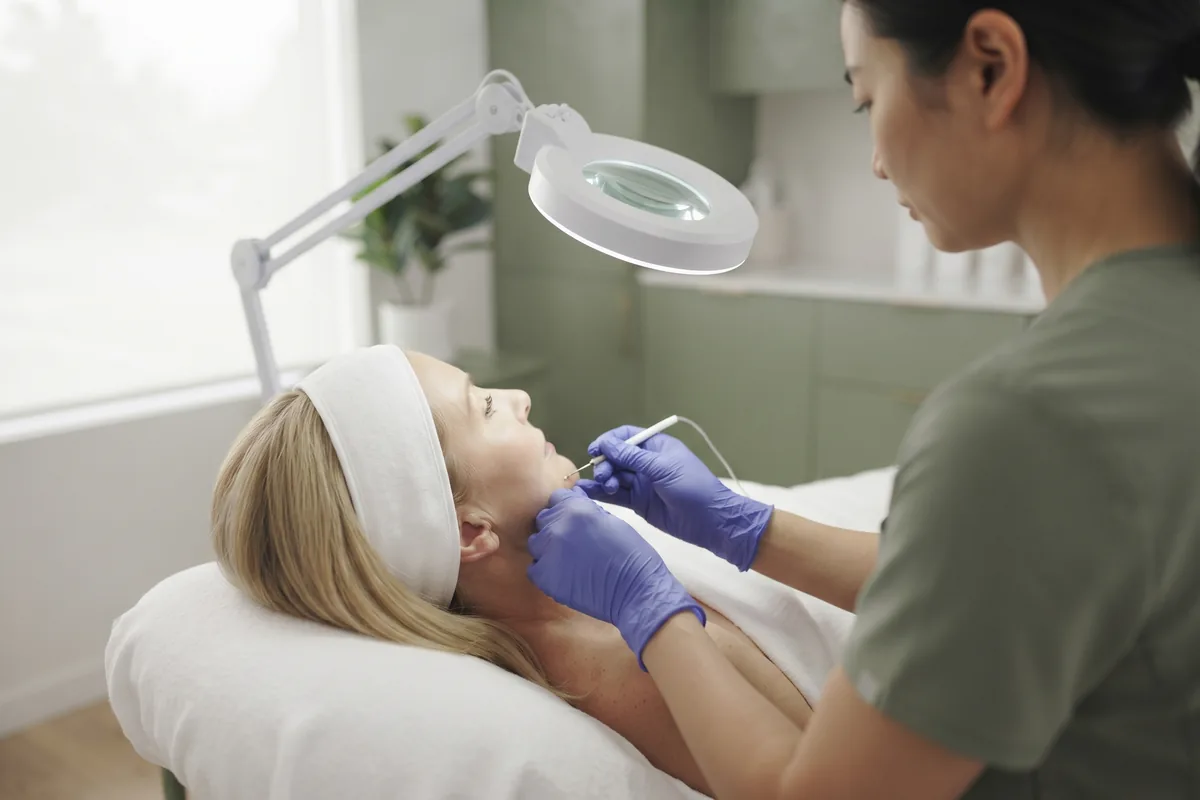
Treating one follicle at a time under magnification, the part that is hard to copy at home.
If You Still Want to Try a Device: A Safety Checklist
I would rather you ask a professional. If you decide to try something at home anyway, these checks reduce the risk:
Do not use any device on moles, warts, broken skin, active acne or irritated areas.
Check the device is cleared or registered for the claim it makes, and read independent reviews instead of ad copy.
Never share a probe, and never reuse a needle or tip that has pierced skin.
Test on a small, low-visibility area first and wait several days to see how your skin reacts.
Avoid the face if you are prone to keloid or dark marks. See a physician before treating.
Stop and call a doctor if you develop spreading redness, swelling, pus or fever.
Skip home treatment if you are pregnant, have a pacemaker or take medications that affect healing, and ask your physician first.
If hair growth on the face or body is new, heavy or sudden, see a physician as well. Hormonal causes such as PCOS can drive it, and that changes the plan. My article on PCOS facial hair removal explains the connection.
If You Already Used a Device: How an Electrologist Can Help
Many clients arrive after trying something at home. That is common, and there is nothing to be embarrassed about. What helps is telling me exactly what you did.
Name the device and how often you used it. A needle kit, a tweezer device and a light device leave different traces.
Tell me what you do between uses. Plucking, threading and waxing pull hairs out and can distort the follicle, leaving hair that grows in odd directions.
Let the skin settle. If the area is irritated, scabbed or inflamed, we wait. Treating on top of damage makes marks more likely.
Expect a fresh assessment. I look at the hair that is there now, not at what the box promised. The plan starts from that.
Hair that has been repeatedly plucked or tweezed can look different, but it can be treated like any other. If you tried a light device and hair came back or grew in thicker or in new places, my article on hair growth after laser explains what may be going on and why electrolysis is the usual fix. For chin hair in particular, electrolysis for chin hair covers the process step by step.
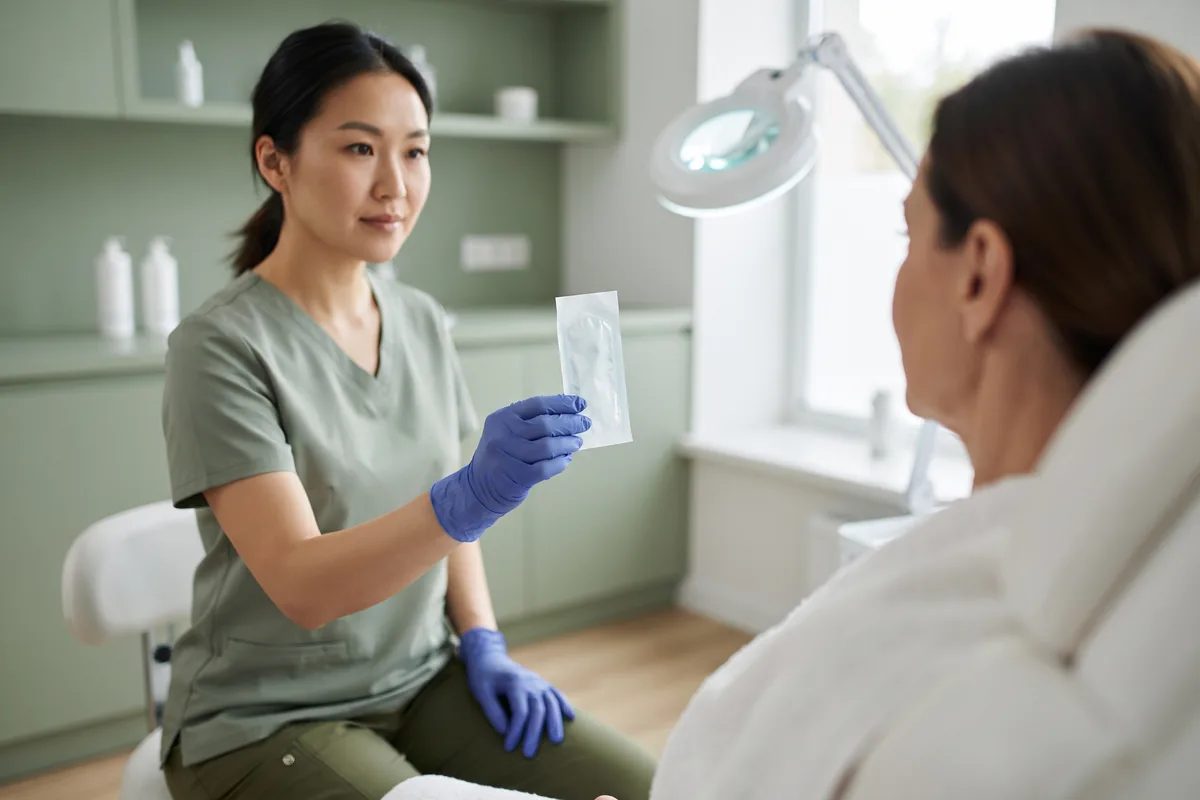
A sealed single-use probe is opened in front of the client, a step no home kit can replicate.
Questions to Ask Before Buying Any Hair Removal Device
If you are still going to shop, these questions will filter out most of the weak products.
What exactly does it claim: removal, reduction or smoothing? Those are three different promises.
Which regulatory clearance does it hold, and for which claim? "Hair reduction" and "permanent hair removal" are not the same.
Does it depend on pigment? If so, check your own hair and skin tone against the instructions honestly.
Does it use a needle or any tip that breaks the skin? If so, how is each insertion kept sterile?
What is the return policy if it does nothing after a full trial period?
Is the total cost of the device, replacement tips and time more than the sessions you would need for the area you care about?
On that last question, compare with real numbers. At the studio, upper lip is $50 for 20 minutes and chin is $65 for 30 minutes. A device that does not work costs its full price plus the cost of repairing any damage. A first appointment costs nothing, because the consultation is free. For choosing a practitioner, read how to choose an electrologist in California.
What Professional Electrolysis Costs and Where to Start in Irvine
Many people reach for a device because they assume professional treatment is out of reach. The studio prices are simple: upper lip is $50 for 20 minutes, chin is $65 for 30 minutes, and a general facial zone is $75 for 30 minutes. Larger areas cost more because they take longer.
The total depends on how much hair you have, how coarse it is and how it responds, so I never quote a fixed number before I see you. That is why the consultation is free. We look at the area, talk through your history and I give you a realistic range. You pay only for sessions after that.
The studio is at 18021 Sky Park Circle, Suite N, in Irvine, and clients come from across Orange County. If you are weighing a DIY kit against a first appointment, book a free consultation and ask me anything. You can also read the full electrolysis service page for what a session involves.
Frequently Asked Questions
+ Do at-home electrolysis devices work?
Some can remove or trim hair in the short term, but I do not consider them reliable for permanent removal. Needle kits are hard to use accurately on yourself, and tweezer devices have not been shown to match professional results. Professional electrolysis is the method the FDA recognizes as permanent hair removal.
+ Is at-home electrolysis safe?
It is riskier than professional treatment. Without magnification and a sterile setup, the chances of burns, infection, scarring and dark marks go up. Professional electrolysis performed with proper technique is low-risk. If you notice spreading redness, pus or fever after any hair removal, see a physician.
+ Can I use a home laser or IPL instead?
Light devices work on pigment, so they are best on dark hair and lighter skin. They are not electrolysis and usually do little for gray, white, blond or red hair. Some are cleared for hair reduction, which differs from permanent hair removal.
+ Why can I not just electrolyze my own chin?
The follicle angle and depth are hidden under the skin, and you are working in a mirror with your own hand. A small miss means untreated hair or damaged skin. Under magnification, a licensed electrologist can follow each hair at the correct angle.
+ How much does professional electrolysis cost in Irvine?
At Real Skin Beauty, upper lip electrolysis is $50 for 20 minutes and chin is $65 for 30 minutes. Totals depend on hair density and response, so Aida gives a realistic estimate at the free in-studio consultation.
+ Do home electrolysis kits cause scarring?
They can. Without magnification, a steady hand and a sterile setup, a probe can miss the follicle or deliver too much current, and that can leave a pitted mark or a dark spot. Marks are one of the main reasons I advise against home needle kits.
+ Can I use a home device between professional sessions?
Ask your electrologist first. In general, avoid anything that pulls hair out by the root, such as plucking or waxing, because the hair needs to be present to be treated. Trimming is usually fine, and Aida explains what is allowed for your area at the consultation.
+ How long does professional electrolysis take compared with home devices?
Professional electrolysis is a series over many months because hair grows in cycles. Home devices promise faster results, but speed is not the same as permanence. Aida gives a realistic range at the free consultation after looking at your hair and skin.
Licensed electrologist and cosmetologist with 20+ years of experience. Aida sees clients at Real Skin Beauty, 18021 Sky Park Circle, Suite N, Irvine, CA 92614.
Book a free consultation with Aida Khazieva at Real Skin Beauty in Irvine, CA. She will look at your hair, explain what is realistic and give you an honest estimate before you spend anything on devices or sessions.
This article is for informational purposes and reflects Aida Khazieva's professional experience. It does not replace a personalized medical consultation. Individual results vary.
Questions? Aida Answers Them All.
Visit our FAQ or book a free consultation to discuss your specific skin and hair concerns.