How to Prepare Your Skin Before a Chemical Peel: A 2-Week Plan
By Aida Khazieva·Chemical Peels·14 min read·Real Skin Beauty, Irvine CA·Updated October 21, 2026
Protect your skin from the sun for two weeks, pause retinoids, scrubs, acid products and waxing for about a week, and tell your provider about every medication and condition, especially isotretinoin and cold sores. Keep a gentle routine for the last 48 hours and reschedule if the skin is sunburned, broken or irritated. A calm skin barrier gives the most predictable peel.
Quick answer
Two weeks before: daily sunscreen, no tanning or self-tanner, no new products.
About one week before: usually pause retinoids, acid pads, scrubs, waxing, threading and dermaplaning on the area.
Tell your provider about isotretinoin, prescriptions, pregnancy, skin conditions and cold sores.
Last 48 hours: gentle cleanser, plain moisturizer, sunscreen. Reschedule if you see sunburn, cuts, rash or a cold sore.
Darker skin tones: gentler acids, strict sun care and no extra exfoliation lower the risk of dark marks.
The Short Answer: Calm, Protected, Honest
Preparing for a chemical peel is less about adding products and more about removing risks. A peel works by loosening and lifting a controlled layer of skin cells. It works best, and with fewer surprises, when the skin barrier is intact, the skin has not been sunburned or freshly exfoliated, and your provider knows everything that could change how your skin reacts.
In practice that means three things. First, pause strong actives and other exfoliation for a few days to a week beforehand, as your provider advises. Second, protect your skin from the sun for at least two weeks. Third, tell your provider about every medication, skin condition and past reaction, especially isotretinoin, cold sores and any history of dark marks after irritation. Do those three things and most of the work is done.
Every provider has their own instructions, and the depth of the peel changes them. What follows is the general approach I use for the superficial peels I offer in my Irvine studio, such as glycolic, lactic, mandelic and salicylic peels. Medium and deep peels done by physicians follow stricter medical protocols, and you should follow your doctor's instructions for those.
Your Peel Prep Timeline at a Glance
Here is the overview. The sections below explain each step and the reasons behind it.
When
What to do
Why
Two weeks before
Book a consultation, daily sunscreen, no tanning, no self-tanner on the face, stop new products
Sunburned or tanned skin reacts more strongly, and a stable routine makes reactions easier to read
One week before
Usually pause retinoids, scrubs, peeling pads and strong acid toners. No waxing, threading, laser or dermaplaning on the area
Freshly exfoliated or irritated skin can let the peel penetrate deeper than planned
48 to 72 hours before
Gentle cleanser, plain moisturizer, sunscreen. No new products. Shave other areas, not the treatment area
The barrier should be calm and unbroken on peel day
Day before
Check for cuts, rashes, sunburn or a cold sore starting. Tell your provider if anything changed
Broken or inflamed skin is a reason to reschedule
Day of the peel
Arrive with clean skin or minimal makeup, bring sunscreen and a hat, plan a quiet evening
Less to remove, less friction, and protection on the way home
If you only remember one row, remember the one-week row. Most avoidable peel reactions I hear about involve someone who used a retinoid, a scrub or a peeling pad the night before, or who waxed the area a few days earlier.
Two Weeks Before: Start With a Consultation and Sun Protection
Book a skin consultation
A good peel starts with choosing the right acid and strength for your skin, not the strongest one. At a consultation I look at your skin under magnification, ask what you want to change (texture, breakouts, dullness, dark spots) and go through your health history. Then I suggest which peel fits. If you want to read ahead, my guide on glycolic, lactic or mandelic: which peel fits your skin explains the differences. Consultations at my studio are free.
Protect your skin from the sun every day
Sun is the biggest factor you can control. A peel should not be done on sunburned skin, and recent tanning raises the chance of uneven pigment afterward, especially for medium and darker skin tones. In the two weeks before, wear a broad-spectrum sunscreen every morning, reapply when you are outside, and use a hat at the beach or on the trail. In Orange County that sounds obvious, but many clients forget that driving, outdoor lunches and walking the dog add up.
Avoid self-tanner on the face in this window as well. It sits in the top layer of skin and can come off unevenly during a peel.
Stop introducing new products
Two weeks before a peel is not the time to try a new serum or cleanser. If your skin reacts, you will not know whether it was the new product or the peel. Keep your routine stable and boring.
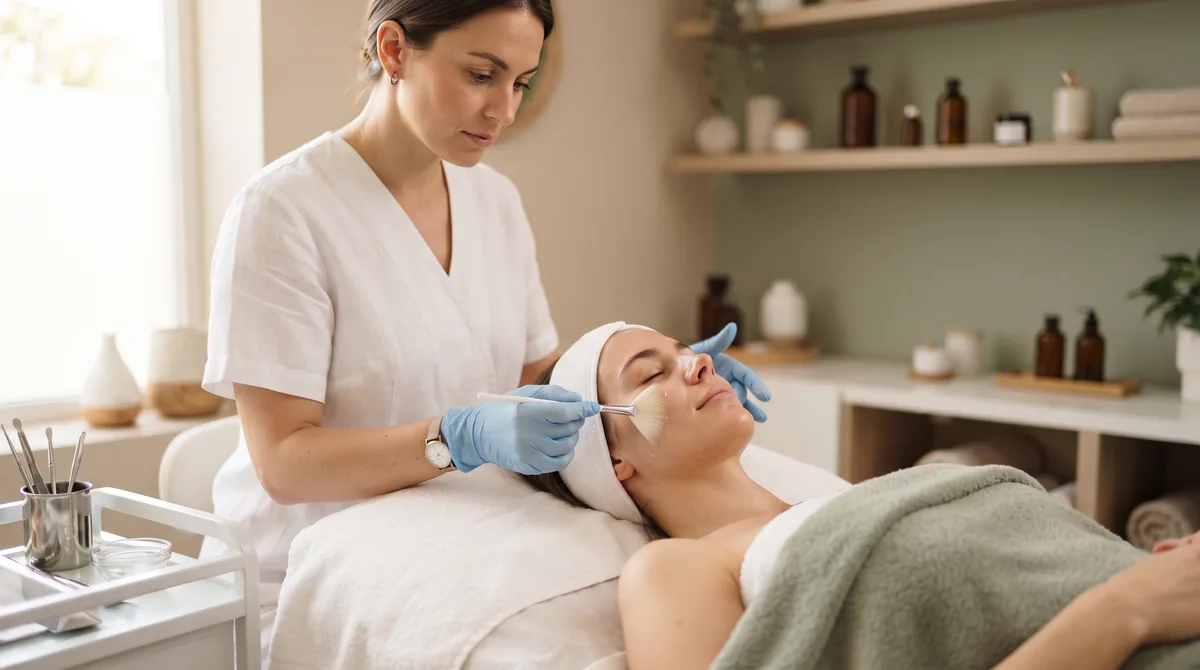
Peel prep starts at the consultation: skin type, goals, medications and past reactions decide which acid fits.
One Week Before: What to Pause
Many products make the top layer of the skin thinner or more reactive. That is often why they work, but before a peel it can mean the acid goes deeper than intended. Providers differ on exact timing, so follow your own provider's instructions. These are the general guidelines I give for superficial peels.
Product or treatment
Usual pause before a superficial peel
Notes
Retinol and other over-the-counter retinoids
Often 3 to 7 days
Longer if your skin is already flaky or red
Prescription retinoids (for example tretinoin)
As your prescriber and peel provider agree
Never stop or change a prescription without asking the prescriber
Glycolic, lactic or salicylic toners, pads and serums
Often 3 to 7 days
Includes "resurfacing" and "glow" pads
Physical scrubs and cleansing brushes
About a week
Switch to fingertips and a gentle cleanser
Benzoyl peroxide
Often a few days
Can add dryness and irritation
Waxing, threading or depilatory creams on the area
About a week
They strip the surface and can cause patches of stronger reaction
Dermaplaning, microdermabrasion or other exfoliating treatments
About a week, sometimes longer
Your provider may combine them on purpose, but not on your own
Laser, injectables or other procedures on the face
Ask your provider
Timing depends on the procedure
What you can keep: a gentle cleanser, a simple moisturizer, sunscreen and soothing ingredients such as niacinamide or hyaluronic acid if your skin already tolerates them. My retinol beginner's guide explains how retinoids change skin and why a short pause before a peel makes sense.
A sample routine for the week before
Clients often ask me what they actually should use in the days before a peel. Here is a simple routine that works for most skin types. Swap in your own gentle products; brand matters much less than keeping things mild and consistent.
Step
Morning
Evening
Cleanse
Rinse with lukewarm water or a gentle, fragrance-free cleanser
Gentle cleanser, fingertips only, no brush
Treat
Optional hydrating serum (hyaluronic acid or glycerin) if you already use it
Optional niacinamide if your skin already tolerates it
Moisturize
Light moisturizer
Plain moisturizer, a little richer if your skin feels tight
Protect
Broad-spectrum sunscreen, reapplied outdoors
Nothing else. No masks, no acids, no retinoids
If your skin is oily or breakout-prone, you may worry that a week without acids will cause spots. A short pause rarely changes much, and the peel itself will clear the surface. If your skin is dry or sensitive, the week of rest often makes the peel more comfortable. Either way, the skin that arrives calm usually leaves calm.
One more practical point: drink water and sleep normally. These do not change the peel chemistry, but a rested client who is not rushing to the appointment tends to sit more comfortably and notice less stinging. I also suggest eating something beforehand, because some people feel lightheaded when they are nervous and hungry.
What about priming the skin?
Some providers ask clients to "prime" the skin for a few weeks before a series of peels, for example with a mild acid product or, for some pigment concerns, with specific products a physician prescribes. Priming can help the skin get used to acids and may help the peel absorb more evenly. It is not something to improvise. If your provider gives you a priming plan, follow it and stop it at the point they say, usually several days before the peel. If they do not, a stable gentle routine is enough for a superficial peel.
Tell Your Provider: Medications and Health History
This is the part people rush through on the form, and it matters most. Some medications and conditions change how skin heals or reacts. Mention everything, even if it seems unrelated. I am not able to give medical advice, so if you are unsure about a medication, ask the physician who prescribed it.
Isotretinoin (Accutane and similar). It changes how skin heals. Many providers will not do peels during treatment and for a period after it ends. Tell your provider exactly when you took it last, and follow your physician's guidance.
Prescription retinoids and topical acne medications. They can make skin more reactive to a peel.
Medications that increase sun sensitivity, such as some antibiotics and other drugs. Your pharmacist can tell you whether yours does.
Blood thinners and anything that affects healing. Mention them even for a light peel.
Pregnancy or breastfeeding. Many providers limit which peels they offer during this time. Ask your physician first.
Skin conditions such as eczema, psoriasis, rosacea, active dermatitis or a history of keloid scars.
Allergies, including aspirin allergy, since salicylic acid is related to aspirin.
Recent procedures on the face, including laser, injectables or surgery.
Being honest on the form is not about getting permission. It helps your provider choose the right acid, the right strength and the right timing, or decide that waiting is better.
In the week before a peel, a plain routine of cleanser, moisturizer and sunscreen usually replaces retinoids, acid pads and scrubs.
Cold Sores: Plan Ahead
If you get cold sores, tell your provider at the consultation. Peels and other facial treatments can sometimes trigger an outbreak around the mouth in people who are prone to them. Some people with frequent outbreaks talk to their physician before a peel about whether preventive medication makes sense for them. That decision belongs to your doctor.
If you feel the tingling or see the start of a cold sore in the days before your appointment, call and reschedule. A peel should not be done over an active cold sore or any open lesion. The same applies to active breakouts that are open, scratches, rashes and sunburn.
Darker Skin Tones: Extra Care With Pigment
Peels can be a good option for medium and deep skin tones, but the skin is more likely to respond to irritation with dark marks (post-inflammatory hyperpigmentation). Preparation helps lower that risk.
Choose a gentler acid. Mandelic and lactic acids are often preferred for skin that marks easily, and glycolic strength is chosen carefully. My glycolic acid peel guide covers how strength and timing are adjusted.
Be strict with sun protection before and after.
Do not stack exfoliation in the week before. Irritation before a peel is one of the easiest ways to get uneven pigment after.
Mention any past dark marks from acne, bug bites, waxing or previous treatments.
Consider a patch test if your provider offers one, especially for a first peel.
If dark spots are your main concern, my article on chemical peels for dark spots explains which peels are used and what to expect over a series.
48 Hours Before and the Day Before
Two days before your peel, your routine should be as simple as possible: a gentle cleanser morning and night, a plain moisturizer and sunscreen. No new products, no masks, no at-home "glow" treatments.
Shaving: if you shave your face, do it at least a day or two before, or skip it and let your provider know. A fresh shave can leave tiny nicks the acid will find. Men who shave daily should ask their provider how they handle the beard area.
The day before, look closely in good light. Check for:
Sunburn or peeling from the sun
A new rash, redness or stinging
Cuts, scratches or picked spots
A cold sore starting
Very irritated skin after a product you forgot to pause
If you see any of these, call the studio. Moving a peel by a week is better than doing it on compromised skin. I would always rather reschedule than take a chance.
Exercise and heat: a normal workout the day before is fine, but avoid a long sauna session, hot yoga or a very hot bath the evening before if your skin tends to flush. Heat and sweat can make sensitive skin more reactive, and you want it calm and cool when you walk in. The same goes for a very spicy dinner if you know it triggers redness for you.
Plan your calendar too. Superficial peels usually allow you to go back to normal life the next day, but light flaking or pinkness for a few days is common. Avoid planning a peel right before a wedding, a photo shoot or a beach trip. My article on how long before an event to get a facial or peel has suggested windows.
On calm, unbroken skin the peel spreads evenly and the reaction is easier to predict.
Peel Day: What to Bring and What to Expect
Arrive with clean skin or light makeup that is easy to remove. Skip heavy foundation, waterproof mascara and fragranced products. Tie back long hair or bring a headband. Bring a hat and sunscreen for the trip home.
In the treatment room I cleanse the skin, remove any oil, protect sensitive areas such as the corners of the eyes, nostrils and lips, and then apply the peel. Most people feel warmth, tingling or a mild sting that builds for a few minutes. It is normal to feel something. It is not normal for it to feel unbearable, and you should always say if it does. The peel is then neutralized or removed according to its type, and I finish with a calming product and sunscreen.
Preparation and aftercare are two halves of the same plan. After a superficial peel, the usual rules are gentle cleansing, a plain moisturizer, strict sunscreen, no picking at flakes and no actives until your skin feels normal again. I wrote a separate, detailed guide on the chemical peel recovery timeline that walks through what is normal day by day and when to call your provider.
Common Prep Mistakes I See
Using retinol "one last time" the night before because the skin felt fine.
Waxing the upper lip or brows a few days before a full-face peel.
Coming in with a sunburn from a weekend at the beach and hoping it does not count.
Forgetting to mention isotretinoin taken in the past months, or a new prescription.
Trying a new cleanser or serum the same week.
Scrubbing to "help" the peel, which only irritates the surface.
Booking a peel two days before an event.
None of these are disasters on their own, but each one adds risk you do not need. If you are in Irvine or nearby in Orange County and want a peel plan built around your skin, book a free consultation at Real Skin Beauty, 18021 Sky Park Circle, Suite N, Irvine, or call (949) 444-6191. I have worked with skin for more than 20 years, and the clients who get the best results from peels are almost always the ones who prepared calmly. You can book online here.
Frequently Asked Questions
+ How long before a chemical peel should I stop retinol?
For a superficial peel, many providers ask you to pause over-the-counter retinol for about 3 to 7 days, and longer if your skin is flaky or red. Prescription retinoids should only be paused or changed in agreement with your prescriber. Always follow the exact instructions of the provider doing your peel.
+ Can I wax before a chemical peel?
It is usually best not to wax, thread or use depilatory creams on the treatment area for about a week before a peel. These methods remove a layer of surface cells along with the hair, which can make the peel react more strongly in those spots. Shaving other areas of the body is fine.
+ Should I exfoliate before a chemical peel?
No. Stop scrubs, cleansing brushes, peeling pads and acid toners for about a week before a superficial peel. The peel itself is the exfoliation. Extra exfoliation beforehand can thin the surface and let the acid go deeper than planned, which raises the chance of irritation.
+ Can I get a chemical peel if I have a tan or sunburn?
Not with a sunburn. Peeling sunburned skin is a reason to reschedule. A recent tan also raises the risk of uneven pigment after a peel, especially on medium and darker skin. Wear sunscreen daily for at least two weeks before and tell your provider about recent sun exposure.
+ Can I get a chemical peel while taking isotretinoin?
Many providers will not perform peels during isotretinoin treatment or for a period after it ends, because the medication changes how skin heals. Tell your provider when you last took it and follow your physician's guidance. Do not stop or change any prescription on your own.
+ What if I get a cold sore before my peel?
Call and reschedule. A peel should not be done over an active cold sore or any open lesion. If you get cold sores often, mention it at your consultation, and talk with your physician about whether preventive steps make sense before facial treatments.
+ Should I wear makeup to my chemical peel appointment?
Come with clean skin or light makeup that is easy to remove. Skip heavy foundation, waterproof mascara and fragranced products. Your provider will cleanse and degrease the skin before applying the peel. Bring sunscreen and a hat for the trip home.
+ Are chemical peels safe for darker skin?
Many superficial peels can be used on medium and deep skin tones with care. Providers often choose gentler acids such as mandelic or lactic, adjust strength and timing, and stress strict sun protection, because darker skin is more likely to form dark marks after irritation. A consultation and sometimes a patch test help plan it.
Licensed electrologist and cosmetologist with 20+ years of experience. Aida sees clients at Real Skin Beauty, 18021 Sky Park Circle, Suite N, Irvine, CA 92614.
Book a free consultation with Aida Khazieva at Real Skin Beauty in Irvine, CA. She will choose the right peel for your skin and give you a simple prep plan for the two weeks before.
This article is for informational purposes and reflects Aida Khazieva's practitioner experience. It does not replace a personalized medical consultation. Individual results vary.
Questions? Aida Answers Them All.
Visit our FAQ or book a free consultation to discuss your specific skin and hair concerns.