Anti-Aging Facials After 50: What Your Skin Needs and Why
By Aida Khazieva·Anti-Aging·14 min read·Real Skin Beauty, Irvine CA·Updated July 27, 2026
Skin in your 50s is not simply older skin. It is structurally different at the cellular level, and the treatments, ingredients and approaches that worked at 35 are not just less effective at 55, some of them are actively wrong. I see this regularly in my Irvine studio: clients who have been loyal to a skincare routine for years who cannot understand why their results stopped, or why a treatment that gave them radiant skin at 40 is leaving them irritated and tight at 54. The answer is almost always that mature skin has different needs that require a different strategy, not more of the same approach applied harder.
Quick answer: There is no single best anti-aging facial after 50. The most effective approach combines treatments: microcurrent for muscle laxity, red LED to stimulate collagen, a series of mild lactic or enzyme peels for texture and tone, and steady hydration for the barrier. Collagen declines about 1 percent a year after 25, so consistency matters.
How Skin Actually Changes After 50: The Clinical Reality
Understanding what is actually happening biologically to your skin after 50 determines everything about how to treat it effectively. Most skincare marketing describes this process vaguely in terms of "dullness" and "loss of radiance." The clinical reality is more specific and more useful to understand.
Collagen and elastin decline is compounding. Collagen production starts declining at approximately age 25 at a rate of about 1 percent per year. By age 50, that means 25 years of accumulated decline, leaving skin with meaningfully less structural support. Elastin, the protein that allows skin to spring back after being stretched, follows a similar trajectory. The combination produces skin that is thinner, less resilient and more prone to showing lines and sagging.
Sebaceous activity decreases. The oil glands produce less sebum after 50, especially in women after menopause when estrogen levels fall. This is why skin that was normal or even oily through your 30s and 40s may feel chronically dry and tight in your 50s. The lipid layer that protects the skin barrier becomes less robust, and dehydration becomes the default skin state rather than an occasional problem.
Cell turnover slows significantly. Skin cell turnover that happens every 28 days in young skin slows to 45 to 60 days or longer after 50. Dead skin cells accumulate on the surface for longer before they shed naturally. This is why mature skin often looks dull and lacks the fresh texture that more frequent cell turnover produces. It is also why gentle exfoliation becomes more important while aggressive exfoliation becomes more damaging.
Glycosaminoglycan content drops. Glycosaminoglycans, including hyaluronic acid, are the water-binding molecules distributed throughout the dermis. They hold up to 1,000 times their own weight in water and are responsible for the plump, hydrated appearance of younger skin. After 50, both the quantity and the quality of these molecules decline. Skin that was once plump and dewy from intrinsic hydration requires external support to maintain adequate moisture levels.
Subcutaneous fat redistributes. The fat compartments beneath the skin that give the face its youthful volume do not disappear equally across the face. They shift downward and the compartments in the temples, under the eyes and in the cheeks lose volume while the lower face and jowl area gains it. This redistribution changes the shape of the face and contributes to the gaunt temple, hollow cheek and jowl profile characteristic of advanced facial aging.
Estrogen decline in women affects skin directly. Estrogen stimulates collagen production, increases skin thickness, and supports barrier function. When estrogen levels fall during perimenopause and after menopause, these protective effects diminish. Skin can thin noticeably within the first few years of menopause, and the rate of collagen decline accelerates during this period compared to the years before it.
Barrier function becomes more permeable and less resilient. The skin barrier, the outermost protective layer of lipids and corneocytes, becomes thinner and less effective at preventing moisture loss and keeping irritants out. Ingredients and treatments that mature skin could tolerate at 35 may cause redness, stinging and sensitization at 55 because the barrier is less capable of absorbing the challenge without reacting.
Why Treatments That Worked at 35 Often Fail at 55
The clients in my Irvine studio who are most frustrated when they first come in are usually those who were diligent about skincare and professional treatments for years and cannot understand why the same approach has stopped working. The explanation is almost always that the approach was designed for skin in a different biological state, and mature skin requires a fundamentally different strategy, not just different products.
Aggressive exfoliation
High-concentration acid peels and vigorous mechanical exfoliation that produced results at 35, clearing congestion, improving texture, delivering instant brightness, can over-stimulate and compromise the barrier of mature skin at 55. The thinner, less resilient barrier of post-50 skin does not recover from aggressive exfoliation at the same rate. Instead of the 48-hour turnaround that cleared and brightened younger skin, aggressive exfoliation on mature skin can produce prolonged redness, increased sensitivity and a barrier that takes weeks to recover. The approach requires downgrading to gentler exfoliation at longer intervals, not simply continuing the same protocol.
Oil-controlling products
Products formulated for oily, acne-prone or combination skin, toners with high alcohol content, foaming cleansers designed to strip excess sebum, mattifying moisturizers, are actively damaging for skin that is producing significantly less oil than it did at 35. Mature skin that feels tight after cleansing is experiencing barrier disruption, not effective cleansing. The correct response is to switch to creamier cleansers, remove alcohol-based toners from the routine entirely, and use moisturizers designed to supplement rather than suppress the lipid layer.
Steam and heat in facials
Extended steam application, a traditional component of many facials designed to open pores and soften congestion, can be dehydrating and vasodilating for mature skin with a compromised barrier. Brief, controlled steam is manageable. The 15-minute steam sessions that make sense for congested young skin draw moisture from already-dehydrated mature skin and can trigger visible redness and reactivity in sensitive mature skin types. I adjust steam timing and temperature significantly for clients over 50.
Deep extractions
Mature skin has less elasticity and a thinner barrier, which means the manual pressure required for aggressive extraction carries higher risk of bruising, broken capillaries and post-extraction inflammation that heals more slowly than it would in younger skin. I limit extractions in mature skin clients to what is genuinely necessary and use technique calibrated for tissue that does not rebound as quickly.
The solution is not abandoning professional treatments. It is recalibrating the approach entirely to serve the specific biology of mature skin, which is more about hydration, cellular energy support and gentle stimulation than about aggressive resurfacing and extraction-focused clearing.
The Mature Skin Mindset Shift
Younger skin generally responds well to "strip and refresh" approaches because it recovers quickly and produces oil and cell turnover at a pace that supports it. Mature skin responds better to "support and stimulate" approaches: protecting the barrier, adding moisture rather than removing oil, and stimulating collagen and muscle tone through energy rather than controlled damage. This is the single most important conceptual shift for effective skincare after 50.
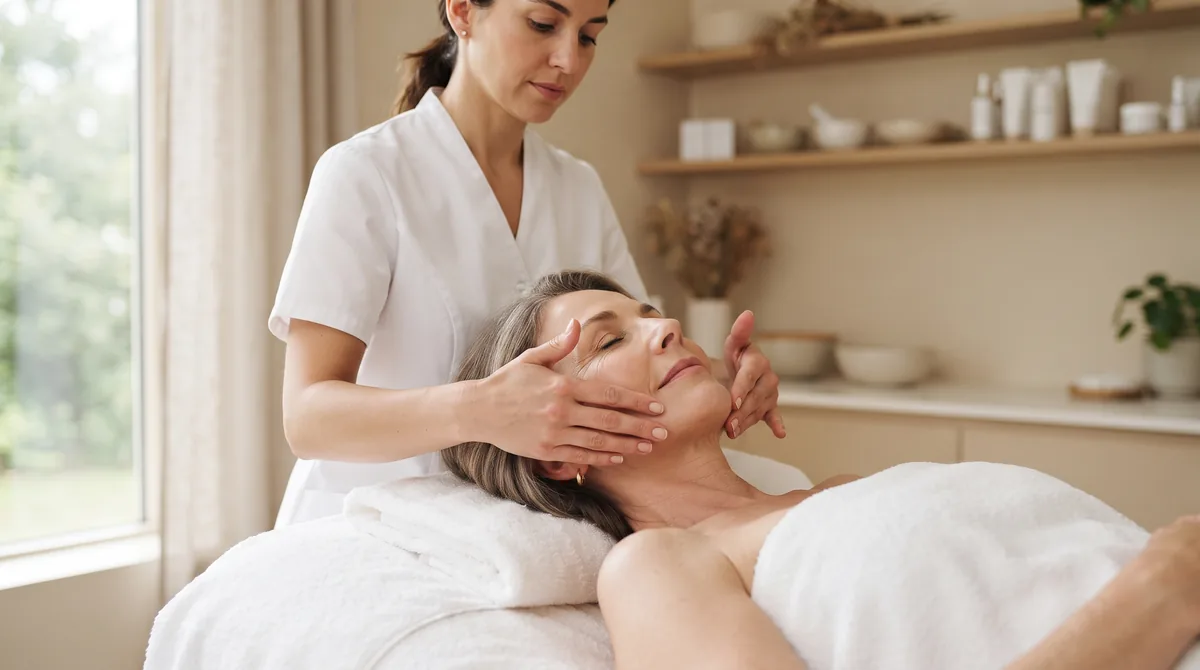
Lifting massage is a core part of facials for skin over 50: it supports circulation and muscle tone.
Building New Collagen in Mature Skin: What Works
Collagen production does not stop after 50. It slows, and the rate of breakdown begins to exceed the rate of synthesis, which is why structural collagen loss accumulates. But fibroblasts, the cells that produce collagen, remain responsive to stimulation at any age. The right treatments do trigger measurable new collagen synthesis even in skin that has been producing less for decades.
The treatments with the strongest evidence for stimulating collagen synthesis in mature skin fall into three categories: those that use energy to stimulate fibroblast activity directly, those that create controlled micro-injury triggering a wound-healing collagen cascade, and those that deliver bioactive compounds that signal fibroblasts to increase production.
Energy-based collagen stimulation
Red LED light at 630 to 670 nanometer wavelength penetrates to the dermis and stimulates cytochrome c oxidase, a component of the cellular energy production chain. This increases ATP production in fibroblasts, directly fueling collagen synthesis. Clinical studies of red LED for skin have documented measurable increases in collagen density with 8 to 12 session treatment series. No heat, no recovery time, no risk of worsening skin sensitivity.
Microcurrent also increases ATP production in fibroblasts through a different electrical mechanism, producing collagen stimulation as a secondary benefit alongside its primary muscle re-education effects. Both modalities work at the cellular energy level rather than through damage and repair, which makes them particularly well-suited to mature skin that is already managing a compromised barrier.
Controlled resurfacing
Chemical peels at appropriate concentrations and acid types for mature skin create a controlled degree of epidermal injury that triggers the skin's repair cascade. New collagen forms as part of that repair process. The key phrase for mature skin is "appropriate concentration." The lactic and enzyme peels I use for mature skin clients produce genuine collagen-stimulating resurfacing without the barrier compromise that higher-acid peels can cause in thinner, less resilient skin.
Bioactive compound topicals
Growth factor serums, peptide complexes and retinoids all have evidence for directly signaling fibroblasts to increase collagen production. Growth factors are extracted from cell cultures and deliver the specific signaling molecules fibroblasts respond to. Peptides provide the amino acid building blocks and signaling sequences that stimulate collagen synthesis. Retinoids work through nuclear retinoic acid receptors to increase collagen gene expression. Each of these works at the at-home level to support what professional treatments initiate.
The clients in Orange County who see the most meaningful anti-aging results are those combining professional treatments with a strong home routine that addresses the same collagen stimulation goals between sessions. Professional treatment without supportive home care, or home care without professional treatment to initiate the deeper cellular changes, produces slower results than the combination.
Microcurrent for Facial Muscle Re-Education After 50
By age 50, the compounding effects of facial muscle atrophy have been accumulating for two to three decades. The frontalis muscle that once held the brows at a youthful position has weakened. The zygomaticus muscles that define the cheek have lengthened and the tissue above them has descended. The masseter and surrounding support muscles have lost enough tone that the jawline shows early to moderate jowling. This is the landscape that microcurrent is specifically designed to address.
The good news for clients who come to me in their 50s concerned that they have "waited too long" for non-surgical lifting: muscle tissue remains responsive to electrical stimulation at any age. The re-education process takes longer and requires a more intensive initial series than it would for a 35-year-old client starting early, but the muscles do respond and the results do accumulate. I have worked with clients in their late 60s who saw meaningful visible improvement from a properly administered microcurrent series.
The initial series for a client in her 50s with moderate facial atrophy typically runs 12 sessions over 5 to 6 weeks at 2 sessions per week. This slightly longer series compared to younger clients reflects the greater degree of re-education required. The monthly maintenance that follows sustains and continues building on those initial results.
The areas that respond most visibly in mature skin clients are the brow and upper face, the midface and cheek, and the jawline and neck. The brow lift that develops over the series is often the first result clients notice because it changes the apparent size and openness of the eyes, a change visible in photographs and something other people notice and comment on before the client has fully registered it herself.
For clients who are also receiving cosmetic injections for volume or dynamic line management, microcurrent works well as a complement. I discuss how to sequence microcurrent around injection appointments to avoid interference and maximize the benefit of each. You can book a free consultation to discuss how microcurrent would fit your specific situation, including your current injection schedule if you have one.
For a detailed explanation of microcurrent technology and how the initial series and maintenance schedule work, the full microcurrent facial guide covers the complete protocol.
Chemical Peels for Mature Skin: Which Acids and Concentrations
Chemical peels remain one of the most effective tools for improving texture, tone and collagen density in mature skin, but the selection criteria for acids and concentrations are significantly different at 55 than they were at 35. The wrong peel on mature skin does not just fail to produce results. It can compromise a barrier that is already struggling to maintain integrity.
Best acid choices for mature skin
Lactic acid is my first-choice acid for most mature skin clients. It is an AHA derived from milk with larger molecular size than glycolic acid, meaning it penetrates more slowly and gently. It has the additional benefit of being a natural humectant, drawing moisture into the skin as it exfoliates. A lactic acid peel on mature skin produces resurfacing without the barrier compromise risk of stronger acids. The concentration range I use for mature skin clients is typically 30 to 50 percent, which provides effective exfoliation while respecting the thinner barrier.
Enzyme peels, derived from papain (papaya) or bromelain (pineapple), digest the protein bonds holding dead skin cells together without any acid pH activity on the skin. They are the gentlest exfoliation option available and ideal for the most sensitive mature skin clients or those who are just beginning to reintroduce exfoliation after a period of barrier recovery. Results are milder than acid peels but cumulative over a regular series.
Mandelic acid has a large molecular size that limits penetration speed, making it gentler than glycolic at equivalent concentrations. It also has mild antibacterial properties, making it useful for mature skin clients who still experience occasional breakouts alongside their aging concerns.
TCA (trichloroacetic acid) at low concentrations, typically 15 to 25 percent, can be used on mature skin by experienced practitioners and produces more significant collagen stimulation than superficial AHA peels. I use TCA on appropriate mature skin candidates after barrier assessment confirms the skin can tolerate it. This is not a starting point and not appropriate for clients with compromised barrier function or active sensitivity.
What to avoid in mature skin peels
High-concentration glycolic acid peels (above 50 percent), which penetrate rapidly and can over-stimulate thin mature skin
Jessner's solution without careful candidate assessment, due to the combined acid activity
Peels performed without a hydration focus in the recovery protocol
Frequent peeling without adequate recovery time between sessions, typically less than 3 to 4 weeks for mature skin
Every peel I perform on a mature skin client is followed by hyaluronic acid serum applied to damp skin to drive maximum hydration into the freshly exfoliated surface, a calming peptide serum, and a physical barrier SPF. This post-peel protocol is not optional. It is the completion of the treatment, not an afterthought. The chemical peel services page describes the specific options available at Real Skin Beauty.
Peel Recovery Note for Mature Skin
Mature skin recovers from peels more slowly than younger skin, typically 5 to 7 days for a mild lactic peel compared to 2 to 3 days for the same peel on a client in her 30s. Plan peel timing accordingly, especially if you have an important event within 10 days. The longer recovery is worth accounting for in the schedule rather than being surprised by it.
LED Light Therapy for Skin Renewal at Any Age
LED light therapy is one of the few professional treatments with no contraindications for mature skin and a robust evidence base for producing results. No heat is generated. There is no recovery period. The treatment is safe for every Fitzpatrick skin type. And the mechanism of action, specific wavelengths of light stimulating targeted biological processes in the skin, works at any age because fibroblasts and the collagen synthesis process remain responsive to photobiomodulation throughout life.
The wavelengths relevant for anti-aging in mature skin are red light at 630 to 670 nanometers and near-infrared light at 830 to 850 nanometers. Red light at this range penetrates to the dermis, where fibroblasts are located, and stimulates cytochrome c oxidase in the mitochondrial electron transport chain. This increases mitochondrial ATP production, directly fueling fibroblast activity and collagen synthesis. Near-infrared penetrates deeper, reaching the subcutaneous layer and stimulating collagen production at a greater depth.
Published clinical research on red LED for skin aging includes studies showing measurable increases in collagen density and elastin content with series of 8 to 12 sessions. A 2014 study in Photomedicine and Laser Surgery showed 91 percent of participants experienced improvement in skin complexion and skin feeling, with 82 percent showing an increase in collagen density after LED treatment. These are not small effect sizes for a completely non-invasive treatment with zero recovery time.
In my practice, I use LED as a standalone treatment and as a combination step following microcurrent or peels. After a peel, red LED accelerates the calming and repair phase. After microcurrent, LED adds fibroblast stimulation for collagen support to complement the muscle work. As a standalone treatment for clients who cannot tolerate more active modalities due to barrier sensitivity, LED provides genuine collagen stimulation with no barrier challenge whatsoever.
For mature skin clients in Irvine and Orange County who are beginning a professional treatment program for the first time in years, I often start with a series of LED sessions to support barrier recovery and collagen initiation before introducing peels or more active treatments. It is a strong foundation for a mature skin protocol because it adds to the skin rather than challenging it.
A typical LED series for anti-aging is 8 to 12 sessions over 4 to 6 weeks, followed by monthly maintenance. The initial series produces the collagen stimulation results. Monthly maintenance sustains them and continues the cumulative improvement.
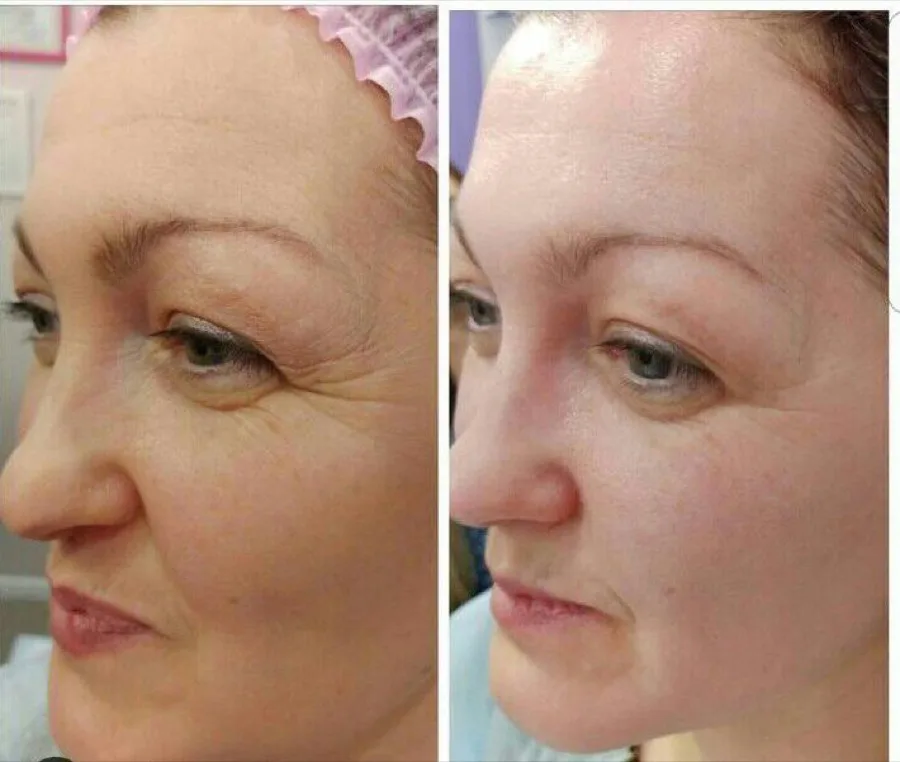
Eye area before and after an anti-aging treatment series at Real Skin Beauty. Individual results vary.
Hydration as the Foundation of Every Mature Skin Protocol
Every effective mature skin treatment protocol is built on adequate hydration. Not as a nice afterthought, but as the literal prerequisite that determines how well every other treatment works. Dehydrated mature skin does not respond to LED as well. It does not tolerate peels without reactivity. It does not hold microcurrent results as long. Hydration is not the glamorous part of the treatment plan. It is the structure that makes every other element of the plan function correctly.
The hydration challenge in mature skin has three distinct components that require three different types of products to address.
Humectants: drawing water in
Humectants are molecules that attract and bind water from the environment and from the deeper layers of the skin. Hyaluronic acid is the most well-known and clinically studied humectant. It can hold up to 1,000 times its own weight in water and is naturally present in the dermis. As HA content declines after 50, topical replenishment becomes important. Application technique matters: hyaluronic acid serum should be applied to damp skin, not dry skin. Applied to dry skin it can actually pull moisture from the dermis rather than drawing it in from the surface, which is the opposite of the intended effect. Glycerin, urea and sodium PCA are additional effective humectants that work well for mature skin.
Emollients: smoothing and sealing the barrier
Emollients fill the spaces between corneocytes in the skin barrier, smoothing texture and reducing water loss. For mature skin with a lipid-deficient barrier, ceramides are the most important emollient class. Ceramides make up approximately 50 percent of the lipid content in a healthy skin barrier. Products containing a balanced ceramide complex, typically Ceramide 1, 3 and 6-II, directly replace the lipids the mature skin barrier is no longer producing in adequate quantity. Fatty acids including linoleic acid and squalane are additional emollients that strengthen the barrier and prevent transepidermal water loss.
Occlusives: locking moisture in
Occlusives create a physical film on the skin surface that prevents evaporation of the moisture the humectants and emollients have established. Petroleum jelly is the most effective occlusive but the heaviest. Shea butter, beeswax and dimethicone are lighter occlusives appropriate for daily use. Mature skin that feels tight within an hour of moisturizing is not retaining moisture effectively and typically needs a heavier occlusive layer, especially at night when transepidermal water loss is highest.
The morning routine for mature skin I recommend to clients at Real Skin Beauty: cleanse with a non-foaming cream cleanser, apply vitamin C serum to damp skin, apply hyaluronic acid serum while still slightly damp, apply a ceramide-rich moisturizer, finish with SPF 50. This sequence addresses humectant, emollient and UV protection within the morning routine.
A Realistic 3-Month Anti-Aging Plan for Women Over 50
A 3-month plan serves as the minimum meaningful assessment window for any multi-modality anti-aging protocol. Collagen synthesis is a slow biological process. Muscle re-education through microcurrent requires consistent repetition before results consolidate. Three months with consistent professional treatment and a supporting home routine provides enough time to see genuine results and enough data to refine the approach based on how the specific individual's skin is responding.
Month 1: Foundation and Assessment
The first month is about establishing the baseline and beginning barrier support while introducing the first active treatments.
Week 1: Full intake assessment, skin analysis and photography. Establish the correct home routine (cleanser, vitamin C, HA serum, ceramide moisturizer, SPF 50). Begin retinol at 0.025 or 0.05 percent, 1 night per week to start.
Week 2 and 3: First 2 LED sessions, spaced 3 to 4 days apart. Continue establishing home routine. Discuss any products that are causing irritation and make adjustments.
Week 4: First enzyme or lactic acid peel to assess barrier response and begin gentle resurfacing. Third LED session.
Month 2: Active Treatment Introduction
Begin microcurrent initial series: 2 sessions per week for the month, totaling 8 sessions by end of month 2.
Continue LED after each microcurrent session or as a separate appointment. Total of 4 to 5 LED sessions this month.
Second peel mid-month, same or slightly increased concentration based on how the skin responded to the first.
Increase retinol to 2 nights per week if tolerating without irritation. Introduce peptide serum in the evening routine.
Month 3: Full Protocol and First Assessment
Complete the microcurrent initial series (sessions 9 through 12). Transition to monthly maintenance appointments.
Third peel this month. Assess the cumulative texture and tone improvement.
Monthly LED maintenance session.
90-day comparison photography. Evaluate brow position, midface definition, jawline clarity and skin texture against baseline photographs.
Consider adding a growth factor serum if budget allows, to support collagen synthesis between professional sessions.
By the end of 3 months following this plan, most clients in my practice are seeing visible improvement in facial definition, skin texture, radiance and overall skin quality. The improvements are not dramatic week to week. Viewed in the comparison photographs, they are substantial.
If you want to discuss how to build a protocol like this specifically for your skin, book a free consultation at Real Skin Beauty in Irvine. I will review your current routine, assess your skin in person and outline a plan that fits your specific aging concerns and schedule. The FAQ page also covers common questions about treatment pacing, what to bring to a first appointment and what to expect from each modality.
Frequently Asked Questions
What is the most impactful anti-aging treatment for women over 50?
There is no single answer, because the most effective approach combines modalities targeting different aspects of aging simultaneously. Microcurrent addresses muscle laxity and tissue descent. Red LED stimulates collagen and elastin production at the cellular level. A series of appropriately selected peels improves texture, tone and collagen remodeling. Consistent hydration maintains the barrier that supports everything else. Monthly professional treatment combined with a strong home routine produces cumulative results that none of these elements achieves alone.
Are chemical peels safe for mature skin over 50?
Yes, with appropriate acid and concentration selection. Lactic acid and enzyme peels are ideal starting points for mature skin. They resurface without compromising the thinner mature skin barrier. TCA peels at lower concentrations produce stronger collagen remodeling and are appropriate for mature skin clients with intact barrier function in the hands of an experienced practitioner. The error to avoid is applying protocols designed for younger skin without adjustment for the different biology of mature skin.
Does collagen production stop after 50?
No, but it slows significantly and the balance shifts so breakdown begins exceeding synthesis. After age 25, collagen declines approximately 1 percent per year. By 50, that accumulates to meaningful structural loss. The right professional treatments, specifically red LED, microcurrent and appropriately selected peels, do stimulate measurable new collagen synthesis at any age. The results are slower and less dramatic than in younger skin, but they are real and consistent with ongoing treatment.
How is a facial for a 55-year-old different from one for a 35-year-old?
The entire approach is recalibrated. Mature skin requires more hydration focus, gentler and less frequent exfoliation, specific muscle-lifting techniques for tissue that has descended, and careful attention to a thinner and more permeable barrier. Extractions are limited. Steam is brief. Acid concentrations are lower. Products used during the treatment are selected for barrier support rather than oil control. Everything is adjusted to serve a skin biology that has fundamentally different needs than it did 20 years earlier.
What at-home skincare amplifies professional anti-aging treatments after 50?
The four essentials: vitamin C serum in the morning (10 to 20 percent L-ascorbic acid or a stable derivative), retinol 2 to 3 nights per week beginning at a low concentration and increasing slowly, daily SPF 50 (the single most important anti-aging step regardless of age), and a ceramide-rich moisturizer morning and evening. Growth factor serums and peptide concentrates add meaningful collagen support between professional sessions for clients who want to maximize results.
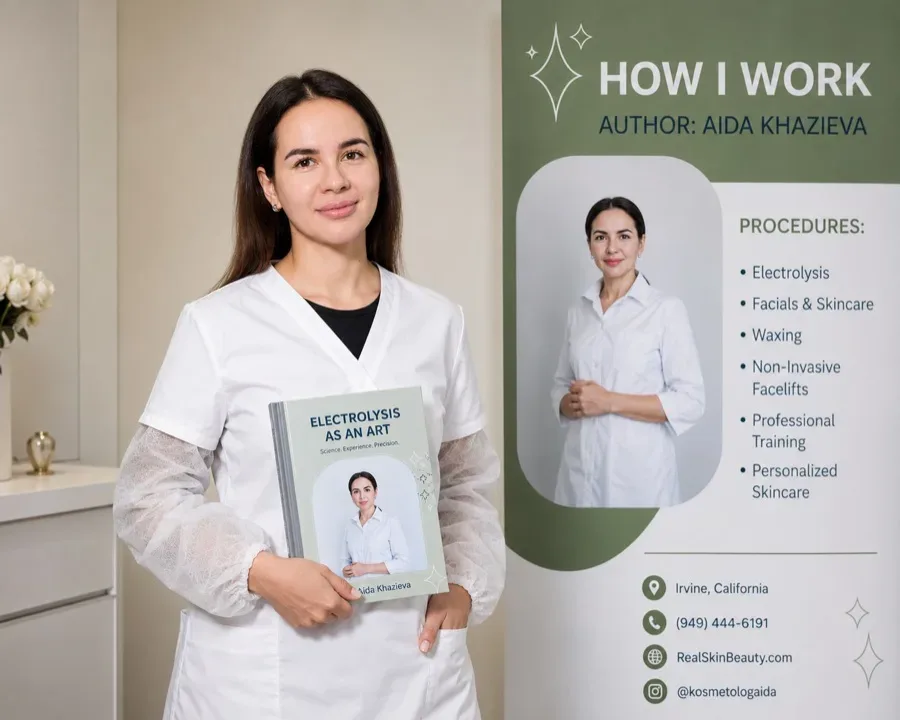
Licensed electrologist and cosmetologist with 20+ years of experience. Aida sees clients at Real Skin Beauty, 18021 Sky Park Circle, Suite N, Irvine, CA 92614.
Book a free consultation at Real Skin Beauty in Irvine, CA. I will assess your skin, review your current routine and build a realistic 3-month plan based on what your skin actually needs, not a generic protocol.
This article is for informational purposes and reflects Aida Khazieva's clinical experience. It does not replace a personalized medical consultation. Individual results vary.